15 Greatest Acting Debuts In Cinema History

Hitting it out of the park on the first attempt.

Some actors spend their entire career fine-tuning their craft and yet somehow never manage to land a role for which they will be remembered for years to come. Others, through a combination of good fortune and a healthy dose of talent, knock it out the park in their very first movie. Finding the right part isn't the only hurdle a new actor has to bound over, but sometimes a bit of good luck means that the part finds them. Some of the greatest debut performances in the history of cinema came about as much as a result of clever casting as they did from the hard work of the actor; as with many of film history's defining moments, there's often a little bit of magic involved. From a harrowing portrait of a child soldier to an actor who redefined what cinema achieve, here are the 15 greatest movie acting debuts the big screen has ever seen.

15. Hailee Steinfeld - True Grit

If you could count on anyone remaking a classic Western like True Grit and not only doing a great job of it but also bringing something new to the table, it was the Coen Brothers. Unlike their woeful remake of The Ladykillers, this redo emerged as one of the greatest films of its genre so far this century. In emphasising fidelity to the source novel rather than the John Wayne-starring 1960 movie, the Coens brought to the fore the character of Mattie Ross. Played by Hailee Steinfeld with the maturity and confidence of a seasoned professional actor, it's an incredible turn that stands up against her co-stars including Jeff Bridges, Matt Damon and Josh Brolin. While Steinfeld didn't win the Academy Award for Best Actress in a Supporting Role, it was nevertheless a remarkable debut, particularly in light of her relatively brief foray into the world of acting before she was cast in True Grit. Steinfeld hasn't been in anything quite as noteworthy since, but at just 18 years old there's plenty of time for more impressive performances to come.

14. Rudy Youngblood - Apocalypto

After taking audiences back to the final hours in the life of Jesus Christ in The Passion Of The Christ - complete with dialogue in reconstructed vernacular Hebrew - Mel Gibson followed it up with another violent jaunt into the past to explore the last days of the Mayan civilisation, Apocalypto. Frequently as brutal and bloody as The Passion Of The Christ - although here the violence is widespread, the sign of a civilisation on the brink, where human sacrifice is commonplace and men are hunted like beasts - Apocalypto is a thoroughly entertaining action-packed chase movie with a slight arthouse veneer. Central to the film's success is the lithe and athletic performance of Rudy Youngblood as Jaguar Paw, the hunter taken from his village and led to the slaughter, only to escape and hunt down his oppressors. There's something Rambo-ish about the way in which Jaguar Paw comes into his element when the tables are turned, and Gibson's direction is suitably adrenaline-charged, too. Unfortunately it wasn't enough to kick start a thrilling career and he's only appeared in two little-known movies since.

13. Abraham Attah - Beasts Of No Nation

Cary Fukunaga followed up his exceptional directing for True Detective (the great first season, not the disappointing second) with a shift away from television directing and into feature films with Beasts Of No Nation, a harrowing portrait of a vicious tribal warlord and his child soldiers. Idris Elba finally got a chance to sink his teeth into a substantial leading role, and his performance as the Commandant of an army of child soldiers is intense and engaging. But Elba really plays second fiddle to the young Ghanian actor Abraham Attah, who plays a young boy by the name of Agu, swept up into the violent conflict which rages across his sun-scorched homeland. Fukunaga's camera insistently tracks the boy as he is drafted into the fighting forces and made to perform unspeakable acts of horror in the name of "freedom", by turns weary and defeated and bravely resilient to the nightmarish world around him. His upcoming role in the next film by Shane Curruth, The Modern Ocean, should be one to watch out for.

12. Haing S. Ngor - The Killing Fields

The Killing Fields is another of cinema history's great movies about the crimes against humanity carried out by dictators and tyrants, focusing on perhaps one of the most unspeakable genocides since the Second World War, when Pol Pot's regime slaughtered millions of Cambodians during the 1970s. Based on the experiences of The New York Times journalist Sydney Schanberg, who visited Cambodia at the time when the titular massacres were just getting underway, The Killing Fields is a powerful and disturbing evocation of the forced labour and murder under the Khmer Rouge. Haing S. Ngor plays Schanberg's translator Pran, effectively stealing the movie from under the nose of his co-star Sam Waterson particularly as his latent humanity comes to dominate the narrative in the final act. Having never acted before, Ngor came to the attention of director Roland Joffe at a wedding party in Los Angeles - in spite of his complete lack of acting experience he was more than qualified for the role. Ngor spent four years of his life toiling in the actual killing fields of Cambodia before escaping to Thailand.

11. Edward Norton - Primal Fear

Leaving aside the the mediocre performance as Bruce Banner/Hulk in the forgettable The Incredible Hulk, it's fair to say that Edward Norton has established himself as one of the finest actors working in the film industry today. Movies like American History X, Fight Club and Birdman demonstrate a fantastic range few other actors can match. Norton is one only a handful of lucky actors to have been nominated for an Academy Award for their first big screen performance - his debut as Aaron Stampler in Primal Fear, Gregory Hoblit's 1992 adaptation of William Diehl's novel of the same name, saw him in the running for Best Supporting Actor (inexplicably losing to Cuba Gooding Jr. in Jerry Maguire). Norton's performance more than makes up for some uneven plotting, his schizophrenic turns are thoroughly compelling viewing. Norton's upcoming appearances on the silver screen are thin on the ground, with the actor as keen about performing on the stage as he is in movies. It's unlikely his supporting role in the upcoming animated comedy Sausage Party will see him winning any awards (if ever a movie title spoke volumes about the quality of the content...).

10. Anna Paquin - The Piano

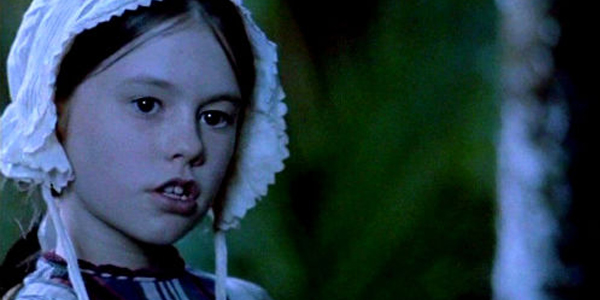
Hailey Steinfeld might have missed out on her Academy Award for Best Supporting Actress in True Grit, but Anna Paquin was more fortunate. Her debut appearance in Jane Campion's The Piano saw her picking up the golden statue at just 11 years old. In The Piano she plays Flora McGrath, daughter of a mute woman (played by Holly Hunter) who finds solace in music. Paquin acts as her interpreter, bridging the gap of communication lost through words and serving as a vessel for her mother's frustrations and desires. It's a performance which shares Steinfeld's inherent maturity in True Grit, another story in which children are caught up in the drama of adult life. Paquin might not have had the most exemplary career in the years since - she's perhaps best known today for her leading role in the intermittently entertaining HBO series True Blood, which concluded last year - proving that getting off to a great start isn't always a good thing.

9. Jason Schwartzman - Rushmore

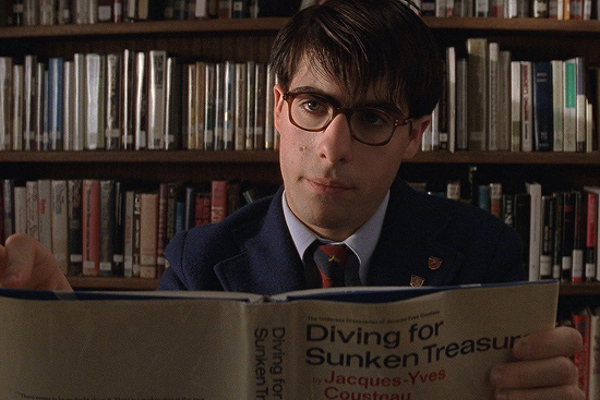
When you're cousins with Nicolas Cage and nephew to Francis Ford Coppola, getting a break in the film industry is hardly going to be too much of a challenge. Fortunately for Jason Schwartzman his acting more than stands up to scrutiny even when examined under the light of nepotism. In Rushmore, Wes Anderson's sophomore film in which his idiosyncratic visual style truly started to emerge, Schwartzman plays Max Fischer, a strangely mannered teenager with a passion for just about everything conceivable who strikes up a tentative friendship with local industrialist Herman Blume (Bill Murray, returning to form after years in the wilderness). Schwartzman nails the offbeat teenage angst and held his own in the company of Murray - indeed, it's their chemistry which makes Rushmore one of the greatest moves of the 90s. Schwartzman has largely stuck to his high quality independent cinema roots in the years since, with Listen Up, Philip one of last year's best comedies.

8. Quvenzhane Wallis - Beasts Of The Southern Wild

If you thought Anna Paquin was young to earn an Academy Award at the age of 11, Quvenzhane Wallis very nearly set a new record of her own. At just 9 years old she picked up a nomination for an Academy Award for Best Actress for her performance in Benh Zeitlin's Beasts Of The Southern Wild. Set in the "Bathtub" community on the Louisiana Bayou, Beasts Of The Southern Wild follows the life of a child known as Hushpuppy (Wallis) as she deals with her incompetent and lazy father and tries to make ends meet in a world where most people have given up hope. Meanwhile, an approaching storm threatens to literally overhaul their lives. What makes Wallis's acting so affecting is the way in which Zeitlin's direction emphasises the world from her perspective, the camera glancing at objects which pique her interest or gazing at other characters from her perspective. In many ways this is one of the most authentic and naturalistic portraits of childhood in recent years.

7. Bjork - Dancer in the Dark

You only have to look at some of the films starring the likes of Madonna, Jennifer Lopez and - heaven forbid - Beyonce to realise that pop stars do not always make for good actors. They might be great at performing on stage, but strip away the glamour and there's little beneath the surface to write home about. Bjork has never been categorised as a typical pop star and it's her inherent eccentricities which made her a perfect choice to play the lead in Dancer In The Dark. She plays Selma Ježková, an impoverished immigrant in 1960s America who discovers she's going blind and resorts to increasingly desperate measures to raise the money for an operation for her son in order to spare him the same fate. Interspersed with musical numbers this is brave cinematic work from Lars von Trier, perhaps one of the few contemporary directors as eccentric as Bjork. Typically for a von Trier movie, Dancer In The Dark polarised critics and audiences alike, but few can argue that Bjork's first - and only - feature film starring role is powerful and innovative, even if it does frequently slide into moments of pretentiousness.

6. Q'orianka Kilcher - The New World

It often feels as if characters in Terrence Malick's movies aren't so much individual human beings as they are avatars for broader philosophical concepts - in Tree Of Life this idea was brought to the fore through the perspective of childhood memories and the roles played by mother and father seen as a metaphor for grace and nature. With The New World, Malick was more concerned with the clashing of civilisations with the arrival of the British to the Americas and their first encounters with the indigenous population. As with his exceptional war film The Thin Red Line, mankind's conflict and attempted reconciliation with the natural world sits at the fore, with Q'orianka Kilcher's Pochahontas (although she is never named this during the film) representing the physical embodiment of the purity of life. Q'orianka Kilcher hadn't acted before appearing in The New World aged 14, and her career has been intermittent since, with a well-received starring role in the otherwise mediocre Princess Kaiulani and a small role in the TV series Sons Of Anarchy. As if inspired by her character in The New World, Kilcher's main commitment has been to activism, speaking out on environmental issues.

5. Sharlto Copley - District 9

Neill Blomkamp's directorial debut District 9 was certainly one of the most surprising science fiction movies in recent years, in many ways coming from the same genre tradition found in American B-movies of the 50s and 60s, where invading aliens acted as a metaphor for political and social issues of the time. Leading viewers through Blomkamp's dysfunctional vision of South Africa is Wikus van de Merwe, the bureaucrat who finds himself drawn towards the plight of aliens interned in a huge, sewage-ridden encampment. In his first film role, Sharlto Copley slowly transforms from a mild-mannered suit to something of a freedom fighter, and thanks to an energetic performance this transformation is entirely convincing. Copley has proved that this wasn't a one off with some great performances since - not least a chance to go "full psycho" as a mercenary in Blomkamp's Elysium. Although the less said about his villain in the awful remake of Old Boy the better - even the greatest actors put their foot wrong from time to time.

4. Natalie Portman - Leon

If you've only ever seen Natalie Portman in the Star Wars prequels you'd be forgiven for thinking that she possesses a complete lack of talent - fortunately her filmography includes a few great performances which prove that she isn't made entirely out of wood. One of these great performances was her first, when she appeared in Luc Besson's Leon as a 12-year-old girl taken under the wings of a hitman (Jean Reno) after her parents are massacred by corrupt policemen. Portman was fortunate enough to collaborate with Besson back when he was capable of making great movies, and her combination of determination and vulnerability is perfectly pitched. Not afraid to go from blockbuster fare like Thor to art house production including Terrence Malick's disappointing Knight Of Cups, her standout performance can be seen in Darren Aronofsky's Black Swan, an award-winning turn about a ballerina slowly losing the plot.

3. Emily Watson - Breaking The Waves

While we're on the subject of great performances about women losing the plot it seems fitting to move onto Emily Watson's first role in Lars von Trier's Breaking The Waves, in which Watson plays Bess McNeill, asked to sleep with other men by her husband after being severely injured in an industrial accident. This being von Trier there's plenty of fraught emotions - and emotional baggage - to deal with, mostly in desaturated imagery which heightens the desolate Scottish landscapes around which the action unfolds. Bess has some real psychological issues to deal with, but Watson teases these out of her character over the duration of the film rather than laying them all out on a platter - that is until the final act of self-destruction. Breaking The Waves isn't for everyone (a statement which applies to pretty much every single film by Lars von Trier), but there's no denying that Emily Watson threw herself into the role with a passion few actors can match.

2. Tatum O'Neil - Paper Moon

A huge star encouraging their offspring to get into acting at a young age can have disastrous consequences - take a look at Jaden Smith in After Earth and there's all the evidence you'll need that this can be a huge mistake. But as with most things, there are exceptions to the rule - in this case, Tatum (son of Ryan) O'Neil in Peter Bogdanovich's wonderful film Paper Moon. With Paper Moon, Bogdanovich took the Depression era and injected a dose of humour, following the exploits of con-man Moses Pray as he travels across America with young girl Addie Loggins. While it's not surprising that there's a real sense of rapport between father and daughter on-screen, what stands out is just how impressively Tatum O'Neil puts across the psychology of young Addie as she proves herself to be just as good a con artist as her untrustworthy protector. Tatum O'Neil remains the youngest actor of all time to win the Academy Award for Best Supporting Actress, a feat which she fully deserves for such a quirky and impressive debut at just 10 years old. It's a shame that her marriage to tennis player John McEnroe is one of the highlights of her adult life, rather than a career in acting littered with more awards.

1. Orson Welles - Citizen Kane

It's one thing to pick up an Academy Award on the strength of your very first performance (especially notable for a ten year old), but it's something else entirely to write, direct produce and star in your cinematic debut, then for it to go down in history as the greatest movie ever made. Whether or not you agree that Citizen Kane is the best movie of all time (I don't, but it's certainly up there) it's impossible to deny that Orson Welles managed to craft a film which was not only a huge step forwards in terms of technical innovation but also a radical reworking of the notion of biography and narrative structure. More importantly, it all holds together via the towering central performance from Welles that matches the sense of omnipotence - and arrogance - of the media magnate on which the character was based, William Randolph Hearst. The real tragedy, as any cinephile knows, is that unlike many of the other stunning debut performances featured on this list, Orson Welles didn't get the recognition he clearly deserved for this accomplishment, and instead spent his entire career almost as a pariah outside of the film industry circles. There have been fewer travesties of justice in the history of the movies. Are there any other exceptional debut performances missing from this list? Why not tell us about them in the comments?

Contributor
Contributor

Andrew Dilks hasn't written a bio just yet, but if they had... it would appear here.