15 Massively Underrated Movies From The 90s

The 90s was a cooler movie decade than you remember!
Pulp Fiction, The Shawshank Redemption and Forrest Gump are twenty years old, Diana died seventeen years ago and twenty-three years ago, Luton Town were in the first division of English football. The nineties was a loveable decade that can be looked back on fondly and cinema's contribution to the era is as influential as any; impressively, 44 of IMDB's Top 250 have a nineties date attached to them and 12 of them are in the Top 30. In a follow-up to last year's article, "15 Massively Underrated Movies From The 2000's" (which you can read here), this article goes on to explore the murky depths of nineties cinema and the underrated films that got left behind at the end of the last millennium. Like in the foregoing article, the definition of underrated is tricky to define. For continuity purposes, the same criteria has been used to distinguish 'underrated' films from every other release from that decade. As such Oscar nominations for Best Picture or extensive placement on year-end top ten lists are not include, as well as titles that could not place too highly on IMDB, generally avoiding any found on the Top 250 list. Some films featured on this list are well-regarded, but have been robbed of achieving 'classic' status or faded from memory over time. Others received at best critical apathy or even aversion that have since proven to have been 'ahead of their time', and others were simply - tragically - overlooked. All are excellent films in their own right and worthy of being checked out after reading the article. As always, opinions and other suggestions are welcomed in the comment section below. Here are 15 massively underrated movies from the 1990's.

15. Galaxy Quest

To start, Galaxy Quest is an example of satire done right; 1999's sci-fi/comedy sees cinema's greatest space-heroine Sigourney Weaver head a fantastic ensemble cast of TV actors who find themselves living out their cult space show for real when an alien race come to them for help. With an abundance of references to the hugely popular Star Trek series, Galaxy Quest carves its own story line without ever feeling like a parody. Its original characters - ranging from Tim Allen's captain (in arguably a career-best role) to Sam Rockwell's paranoid 'red-shirt' who's convinced he's going to die at any moment like the superfluous extras in Star Trek - provide the greatest moments when bickering and sparring between them. It's a film that, those who love really love, but for anyone else it gets passed off as a silly spoof or forgotten entirely. In a year that saw both The Phantom Menace and The Matrix also hit cinema screens, perhaps Galaxy Quest's most unfortunate failing was that it found itself affectionately mocking the very audiences that were now convinced they lived inside a complex computer system governed by Hugo Weaving. As a movie and as a spoof, Galaxy Quest deserves its spot in amongst the satirical-comedy heavyweights like Airplane!, Life Of Brian and Shaun Of The Dead.

14. From Dusk 'Till Dawn

"... and then, out of nowhere, there were these f*ck*ng vampires!" says anyone who has ever recounted the plot of Robert Rodriguez and Quentin Tarantino's barmy crime-turned-horror flick, From Dusk 'Till Dawn. It's true that the Tarantino-scripted story takes a dramatic left turn about halfway through the movie but for some reason, this is seen as a flaw rather than a refreshingly bold move against archetypal story narrative. The story sees two brothers (played by George Clooney and Tarantino himself) who, after robbing a bank, take Harvey Keitel and family hostage in order to cross the border into Mexico. Unknowingly, the group seek refuge at a sultry club that happens to be a coven for violent and bloodthirsty vampires. Whilst not directed by Tarantino, the film embraces many of his signature traits; including his witty dialogue and penchant for violence. Unfortunately, it seems that the film's boldest moments are also its most inhibiting. The change in tone does not sit well with many people, and it's a credit to the engaging first act as a crime thriller that audiences feel so alienated when the goal posts are shifted. A film should not be discredited for taking risks however, and people need to remember that act one's bank robbers and act two's vampires make up two halves of a very compelling and original story.

13. Chaplin

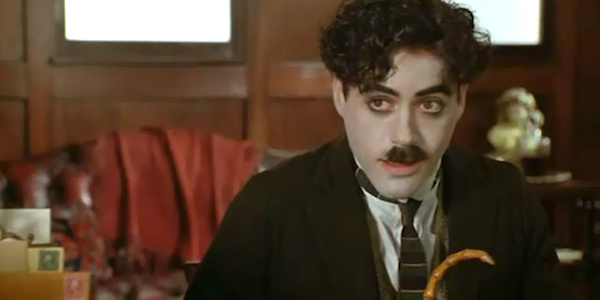
Richard Attenborough's films in the nineties were a series of biopics that dealt, almost exclusively, around the themes of identity and self-deception of the characters they depicted. 'Shadowlands' detailed the tragic love affair between C.S Lewis and American poet Joy Grisham, whilst 'In Love And War' and 'Grey Owl' dealt with the early life of Ernest Hemingway and the story of Englishman Archibald Belaney as he passed himself off as a Native Indian guide, respectively. However Attenborough's most underrated (and certainly best) film of the nineties was 'Chaplin' - the biopic of the enigmatic filmmaker that saw Robert Downey Jr's performance earn him an Oscar nomination. Whilst Downey Jr was (rightly) given credit to his performance, the film as a whole was disappointingly ignored as a nomination for Best Picture. The film depicts Chaplin as a man at odds with himself and his own sense of identity - discontent with his public appearance versus his personal private issues. Some say it plods through Chaplin's extensive life from a child street-busker to the old man on the stage at the Oscars without much in the way of exciting drama or revolutionary storytelling. However, these criticisms often neglect the detailed character-study the film offers; it picks away at its protagonist in a way that translates as a very honest and ultimately endearing biopic that informs as much as it entertains.

12. Cube

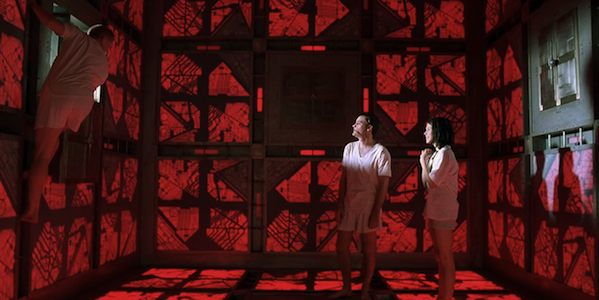
Vincenzo Natali is an underrated director who has spent a career writing and directing underrated films. His first directorial effort is 'Cube' - a thinking-man's horror that plays on the Aristotelian theory of 'classical unities'; the philosopher's rules of drama state that it should follow his three unities: action, space and time. 'Cube' adheres to this; the story follows one single plot without distraction of subplot - the survival and escape of its central characters reflects 'action'. Its claustrophobic use of a single setting - which takes place entirely inside the mysterious Cube - and its ambiguous pacing (how long are they in the cube?) also reflect the last two unities respectively. As a result, 'Cube' is a tight, well thought-out horror that, despite some heavy mathematical concepts, never gets bogged down in its own logic. The characters appear to be your typical nineties horror tropes but as the story develops, each person's role in the group dynamics is challenged, making this as much a character study as a survival story. Its biggest success however, is the setting itself. The Cube's effects - including the energy-draining blandness of the rooms' lighting - takes as much a tole on the audience as the characters. Remember that for the duration of the film the audience too is stuck in the Cube, searching for an escape from the relentless monotony just as much as anyone onscreen.

11. A Time To Kill

Sure, everybody loves Matthew McConaughey now, but those same people that revel in the cinematic gold of the 'McConnaissance' were the same people who'd given up hope on the Texan-born actor after dire turns in Fool's Gold and Sahara. However, people tend to forget that in the mid-to-late nineties McConaughey turned in a few memorable performances that would later put him in such a position to make misjudged choices in the noughties. Many see 1993's 'Dazed and Confused' as his standout role, but his most vastly underrated performance (and underrated film as a whole) is the John Grisham adaptation, 'A Time To Kill'. The story follows Samuel L Jackson's vengeful father who murders two white men guilty of raping his young daughter, and the lawyer (McConaughey) who stands up to defend him in court. The case causes controversy and ignites the racial and prejudicial tensions of Mississippi in the eighties, whilst raising a very controversial question; can murder ever be justified? Perhaps it was the lack of an Oscar nomination (in a year that also saw heavyweight contenders like Titanic and LA Confidential) that has left 'A Time To Kill' doggy-paddling in the ocean of obscurity, struggling to remind people that in any other year, its superb cast (that also includes Kevin Spacey, Sandra Bullock, Donald Sutherland, Oliver Platt and Kiefer Sutherland) and its Oscar-baiting themes would have made it a memorable classic. It certainly deserves it.

10. The Full Monty

Whilst The Full Monty's merits as a successful comedy have never been disputed (in 2000, readers of Total Film Magazine voted it the 49th best comedy of all time), its role as an insightful and bold social commentary is often overlooked. The film follows six out-of-work men in Sheffield who decide to form a male strip-tease group in the style of 'Chippendale dancers' - only these men promise to go 'the full monty' and strip right down to nothing. The flesh on show is more Coronation Street than Magic Mike but when it comes to the final showdown you'll not mind a bit; six unremarkable men grinding onto their cowboy hats is an image hard to forget. In its lighthearted approach, The Full Monty deals with serious themes of unemployment, depression, homosexuality, obesity, father's rights and suicide. Such is the film's approach, that it makes it one of the most engaging and approachable social-commentaries on the UK working class in the modern era. As previously mentioned, it's not the 'comedy' aspect of Full Monty that's underrated; it's the affecting moments of drama that often get overlooked but are significant enough to raise the film from quirky-but-forgettable comedy to one of the greatest British movies of the 20th century.

9. The Nightmare Before Christmas

Before Tim Burton started making 'generic Tim Burton' films, he produced this little gem of a picture based off of a story and characters he'd already created. The origin of Nightmare Before Christmas comes from a three-page poem Burton wrote through inspiration from TV specials of Rudolph The Red Nose Reindeer and How The Grinch Stole Christmas. The story (once adapted to a screenplay by Burton's good friend, Martin McDowell), follows Jack Skellington - a somewhat celebrity of Halloween, the name of the town in which the film is predominantly set. In a chance visit to Christmas-land, Jack decides that he and his horror cronies should do their own version of Christmas, subsequently kidnapping Father Christmas and delivering, with good intentions, all manner of frightful gifts on Christmas Eve. The film has an IMDB rating of 8.1 - a score high enough to warrant a place on the top 250 list - but is not included due to its insufficient votes total. Tragically, those that have seen consider it worthy of a prestigious spot that would place it in among other classics such as Terminator and Butch Cassidy and the Sundance Kid (both of which have a rating of 8.1). Unfortunately it often gets overlooked as being "too weird", unceremoniously bumped down the pecking order of stop-motion movies by the more recent (inferior) films like Corpse Bride, Coraline and Frankenweenie.

8. Event Horizon

It's a B-movie horror but by no means does that make Event Horizon anything less than a wonderfully unappreciated foray into the murky depths of space travel. The eclectic crew (from Lucius Malfoy to Gotham's new Alfred, via Michael Scofield's mum from Prison Break), led by Laurence Fishburne's Captain Miller, are on a mission to investigate a ship that disappeared into a black hole. What works in Event Horizon is the fluent transition of tone, as reflected in the arc of Sam Neill's character, Dr Weir. So often, sci-fi and supernatural entertain on opposite ends of the spectrum but Horizon toes the line playfully, blending themes of rationalized physics with elements of unfounded transcendent theories. Its position as a horror/sci-fi hybrid means the film finds itself foregoing the real details of both genres. It doesn't care to explain the physics behind the logic of a black hole being built into the heart of the ship, nor does it feel the need to scare you every other scene; choosing instead to release its horrors in short, violent bursts - but neither does it want to. It offers no misgivings on its inspirations, cheekily replicating the Shining-esque blood bath and spaceship designs from Alien. Its boldest move however, and the reason it should be applauded, is how it takes inspiration from these films on equal parts; drawing together two disparate genres in an attempt to create a unique cinematic experience.

7. One Eight Seven

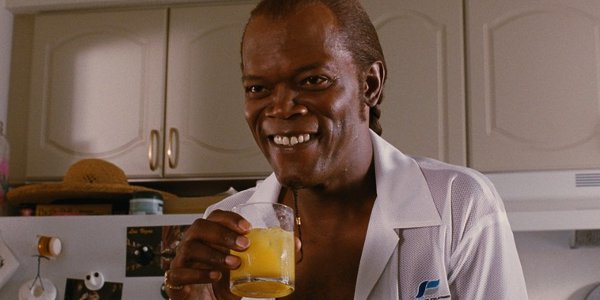
One Eight Seven is famous for being Samuel L Jackson's first top-billed starring role. Up until then Jackson had proven himself in supporting roles or as part of an ensemble (like Pulp Fiction) but One Eight Seven (often abbreviated to 187) saw the actor take the lead as a science teacher who, after being near-fatally stabbed by a student, moves from New York to LA to rehabilitate. Whilst in LA, Jackson takes a supply role in a troubled, largely Hispanic school where he finds himself engaging in a power struggle with the members of a criminal gangs operating in the classroom. One Eight Seven is not about a messiah-like teacher coming into the lives of challenging 'victim-of-their-upbringing' kids and inspiring them to change their lives around. There is no humanizing revelation about the power of the education system. It is not 'Coach Carter'. Jackon's Mr Garfield is a battered, broken man whose faith in the system is all but spent, he's out of his depth and enacting his own vigilante form of justice on those he feels are beyond salvation. It's an entertaining thriller that tries to offer an alternative perspective of the classroom to the bubble-wrapped dramas - the 'redemption for everyone' endings that Hollywood likes to produce. It demonstrates why the man so cool he can make a single letter sound bad-ass, has gone on to have a hugely successful career in the industry.

6. Croupier

One could argue that roles in Gosford Park and The Bourne Identity at the start of the noughties, were the linchpin of Clive Owen's hugely successful career. However, you could go further back to 1998 and the release of 'Croupier' - a neo-noir picture that details the life of a failing author (played suavely by Owen) who takes on the job as a croupier to tide himself over - as his first great performance in a leading role. Short of money and lacking in ideas, Jack Manfred (Owen) begins work at the casino in a voyeuristic capacity - watching the lives of the downtrodden as they gamble away their last hopes, with the intention that his findings might inspire a new novel. Using a voice-over monologue straight out of a fifties detective noir, Jack details his encounter with Jani (played by Alex Kingston), a femme-fatale whose offer of £20,000 to partake in a robbery of the casino, is too tempting to turn down. What remains is a strange, twisted movie that refuses to relent its bizarre narrative, no-matter how out of control Jack finds himself. Strangely, Croupier seemed to find more success in American than it did in Britain and has since been re-released. Unfortunately, its following is still disappointingly small considering it convincingly heads the pack of London crime thrillers that were regurgitated onto cinema screens around that time.

5. Abre Los Ojos

The original Spanish version of Cameron Crowe's 'Vanilla Sky', Abre Los Ojos (Open Your Eyes) often gets lost behind its flashier, American cousin. Tragically, many see the Tom Cruise version before they see Abre Los Ojos and, in a natural human response of 'first is best', stubbornly refuse to accept that it's better. Which (in a moment of bias here) it is. The film sees Eduardo Noriega's handsome playboy become a victim of a car crash involving an unhinged ex-lover. As he comes to terms with his drastic physical injuries, he falls in love with Penelope Cruz (who plays the same role in Vanilla Sky) but refuses to accept he can be with her because of his scars. Slowly his life starts to unravel, leading to paranoia and dreamlike abnormality. Its palliative blend of drama, sci-fi and thriller lends itself to the arcs of its characters and the dramatic twists of its final acts. Both versions are underrated but Abre Los Ojos more so for the inhibiting fact that it's in a foreign language. Whilst many film fans would not find this problematic, the casual viewer might opt to go for the less taxing task of listening without reading. After all, its concepts are not straightforward and the subtitles could leave viewers alienated from the story.

4. Miller's Crossing

The Coen Brother's contribution to the nineties is fantastic. Fargo, The Big Lebowski and Barton Fink have found both critical acclaim and box-office success, cementing themselves as cult classics in the process. One Coen Brother project that often gets overlooked however, is 1990's gangster drama, 'Miller's Crossing'. An amoral story that simultaneously deals with the morals of gang culture, 'Miller's Crossing' lacks the obvious humor of other Coen Brother films but rewards those that have the patience to follow its weaving story-line, with fine drama and a black drollness that reflects the tone of the movie. It centers on mob enforcer, Gabriel Byrne, as he is caught in a war between rival bosses Albert Finney and John Polito. The reason Miller's Crossing failed to get bums on seats was its overshadowing by similar gangster flicks; Goodfellas and The Godfather III. Both films had bigger directors, bigger casts and, in the Godfather's case, a pre-established following that was hard to deter. Time has passed and retrospective praise has been put Crossing's way - Empire crediting it as 'one of the most underrated movies of all time' - but unless more articles of this ilk are written, the Coen Brother's quiet masterpiece will simply be a treat reserved for the enlightened few.

3. Glengarry Glen Ross

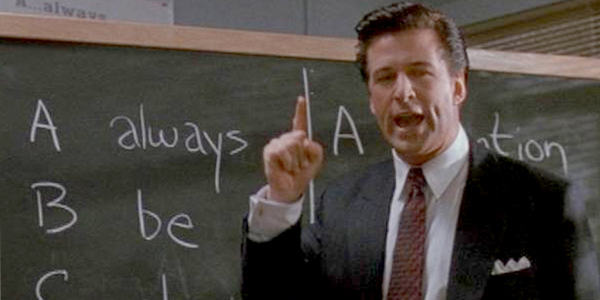
With perhaps the most jaw-dropping, ball-bustingly epic motivational monologue from Alec Baldwin within the first fifteen minutes, Glengarry Glen Ross sets the tempo fast and follows through expertly to produce a masterpiece in modern cinema.

The story follows a group of down-on-their-luck real estate agents, grappling desperately with rival firms and even those they call colleagues, to close leads and bring home the most sales in the month. Boasting a tremendous cast, including; Al Pacino, Alec Baldwin, Kevin Spacey, Ed Harris, Jack Lemmon and Alan Arkin, the script €“ adapted by David Mamet from a play by David Mamet €“ sparkles with child-like cheek and audacity.

Filmed on a relatively low budget (the single biggest cost coming from the rain effects in the first half of the film), Glengarry Glen Ross captures the intricacies and the politics of everyday life. The strength of the film comes from the fact that the same characters could have the same fears and aspirations, the same social interaction and the same confrontation in any setting. It€™s relate-able, but in a darkly comic, subtle and utterly brilliant way. Hands down, one of the top 10 films of the nineties.


2. Dogma

Believe it or not, there is a Chris Rock performance out there that is actually funny, and it comes in the shape of Rufus, the 13th apostle of Christ in Kevin Smith's religious romp, 'Dogma'. Boasting an impressive cast, the film sees angels Ben Affleck and Matt Damon trying to get back into heaven via a loophole of Catholic dogma that would see all of their sins unwillingly forgiven by God. Along the way they find themselves hindered by an Avengers-style team of misfits including the great-grandniece of Christ, two ignorant apostles (the infamous Jay and Silent Bob return once again), angelic stripper Salma Hayek and Rock's forgotten apostle - indignant at being left out of the Bible due to his race. Despite frequently being dismissed as a heretic movie, Dogma is a touching homage to religion with an important underlying message. Once you strip back the playful lampooning of regimented Catholic ideals - like the assumption that Jesus is white, God is a male and that faith is somehow a burden - Dogma could stake a claim as one of the best 'stoner road movies' of the nineties whilst simultaneously reigniting the fun spark of a religious denomination that, in the words of Serendipity, are people 'who treat G-d as a burden instead of a blessing. You people don't celebrate your faith; you mourn it.'

1. Jackie Brown

Quentin Tarantino was a big player in nineties, reshaping the crime genre into a pulpy, violent sprawl of witty dialogue and incongruous narrative. Whilst Pulp Fiction and Reservoir Dogs stand testament to the director's successes, often-overlooked Jackie Brown showcases his abilities as a more subtle, restrained director. The story follows the titular Jackie Brown (Pam Grier) as a flight attendant who inadvertently becomes embroiled in the drug running of psychotic pimp Samuel L Jackson and oily thug, Robert De Niro. Unexpectedly arrested by Michael Keaton's cop, Brown finds herself playing off against the police and the dealers in an attempt to steal half a million dollars with the help of bail bondsman Robert Forster (incidentally playing the most 'straight-up', respectable character Tarantino has ever written). To its unfair disadvantage, the style and flair of a usual Tarantino flick is toned down in this film, leading to an unremarkable reception from audiences who feared that the 'Pulp Fiction effect' had waned with this exciting new director. Contrarily, it shows Tarantino taking the foot off the gas and allowing for this tight crime caper to tell itself - a luxury afforded by its compelling characters and natural flow. If its lukewarm reception is the reason why we've not seen a Tarantino film like Jackie Brown since (or ever will again), it only shows that the temperate, more mature side to the director has faded; leaving us the firecracker with a penchant for the pastiche and limited self-control.

Contributor
Contributor

Aspiring screenwriter. Avid Gooner. Saving the rest of the self-descriptive stuff for the autobiography.