15 Masterpieces Of Pure Cinema

Taking cinema to new heights.
The idea of "pure cinema" was first suggested by the avante-garde French filmmakers of the 1920s and has been something discussed by filmmakers and movie lovers ever since. But what is "pure cinema"? While the definition has been debated, most agree that pure cinema represents the conscious rejection of other artistic mediums in filmmaking, specifically the narrative influence of literature and the theatrical influence on acting and plot structure which most films tend to emulate. Pure film tells its story - or more relevantly explores its themes, since stories are inherently literary - not through dialogue and exposition but through the elemental combination of sound and imagery. Composition and editing techniques which are exclusively cinematic come to the fore allowing ambitious ideas to be explored in unique new ways. Some people can find this approach to filmmaking boring or pretentious - and sometimes this is the case - but when a director gets it just right the result is often a bona fide cinematic masterpiece. Here are 15 such masterpieces of "pure cinema" every movie lover should see.

15. Man With A Movie Camera

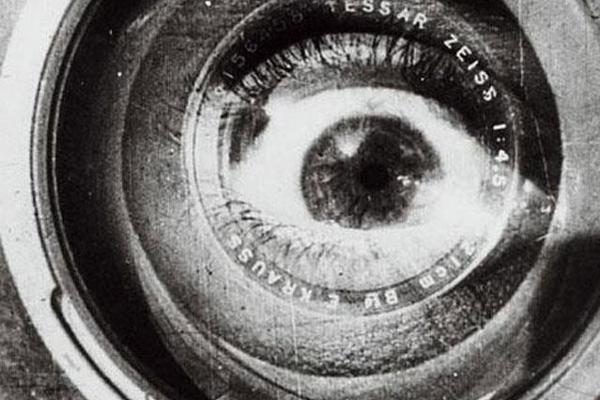
Robert Flaherty's 1922 film Nanook Of The North might have the honour of being the first documentary ever made, but it was Dziga Vertov who took the format and lifted it towards something that can be called purely cinematic. Set during a day in the life of the residents of the Soviet Union, Man With A Movie Camera revolutionised the way films are shot and edited, weaving stop motion, reversed footage, overlays, split screens and a range of camera movements into a tapestry of human life. Freed from narrative conventions, the emphasis of the cameraman as the principle character makes this a film which foreshadows the meta nature of postmodernism by many decades. The 1920s and 30s saw a number of experimental movies in the vein of Man With A Movie Camera including Berling: Symphony Of A Great City and A Propos De Nice, which fell under the umbrella of "City Symphonies" - they offer fascinating glmpses into the past and are essential viewing for cinephiles.

14. Enter The Void

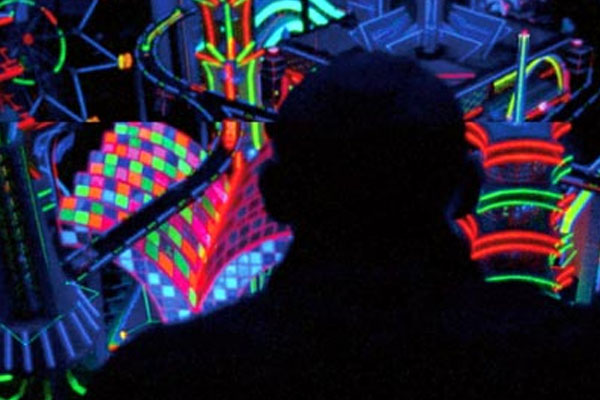
Argentinian director Gaspar Noé has never been coy about his passion for the films of Stanley Kubrick - from the 2001: A Space Odyssey poster on the bedroom wall in Irreversible to his often pessimistic view of human nature, Kubrick's influence is apparent. While Noé doesn't live up to Kubrick in terms of greatness (hardly a criticism given Kubrick's unassailable position as one of cinema's masters) he does succeed in using the language of cinema in its purer sense. With Enter The Void he uses his camera in a completely unique way, telling the first person story of an American named Oscar living in Tokyo who is shot and (possibly?) killed by police, his disembodied consciousness traversing the neon-lit city. The camerawork is predictably virtuosic as it swoops around looking down on life below, while Oscar's apparent death and rebirth taking on increasingly psychedelic tones as the process reaches its conclusion. Never has a camera been utilised in such a literally metaphysical way.

13. I Am Cuba

While Dziga Vertov's Man With A Movie Camera reinvented the way films could be edited, a later Russian filmmaker by the name of Mikhail Kalatozov would take the way in which cameras can be wielded to new heights. In several sequences this statement can be taken literally: I Am Cuba's overview of life in Cuba begins with a tracking shot which seems to defy the impossible as it floats around the exterior of a hotel; later it drifts over a huge procession, weaving in and out of windows in stunningly crafted shots which wouldn't look out of place in Birdman. Four short, loosely told stories depict the various strata of Cuban society, with Kalatozov's direction a constant stream of inventive, wide angle tracking shots scrutinizing the characters. While I Am Cuba wasn't well received on its release, its discovery by Martin Scorsese led to a campaign for its restoration in the 1990s. Hardly surprising, given that Scorsese himself is the Hollywood master of the grandiose tracking shot.

12. La Jetée

Chris Marker's La Jetee is a film which strips cinema down to its base components; it is almost entirely constructed of still images accompanied by narration to tell a story of time travel in a post-apocalyptic world. A nameless protagonist is chosen as a guinea pig for an experiment in time travel, which leads him to meet a mysterious woman from the past he once saw on the titular jetty. If this wasn't strange enough, an advanced race pays him a visit with an exceptional proposition. Widely regarded as one of the greatest filmed works of science fiction, La Jetee caught the eye of Terry Gilliam who remade it into the very different - and very watchable - Twelve Monkeys.

11. Baraka

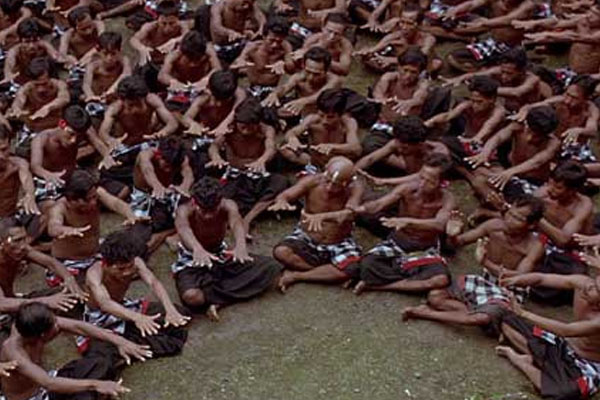
While the "City Symphony" format of the silent era might no longer be a filmmaking trend, a string of more recent movies which explore the visual potential of the planet has emerged to take its place. After acting as cinematographer on Godfrey Reggio's Koyaanisqatsi, Ron Fricke took up the directing duties himself for Baraka, perhaps the most impressive of the "Earth Symphony" (to coin a phrase) films. The peace and tranquility of a remote Japanese mountain is juxtaposed with the bowels of a gigantic quarry; baby chicks in a factory cross cut with streets teeming with pedestrians. In this way, Fricke unravels the complexities and contradictions of the world we live in. Shot in 70mm, Baraka is a truly stunning visual experience (and it's worth owning on Blu-ray for the reference quality transfer) which was considered one of the greats by late critic Roger Ebert, who said of the film, "If man sends another Voyager to the distant stars and it can carry only one film on board, that film might be Baraka."

10. The Holy Mountain

It's easy to watch The Holy Mountain - Alejandro Jodorowsky's mind-bending surreal mystery - and give in to its apparent lack of narrative coherence and let the beautifully strange imagery wash over you. Few films carry so many striking, indecipherable images. Viewed, however, with a grasp of the alchemical processes of transformation and regeneration, and The Holy Mountain's triumph as a film which captures the essence of symbolic allegory becomes clearer. As weird and Midnight Movie-ish the sequence of events appears to be, there is a method to Jodorowsky's madness and a reaching towards enlightenment. Throw in some satirical swipes at contemporary materialism and scenes which are by turn brutal and beautiful, and the result is one of the most unusual movies of all time, even giving great cinematic surrealists like Luis Bunuel a run for their money.

9. Weekend

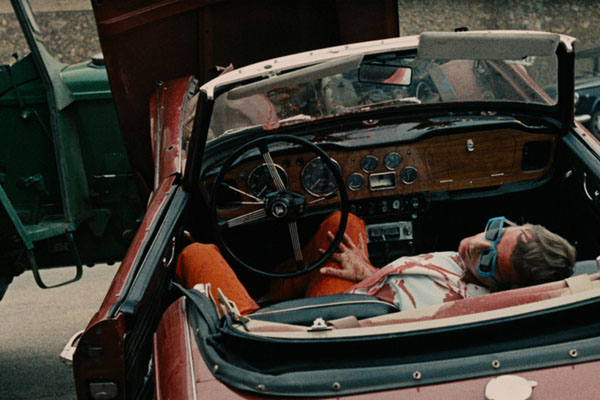
The French New Wave filmmaking movement which began in the late 1950s was one of the radical challenges to the conventions of filmmaking of the 20th century - Jean-Luc Godard was the enfant terrible of that movement. Godard's 1959 film Breathless kickstarted a new generation of cool, stylish movies featuring radical new techniques (here the jump cut took on a new dimension), but nearly a decade later he would reshape the potential of cinema with Weekend, a scathing black satire on the collapse of modern civilization. Godard's real achievement here, beyond the wonderfully realised anarchic landscapes of modern France, violence and car crashes littering the streets, is his infusion into the story of real historic figures. To cite Ebert once more, " is his best film, and his most inventive. It is almost pure movie."

8. The Tree Of Life

Ever since his directorial debut Badlands, Terrence Malick has pushed further away from the mainstream conventions of linear storytelling, progressively moving towards movies as tone poems with often deeply spiritual undertones. The Tree Of Life represented Malick's real shift in gear towards impressionistic filmmaking, telling the fragmented recollections of architect Jack O'Brien (Sean Penn) as he ponders back on his childhood growing up in 1950s Texas. His parents (played by Jessica Chastain and Brad Pitt) are viewed in symbolic terms, Nature and Grace taking on physical form. With a meandering pace which even allows for a detour from the central characters to explore the creation of the universe (dinosaurs included), The Tree Of Life was always going to have a polarizing effect on audiences, but there's no denying Malick's ambition as a filmmaker. Such a shame that his more recent movies To The Wonder and Knight Of Cups feel like pale imitations rather than the real deal.

7. Last Year At Marienbad

It's amazing to think that Alain Resnais's Last Year At Marienbad's release in the US led to movie fans queuing up outside of movie theatres - few films are quite so deliberately obscure, mysterious and lacking in obvious popular appeal. Set in and around an opulent château and shot in crisp black and white widescreen cinematography, Last Year At Marienbad doesn't just deny the viewer an explanation for its mysterious narrative but invites them to disregard trying to figure it out altogether. A man discusses with a woman their prior meeting one year before - it's a meeting she doesn't recall, which may or may not have happened, and which sums up the line of questioning Resnais wants to establish about how we shape our own stories. As the characters reconfigure their relationships - just as they reconfigure the space they inhabit, which Resnais shows with some exceptionally staged shots - so too does the viewer find themselves endlessly reanalysinig what they have seen. As a cinematic puzzle, Last Year At Marienbad is almost impossible to solve - which, according to Resnais himself, is precisely the point.

6. Upstream Colour

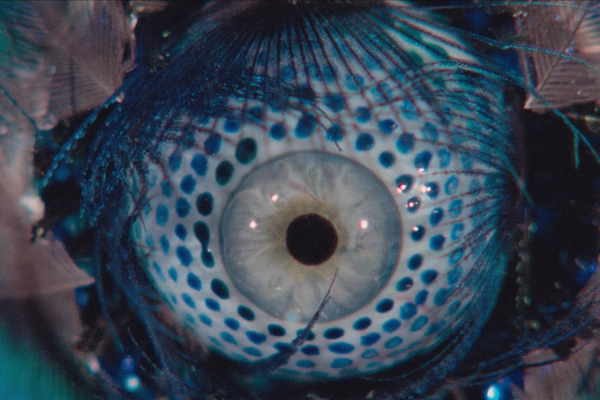
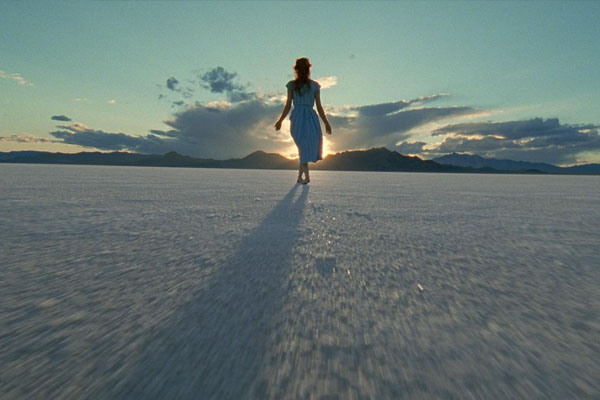
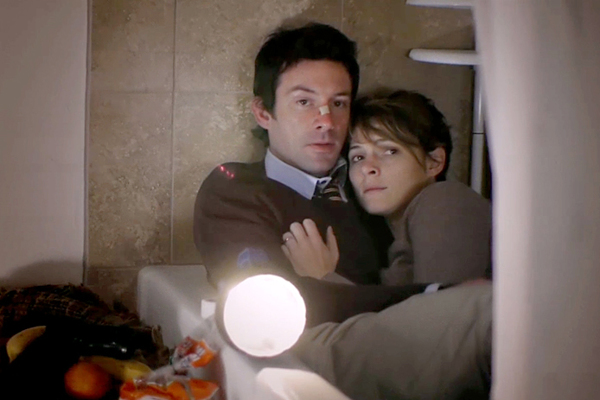
Shane Carruth wowed and baffled audiences in equal measure with his ulta-low budget high concept science fiction debut Primer, but nothing would prepare people for the bizarreness of his sophomore film Upstream Colour. Upstream Colour certainly stands as one of the strangest movies of the decade - and probably of all time - but there's a subtle method to the madness on display here. As Primer demonstrated, Carruth is a filmmaker interested in posing more questions than answering them - if indeed there is an answer to this story of sybiotic parasites. Carruth shot the film himself, with many of the strangely beautiful sequences resembling something out of a David Lynch dream sequence, while the experimental editing makes this one of the strongest candidates for the best in pure cinema in recent years.

5. Mad Max: Fury Road

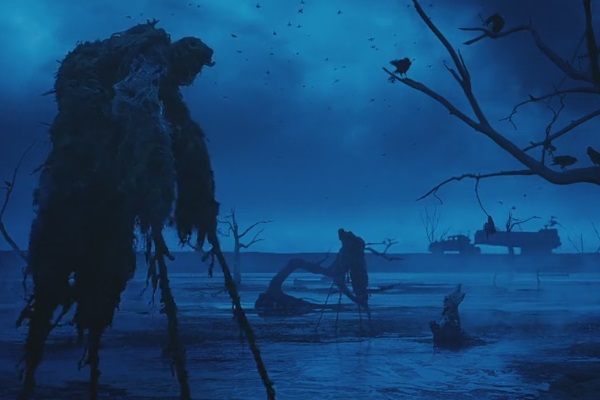
Mad Max Fury Road might seem like a strange - or even controversial - entry on a list of pure cinema movies, but judged on the central tenets of the style of filmmaking it becomes clear that it covers many of the key elements required. As with all great pure cinema, Mad Max: Fury Road is sparse with its dialogue and rarely uses it simply for exposition. Similarly, the plot is relatively simple and discards the narrative complexity of more mainstream movies, and what storytelling there is is told almost entirely through the carefully composed visuals. Mad Max: Fury Road may be "just" an action movie, but it is one driven (if you'll pardon the pun) by a heightened appreciation of aesthetics, masterful framing and crystal clear editing more than worthy of the label "pure cinema". It's certainly a claim few other mainstream action movies can make.

4. Under The Skin

It's always great when a huge Hollywood star takes a break from the blockbusters and works on a project with a focus on artistic integrity over box office receipts. Under The Skin, starring Scarlett Johansson as an alien preying on unsuspecting men in Scotland, is about as far removed from summer blockbusters as you can get. Another contemporary film in which the spirit of Stanley Kubrick looms over the frame, Under The Skin blends two very distinct visual styles to create an appropriately alienating effect. Handheld - and sometimes hidden - cameras show Johansson's alien as she hunts her prey on the streets of Glasgow, but director Jonathan Glazer counterbalances this with some highly abstract staging, particularly of the disturbing void where the alien lures her victims. By using such a famous actress and reframing her as an alientated form of sexuality, Under The Skin transforms the way we perceive stardom and stands as one of Johansson's finest performances to date.

3. Au Hasard Balthazar

Legendary French filmmaker Robert Bresson was widely known for his process of getting his (largely non-professional) actors to repeat scenes over and over again with the intention of stripping their performance of all affectation and sense of style. No such process was required for directing the star of his classic movie Au Hasard Balthazar, which tells the story of a donkey's life with a cool precision which only Bresson could achieve. His "pure cinematography" had already been used to great effect on films like A Man Escaped, and here this minimalist style works to create an experience of total immersion, with Balthazar's experiences speaking to something timeless about humanity. Few filmmakers are regarding in such high esteem as Robert Bresson (he influenced Andrei Tarkovsky and Jean Luc-Godard once said, "Robert Bresson is French cinema"), while few movies are as profound as Au Hasard Balthazar.

2. The Mirror

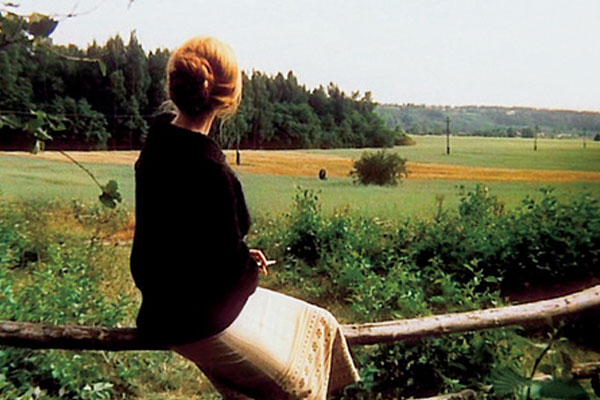
It's impossible to discuss the concept of "pure cinema" without a nod to the great Russian director Andrei Tarkovsky - from Ivan's Childhood to The Sacrifice, his was a career in which the exploration of the possibilities of the medium was paramount. The Mirror, Tarvovsky's seventh and most personal film, is perhaps his most unconventionally structured. It weaves poetry written by Tarkovsky and read by his father around a dream-like montage of imagery relating to the director's childhood memories. The Tree Of Life's similar approach is by comparison handled in a much more straight forward manner. The Mirror's triumph as a work of pure cinema is perhaps best illustrated in comparisons with Modernist stream of consciousnes literature, a style which itself shatters the conventions of the novel and by all accounts should be unfilmable. British author Will Self described it as the most beautiful film ever made - it's certainly a contender.

1. 2001: A Space Odyssey

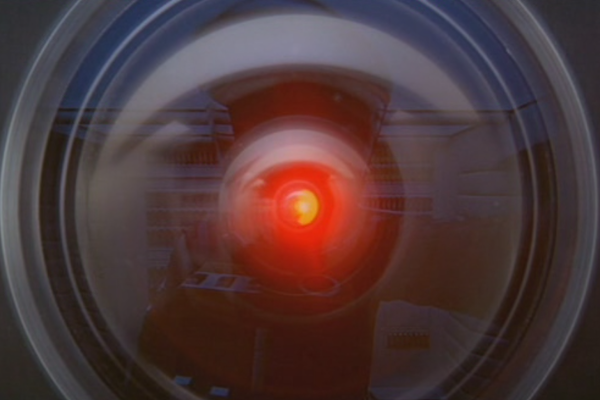
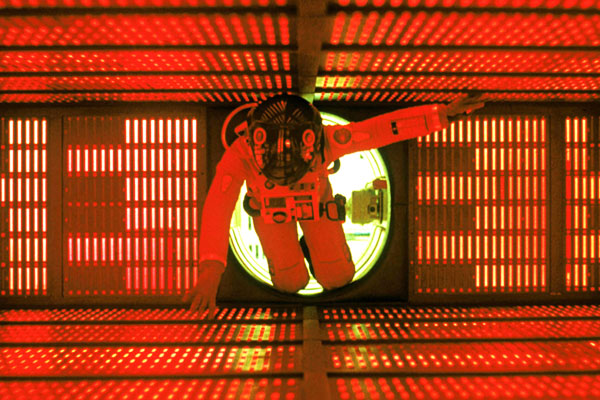
Few films in movie history sum up the principles of pure cinema better than Stanley Kubrick's masterpiece, 2001: A Space Odyssey. A film about the birth and evolution of the human race, while it's based on a novel its place outside conventional narrative filmmaking is clear. There are many shots in 2001 which capture the essence of what "pure cinema" is, not least the shot when the monkey throws the bone club into the air, which then match-cuts to the orbital platform floating in space, transporting the audience across aeons of time in a split second. It's one of the most iconic shots in the history of cinema, and it is something which only cinema is capable of achieving. Kubrick's background as a photographer and his faultless eye for composition, combined with his revolutionary use of music to juxtapose moods makes him one of the masters of pure cinema. That he managed to do this in such a wide variety of genre movies, from the science fiction of 2001 to the horror of The Shining, makes his achievements all the more impressive. Which other examples of "pure cinema" belong on this list? Why not let us know about them in the comments?

Contributor
Contributor

Andrew Dilks hasn't written a bio just yet, but if they had... it would appear here.