15 Most Confusing Movie Moments Nobody Understands
From surprise iguanas to raining frogs and everything in-between...
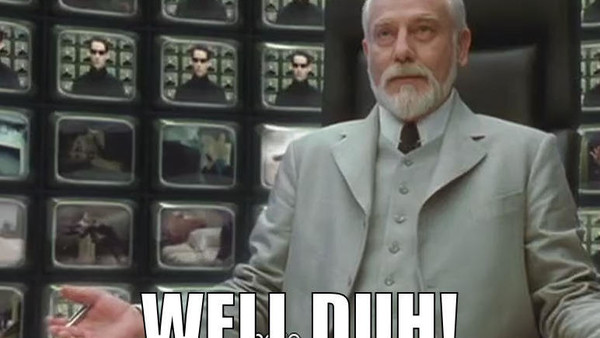
As film fans, everyone's sat through a movie and had an overwhelming feeling of stupidity wash over them, as they found themselves unable to figure out what a particular scene meant. Why did that thing just come out of nowhere and completely derail the movie?
Rest easy, though, because you're probably not alone, and in the case of these 15 obtuse, bizarre and impenetrable scenes, you're definitely not the only one totally confused. What causes a scene to completely befuddle audiences can range from hilariously out-of-place dialogue to surreal scenes seemingly intended to confuse viewers, visual symbolism that's difficult to categorise, scenes that fail to adhere to previously-established fantasy logic, and of course, when iguanas show up completely out of nowhere.
Whether simply the most confusing scene in an already challenging movie or an out-of-nowhere blast of the surreal, these 15 movie scenes have bemused audiences ever since release, and will surely leave viewers debating their merits (or lack thereof) for decades to come. This article will attempt to peel back some of the meaning behind these peculiar scenes, but for the most part, don't expect any concrete answers.
15. "Pancakes!" - Cabin Fever
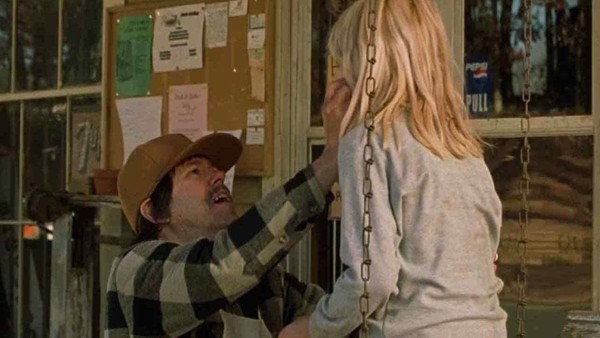
The Scene: When Bert (James DeBello) tries to seek help for his virus-afflicted friends at a local store, the owner's young son Dennis (Matthew Helms) takes one look at Bert and starts screaming, "Pancakes!", before performing a demonstration of his martial arts skills and biting Bert in the hand.
What It Probably Means: Nothing, really, considering that writer-director Eli Roth added it in at the last minute after he saw Helms practising tae kwon do during a break in filming. It just adds a little character to the film, and even though it's easily the most memorable scene in the entire movie, it's not supposed to make much sense beyond "this kid is crazy".
14. The Architect - The Matrix Reloaded
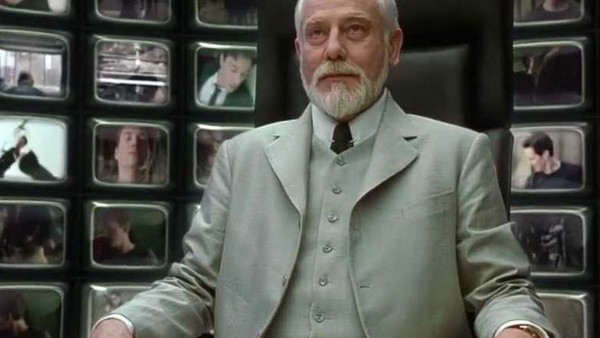
The Scene: Neo (Keanu Reeves) meets the creator of the Matrix, the Architect (Helmut Bakaitis), who explains the nature of both Neo and the Matrix while using words such as "concordantly", "sedulously" and "contingent affirmation". Despite being a majorly crucial scene in the movie, practically nobody understood it completely upon first viewing, and it became a major source of frustration for audiences, especially younger viewers.
What It Probably Means: If you watch the scene with subtitles and break it down into its core parts, it makes enough sense, though given the needlessly verbose nature of the Architect's exposition-laden monologue, it'll require a dictionary and half an hour of your time to truly make sense of.
The basic information the audience learns is that this is the sixth version of the Matrix, and that Neo has a choice, to restart the Matrix or cause a crash that kills everyone connected to it, but the Wachowskis just couldn't resist hiding it underneath some of the most headache-inducing dialogue in any mainstream Hollywood production ever.
13. The Spider - Enemy
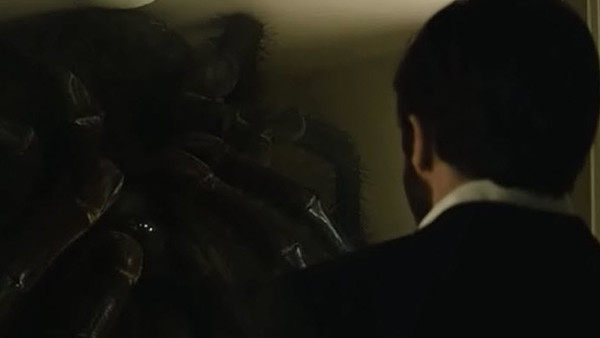
The Scene: As Adam begins to assume the identity of his dead doppelganger Anthony (both played by Jake Gyllenhaal), he heads into the bedroom to talk to Anthony's pregnant wife Helen (Sarah Gadon), only to find a gigantic tarantula in her place, which backs up against the wall as Adam looks on with what appears to be disappointment.
What It Probably Means: There have been numerous debates about whether Enemy is an allegory for oppression under a totalitarian state or if the Adam-Anthony double scenario is really just a schizophrenic episode. However, in reference to the ending scene in particular, many have pointed to the image of the spider as representing a fear of commitment and settling down, especially considering that the opening scene of the movie has a woman in high heels squashing a tarantula under her high heels while Anthony looks on.
As he's a man out at a sex show while he has a pregnant wife at home, it makes some twisted sense. And as such, when Adam assumes his life at the end of the movie, he is caught in the exact same feeling of oppression, and so to him, Helen is visualised as a huge tarantula. That the spider cowers in fear (reflecting Helen's possible fear of abandonment or infidelity) and Adam just nods with a certain resigned recognition supports his disappointed acceptance of this life.
Or maybe it doesn't mean that at all. Who knows?
12. The Picture - The Shining

The Scene: After Jack Torrance (Jack Nicholson) freezes to death, the movie ends on a close-up of a picture from the Overlook Hotel dated July 4, 1921, in which Jack appears with a group of party guests. This ending has confused audiences for decades, because after the relatively concrete ending of Jack dying, this allusion completely up-ends everything the audience thought they knew. How can Jack be alive in 1921? And why is he already at the hotel?
What It Probably Means: The theories are numerous, but one of the most popular suggests that Jack is reincarnated from the hotel guest (presumably the caretaker) from 1921, supported by the scene where the butler tells him, "You've always been the caretaker", as well as Stanley Kubrick letting slip that reincarnation is absolutely key to the mystery.
The other most popular theory is that when Jack dies, the hotel "claims" his soul, absorbing him back into the hotel's "furniture" by forever sealing his essence inside the 1921 picture. Whatever answer you subscribe to, it's clear that Jack is bound to the hotel in some way.
11. Jason Swims To Manhattan...Despite Being Afraid Of Water - Friday The 13th Part VIII: Jason Takes Manhattan

The Scene: After the hapless protagonists realise that Jason Voorhees is stalking everyone aboard their boat, the high-schoolers row to New York. Great, they've gotten away from Jason, who can't swim, right? Wrong. Jason swims to Manhattan and the chase continues in the Big Apple. The machete-wielding maniac even rides the subway. Considering how crucial to the plot Jason's fear of water has always been, many Friday fanboys were left confused and irritated that they would abandon such a defining characteristic so brazenly.
What It Probably Means: All it really means is that, by the eighth film in the series, the writers didn't give a damn about any sense of continuity or, well, any sense whatseover. Over-thinking the Friday franchise is a fruitless endeavour, so chalk this one up to zero f***s given by the yokels who wrote the script.
10. Raining Frogs - Magnolia

The Scene: As all of the main characters' plots reach their resolutions, frogs begin raining from the sky, interrupting suicide attempts, crashing ambulances and basically causing chaos, but why?
What It Probably Means: It's certainly easy to read the scene as nothing more than a random deus ex machina, by introducing a freak phenomenon to up-end all the grounded drama, and to some it may even indicate the presence of God among all the chaos (referring to the Book of Exodus' plague of frogs).
When asked about the scene, writer-director Paul Thomas Anderson said, "I'd read about rains of frogs in the works of Charles Fort...who was a turn of the century writer who wrote mainly about odd phenomena. So I just started writing it in to the script. It wasn't until after I got through with the writing that I began to discover what it might mean, which is this: you get to a point in your life, and s*** is happening, and everything's out of your control, and suddenly, a rain of frogs just makes sense."
9. "I Definitely Have Breast Cancer" - The Room
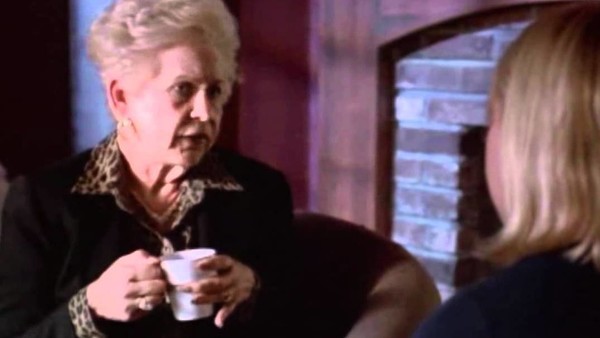
The Scene: Lisa's (Juliette Danielle) mother Claudette (Carolyn Minnott) nonchalantly tells her daughter, "I got the results of the test back. I definitely have breast cancer". The revelation is treated casually and then never mentioned again throughout the rest of the movie.
What It Probably Means: What this scene means basically reflects the entirety of the movie as a whole: was writer-director Tommy Wiseau directing an off-kilter masterpiece, a satire of overwrought dramas, or was he genuinely trying to craft a great movie and abjectly failed? Either this non sequitur was written on purpose to bemuse and amuse, or Wiseau genuinely felt that such a tone deaf and insubstantial treatment of something as serious as cancer was going to pass muster. Whatever you believe, it's undeniably hilarious, and though the scene makes no sense, the humour is really all that matters at the end of the day.
8. The Unicorn - Blade Runner

The Scene: At the end of the movie, Deckard (Harrison Ford) finds an origami unicorn in his apartment, presumably left by officer Gaff (Edward James Olmos). Deckard looks at it inquisitively as Gaff's prior comment ("It's too bad she won't live...but then again who does?") rings out and Deckard and replicant Rachel (Sean Young) leave the apartment complex.
What It Probably Means: This ending has mystified audiences for years, many of whom completely missed the disturbing, provocative allusion of this final scene. Gaff's unicorn could be said to reference an earlier scene where Deckard drunkenly plays the piano and has a daydream of a unicorn. How could Gaff possibly know Deckard's own personal thoughts unless Deckard is, in fact, a replicant with pre-programmed dreams?
It's one of those explanations that seems relatively obvious in retrospect, though it's flown over the heads of countless viewers regardless, considering how unimportant the unicorn daydream seems at first.
7. Crystal's Womb - Only God Forgives
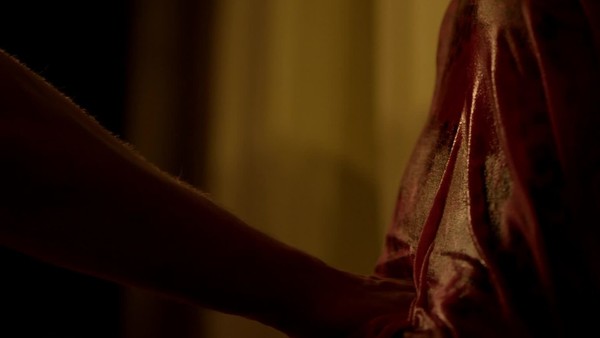
The Scene: When Julian (Ryan Gosling) finds the corpse of his mother Crystal (Kristen Scott Thomas), he slices her abdomen open and places his hands inside her uterus. Granted, there's not a lot that really makes sense in this movie, but still...What. The. F***!?
What It Probably Means: Considering the rather unconventional mother-son relationship Julian and Crystal have, it's easy to draw an incestual reading from this scene. After all, Crystal made a derisive comment about his penis in an earlier scene, and in this moment, it could be said that Julian is quite literally "entering" his mother. Then there's the Freudian notion that every man desires to return to the womb, and so Julian's curiosity allows him to experience that in a small way.
The scene was apparently concocted by Gosling himself after director Nicolas Winding Refn asked whether he wanted to smile or cry after his mother's death, and he said he wanted to see what was insider her uterus, with no apparent further explanation being given.
6. Max Drills His Brain Out - Pi

The Scene: At the climax of Darren Aronofsky's heady debut feature, hallucinating maths genius protagonist Max Cohen (Sean Gullette) grabs a drill and drives it into his skull in order to escape the pressures that his gift has piled on top of him. Young girl Jenna (Kristyn Mae-Anne Lao) later approaches him in the park with a maths question, but he doesn't know the answer, as he looks up and appears to enjoy some peace.
What It Probably Means: The ending of Pi has been heavily debated: after all, performing a drill lobotomy with no medical experience is almost certain to end badly, either in death or disability. So, the first theory is that the peaceful final scene of the movie is merely Max's final thought as the drill bores through his brain, either killing him or turning him into a vegetable.
Alternatively, did Max successfully eliminate his special abilities, and as such is truly now free to live his life in peace? It's an agonisingly ambiguous mind-screw of an ending, but you have to decide for yourself.
5. The Water Puzzle - Die Hard With A Vengeance

The Scene: John McClane (Bruce Willis) and Zeus (Samuel L. Jackson) are faced with their next challenge from Simon Gruber (Jeremy Irons). They are given a 3-gallon plastic jug and a 5-gallon plastic jug, one of which needs to be filled with 4 gallons of water and placed on the scales to prevent the bomb exploding. More than 1 ounce over that weight and the bomb will detonate anyway. The two quickly realise they can't fill the 3-gallon jug with 4 gallons (obviously), but as the pair try to work out the solution, it's almost impossible for the viewer to figure out how they've actually solving the puzzle. Their arguing combined with the close-up shots and a cutaway to Gruber's activities appears to obscure the solution, and even Roger Ebert remarked the fact that McClane and Zeus don't seem to actually complete the puzzle on-camera in any coherent way. Nevertheless, they figure it out somehow, and are soon enough high-fiving their way out of there.
What It Probably Means: The likely answer is that the filmmakers intentionally rushed through the puzzle in order to ensure a quick resolution to the scene and not bore casual film fans.
The most frequently-cited solution to the puzzle is decidedly more intricate than is shown in the movie: a) Fill the 5-gallon jug to the brim while the 3-gallon jug stays empty b) Transfer 3 gallons from the 5-gallon jug to the 3-gallon jug, filling it to the top but ensuring to avoid spillage c) The 5-gallon jug now has 2 gallons left in it, and the 3-gallon jug now needs to be emptied d) Pour the 2 gallons from the 5-gallon jug into the 3-gallon jug e) Fill the 5-gallon jug to the brim and pour a gallon from it into the 3-gallon jug, filling it to the top, and again avoiding spillage f) The 5-gallon jug now has 4 gallons left in it.
Simply, if anyone can do this within the ridiculous 2-minute time limit Gruber gives them, then they probably deserve their own movie franchise. As for the movie itself, it seems like Jonathan Hensleigh's script really wanted to hold onto a brilliant brain teaser but didn't think people would actually care about the solution.
4. Fred Transforms Into Pete - Lost Highway
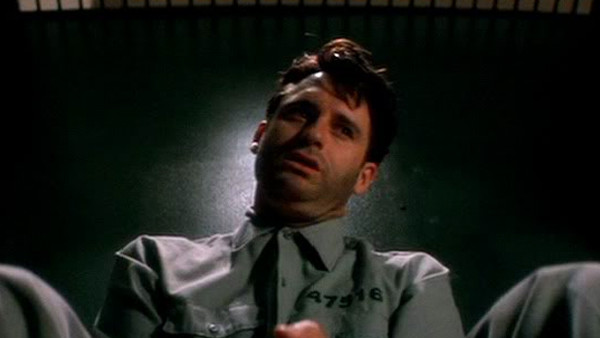
The Scene: After Fred Madison (Bill Pullman) is arrested for apparently killing his wife Renee (Patricia Arquette), the guards check on his cell one morning to find that he has somehow transformed into a young auto mechanic named Pete Dayton (Balthazar Getty). Even though they can't figure out how Pete got there and what happened to Fred, Pete is released from custody.
What It Probably Means: Frankly, trying to make sense of most of Lynch's films is a tremendous effort, and Lost Highway is certainly one of his most surreal and difficult to explain. One of the more commonly-accepted theories is that most of the movie is a fabrication in an insane Fred's mind, perhaps in order to cope with his murder of his wife and justify it to himself.
The "transformation" into Pete is merely Fred imagining a fresh start from prison as a good-looking young man who can romance Alice (Arquette), a woman who of course looks exactly like Renee. On a first viewing in particular, though, it's pretty damn impossible to make sense of.
3. The Star Child - 2001: A Space Odyssey
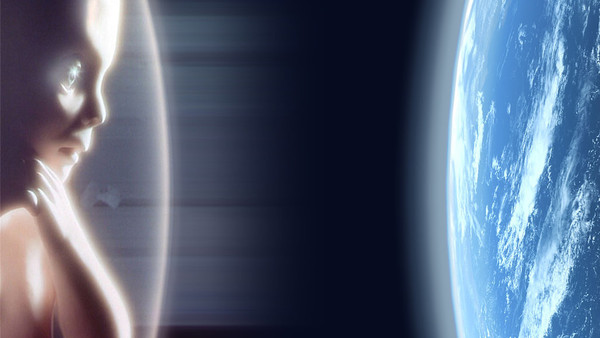
The Scene: After encountering a monolith, Dr. David Bowman (Keir Dullea) is drawn into a stargate and shown himself at different increasing ages. Finally, he is an old man in bed as the iconic monolith appears before him and, as he reaches for it, transforms into the Star Child, a fetus encased in an orb of light who looks upon the Earth as the movie ends.
What It Probably Means: Kubrick himself has commented enough on the ending to give a pretty clear explanation of what really happens to Bowman. The monolith is, of course, an evolutionary tool for an advanced alien civilisation. So, where are the aliens? Well, they're advanced enough to have transcended matter entirely, and as for the Star Child, this is merely the monolith being used to advance the human Bowman into a superbeing.
2001 isn't so much a movie that needs to be fully understood as simply felt and experienced, but a halfway-concrete explanation certainly adds more joy to the film for a lot of people. And the beauty of the ending is that Kubrick leaves so much for viewers to ponder on and decide for themselves.
2. Iguanas. Iguanas Everywhere - Bad Lieutenant: Port Of Call New Orleans
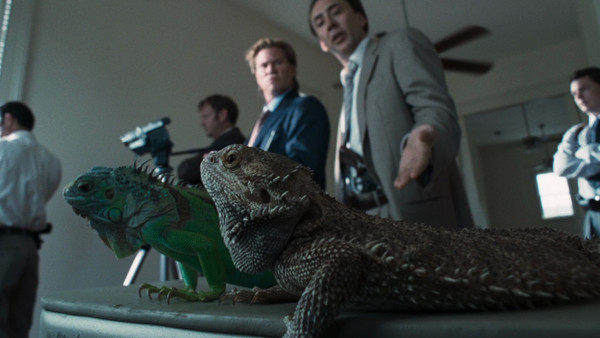
The Scene: The titular lieutenant Terence McDonagh (Nicolas Cage) is on a stake-out when he notices two iguanas sitting on the table next to him and he asks, "What are these f***ing iguanas doing on my coffee table?" His partner Stevie Pruit (Val Kilmer) replies, "There ain't no iguana", which only angers Terence more as he flicks at the reptiles. After they finish talking, the hilariously out-of-place Release Me by Jimmy Adams plays as a cheap pinhole camera closes in on the iguana while Cage stares at it incredulously for around a minute before finally snapping out of it.
What It Probably Means: It's not a massive stretch to believe that the hallucinations are caused by a combination of Terence's excessive drug use and his increasingly evident insanity, though taking a minute-long detour to show the iguanas fooling around is a mind-melter even for the standards of director Werner Herzog. On the other hand, given how much Herzog lingers on reptiles throughout the film (he follows a roadside alligator at one point), it's easy to try and find a more symbolic quality for the animals. Is it saying that Terence is himself a reptile, a slimy, slithering creature?
Whatever your interpretation, it's pretty damn funny, and in a movie with so much grimness, well-placed indeed.
1. Talking Cars - Holy Motors
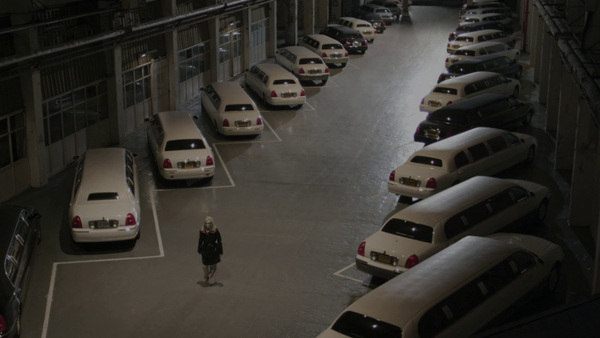
The Scene: At the end of the movie, Céline (dith Scob) drives the limousine to the Holy Motors garage, and after she leaves, the limos start talking to each other, whining about their clients and expressing fear that they may become obsolete soon enough. Sure, it's hard to make sense of most of the movie, but this one really takes the cake.
What It Probably Means: The movie as a whole has been recognised as a critique of the modern film industry, and the limousines throughout the film can be seen as the literal and figurative "vehicle" which allows Mr. Oscar (Denis Lavant) to give his performances across the city. A crucial line comes at the end of the limo discussion, when one says, "Men dont want visible machines anymore", and within the scope of cinema, it's hard not to interpret that as a slam against digital filmmaking, which is of course known for its smaller technology with greater accessibility. The limos are, by contrast, the titular "holy motors", cherished, classic relics of a time mostly bygone (of shooting on film).
Or maybe it all means nothing and director Leos Carax was just seeing how much crap he could get film critics to write about something which makes no sense.
Which movie scenes do you find the most confusing? Shout it out in the comments!