15 Most Visually Astonishing Films Of All Time
 It's hard to overstate just how important visuals are to the quality of a film. The aesthetic of a film has to be thought out just as much as the screenplay as it is essential in setting the desired mood, just as in genres such as film noir, where the black and white visuals and use of shadows help establish the tone for the entire film. When taken to the next level, visuals can be more effective in telling a story than actual dialogue would be. Take Pixar's Up as an example, and the incredible wordless montage at the beginning of the film - try to imagine how it would have worked if the filmmakers had emphasized dialogue over visual storytelling. The result is hardly as inspiring as that utterly devastating sequence. The standards for this list included how well the individual films manipulated both natural scenery as well as special effects, how well a film incorporated set design, and the overall visual composition of the film. One caveat is that a director could only have one entry in order to prevent certain filmmakers from monopolizing the list. Crucially, the rankings didn't take into account how good the rest of the film as a whole was, although every movie on here is excellent, only the visuals and how they added to the movie were considered.
15. Apocalypse Now
 Owner of one of the most troubled productions in film history, Francis Ford Coppola's Apocalypse Now, an adaption of Conrad's Heart of Darkness, has since become one of the most well regarded war films of all time, conveying the sense of purposelessness felt by many over the Vietnam War. Apocalypse Now deals with a U.S Army special operations officer who is dispatched to the heart of the Vietnam Jungle in order to hunt down renegade Colonel Kurtz. The film establishes itself as a visual marvel early on with a haunting opening montage of helicopters napalming a jungle while The Doors song The End plays in the background. The big highlight of the movie is a battle scene later in the movie where a group of helicopters attack a Viet Cong held village, which again is a visually stunning set-piece that few war movies can even aspire to recapture. In addition to its large scale scenes, Apocalypse Now is loaded with more subtle visuals that make a similarly huge impact on the film. Colors are heavily saturated, fog is prevalent, characters are frequently covered in shadows, and it all comes together to make one of the most affecting movies ever made.
14. Raging Bull
 One of Martin Scorsese's most memorable films, Raging Bull has only grown in acclaim since its release. It is based on the autobiography of Jake LaMotta, and follows a boxer who is unable to control his own inner demons. Shot in glorious black and white, Raging Bull is the best looking movie Scorsese has ever turned out and there are a number of remarkable sequences. DeNiro's powerhouse biopic uses visuals to portray a man who can't separate his boxing career from his life outside the ring. Scorsese uses a variety of tricks such as dolly shots, steadicam, slow motion, POV shots, and others in order to fully involve the audience in the movie. Winning an Academy Award for De Niro, Raging Bull is now considered one of the best American films of all time, in large part thanks to its stunning visuals.
13.The Fountain
A massively ambitious film, Darren Aronofsky's troubled passion project suffered from a difficult production that affected the quality of the final product. The budget was cut in half, stars dropped out, and the script was rewritten, but the one thing that wasn't harmed was the visuals. The Fountain tells three separate story lines where Hugh Jackman and Rachel Wiesz play characters involved in an epic story spanning thousands of years. Due to budget cuts, the visual effects team for the Fountain tried to use as little computer generated effects as possible, instead relying on creative alternatives. One option was filming the reaction of different chemicals over several weeks and then using said reactions as part of the scenes set in space. Due to the non-conventional methods, The Fountain looks remarkably unique and many of the crew members who worked on the film say that it might look better than it would have if the film had received a bigger budget.
12. Metropolis

11. Hunger
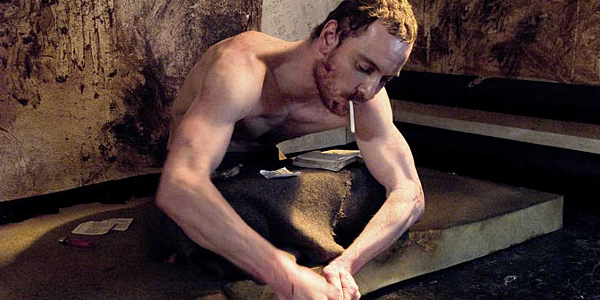 Before Hunger, Steve McQueen made a series of acclaimed short art films, something that prepared him to make some of the best looking films of recent years. Retelling the 1981 Irish Hunger Strike of Bobby Sands, Hunger is an engrossing work of filmmaking that works on so many levels. Voted the number one movie of 2008 by Sight and Sound, Hunger brought McQueen and lead actor Michael Fassbender to the attention of the wider moviegoing world. McQueen uses a number of techniques to maximize the impact of the film: Cinematographer Sean Bobbitt, decided to use a 2-perforation camera in order to maximize picture quality, keep costs down, and enable the filmmakers to film the centerpiece twenty minute unbroken camera shot. Hunger is shot in a way that each image looks almost like a series of painting, with each shot impeccably framed. In addition, many critics noticed the use of religious imagery, particularly with Bobby Sands. And by contrasting the physical suffering of the prisoners with the mental suffering of the guards, McQueen avoids taking a political stance and focuses strictly on the human part of the story.
10. Lord Of The Rings Trilogy
 Wielding state of the art special effects as well as benefiting from New Zealand's natural scenery, Peter Jackson's Lord of the Rings trilogy is one of the most spectacular movies ever made. Few films have ever matched the sense of size and scale evoked by the Lord of the Rings and to be honest, not that many are even close. Peter Jackson brilliantly used three different visual tools to his advantage: the first being Bigatures, the second being groundbreaking special effects, and the third the natural landscape of New Zealand. Bigatures, basically gigantic models, were seamlessly inserted into natural scenery with special effects, enabling locations such as Minas Tirith, Orthanc, and Helm's Deep to look completely natural. In order to show some of the largest onscreen battle in movie history, the filmmakers turned to a computer system named MASSIVE, which enabled each individual CGI character to act independently. Finally, the breathtaking natural landscape of New Zealand was used magnificently as the setting for middle-earth as each location feels both otherworldly and yet familiar at the same time. In addition to the other tools, The Lord of the Rings offers probably the most famous example of forced perspective, letting actors of similar heights portray character of different sizes onscreen at the same time.
9. 8 1/2
 Frederico Fellini's brilliant depiction of writers block has long been considered one of the great accomplishments in film history. Winner of the Academy Award for Best Language film, 8 1/2 often ranks highly on Greatest Movie lists. 8 1/2 has been particularly acclaimed for its use of visuals, which show the main character escape from his troubles and into dreams and fantasy. Essentially is a film about the making of a film, the title 8 1/2 refers to the number of film Fellini had made up to that point, but in reality it became so much more. It is a film about knowing yourself in a fragmented world, about the mysteries of art, alienation in modern life, and a self reflective look into the mind of one of cinema's all time greats. 8 1/2 uses visuals to explore these ideas in ways that words simply couldn't, making it one of the most purely "cinematic" of all films and earning it a place on this list.
8. The Searchers

7. Citizen Kane

6. The Seventh Seal

5. Lawrence Of Arabia
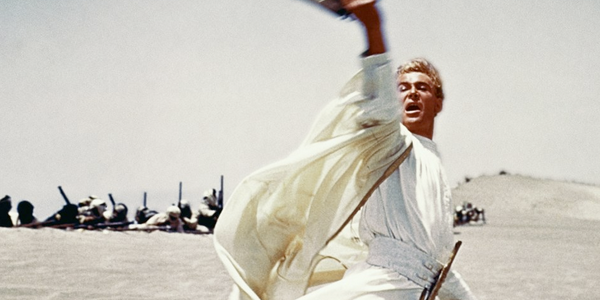 David Lean's epic masterwork, Lawrence of Arabia features natural scenery more effectively than any other movie. The film Follows British army officer T.E Lawrence as he is sent to assess the efforts of Prince Faisal in a revolt against the Turks. The definitive epic, Lawrence of Arabia spans both large expanses of time and area as it shows the internal struggle of the main character. Lean cemented his status as one of the most awe-inspiring directors in history with Lawrence of Arabia, as he used all of his technical abilities to create one of the most ambitious films ever made. The landscape of Lawrence of Arabia almost becomes another character as it is used to astonishing effect. One of the last films to be shot in 70 mm, Lawrence of Arabia is a visual marvel in every way. Roger Ebert described it by saying "It is spectacle and experience, and its ideas are about things you can see or feel, not things you can say... we remember the quiet, empty passages, the sun rising across the desert, the intricate lines traced by the wind in the sand."
4. Blade Runner
 Blade Runner met with lukewarm reception upon its release but is now considered one of the definitive works of science fiction. In a dystopian Los Angeles, Blade Runner Rick Deckard is tasked to hunt down and destroy a group of escaped replicants who infiltrate Earth in order to meet their maker. With director Ridley Scott at the helm, Blade Runner is a stunning film that has some of the best production design in movie history. Its dark, shadowy visuals are reminiscent of film noir and have proven heavily influential on future films such as Dark City, Batman, Ghost in the Shell, and many others. Blade Runner used a variety of inventive shots and religious imagery and benefited from inventive camera angles and use of lighting. Blade Runner also used visual symbolism in order to push themes dealing with paranoia, memory, and what it means to be human.
3. 2001: A Space Odyssey

2. The Tree Of Life

1. The Fall
 Tarsem Singh's passion project is not the best movie on this list. What it is however is an unprecedented visual experience. In many of the other entries on this list, the visuals support the story, in The Fall however, the visuals are the story. According to the director, not a single scene of the film incorporated computer effects, something which simply does not seem possible given the seemingly impossible things shown in the film Shot over a period of four years and in over twenty different countries, The Fall is hard to describe in a way that does it justice. The film deals with an injured stuntman, who regales a little girl who is in the same hospital with stories about a variety of characters. The Fall might be the only movie with the audacity to even attempt some of the shots that permeate the film. Tarsem Singh largely funded the movie himself, using locations he had discovered while shooting commercials to minimize costs, and it is quite simply, the most astounding visual film I've ever seen. The Fall is a movie that you just have to see for yourself. Did we miss any visual stunning films that you think should have made this list? Share your own picks below.