15 Most Visually Stunning Sci-Fi Movies
Trippy Aronofsky headf***s! The most evocative scenery in cinema history! And... Lars Von Trier?!

Throughout the entire medium of cinema, there’s no genre that can outdo sci-fi when it comes to sheer imaginative visual splendour. Sure, horror may be able to keep us up at night turning on the lights, and the greatest period pieces can transport us to another time entirely—shout out to Cecil B DeMille and Merchant Ivory, the only people able to make pre-computer life look appealing.
But when it comes to sheer overwhelming onscreen beauty, sometimes without even a plot to back it up, nothing beats science fiction.
Unburdened by the traditional expectations of realism and the antiquated aesthetic which we expect from fantasy, sci-fi alone can create worlds unlike anything we’ve ever seen and spend hours exploring their inventive creations. With that in mind, we’ve compiled an extra-long fifteen flick list of the sci-fi genre’s most visually stunning contributions to cinema.
Are these all masterpieces of storytelling and character work? Hell no (although a lot of them also happen to be). The sole criteria for this list is a beautiful and unforgettable aesthetic, so with that in mind let’s count down the fifteen most stunning sci-fi flicks of all time.
15. 2001: A Space Odyssey

Stanley Kubrick is known for his visually sumptuous cinematic offerings, with the clinical and often austere helmer even being accused of using his actors as props for some stunning tableaus long before that became Wes Anderson’s whole schtick.
The filmmaker never topped 2001: A Space Odyssey, an Arthur C Clarke adaptation which in Kubrick's hands became a psychedelic interstellar trip from the sixties. A stunning sci-fi exploration of deep space, the flick begins with methodical, swooping camera shots introducing us to its beautiful production design and meticulously perfected sets, gradually revealing its story. Then comes the unparalleled ending sequence, one of cinema’s most potently mind-blowing scenes.
An impossible-to-parse trip, the colourful, strange closing moments of this film are guaranteed to stick with you for life—even if you have trouble explaining them to anyone without the aid of some seriously strong psychotropics.
14. Gravity
Harry Potter and the Prisoner of Azkaban helmer Alfonso Cuarón has consistently offered stunning visuals throughout his storied directorial career, with everything from his misjudged 2000 update of Dickens’ Great Expectations to his more recent, devastating Netflix effort Roma providing some unforgettable cinematic sights.
But the director has never outdone his work on Gravity.
This 2013 space-set thriller, a tense, beautifully realized sparse survival story which follows Sandra Bullock’s astronaut as she desperately attempts to return to earth, is more fast paced than Christopher Nolan’s Interstellar and more primally affecting than pulpier offerings like 2017's Life. Most impressively, the visually stunning flick utilizes cutting edge CGI to offer one of cinema’s most breath-taking and unforgettably vast explorations of outer space.
13. Blade Runner

Alien director Ridley Scott is no slouch when it comes to stunning sci-fi, having hired designer extraordinaire HR Giger to create that flick’s unforgettable look. Hell, even 2012’s otherwise woeful Prometheus offered up some phenomenal visuals.
But the helmer has never outdone Blade Runner, his seminal 1982 cyberpunk thriller.
An adaptation of Philip K Dick’s Do Androids Dream of Electronic Sheep. Scott's film never allows the story’s downbeat philosophizing to get in the way of its seductive, enthralling visuals, with a vibrant colour palette and some stunning cityscapes updating the monochromatic world of traditional film noir into a futuristic (but still constantly rainy) era of polished chrome, neon, and glass towers.
12. Annihilation

The Beach creator Alex Garland knows his way around an appealing visual—look no further than the sparse, beautiful sets of 2014’s Ex Machina to see how much the helmer can achieve even with a single location as limited as a remote house/ fortress hidden in the US wilderness.
But the director’s visual palette was given room to breathe in Annihilation, a trippy horror sci-fi from 2018. An adaptation of Jeff VandeMeer’s New Weird novel of the same name, the flick follows Natalie Portman into dangerous territory where a strange alien presence has begun to warp nature and reality.
This results in striking sights like a human corpse which has become a sprawling home to flowering buds, deer whose antlers are tree branches, and even a minor character who finds herself consumed by the fauna and becoming one with the landscape.
11. Upstream Color
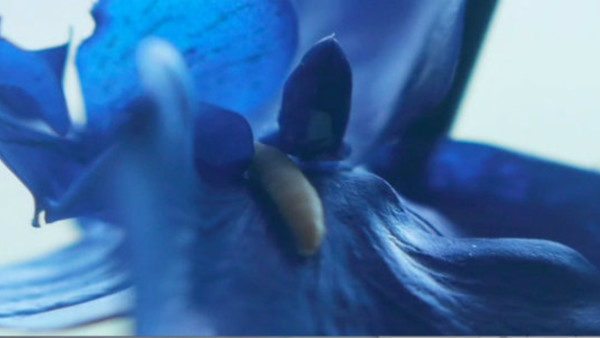
Primer director/ reliable headf*** helmer Shane Carruth proved he could create a memorable sci-fi adventure with his tense and absurdly complex no-budget debut way back in 2004. But it’s fair to say that, beloved as Primer is, the spare effort left something to be desired in visual terms—it’s mostly just two blokes (or at least, a few versions of them) in one room.
But the mercurial genius more than made up for these shortcomings with 2013's Upstream Color.
A stunning, indecipherable belated follow-up, this flick's plot follows a pair of scientists researching a parasite whilst falling in and out of love, but you’ll mostly remember its stream of strange, haunting, and difficult to discern imagery, a psychedelic trip which gives even 2001: A Space Odyssey a run for its money.
10. The Fountain

Mother! helmer Darren Aronofsky has never been one to shy away from a camera trick or two. Hell, most of what’s worth recommending about devastating drug drama Requiem for a Dream and his later biblical epic Noah are their stunning visuals, with the thin stories propped up by some unforgettable sequences.
But the director’s incredible visual style has never been better married to a concept than in 2006’s wildly underrated financial flop The Fountain.
Following various iterations of one character throughout different eons, the complex, genre-hopping love story is one of the new millennium’s most majestic tributes to the sheer visual power of cinema, second only to Terrence Malick’s Tree of Life (we decided it wasn’t sci-fi enough to qualify).
9. Stalker

Probably the most famous flick from Solaris helmer Andrei Tarkovsky, Stalker is a 1979 adaptation of cult Russian sci-fi novel Roadside Picnic which follows a set of travellers (with a variety of gradually-revealed motivations) entering the Zone, a strange wasteland which may be home to their wildest dreams (and certainly is a path to all sorts of philosophical pondering en route).
That’s it in terms of story, but don’t worry—this couldn’t be further from a sparse, Beckettian character piece which belongs onstage.
The real star of this film is Tarkovsky's unparalleled visual work, with the helmer framing some of sci-fi’s cinemas most affecting and beautiful images during the run of this strange, trippy journey.
8. Fury Road

Babe director (yes, really) George Miller is no stranger to framing a stunning sci-fi story.
After all, a cursory glance at the first Mad Max offers a stunning view of verdant locales suddenly encroached on by brutal, but effectively realized, bursts of violence. Meanwhile, the film’s first sequel treats us to a dusty, orange-tinged post-apocalyptic landscape which is so well-realized, it’s still being ripped off by filmmakers to this day.
But the hyper-contrasted settings of Fury Road take the stylized approach up to eleven and offer some of the director’s most stunning vistas yet, with the burnished metals glinting in blinding sun as the characters kick up sandstorms in the expansive desert. Water looks like life itself when it pours free come the film’s close, resulting in an ecological message viewers are more likely to feel in their bones than roll their eyes at.
7. Under The Skin

Starring Black Widow herself Scarlett Johansson, this
2014 indie horror/ sci-fi/ romantic drama hybrid sees the actor portray a very
different sort of black widow—that is, some sort of skin-donning alien
seductress who consumes human men once she’s ensnared them in some sort of
lightless blank black sex void.
Sound weird?
It is, and deeply disquieting to boot, mostly thanks to Sexy Beast helmer Jonathan Glazer’s stylish visuals, which turn the Scottish highlands into as alien and unforgiving a landscape as any alien planet. However, it's also the director's cramped, claustrophobic camerawork which renders the disturbing death/ rebirth scenes even more effective in their trippy, horrific beauty.
6. Close Encounters Of The Third Kind

You already knew from the article title that ET helmer Steven Spielberg had to show up here somewhere, since even the questionable Spielberg/ Kubrick hybrid AI can boast some stunning visuals (if almost nothing else impressive).
But we’ll be damned if we’re giving a spot to that loveable
little raisin (ET, not Spielberg) when the lower budget, visually
impressive Close Encounters Of The Third Kind was released a mere half decade earlier and offers an even more stunning visual sci-fi treat.
Utilizing a colourful array of special effects to recapture the feel of his own childhood serials, Spielberg uses a palette of deep orange hues and contrasting cool blues to make a visually arresting vision of alien contact which remains jaw dropping decades on, despite endless advances in filmmaking technology.
5. Beyond The Black Rainbow

Directed by Panos Cosmatos (who, bizarrely, is the son of Rambo First Blood Part II helmer George P Cosmatos), Beyond The Black Rainbow is an undeniably unique, unsettling 2010 indie horror-sci-fi hybrid. The singularly beautiful flick's plot owes a debt to everyone from David Lynch to David Cronenberg to the slow, thoughtful trippy sci-fis of the seventies, from Logan’s Run to Silent Running to some films which don’t have any mention of runs in their titles.
But the film’s visual style is all its own, with the visionary helmer using deep, vibrant colour throughout the flick’s limited sets to mask their size and clever camera trickery to create Droste images and other trippy optical illusions (watch out for the shot which makes a carpet pattern into a mindf***, somehow).
It’s all in service of a strange story which comes to life thanks to Cosmatos’ commitment to stunning, often disorienting purely visual storytelling.
4. Solaris

A more muted and meditative effort than many on this list, Solaris is a thoughtful flick from Stalker director Andrei Tarkovsky. Despite its stately pace, however, Solaris is a singular cinematic experience which any sci-fi fan—or anyone interested in the visual potential of cinema as a medium—needs to see.
Following a troubled psychologist to the titular space station, this slow moving exploration of loneliness and purpose in an age of deep space exploration and interstellar travel is a unique visual delight, from its impeccably symmetrical sets to the stunning invocations of nature throughout the film’s runtime—you’ll never look at a lone blade of grass quivering in the breeze the same way again after this one.
3. Mandy

Another effort from sci-fi visionary Panos Cosmatos, Mandy is a more recent 2018 effort which fuses together sci-fi and horror in the story of Nic Cage as a grieving widower avenging his wife’s murder at the hands of possibly demonic bikers.
That’s about it in terms of story. So, just a shameless showcase for the actor’s demented performance?
Not a chance.
Cage just about makes a mark in this flick, with the visuals so drenched in colour and atmosphere that the camerawork ends up the star of this trippy, visually stunning show. From the expansive landscapes of its remote setting to the horrifying visages of the largely shadowy antagonists, this beautifully realized nightmare has few comparisons in recent memory, and makes for a mind-blowing cinematic experience—even before the spectacle of a chainsaw wielding Nic Cage going psycho.
2. 2046

Coming from In the Mood for Love director Wong Kar-Wai and set (partially) in the eponymous year of 2046, 2046 is a visually lush romantic drama which follows the exploits of a lonely, melancholy man through a time travel adventure marked more by love and loss than the typical high-octane, high-stakes drama of more mainstream Hollywood efforts.
It’s a sobering and often sad flick, but there’s nothing understated about its vibrant and stunning presentation.
Imagining an evocative future city which owes as much to sixties psychedelia as actual technological advancements, the filmmaker’s style offers up a strangely nostalgic lost future of 2046 which perfectly fits his moving narrative of thwarted ambition and missed chances.
1. Melancholia

It’s a bit hard to believe that the man responsible for the intentionally ugly Dogme 95 manifesto could be behind Melancholia, arguably the sci-fi genre's most stunning cinematic outing, But then again, Thomas Vinterberg makes big budget Thomas Hardy adaptations nowadays, so maybe all the cool kids have to sell out eventually. Even Spike Jonze made Her after Jackass, after all.
Following a bride (Kirsten Dunst, typically superb) beset by a serious set of the blues as the world literally and figuratively ends on her wedding day, this flick is short on plot and long of overwhelming, utterly stunning atmosphere, with its vision of the numbing titular condition realized by a cinematic apocalypse which is as strangely comforting as it is expansive and beautifully realized.