15 Movie Sets You Didn't Know Were Hell To Work On

Toxic makeup, epic drug binges and...Warner Bros. thinking they know better than Peter Jackson...

Everyone knows that Jaws, Blade Runner, Apocalypse Now, The Crow, 47 Ronin and absolutely anything directed by David O. Russell had punishing shoots, but what about those ones you might not be quite so familiar with? From Best Picture-winning classics to low-budget horrors, contemporary sci-fi flicks and everything in-between, these movies were all assailed by huge production problems, be it creative arguments on set or acts of God, which tested the mettle and patience of just about anyone working on them. Though many of these movies are best remembered for, well, just being great movies, dig a little deeper and there are some juicy tales of how everyone involved suffered for their art, and though for some the juice may not have been worth the squeeze.

15. Gladiator

Why It Was Hell: Developing Gladiator's script was an absolutely agonising process, going through countless drafts such that, a mere two weeks before shooting, cast members were still complaining about various aspects of it. Once filming began, the issues didn't stop: Oliver Reed died mid-production and the script had to again be altered to accommodate this, while Russell Crowe's behaviour was noted as "erratic" by many cast and crew members. Crowe reportedly stormed off set twice over creative disagreements and threatened to kill producer Branko Lustig "with his bare hands" because he claimed his assistants weren't being paid enough. Was It Worth It?: It was nominated for a whopping twelve Oscars and ended up winning five (including the coveted Best Picture and Best Actor awards) and went on to gross more than four-times its hefty $103 million budget, ensuring that all that toil was absolutely worth it. A rare example of a movie that manages to scoop both huge fortune and immense glory all at the same time.

14. Chappie

Why It Was Hell: Just one person to blame here: Ninja, who co-stars as, well, himself. Director Neil Blomkamp reportedly said that he doesn't "ever want to be in the same room as him again", and numerous crew members confirmed his disruptive presence, being annoying enough that he was written out of a scene with Hugh Jackman, as the A-lister apparently loathed him. Other offences include Ninja harassing other cast members about their performances, insulting Blomkamp's sister (who worked as a set photographer), sending pictures of himself receiving a blowjob to at least one female crew member, and hitting on other women on set. He create an air of tension that dissipated whenever he wasn't around. Was It Worth It?: Another underwhelming sci-fi effort for writer-director Blomkamp, Chappie squanders his clear aesthetic talents with a story that received mixed-to-negative reviews, while the film made barely double its $49 million budget, which was surely substantially less than Columbia bargained for, even if it wasn't an outright failure. But worth hanging around with Ninja for 3 months? Probably not.

13. The Bourne Identity

Why It Was Hell: Director Doug Liman and Universal clashed from the very beginning of production, with them expressing concern over countless plot points and Liman's directorial style. Liman and star Matt Damon fought the studio on the third act in particular, which Universal wanted to be massively re-written, with writer Tony Gilroy faxing in new scenes on a daily basis. Liman resorted to filming extra scenes without studio approval, and instructed his second-unit director to film the majority of the famous Paris car chase, while he continued work on the rest of the film. It ultimately went through four rounds of re-shoots, going $8 million over budget and hugely souring the studio's relationship with Liman, such that his upcoming film, Mena, is his first collaboration with Universal since. Was It Worth It?: Certainly. Aside from grossing more than 3.5x its $60 million budget, Identity opened to strong critical acclaim and, most importantly, kick-started a franchise which is about to start shooting its fifth installment, and to date has raked in over $1.2 billion for Universal, as well as establishing Matt Damon as a plausible action star. On the debacle? Damon said, "The word on Bourne was that it was supposed to be a turkey...It's very rare that a movie comes out a year late, has four rounds of re-shoots, and it's good."

12. Blade: Trinity

Why It Was Hell: Wesley Snipes seems to be the sole cause of this film's hectic production, clashing with writer-director David S. Goyer (who he didn't want to direct the film), to the point that, according to co-star Patton Oswalt, he'd spend all day smoking weed in his trailer, causing Goyer to employ the use of stand-ins and CGI to keep Blade in the film. Snipes also reportedly physically accosted Goyer, resulting in the director hiring a group of local bikers as bodyguards to keep Snipes in line. The atmosphere was so toxic on set that Snipes ultimately used both his assistant and post-it notes to communicate with Goyer and the rest of the cast, rather than talk to them (notes which he would sign as "from Blade"). As Oswalt put it himself, "He wouldn€™t come out of his trailer...which is fine with me, because I had all these DVDs that I wanted to catch up on." Was It Worth It?: Not really. The third film was both the lowest-grossing and by far the worst-reviewed of the series, pretty much killing the franchise overnight. So, while many attest that the more fun you have on a movie set the worse the film is, it doesn't necessary work the other way around. Still, at least Oswalt got to clear part of his DVD backlog, so it's not all bad...

11. Scream 3

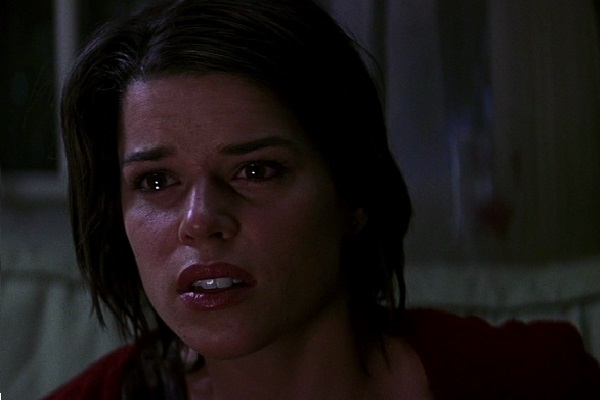
Why It Was Hell: By almost all accounts, making Scream 3 was a pretty miserable experience. Going into production just two months after the Columbine High School shootings, a cautious Dimension Films originally insisted that no blood or violence be shown on-screen, until director Wes Craven intervened and explained how absurd this would be for a Scream movie. Even getting the script finished was a shambles, and ultimately the film ended up being written as it was being filmed, with Ehren Kruger's character work having to be constantly rewritten by Craven for being inconsistent with previous films. Due to Craven not knowing exactly how everything was going to fit together, multiple versions of numerous scenes were shot to give him more editing choices, and this often meant that scenes were stitched together from several scarcely continuous takes, many of which had to be filmed in doubled locations because the original was no longer available. As if all that wasn't bad enough, Neve Campbell's shooting schedule was severely restricted due to her also filming Drowning Mona and the TV series Party of Five. She spent only 20 days on set, forcing the film to focus more on supporting characters, and because her Drowning Mona character had a different hair colour, she had to spend two hours every morning having a wig fitted. Was It Worth It?: Despite mixed reviews and a fan consensus that it's easily the worst of the four films, Scream 3 did gross more than 4x its budget, though it did gross slightly less than both prior films. The underwhelming box office put the series on Dimension's back burner for over a decade, before 2011's Scream 4 came back with an effortlessly superior sequel that nevertheless didn't launch at the box office, probably killing the series once and for all, banishing it to the land of TV forever more.

10. The Wizard Of Oz

Why It Was Hell: Trouble began mere days into Oz's filming, when Buddy Ebsen, the original Tin Man, suffered an allergic reaction to his make-up and ended up in hospital, shutting production down while he was replaced. Five directors ultimately worked on the film (causing many scenes to be re-shot), which took six months of six-day weeks to shoot, while numerous cast members struggled with overwhelming make-up that made it difficult to eat, actress Margaret Hamilton suffered a burn during filming which kept her off-set for 6 weeks, and later, her stunt-woman was also horribly burned. Was It Worth It?: Oz was nominated for six Oscars (including Best Picture), won two (Best Original Song and Best Original Score), and though not a huge box office smash upon release, has been a constantly in-demand movie over more than seven decades, ensuring it's made MGM a fine penny over the years. In addition, it remains regarded as one of the greatest films ever made, near-unanimously praised by both critics and audiences as a crowd-pleasing fantasy with glorious visuals that have undeniably stood the test of time.

9. The Abyss

Why It Was Hell: On the first day of shooting, one of the water tanks sprung a massive leak, and this was just the start of a torturously long, six-month shoot with 70-hour work weeks. The cast ultimately ended up manifesting psychological symptoms, with Mary Elizabeth Mastrantonio having a breakdown and Ed Harris suddenly sobbing on his way home from the set. At one point, Cameron told Mastrantonio to urinate in her wet suit rather than leave for a bathroom break, and as frustration built, she once screamed at him, "We are not animals!" Both of these actors largely refuse to talk about the film's production in interviews. As for the crew, shooting so much of the film in water caused huge technical issues, and over-clorinated water led many of the divers to suffer skin damage. Eventually, the cast and crew became so burned out that they began destroying furniture in their dressing rooms. Even when filming wrapped, the project was $4 million over-budget. Was It Worth It?: The Abyss was a rare box office miss for James "Avatar" Cameron (grossing just $90 million against a $70 million budget), but the film was highly acclaimed for its visual effects, suspenseful narrative and well-developed characters, going on to score four Oscar nods, and winning one (for Best Visual Effects, of course). Still, the master filmmaker has made so much money for Fox both before and since that they'll probably let him have this one...

8. The Notebook

Why It Was Hell: Given the utterly sizzling chemistry between Ryan Gosling and Rachel McAdams in the film, it's a surprise that the two reportedly hated each other on set, to the point that Gosling asked director Nick Cassavetes to bring in another actress for him to read lines opposite. The stand-off eventually exploded into a shouting match in which the pair essentially aired all their grievances (mainly about the portrayal of McAdams' character), enough to complete the movie, and weirdly enough, become a couple for two years once filming wrapped. Was It Worth It?: The film scored mixed reviews upon release but has fared much better with general audiences, enduring as a contemporary classic of the romance genre. In terms of box office, it made an impressive $115 million (almost 4x its budget), and helped boost the profiles of both Gosling and McAdams.

7. The Evil Dead

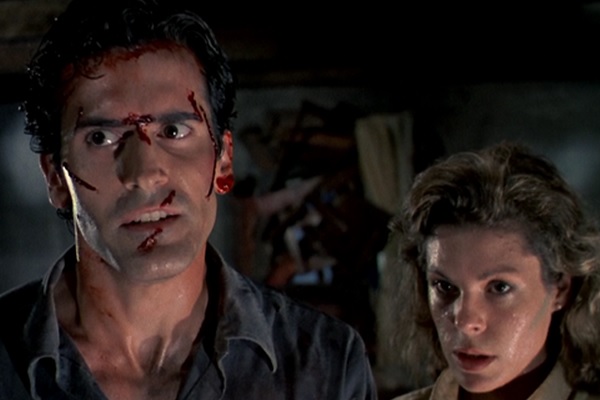
Why It Was Hell: Bruce Campbell famously described shooting The Evil Dead as "twelve weeks of mirthless exercise in agony". The iconic cabin setting also housed all thirteen of the film's crew members, and because it had no plumbing, they had to go days without washing, causing arguments to frequently break out. As crew members began to fall ill due to the intemperate weather, they resorted to burning the cabin's furniture to stay warm. What else? The crew got lost in the woods on the first day of filming, a number of crew members were injured but were unable to seek medical attention due to the cabin's isolation (including Betsy Baker, who played Ash's girlfriend Linda and had her eyebrows ripped off). In Campbell's case, when he injured his leg, writer-director Sam Raimi poked it with a stick to provoke a more tortured performance out of him. Was It Worth It?: Yes, yes, a thousand times yes. It grossed more than 8 times its $400,000 budget and has been a consistent high-seller on home video. Plus, it enjoyed a wealth of critical acclaim and essentially kick-started the careers of both Raimi and hilarious star Campbell, who just this year are returning to bring the Evil Dead franchise to the small screen with the Starz series Ash vs. Evil Dead.

6. Cop Out

Why It Was Hell: Director Kevin Smith had such a miserable time filming Cop Out that he wrote an entire chapter of his book about the production, namely his clashes with Bruce Willis. Smith called the experience "soul crushing", and that were it not for the calming presence of co-lead Tracy Morgan, " might have either killed , or someone else". Smith complained that Willis was uncommunicative and irritable throughout shooting, intentionally flubbing scenes, insulting Smith, refusing to co-operate for promotional materials and even threatening Smith physically. On the other hand, Willis was reportedly unimpressed with Smith's lack of technical knowledge about camera lenses and his tendency to smoke weed while on set. Who was right? Who knows? Was It Worth It?: As Tracy Morgan's character himself says in the film, "No, no, uhm mmm, no, no, no, no, no, no, hell no, no, no, I refu-no, no." Cop Out was eviscerated by critics for being a tepid, weirdly generic buddy cop film which suffered from the fact that this was the first time director Kevin Smith had worked from someone else's script as a "gun for hire". It made its budget back, but not a whole lot more.

5. The Boondock Saints

Why It Was Hell: The 2003 documentary Overnight covers the hectic production of this film in hilarious, demented detail. Miramax paid writer Troy Duffy $300,000 for his script and allowed him to direct the film with a $15 million budget, while sweetening the deal by allowing his band to provide the movie's music and giving them a recording deal, and if that wasn't enough, buying the bar Duffy worked at and hiring him to run it. Before the cameras ever rolled, Duffy's own ego caused him huge problems, referring to Kenneth Branagh (a potential actor lined up for the film) as a "c***", and alienating almost the entire production team with his arrogance to the point that the film was put in turnaround by Harvey Weinstein. Duffy eventually secured funding again (albeit less than half of the planned $15 million), yet the new production company, Franchise Pictures, nearly fired Duffy for shooting too much of the film in slow motion. In addition, Duffy, as a first-time filmmaker, struggled to block scenes properly after spending huge amounts of money setting them up, and had to complete up to 35 camera set-ups per day in order to meet a tight schedule. Was It Worth It?: Despite its pathetically small original theatrical run netting it just $30,000, the $6 million crime film went on to become a cult classic (despite largely scathing reviews), reportedly grossing more than $50 million in home video sales, somewhat justifying Duffy's outrageous methods, even though nobody really wants to admit it. Its success eventually gave Duffy enough clout to make a belated 2009 sequel, All Saints Day, which despite another limited release (and, again, negative reviews), somehow grossed more than $10 million at the box office.

4. Days Of Thunder

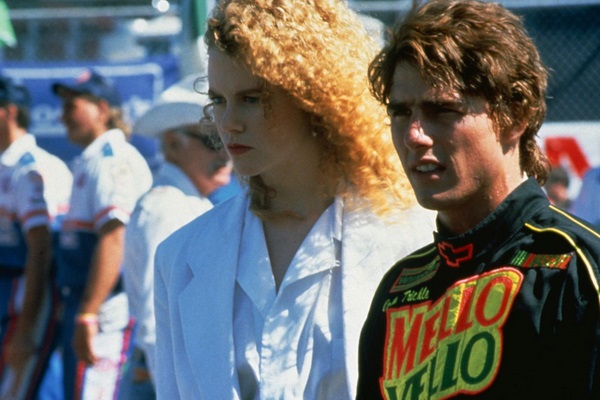
Why It Was Hell: Producers Don Simpson and Jerry Bruckheimer, along with writer Robert Towne, often argued with director Tony Scott about his directorial style (enough to make you wonder why they hired him in the first place). This creative wrangling in part led to a shoot that ran three months over schedule (ending just a month before release), causing the budget to almost double, with staff members often being paid to sit around on set, collecting huge overtime payments. Simpson and Bruckheimer spent $400,000 of the budget on building their own personal gym and flew hookers to the set for their own pleasure, all while Scott only realised in editing that he had forgotten to capture the film's money shot, of Cole Trickle's (Tom Cruise) car crossing the finish line. Was It Worth It?: Despite all the concerns, Days of Thunder eventually made close to 3x its $60 million budget and is said to be Quentin Tarantino's favourite racing blockbuster film, even while mixed reviews derisively compared it to Cruise's Top Gun. In short, it did its prime job: to make money, and to further the Tom Cruise brand.

3. Miami Vice

Why It Was Hell: Jamie Foxx can accept much of the blame for this, his Oscar win for Ray reportedly turning him into a diva, bargaining for more money that put him at odds with co-star Colin Farrell (who had to take a pay cut as a result), and demanding to be flown private by Universal. In addition, the arrival of Hurricanes Katrina, Rita, and Wilma delayed filming for a week to the cost of millions, and director Michael Mann was criticised for unexpected script changes, expecting his crew to work in unsafe weather, and hiring local gangs to act as security in crime-ridden areas. It didn't seem to help much, though, as during filming in the Dominican Republic, a gun-fight broke out nearby, causing Foxx to immediately flee the country and refuse to go overseas again for the film. Mann had to hastily rewrite the ending to accommodate this, with many complaining that the original finale was vastly superior. Was It Worth It?: Nope. Massively mixed reviews and a $163 million gross against a $135 million budget ensured that everyone was thoroughly indifferent to what Michael Mann served up.

2. The Hobbit Trilogy

Why It Was Hell: Kicking things off badly, Warner Bros. rushed Peter Jackson through pre-production to the shooting stage, and when the project was expanded from a duology to a trilogy, it hugely expanded the crew's workload without prior warning. Also, the orcs being changed from live-action to CGI mid-way through shooting caused several big scenes to be re-shot, a cliffhanger had to be shoehorned into the end of the second movie causing many actors to have no idea what they were doing, the Kili-Tauriel-Legolas love triangle was studio-mandated, and Jackson was essentially railroaded into editing the third film differently from his own vision. Was It Worth It?: $2.9 billion in box office receipts says a resounding "yes", and even though none of the three movies could match the critical acclaim of the Lord of the Rings films (scoring "only" 7 Oscar nominations between them compared to Rings' 30 nominations and 17 wins), they have all received broadly positive reviews nevertheless. An exercise driven more by money than artistic intent, but a hugely successful one nevertheless.

1. The Blues Brothers

Why It Was Hell: For starters, Universal hadn't agreed upon a budget for the movie until it had already been shooting for a month, and when the studio finally came up with their number ($17.5 million), director John Landis had already burned through a large portion of it, causing the budget to ultimately balloon to $30 million. Most of the production's mayhem, however, can be attributed to the hard-partying John Belushi, whose drug use caused him to frequently arrive late to set, to the extent that a frustrated Landis ended up flushing his cocaine stash and punching him when he became aggressive. Cocaine was even in the movie's budget for night-time shoots, leading to one infamous incident in which Belushi stumbled into a nearby resident's house and stole food from their fridge. Ironically, drugs were needed to complete the shoot, as after Belushi injured his knee while skateboarding, he had to be given a strong does of anesthetics to film the final scene. Was It Worth It?: Despite enormous concerns over the film's budget and ability to connect with audiences, it opened to strong reviews and ultimately became a classic in its own right, grossing close to 4x its eventual price tag. A belated 1998 sequel, however (made without John Belushi, who died of a drug overdose a few years after the original's release), was a critical and commercial dud. Which out of control movie set did you find the most terrifying? Got any other cool on-set stories? Shout them out in the comments!

Contributor
Contributor

Stay at home dad who spends as much time teaching his kids the merits of Martin Scorsese as possible (against the missus' wishes). General video game, TV and film nut. Occasional sports fan. Full time loon.