15 Movies That Say More About Their Makers Than They Realise

Look closer.
No worthwhile work of art or piece of entertainment has ever been created without at least part of its creator being reflected in it. Most of the time, these preferences and idiosyncrasies are easy to identify and don't say anything particularly profound about the associated authors, of course: Michael Bay has a predilection towards bombastic explosions and shooting his female cast members like porn stars, so clearly he's a misogynistic jock asshole who couldn't define the word 'subtle' if you handed him an Oxford dictionary - he'd probably just tear the dictionary apart and reboot it with a needlessly dark backstory. The same goes for Spielberg and his tendency to exhibit broken families in his work - we all know the director's home life wasn't always a box of roses. But what about the films that require a little more digging beneath the surface for us to better understand the psyches of the people who made them, or the messages tucked away in a director's earlier work that have startling, sometimes uncomfortable implications in light of recent real-world events? The following is a list of films and the people who made them, all of which that shed a little more light on their characters than perhaps even they know themselves...

15. Manhattan - Woody Allen

In Woody Allen's black and white 1979 masterpiece, his character Isaac is torn between two women: both have their charms, but one, Mary, is his best friend's mistress and the other, Tracy, is a seventeen-year-old girl. Yikes. You need only have glanced at news sites or Twitter in the past few months to have been aware of the allegations made against Allen by his former partner Mia Farrow and their daughter Dylan Farrow that he molested the latter as a child. Whether the allegations turn out to be true or not remains to be seen, but the director does have a history of both going for younger women and, for lack of a more tactful term, incest, as evidenced in his marriage to his former adopted daughter Soon-Yi. What's interesting about Manhattan in light of all this is that Isaac ends up deciding that he wants to be with Tracy after first dismissing her as too young and inexperienced, apparently deciding that the strength of his feelings toward her and the awkward mess of things that are made between him and other adults (Mary's too complex a figure for him, and his ex-wife is currently living with another woman and writing a memoir about their marriage) are good enough reason for the two of them to be together. Make of that what you will, but it certainly seems to say a lot that Allen believes that true love can be felt by a teenager and a middle-aged man...

14. American Hustle - David O. Russell

In David O. Russell's comedy about government corruption, greed and insane hairstyles, the two lead characters are polar opposites in their approach to business and life in general: con man Irving Rosenfeld (Christian Bale) may be a crook, but he's cautious enough to know when to quit so he doesn't fall victim to the pitfalls of pride and greed. FBI agent Richie DiMaso (Bradley Cooper), on the other hand, is a maverick who throws everything into anything he does and is always in search of a bigger haul - much to the detriment of himself and everyone around him. Where Irving understands the value of discretion, Richie doesn't know the meaning of subtlety or restraint, as shown in his hard-partying lifestyle. If you squint, you can easily see different versions of the director in both of his characters, albeit more than a decade apart. Richie is Russell as a young director who thought he was hot shit and was simply waiting for the world to catch up to him; the guy who had a fistfight with George Clooney on the set of Three Kings and had a recorded and now-infamous row with Lily Tomlin on I Heart Huckabees, a moment that left the director out in the Hollywood wilderness for a number of years before his humble return. Said return is equally well-represented by Irving, who's made mistakes in the past and understands the limits of what he can accomplish. David O. Russell is a more thoughtful, less volatile director now, and while he might not be attempting anything wild or groundbreaking right now, at least he can get along with people long enough to get his films made.

13. Vertigo - Alfred Hitchcock

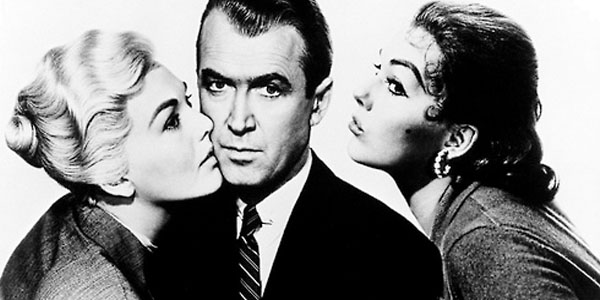
You could replace the above film with any number of his films in which he subjects a blonde woman to great distress or peril (The Birds, Rear Window, Psycho), but it's in Vertigo that Hitchcock truly opens himself up for all to see - you just might have to delve a little deeper than most to see it. The film follows Scotty (James Stewart), a retired San Francisco policeman now working as a private detective who's hired by a friend to follow his seemingly delusional wife, Madeleine (Kim Novak), but ends up falling in love with her. There are plenty more twists in the story than a short summary can really do justice to, but the core themes of obsession and identity resonate more with each viewing. Over the course of Vertigo, Scotty becomes dominated by his desire to get the woman he wants - and if he can't have her, he'll just as happily mould someone else in her image. Hitchcock was notoriously hard on his female stars, and is alleged to have made passes at more than a couple of them before putting them through hell when they didn't give him what he wanted. Scotty can easily be seen as a stand-in for Hitch - a stark reflection of his own obsessive nature - and the trials he puts Madeleine through are an admission of all the times he hurt the women in his life. It's telling, however, that even when every element of the story is under his control, he couldn't even save Madeleine...

12. Taxi Driver - Paul Schrader

The screenwriter of Scorsese's 1976 masterpiece didn't just have a bleak and morally blurry imagination; he most certainly shared Travis Bickle's problem of being "God's lonely man." A victim of a strict Calvinist upbringing, Schrader was an incredibly insecure man who was reported to have slept with a gun in his bed - sometimes held in his mouth - and left it lying around at parties in bizarre attempts to assert his masculinity, a problem that his creation Travis Bickle struggles with throughout Taxi Driver. It wouldn't be a surprise to learn that many of the thoughts that cross Travis' mind during the film originally belonged to Schrader, and though the writer never actually tried to assassinate any political candidates or performed any vigilante acts of violence, his evocation of the isolation and disillusionment being felt by so many young men coming back from Vietnam to a country that seemed to be tearing itself apart is so strongly felt that Schrader had to have an intimately personal connection to his character.

11. Easy Rider - Dennis Hopper

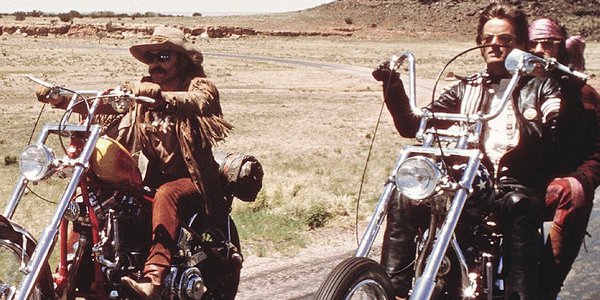
Some know that Easy Rider was Dennis Hopper's directorial debut - a film that made the actor someone worth knowing in '60s Hollywood - but not that many know that he directed a second film titled The Last Movie, which was pretty much a disaster from start to finish. It's probably best summed up in the words of the projectionist from the original screening room Hopper sat in with the studio executives when they saw the film for the first time: "They sure named this movie right, because this is gonna be the last movie this guy ever makes." After the film bombed, the volatile and unreliable Hopper was more or less banned from major moviemaking for 20 years, and Easy Rider predicted the whole thing. Dennis Hopper and Peter Fonda's freewheeling, stoned bikers on a quest to find the American dream have a good time but never truly find their goal, and come away bitter, disillusioned and far worse off than they started. "We blew it," in the famous words of Fonda's character, speaking not just for his and Hopper's opportunity to bring in a new era of creative expression for American filmmakers wasted because of hubris and self-destructive habits, but also for more or less their entire generation.

10. American Graffiti - George Lucas

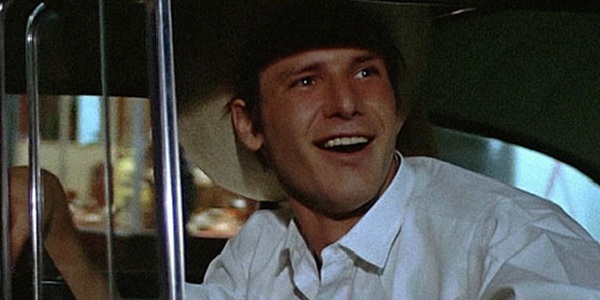
The creator of Star Wars has, perhaps unsurprisingly, never been a filmmaker who dwells on the present very much in his movies. Whether it's the space opera fantasy of Star Wars, the dystopian misery of THX-1138 or even the high adventure of Indiana Jones' period exploits, Lucas tends to look into the future or the past, but rarely the here and now. That characteristic is never clearer than in American Graffiti, his second major production as director and certainly his most unashamedly nostalgic. A saccharine-sweet portrait of 1950s small-town teenagers and the antics they get up to (largely drag racing and hanging around at diners, much like the youth of today), it's cringeworthily obvious that Lucas thinks of this time - the period when he himself was growing up - as the best, most hopeful time imaginable, despite the looming cold war and suburban repression of the time. Though perhaps American Graffiti isn't the most incisive of films to compare with its director; the aforementioned THX-1138 might reveal even more about Lucas, focusing as it does on a society that has done away with emotions and love. Anyone close to the filmmaker will tell you that he's not an especially warm man, even to his own wife, and anyone who's seen the Star Wars prequels will tell you that they couldn't possibly have been made by anyone with any kind of understanding of human emotions...

9. Marie Antoinette - Sofia Coppola

A girl born into (or married, or stumbled onto) wealth has the world at her feet and is able to live a life of complete luxury, but that fact is incredibly boring to her. Now, we could be talking about more or less any of Sofia Coppola's films - Lost In Translation, The Bling Ring, The Virgin Suicides (which actually contains more than one disenchanted lead) and Somewhere (though he's not female, he fits the rest of the profile to a tee) - or we could just be talking about Coppola herself. The daughter of The Godfather and Apocalypse Now director Francis Ford Coppola, Sofia Coppola is about as close to Hollywood royalty as you can get today, and has led something of a charmed life, which perhaps explains why her films feature characters with issues that epitomise the idea of First World Problems; none more so than Marie Antoinette, who as France's Dauphine and Queen in the 18th century was literally royalty. Coppola tells the film's story leisurely, revelling in scenes of Kirsten Dunst as Antoinette partying and relaxing with friends to a contemporary soundtrack, all the while becoming tired of the extraordinary riches and privilege afforded her. No one's saying that Sofia Coppola couldn't make a film about a character who never has to worry about going hungry or paying the rent on time, but it does seem pretty clear that she identifies much more closely with queens and movie stars than she does ordinary folk...

8. Daisy Miller - Peter Bogdanovich

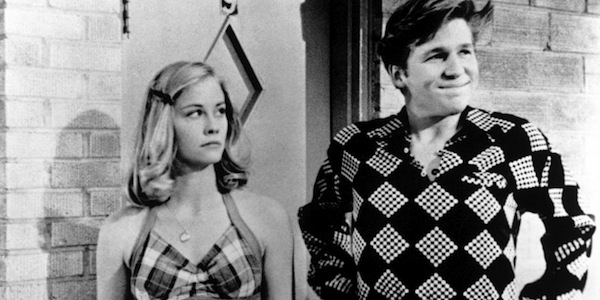
Almost-forgotten director Bogdanovich's love affair with his regular leading lady Cybill Shepherd started on one of his first movies, The Last Picture Show (pictured above), in which she played the small-town object of many young men's affection, during the filming of which he was still married to production designer Polly Platt, but the film that really says the most about both Bogdanovich and their relationship is Daily Miller, his 19th-century romance starring Shepherd as the titular flirtatious socialite. By the time Daisy Miller came around, Bogdanovich had left Platt and made Shepherd his girlfriend, 'schooling' her in cinema history and casting her in near enough every film he made (often to the pictures' detriment as the actress wasn't especially well regarded for her acting ability). The director's obsession with his muse and what he saw to be her enigmatic and free-spirited nature is reflected in his film, as is his insecurity about holding onto her, as seen in his casting choices for the leading men opposite her - not especially gorgeous actors who Bogdanovich "could feel superior to," according to his agent Sue Mengers.

7. Shampoo - Warren Beatty

Though Beatty didn't direct Shampoo, the raunchy political comedy about a hairdresser who's able to sleep with more or less any of his female clients because their husbands are convinced he's gay, his fingerprints are all over it: he's the star alongside Julie Christie and Goldie Hawn, he produced the film and co-wrote the screenplay with Chinatown scribe Robert Towne (though it's unclear as to whether Beatty ever actually typed a word of the script). Directing duties were left to Hal Ashby, who for the most part stayed out of Beatty's way as he was running the show. Much of the film revolves around George's (Warren Beatty) relationship with Jackie, and her being cast wasn't on talent alone - Beatty was head over heels for Christie but, other than an off-and-on relationship with the actor, she wasn't much interested... so he - drunk with power (and likely a whole lot else - this was Hollywood in the 1970s, remember) - decided to move heaven and earth to put them side-by-side in a film where the two got to get it on. Bittersweetly, however, while Shampoo posits that Christie's Jackie is George's true love, they're separated by the film's end, and the two never stuck together very long in real life either. There have got to be simpler ways to get women to kiss you, Warren.

6. Zodiac - David Fincher

Initially regarded as a disappointment upon its release, Zodiac has grown in the estimation of fans and critics alike in the years hence, and many now see it as one of David Fincher's smartest and most precise achievements. The story follows the various investigations into the Zodiac Killer murders in and around San Francisco in the late 1960s and early 1970s by both police detectives assigned to the case and newspaper reporters who eventually come to the same inconclusive conclusion: the murderer can't be found, and the search for him costs each of the protagonists something significant, be it their relationships, careers, ambition, even their judgement. Zodiac is less a film about a serial killer than it is the modern obsession with serial killers and the human desire to get to the bottom of things, and director David Fincher is no different to the characters in that regard - he's just a little more aware of it. A notorious perfectionist and rigorous researcher, Fincher and his crew did their own 18-month investigation into the Zodiac killings before shooting the film, and the period details and myriad plot threads show the fruits of their labour. Possibly the closest character to Fincher himself is Jake Gyllenhaal's newspaper cartoonist Robert Graysmith, who falls much further down the rabbit hole than anyone else, to the detriment of his health, livelihood and safety. The director can surely relate to such a level of dedication to a single cause, though Fincher probably has a clearer head when it comes to walking into the houses of potential mass murderers...

5. The Player - Robert Altman

A biting satire of modern Hollywood producers, writers and moguls and a blackly comic noir in which the film's villain is also the protagonist, The Player is essential viewing for those filmgoers who like a slice of venom with their humour. Tim Robbins plays an executive who accidentally kills a screenwriter and hurriedly tries to get away with it while simultaneously trying to discover who his victim was and juggle the demands put upon him by visionary directors, hack writers and other executives. It's difficult not to watch The Player and imagine that this was how the late Robert Altman saw the Hollywood landscape in his time - full of con men and scoundrels, a place where a groundbreaking pitch for a movie's ending becomes a cynical, hackneyed retreading of tired cliches and an exec can literally get away with murder if he's high enough up and is willing to pay the right price. By this point in his career Altman was far past working within the studio system, preferring to work on personal films for smaller budgets, so he wasn't in much danger of being blacklisted for such a cutting remark on his contemporaries.

4. The Imaginarium Of Doctor Parnassus - Terry Gilliam

Terry Gilliam is infamous for working within huge restrictions on more or less every film he's made, be they budget, casting or editing-related, but he's never been bound by his own imagination at the very least. While his tendency to devise incredibly striking and creative dream or fantasy sequences has cropped up in most of his films, the one in which Gilliam's own personality is most reflected is perhaps The Imaginarium Of Doctor Parnassus, Heath Ledger's final film which features that actor as a con man and Christopher Plummer as the titular Doctor, a mystical old man who holds the key to countless fantastical worlds in his head. It's Parnassus who draws the comparisons with Gilliam, as he is initially presented as a doddering old codger (the director has always been self-effacing) who's capable of much more than people give him credit for (much like Gilliam in the face of bean-counting Hollywood executives who couldn't possibly trust such a volatile man with such large sums of money). The comparison might also extend to Terry Gilliam's sense of grandeur, as Parnassus is in an eternal battle with Tom Waits' devil for the soul of his daughter - but the inimitable auteur likely doesn't think his movies are soul-saving, we'd wager. Life-changing, perhaps...

3. The Breakfast Club - John Hughes

The late, great John Hughes was the voice of a generation in the 1980s, despite the fact that it was one he was never actually a part of. He'd first captured the vocal patterns and angst of upper-middle class teens as a director in Sixteen Candles, lighting a sincere but also chucklesome fire in the hearts of a youth that had so far been fed a diet of college frat-boy movies (which Hughes himself helped spawn with his work for National Lampoon) like Animal House and Porky's. Then came The Breakfast Club, a standard-bearer for teen movies that makes up in still-relevant thematic resonance (everyone has a bit of everything in them; don't let adults or anyone else define who you are) for what it lacks in accurate representations of what happens when you smoke marijuana. The film spoke to a great many young people, and it's clear from much of the rest of Hughes' filmography that he identified with the young leads much more than any of the adults in his work, as evidenced in his mentoring of Anthony Michael Hall and Molly Ringwald and the bitter principal who stands for everything ugly about being an adult. Hughes obviously wasn't interested in belonging to the club he was a part of; he'd rather be one of the kids, miserable as they are.

2. Knightriders - George A. Romero

If you haven't seen Knightriders, then you're missing out: it's really something to behold, though not necessarily in a good way. Ed Harris leads a band of travelling Renaissance Fair performers whose main attraction consists of jousting one another on motorcycles. They make a meagre but fair living, moving from town to town until they run into trouble with a local sheriff and have to stand their ground. That's all strange enough, but once you throw in the factors of Harris' character having delusions that he's a genuine medieval knight, zombie godfather George A. Romero writing and directing and a 150-minute runtime, you've got yourself what should have just been a short, ridiculous B-movie being treated like a serious (not quite) action drama with a decidedly uneven tone and inscrutable final message. What is clear, however, is that Romero always sides with the underdogs, no matter how odd their lifestyle choices or batshit insane the characters themselves might be. It's never called into question that the jousters are the heroes of the picture, despite the really very sensible notion that they might all be better off doing anything but what they've for some reason dedicated their whole lives to. Bless Romero - he's never afraid of being sincere about anything.

1. Apocalypse Now - Francis Ford Coppola
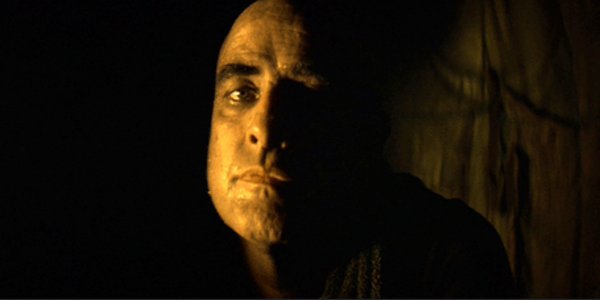
Francis Ford Coppola's Vietnam masterpiece Apocalypse Now has a greatly troubled history, but one that's well worth it for one of the most powerful and evocative war films in movie history. Martin Sheen's journey upriver into the heart of darkness very much echoes Coppola's own, who spent more than a year out in the jungle shooting the film amid rewrites, terrible weather conditions, nervous breakdowns and the occasional battle or two near the set. One of the more infamous stories from the movie's production is that Sheen was battling his alcoholism on-set and broke a mirror with his bare fist for real whilst out of his mind, but Coppola was the real wild card during the shoot. He more or less became Marlon Brando's Kurtz to his cast and crew, demanding they go above and beyond what they were being paid for in order meet his towering vision, often at the cost of their own well-being. By many accounts, Francis Ford Coppola truly went native on the set of Apocalypse Now and, according to his wife Eleanor, "he would tread on anyone he could" to get what he wanted. Like this article? Let us know in the comments section below.

Contributor

Film history obsessive, New Hollywood fetishist and comics evangelist.