15 Movies That Transformed Cinema In 1999

Damn, 1999! Good freakin' job.

This year marks the 15th anniversary of one of the most important years in film. The year 1999 truly changed how movies are made and perceived. Twist endings, low-budget pseudo documentaries, classic book adaptations, darker-than-dark comedies, and that loathsome Jar Jar Binks character: 1999 had it all. Not since the summer of 1989 (Batman, Lethal Weapon 2, Ghostbusters 2, Indiana Jones and the Last Crusade) has a year been more fruitful and transformative at the box office. Why, exactly, there was suddenly a surge in creativity in Tinseltown during this particular year remains a mystery. Maybe the hysteria of the coming Y2K "apocalypse," which, as we now know, never materialised, panicked Hollywood executives, and they took risks green-lighting more daring and out-there scripts (just think of Being John Malkovich). Whatever the reason, their anxieties were the movie-loving world's gain. It's hard to believe, but all of these gems were released in the same year, so c'mon: let's party like it's 1999...

15. The Matrix

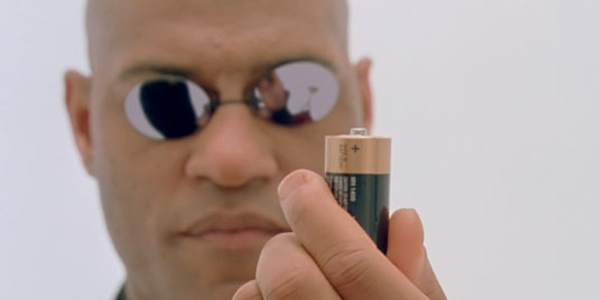
It all started with "The One." The commercials teased, "What is The Matrix?" and, for once, we actually cared and wanted to know (if its box office performance was any indication). Try to forget the nonsensical sequels and the last 5 seconds of this one ("Neo can fly!"), this movie truly showed us things we just never saw before. It even coined the industry term "bullet time," though it was regrettably copied in almost every single action movie since. Still, philosophy and kung-fu have never blended so seamlessly before - or since. In The Matrix, Keanu Reeves' Neo (or "The One") discovers that day-to-day reality is nothing more than a gigantic computer program that has blinded us from the reality that we're actually slaves providing energy to an alien race of machines. The movie sparked our fascination with digital worlds and noted our increased reliance - and interdependence - on computers years before Second Life or Facebook. Somewhat paradoxically, The Matrix enhanced both the amount of digital trickery and practical effects when it came to stunts. While multiple digital cameras captured action in "bullet time," more wires were added to stunt work, though they were naturally erased in post. Wire-work stunts would probably reach its zenith with the following year's Crouching Tiger, Hidden Dragon, directed by Ang Lee. So what is The Matrix? Keanu Reeves in a science-fiction blockbuster that contemplates the transcendence of reality and the tangible nature of existence. "Whoa," indeed.

14. The Sixth Sense

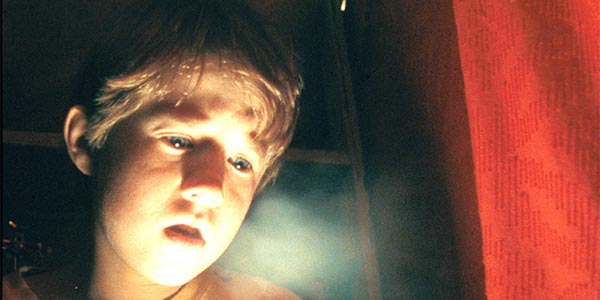
This was writer-director M. Night Shy-mala-ma-ding-dong's first big-budget, and still best, movie. We all know the film's secret by now, but it remains endlessly watchable: the haunting score, the beautifully understated performances, the eerie cinematography. This movie still gives everyone creeps. Of course, on the negative side, it introduced the world to one of the most annoying and overused catchphrases of the decade: "I see dead people." Bruce Willis plays Malcolm Crowe, the child psychologist assigned to Haley Joel Osment's Cole Sear, who has a bit of a problem (see the aforementioned catchphrase). In retrospect, it seems obvious what this movie's twist would be, but that's partly what made it so brilliant. The story didn't cheat, and while you were genuinely shocked at the ending, you also kicked yourself, saying, "Why didn't I see that coming?" The movie would give rise to more atmospheric visuals and twist endings, including Fight Club the same year and Shyamalan's follow-up Unbreakable. Unfortunately, M. Night's reputation has been in a dizzying free-fall ever since. Most of his oeuvre, including The Village, Lady in the Water, The Happening, The Last Airbender, and last year's Razzie-nominated After Earth, have declined in quality almost exponentially. Despite his missteps, this standout from 1999 reminds us - in a somewhat bittersweet way - of what could might have been a very satisfying career.

13. Election

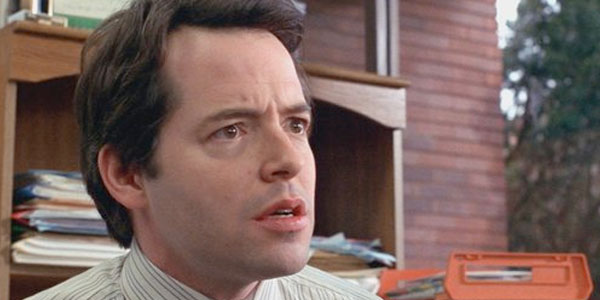
This movie answers the question, "What would Ferris Bueller's Day Off be like if Ferris played Ed Rooney?" And if it was a dark comedy. Pitch-black dark. Thus began a string of critical and commercial successes for gifted writer-director Alexander Payne, which continued with the moving dramadies About Schmidt, Sideways, The Descendants, and last year's stark, black-and-white Nebraska. Casting the leads against type, Payne placed the usually harmless, if sometimes mischievous, Matthew Broderick as a vindictive, scheming civics teacher against the also scheming, though not vindictive, Reese Witherspoon, playing a know-it-all overachiever wrestling her way to class president - by any means necessary. The movie was a game changer in how both her and Broderick's talents were perceived, typecasting be damned. Payne continued this tradition by casting Saturday Night Live's Will Forte, MacGruber himself, in the aforementioned Nebraska.

12. Fight Club

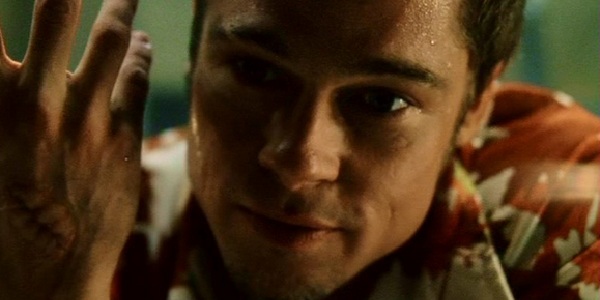
Who knew the beat-'em-up gruntfest depicted in the movie's trailer was actually a disguise for a sharp, biting satire of American consumerism? ("The things you own end up owning you.") The Sixth Sense stole Fight Club's twist-ending thunder a few months prior to its release, of course, but David Fincher's macho yet philosophical masterpiece still holds up a decade and a half later. Edward Norton plays an insomniac product recall specialist for a major car company who meets soap salesman Tyler Durden (played by Brad Pitt) and together they form a "fight club" that seeks to expurgate male aggression pent up from years of servitude in slave-wage jobs. Seven director David Fincher brought his A game to this visually arresting movie, overlaying rapidly appearing - and then disappearing - texts over certain images. When people complained that there wouldn't be enough time to read all the words, Fincher helpfully explained that this would be a movie people "downloaded" into their brains, rather than watched, and even went so far as to sprinkle subliminal images throughout the film. Truly, he understood our ADD society. This rapid-fire/information-overload directing technique would later be aped by Edgar Wright's movies a decade later (especially Scott Pilgrim vs. the World). This is one of the quintessential movies of our frustrated, disillusioned generation. There's probably more to say, but the first rule of Fight Club is you don't talk about it.

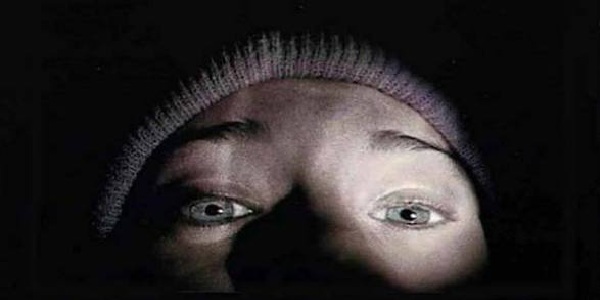
11. The Blair Witch Project

The most frightening thing about this movie was that it felt so real. In fact, some people still weren't convinced it was fake after that last piercing scream and the screen went blank. This is a shockingly original "mockumentary" that proves that, despite recent advances in movie-making technology, imagination is still the most awesome special effect. Armed with only two cameras, three college friends trek into the deep woods of Maryland to make a documentary on the legend of the so-called "Blair Witch." Things do not go well. Despite the scares, of which there are many, and the overall feeling of dread that pervades the film, in the end, the audience doesn't ultimately get to witness anything. And it's still downright terrifying. Unfortunately, the novelty of its unique Internet-marketing strategy and fake documentary style can never be repeated, despite numerous studio attempts to capitalize on the formula, because we now know it's all just a movie... isn't it? The Blair Witch Project practically invented the found-footage genre, which spawned both big-budget disappointers like Cloverfield and low-budget spookfests like Paranormal Activity (which itself spawned a million sequels - and that's perhaps the scariest thing of all).

10. The Cider House Rules

This is a remarkably moving story about breaking your own rules and finding yourself. Well before he donned Spider-Man's suit, Tobey Maguire's greatest strengths weren't in his web-slinging or wall-crawling abilities; it was the quiet pathos of his sad eyes and sensitive smile. This was one of the best films adapted from a book (and, at nearly 600 pages, what a book!), which makes sense since John Irving wrote both the book and the subsequent screenplay, for which he also won an Oscar. Maguire plays the young Homer Wells, whose small orphanage in Maine is the only home he's ever known. Mentored by the kindly Dr. Larch, played by Michael Caine (who would go on to co-star in his own superhero movies with The Dark Knight Trilogy), Homer eventually disobeys him and ventures out into the real world, where he learns the hard way that "there's no taking care of anybody - not out there." To be sure, the movie is slow moving, but if you have the patience to follow it, you'll reap the rewards of its practical philosophy ("Maybe if we just wait and see, I won't have to do anything!"), even if it has to take a hard stance on one of the most controversial issues of our time. I'm not even naming it. You'll just have to see the movie for yourself. So for now: "Goodnight you princes of Maine, you kings of New England."

9. Magnolia

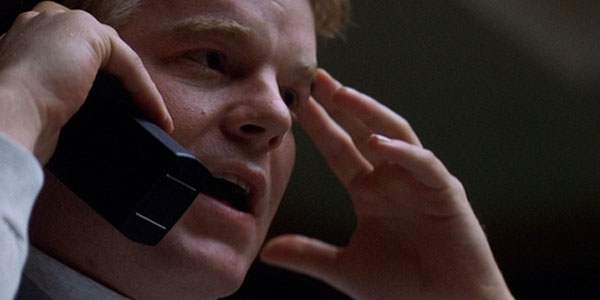
Love him or hate him, Tom Cruise was robbed of the Best Supporting Actor Oscar for his role, albeit small, in this multilayered patchwork of a film by master filmmaker Paul Thomas Anderson (Boogie Nights, There Will Be Blood, The Master). In a movie about lonely Los Angeles that crisscrossed over a dozen characters, Cruise's performance was both hilarious and heartbreaking. Perhaps his best scene is during the seminar when he tries to keep his cool with an extremely taut smile wrapping his face, only to go nuts in the end - just like in real life (couch jumping, anyone?) Magnolia, so named because the story unfolds like a flower, corralled some of the best actors of our time. Besides Tom Cruise, the late, great Philip Seymour Hoffman, Julianne Moore, William H. Macy, and John C. Reilly play sympathetic - if somewhat pathetic - characters trying to connect or reconnect with the people in their lives. The unconventional narrative that ping-ponged back and forth between all these personalities was truly a breath of fresh air at the multiplex back in '99, and was something that really hadn't been done - at least not this effectively - since Robert Altman's heyday. Also, there are frogs. Anderson's inspiring, 3-hour opus would give rise to more movies featuring intersecting storylines, like the Oscar winners Traffic, Crash, Syriana, and Babel. Unfortunately, this also meant we got the romantic clunkers like Valentine's Day and New Year's Eve. Oh, well. You take the good with the bad.

8. Dogma

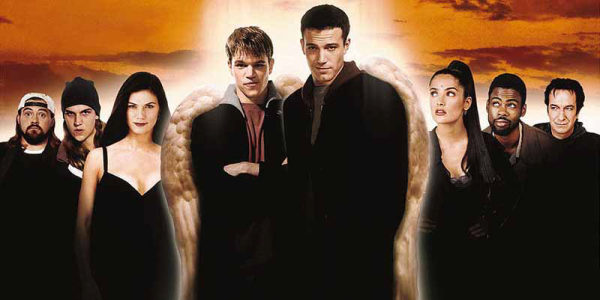
Kevin Smith's hilarious and profane ode to religion starred BFFs Ben Affleck and Matt Damon before the world was sick of them, it's Dogma. Any movie where the late, great George Carlin plays a corrupt priest who spends more time on the golf course than in church gets our vote. And who could forget Chris Rock's iconic turn as Rufus, the lost disciple of Christ? (You know, erased from history because he was black.) Affleck and Damon play fallen angels determined to reenter heaven via a loophole in the Bible. Indeed, it helped if you went to Sunday school to fully understand this sacrilegious movie that mixed faith with fart jokes, but a funny bone is all you really needed. Religion was always a taboo subject in Hollywood, but to a certain degree, Dogma made it less so - at least for innocuous comedies like Saved! Of course, the witty banter and outrageous set pieces didn't always mix, at least not as successfully as Smith intended (that demon made of human excrement maybe belonged in a comic book but not here, Kevin), but the always welcome Jay and Silent Bob kept things moving at an uproariously entertaining pace. And the cherry on this vulgar cake: Alanis Morissette as God. Brilliant.

7. Toy Story 2

One of the rare sequels that's better than the original (even rarer that it was a computer-animated kids' movie), we welcomed Woody and the gang back into our homes and hearts with Toy Story 2. Yeah, that was kind of sappy, but then again, sometimes we need a little sap - like the montage during the Sarah McLachlan ballad "When She Loved Me." It actually made grownups cry. Over a toy. In Toy Story 2, Woody gets kidnapped by an obsessive toy collector and learns about his true origins. This sequel wasn't just content to wow us with what was then state-of-the-art CGI visuals and a truly comic, slam-bang script; it introduced existential angst to a children's movie, giving us further reason to care for these essentially inanimate playthings. Probably the biggest miracle of all was that Toy Story 2 proved more profound and entertaining than its groundbreaking original - a sort of cartoon Godfather: Part II, if you will. Continuing the tradition of one-upping the movie that came before, Toy Story 3 might have even outdone this entry in the heart-tugging moments without venturing into schmaltz territory, especially that epic ending, but Toy Story 2 taught audiences to expect more from their sequels, even cartoon ones. If only Pixar had heeded their own advice when they made Cars 2.

6. American Beauty

American Beauty was the well-deserved winner of the Best Picture Oscar this year and the undisputed champion of black comedies. This is the story of a family finding happiness by coming apart - almost the direct opposite of any other comedy you've seen. Like Fight Club, there are still people who will refuse to "get" this movie, and I pity them; theirs is a smaller and less funny world. Kevin Spacey plays Lester, a sad-sack husband and father who seems to be failing in every aspect of his life, both professionally and personally. The ingenious twist is that we know from the film's very beginning that he's narrating the last days of his life, so there's no false suspense of whether he dies or not in the end. Who kills him and why is one of the film's central mysteries, but there is so much more to this layered slice of suburban ennui. After all, the trailers urged us to "look closer." As Spacey mentioned when receiving his Best Actor Oscar, even though you only get to see the bad side of Lester, you still grow to love him, and this theme opened our minds to welcoming anti-heros with a somewhat faulty moral compass into our filmic experiences. This tradition would later edge into television with James Gandolfini's Tony Soprano on The Sopranos, Bryan Cranston's Walter White on Breaking Bad, and Michael C. Hall's Dexter Morgan on the appropriately titled Dexter. Even Spacey himself currently plays the scheming though somehow endearing Congressman Frank Underwood on Netflix's House of Cards. "I rule!" exclaimed Spacey's Lester. Yes, you do.

5. Office Space

Mike Judge, creator of the subversive cartoons Beavis and Butt-Head and King of the Hill, proved he could also ably direct live actors with aplomb. Though Office Space was a box-office misfire when it first premiered, it has only grown in stature over the years through video rentals (now downloads) and airings on TV. It's also one of the few romantic comedy films star Jennifer Aniston can be proud is on her resume, though Office Space far surpasses the bland boundaries of that safe and overplayed genre. Ron Livingston plays Peter Gibbons, a disgruntled office worker who's had too many memos, too many stern lectures from his condescending boss, and not enough coffee to endure it all. Enlisting the help of his unfortunately named coworkers Michael Bolton and Samir Nagheenanajar - and borrowing the plot of Superman III - he begins his mission of revenge to take down his company and live his life to the fullest, even if it means gutting a freshly caught trout at his desk. The film's subject of office drudgery is easy to relate to, and some may argue too easy a target, but this movie not only hit its target; it obliterated it (much like Peter and his coworkers obliterate the pesky office copier). One of the greatest cult movies of all time, Office Space spawned more quotable lines than the Coen brothers' The Big Lebowski. Watch it once, and you'll never again have "a case of the Mondays" again.

4. Star Wars: Episode I - The Phantom Menace

All right: so some of you are groaning right now, but as disappointing as this opening chapter in George Lucas' legendary sci-fi saga was, you have to admit that, being the first official Star Wars film in 16 years, this wasn't just a movie; it was an event. With its wooden dialogue and robotic performances (and I'm talking about the human actors, not the actual droids), The Phantom Menance pretty much disappointed everyone who laid eyes upon it. And then there was Jar Jar. "Meesa ruin your childhood memories!" Sigh. At least Episode III sort of made up for it - though that did happen six years later. Keeping with the theme of this article, it's probably best to discuss the movie's "legacy" ( if you can call it that). For better or worse, Star Wars: Episode I introduced the world to digital sidekicks brought to you by motion-capture technology. This would be made famous years later with Andy Serkis' brilliant performance as Gollum in The Lord of the Rings trilogy - and now The Hobbit Trilogy (will these movies ever end?). Director Peter Jackson proved in the Rings movies that motion capture wasn't necessarily a bad thing when it was to be accompanied by a fully developed character; not just in pixels, but in pages of the screenplay.

3. South Park: Bigger, Longer & Uncut
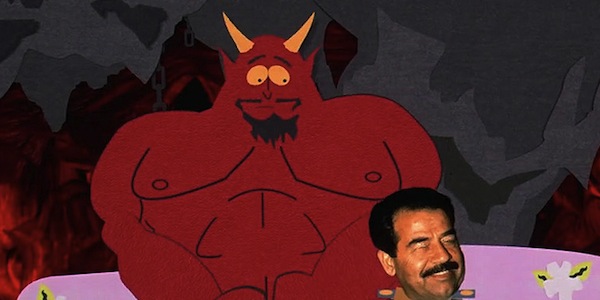
The only movie title to rival the length of Star Wars' in 1999, this film's raw crudeness and near brilliance in its dead-on parody of American small towns (and small-town thinking), war, the MPAA, parent-child relations, and two little lovebirds named Satan and Saddam Hussein shocked the sh*t out of the movie-going public. And it was an R-rated cartoon musical to boot! The music itself was so successful, one of its songs, "Blame Canada," was nominated for an Academy Award - with no less than Robin Williams singing it live during the ceremony. Fifteen years and over 100 South Park episodes later, the movie is still somewhat shocking (in a good way), despite the fact that we now know Saddam Hussein was killed by hanging, not mauled by a pack of wild boars, as the movie so vividly reports. Sad to say Simpsons fans, but South Park fared better on the big screen than your beloved yellow family. I know, I know: blasphemy! Creators Trey Parker and Matt Stone would go on to write the equally blasphemous Broadway musical The Book of Mormon, which won nine Tony Awards, including Best Musical. Is a South Park musical bound for the boards as well? Only time will tell, but we sure do hope so.

2. Sleepy Hollow

One of the best looking Tim Burton films, and also one of the better collaborations between him and frequent muse Johnny Depp, not to mention noted music man Danny Elfman, Sleepy Hollow continued Burton's fascination with gothic undertones, twisted characters, and sympathetic villains, played by none other than the granddaddy of them all - the inimitable Christopher Walken. Depp plays the awkward constable Ichabod Crane (changed from a schoolteacher in the original story by Washington Irving) in turn-of-the century New York City. He is called upstate to the film's titular town when there is a series of mysterious and gruesome murders, who some superstitious town folk claim are the handiwork of the Headless Horseman. The practical though frightened Crane is convinced they are the work of a man, nothing more, but he discovers there may be more to the world than what meets the eye. From this film onward, Depp's odd acting mannerisms were considered somewhat of an asset, when these same traits used to be perceived as handicapping him before. His increasingly eccentric characters with idiosyncratic behaviours picked up steam after this modern classic, which directly led to his star turn as Captain Jack Sparrow in the never ending Pirates of the Caribbean franchise. Meanwhile, there's now a series on TV which not only borrows the film's title, but also steals its gothic visuals and eerie atmosphere.

1. Being John Malkovich

From the warped, creative, insane, and brilliant mind of screenwriter Charlie Kaufman came by far the most original movie of 199, and, as you can see from this list, that's saying a lot. If you've never seen it before and think you know what to expect, you don't. And if you always wanted to see what it would be like for John Malkovich to enter his own mind, you're in for a treat. John Cusack plays a depressed puppeteer who discovers a portal inside the mind of actor John Malkovich, and if you think the movie's description is strange enough, you haven't seen anything yet. Stars Cusack and Cameron Diaz so immersed themselves in their roles that they were almost unrecognizable, hiding their beauty behind thick glasses, frumpy clothes, and ugly wigs so that their remarkable performances would shine through. This trend would continue with Charlize Theron's Oscar-winning performance in Monster and new Oscar winner Jared Leto in Chapter 27, wherein he gained 67 pounds to hide inside the portly body of John Lennon's psychotic killer. Perhaps the movie's greatest casting coup though was getting John Malkovich to essentially play himself. It makes one wonder what the movie would have been like if he refused to do it and they had to cast someone else, forcing Kaufman to rewrite the movie, as he has said he always envisioned John Malkovich in the title role. Kaufman would go on to pen the equally twisted Adaptation, Eternal Sunshine of the Spotless Mind (a personal favorite), and the somewhat incomprehensible Synecdoche, New York, starring Philip Seymour Hoffman. But with Being John Malkovich, Kaufman proved that audiences were finally ready for mainstream movies this wonderfully weird. So which movies from '99 did we miss? Let me know your favorites in the comments section below.

Contributor

Michael Perone has written for The Baltimore Sun, Baltimore City Paper, The Island Ear (now titled Long Island Press), and The Long Island Voice, a short-lived spinoff of The Village Voice. He currently works as an Editor in Manhattan. And he still thinks Michael Keaton was the best Batman.