15 Things That Almost Ruined The Terminator Franchise
You think Genisys is bad? The franchise has survived a lot worse.

Terminator: Genisys. Has it sunk in yet? The first glimpse of the provocatively wrong, grammatically-backward subtitle was unveiled in a photo posted to Arnold Schwarzeneggers Twitter; an innocent snap by the Austrian Oak to commemorate the end of the films shoot caused a wave of uproar across social media. The somewhat inevitable torrent of backlash left many wondering if it was just a working title, slung together by an interns eager finger taps. Surely it must have been...
But a week has now passed since Paramount confirmed the worst. Yes, that IS the title for the studio's fifth instalment in the cyborg franchise. With little information known about the movie, this new mockbuster-esque title is an easy target for trolls. Of course it is, look at it.
The real debate over the films merits should begin once its actually released - you know, when people have had chance to see it - but inevitably, even a year before it hits screens, theres already a wealth of expectation riding on it. And that goes doubly when you consider the disappointment of Terminator Salvation back in 2009 despite huge potential. But with such a beloved fanbase, is Terminator: Genisys already doomed to fail? Will it be the final hurrah for Arnie's monotonous killing machine, sending the robotic series careening into the molten steel forever?
If the reaction to the title is anything to go by, the signs aren't good, but then the Terminator has survived a lot over the run of the franchise, and not just in terms of being melted or smushed either. There have been issues with the films that almost stopped the franchise dead, or turned off so many fans that the prospect of advancing was simply ludicrous. And yet here we are, heading into number five, so maybe there's hope yet for the abysmally titled sci-fi actioner...
15. "I Will Be Back"
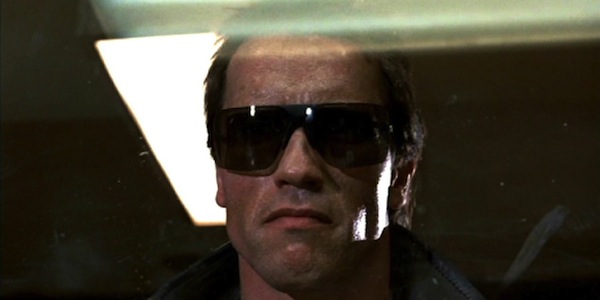
Ill Be Back.
Theres a classic simplicity to it. It wasnt penned with the hopes, all fingers and toes crossed of penetrating into the public sphere, but it did to such an extend that it is now impossible to say in any situation without a stilted Austrian accent.
On set, the catchphrase was up for debate. Schwarzennegger, the man to deliver said line, believed the machine would never say Ill be back. His opinion was that the contraction - I will to Ill - would never be uttered by a Terminator. Why? He thought a robot would maintain a more straightforward style of speech. Oh, and he thought it sounded girly.
James Cameron was not in agreement. He apparently told Arnie I dont tell you how to act, so dont tell me how to write.
All in all, a win for the franchise. The phrase went on to be recycled throughout the series, and became ineffably cemented into the public consciousness. Would that have been the case with I will be back?
14. The Rights

Prior to the shooting of Terminator 2, James Cameron was unable to move forward on production on the sequel. mostly because the franchises new backers, Carolco Pictures, had a legal wrangle to straighten out. The pesky matter of intellectual property rights arose when original owners of the franchise, Hemdale Film Corporation, made public their reticence toward making a second film, because clearly they had something wrong with them.
The entire incident could be traced back to Camerons original deal for The Terminator. At the time he sold the treatment, he was living out of his car, and desperate to make a name for himself, when Hemdale showed interest he offered them the rights for a measly dollar if he could direct.
Cut to 1990, and clearly not wanting lots of cash, Hemdale dug their heels in and refused to make another until Schwarzenegger convinced Mario Kassar, head of Carolco, to bid for the rights. $5 million later and the franchise was reborn.
13. Recasting John Connor

Due to Edward Furlongs personal issues, he didnt return to the franchise after Terminator 2, though he was initially cast for T3, before he had to turn it down. That means - like all of the other actors chosen to play the character - he only once portrayed the future military leader. Michael Edwards played future John in Terminator 2; Nick Stahl in Terminator 3; Thomas Dekker in The Sarah Connor Chronicles and of course Christian Bale in Terminator Salvation.
Theres certainly no rule which states a franchise must use the same actor for a character, but that said, the jump from one to another and a lot of emotional connectivity to the character is lost.
Take Stahls depiction: an off-the-grid gloomy guts who takes menial work instead of utilising his impressive tech skills, this Connor is a world away from Furlongs spunky pre-teen. Of course, people mature, but its as if these different performances are in fact alternate John Connors. Each born in a splintered timeline, they betray certain characteristics introduced in Furlongs version.
It could have been worse though: Chris Klein once auditioned for the role.
12. A Different Terminator 3

The amount of changes scripts undergo during pre-production is lengthy: dialogue is rewritten, scenes are cut, and entire characters are deleted with a few backward keystrokes.
In an early draft of Terminator 3: Rise Of The Machines, the screenwriters had an altogether different vision for the franchise. In this version, after the events of Terminator 2, Sarah and John were to take to the screen together once more. This time, John was written as a computer programmer, which makes sense considering his hacking prowess. Whats a little less sensical is that he winds up being key to the creation of Skynet.
At that point in the story, John hasnt fully morphed into the military leader he is destined to become, but still - a programmer who builds Skynet? This kind of tactic would have raised a lot of flags. The incredulity of John, a lad whos versed in the way the future plays out, actually contributing to the very beast hes been programmed to destroy? Its impossible to fathom.
That same script also had a new brand of Terminator capable of shapeshifting into gas. Despite Terminator 3s flaws, at least it didnt have the visually-dull flatulent robot.
11. Insufficient Technology
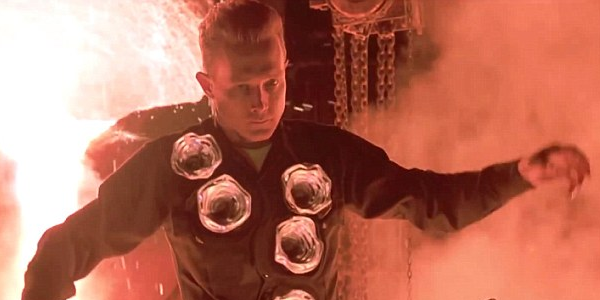
He then turned his attention to underwater epic, The Abyss. It was during production on the 1989 movie, when bringing the pseudopod to life, that Cameron was advised to contact Industrial Light and Magic for assistance in the special effects. And the rest is history: if it hadnt been for this suggestions by effects supervisor Phil Tippett, then the franchises greatest villain would never have made it to the big screen.
10. Terminator 2's Original Ending
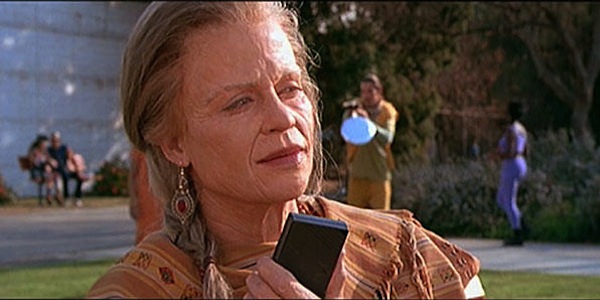
The ending of Terminator 2 is a classic epilogue to the battle against the machines. The uninterrupted shot of a road zooming by; Sarahs voiceover about the future. Its a hopeful, if somewhat sombre close to the movie, and once again it's another choice Cameron battled executive producer Mario Kassar over. Except this time, Kassar fought FOR the ending.
Cameron wanted to tag on his alternate ending. The scene, which can be viewed on the extras, sees a much older Sarah Connor in a park. Linda Hamilton dons prosthetics as she watches her grown-up son, John, now a senator, play with his daughter. Her granddaughter runs over and Sarah helps her tie her shoes. Isnt that all terribly sweet?
This optimistic ending was included for test screenings, and thankfully it was met with negative reviews from audiences. And Kassar. Cameron agreed to scrap it after realising the upbeat tone of the scene detracted from the dark atmosphere of the rest of the movie. Kassar was content with this. After all, the open ending that became the films parting shot paved the way for sequels and lots of money.
9. The T-1000 That Never Was

The affinity between an actor and director often leads to multiple collaborations and as such, James Cameron has brought back many performers from previous movies for future projects: Arnold Schwarzenegger, Sigourney Weaver, Bill Paxton and indeed Linda Hamilton.
And then of course there was Michael Biehn.
The actor, who played Kyle Reese in the first Terminator, impressed Cameron to such an extent he cast him as Corporal Dwayne Hicks in Aliens. He returned for Terminator 2 in a cameo role as Reese during Sarahs dream sequence, though it sadly wound up on the cutting room floor in a deleted scene available on home video.
What you might not know is that he almost returned as another character entirely. Because Michael Biehn nearly played the T-1000. The two time travelers from the first film would have switched their alliances for the second.
Thankfully, Cameron realised the confusion this would have caused for audiences. First off, Sarah would have died immediately upon seeing him, as the relief of reuniting with her love wouldve been overshadowed by him pumping her full of lead. And thats just one example.
8. The Terminators Endoskeleton Reveal

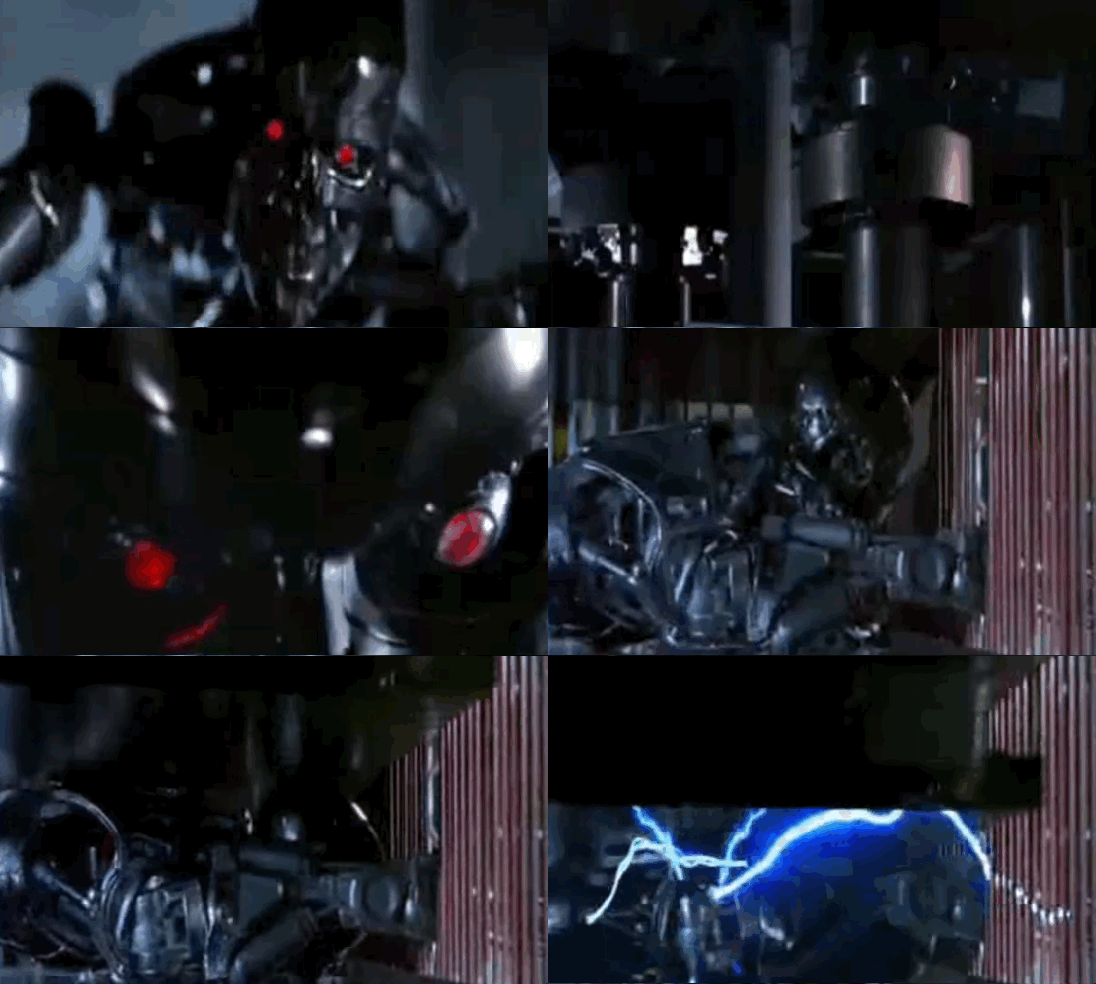
In 1984, the visual of a robot crawling through a hydraulic press to murder a poor waitress was unlike anything seen in cinema.
The Terminators giant endoskeleton reveal at the end very nearly didnt make it into the final cut. Throughout the movie, audiences were teased by the horror of what lay beneath. When the T-800 repairs himself, slicing through flesh to expose his laser red retina, the sight was gruesome but intriguing. What would the rest of this cyborg look like?
All scenes shot after the tanker explosion - the factory showdown, the endoskeleton - were fought for by Cameron. Producer Mike Medavoy was keen to have the movie end at the explosion as a way of cutting costs. Its ultimate inclusion led to the films box office success, which wasnt aided by Orion Pictures marketing department. Medavoy also refused to promote the movie, another obstacle in guaranteeing the film an audience which nearly ended its success before it even began.
That iconic epilogue wasnt mere spectacle, proving the relentless nature of the machines: they can be blown up but still come after you.
They cannot be stopped.
Would Cameron have had as big a success on his hands had audiences never actually seen the full-length endoskeleton?
7. Skynet's Stupidity
In Terminator Salvation its revealed that they created Marcus (Sam Worthington) as an infiltration Terminator prototype to lure Connor back to Skynet HQ. So they can kill him. But Marcus entire mission only plays out based on a bunch of random incidents which occur solely by chance. Marcus stumbles across Kyle and Star in downtown L.A. He teams up with Blair who leads him back to Connors headquarters. Both happy accidents. The only part of his mission he succeeds in accomplishing is letting John know that Kyle Reese has been captured by Skynet.
Why did Skynet not simply rig Marcus to explode when in proximity of Connor? Why did he have to be dragged all the way their headquarters? Lets face it, as soon as he arrives, itd have been far more likely for him to have been gunned down. But no, he gains access into the facility - and fights a T-800 which somehow is unaware its a Terminator. The CGI-Arnie-faced cyborg seems to believe itself to be a kitten and John Connor a ball of twine to be batted about by its giant metallic paws.
And if thats not enough to send cracks shooting through Skynets foundation - when the Hunter Killer picks up Kyle and Star couldnt it have just squished him then? If theyve got facial recognition software built into practically every Terminator (even the remedial models) then wouldnt the dropships possess that same technology?
With Reese dead, then Connor would cease to exist. Skynet 1 Mankind 0.
This type of brainless plotting was likely responsible for the five-year-nail in the Terminator coffin...
6. Johns Memory
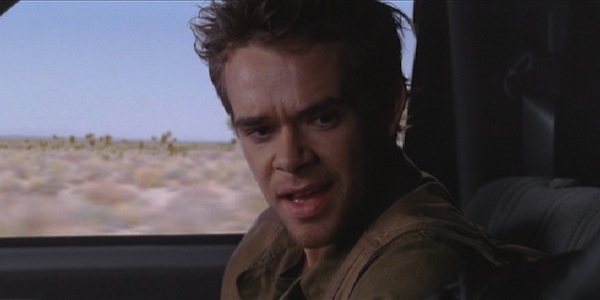
The very existence of the Arnie terminator in T2 proves that theres more than one copy of the same model. The one from the first film (evil), and the one in the second (goodie). If thats not enough, his mother, Sarah, was given a wealth of info on Skynet from Kyle Reese. She recorded a ton of tapes for John to listen to before he was even born, to share with him the knowledge hed need to become a great military leader. He KNEW they came on assembly lines. Yet somehow, this catch-up-the-audience line of expository dialogue was included that made him seem... well, stupid.
Its an issue because it undermines Johns intelligence. Hes not the leader of the resistance YET, but he will be. If his ability to retain basic information or make educated guesses is in question, then how the hell is he gonna lead the resistance?
5. The War Was Inevitable
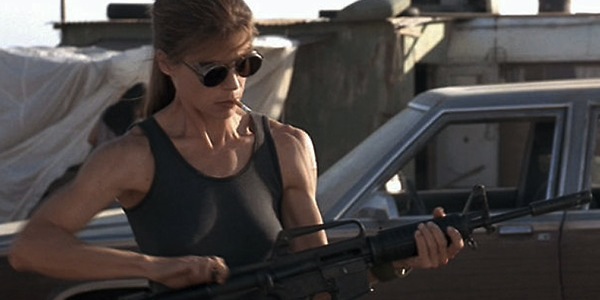
So, then its a mighty headscratcher when that entire conceit is swept under the rug by Arnies T-850 in Terminator 3: Rise Of The Machines. When discussing with an older John about the fact that they blew up Cyberdyne, they avoided Judgment Day, he simply states: judgment day was inevitable. WHAT?! Everything the Terminator in T2 said in retrospect was total bunkum.
On the small screen, The Sarah Connor Chronicles, while far superior to T3, also racked up two seasons of material based on the same argument. It was gonna happen regardless. While its a niggling annoyance for franchise fans, it raises a string of questions.
If it was always going to happen, why do Sarah and John keep fighting? Why does anyone bother trying to stop judgment day? Whats the purpose of continuing to prevent Skynet, if the measures taken at the end of T2 - which had an explosive finality to them - did effectively, zilch?
It reeks of cash-in logic which wont hold up forever.
4. The Gags In Terminator 3
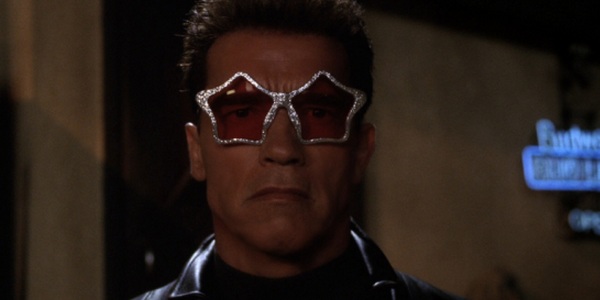
Its just a shame that they all leer toward obvious humour. Dont be mistaken, T2 had its fair share of amusing moments, but they didnt detract from the film overall. Just because the T-800 could learn hip catchphrases John didnt mean anyone doubted its ability to wipe out a room in two seconds flat.
In Mostows third entry, theres simply too much slapstick that it practically undermines the menace of the Terminators. The now-obligatory clothes acquisition sequence for the T-850 (Schwarzenegger) sees the naked robot enter a roadside bar on ladies night. Cue: cheering and hollering. And the donning of star-shaped sunglasses. If that visual wasnt bad enough, the series time stamps itself (an issue it had avoided up until that point) when the Terminator literally talks to the hand after the oily stripper onstage tells him to do just that. The whole point of these cybernetic killers is that we, the audience, are supposed to be terrified of them. Not laughing at them.
One good thing T3 had to offer was its commitment to gender visibility, with the T-X (Kristanna Loken)! In a blatant attempt to sexualise the first female cyborg moments after she first appears onscreen, she inflates her breasts to wangle favour with a cop. Theres just so many things at fault with this scene. Its not just sexist, but its mired in a botched attempt at being funny. Hahahaha - inflata-boobs!
Cameron would never have let that fly.
3. The Comics
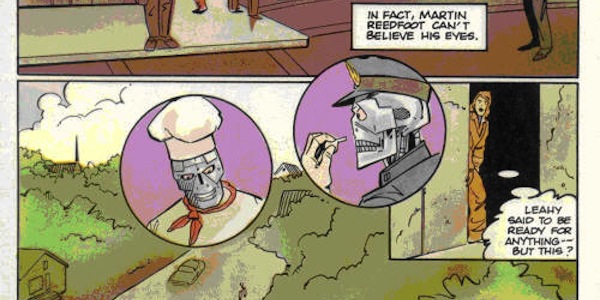
The gap between The Terminator and Terminator 2 spanned seven years. Its not that long. Well, it is when you consider Marvel kickstart new movie franchises and pump out countless sequels in that same amount of time.
While the Terminator was absent on the big screen, it wasnt dead in the water. It spun off into an animated comic series by NOW. Between 1988 and 1990 the label published 17 issues under The Terminator banner. The storylines deviated from the events of the first movie, and instead were based in the future. The year 2031, to be precise, when John Connors resistance army continue to battle against the machines.
Sounds awesome, right?
It wasnt until the later issues (The Burning Earth) that the series garnered any acclaim whatsoever (and that was for the artwork.) In the earlier comics, entire townships founded by machines were in operation like a dastardly version of The Stepford Wives. Terminator police officers, traffic wardens, heck, even bakers all lived happily together when they werent stealing skins from humans.
In another nugget of bizarro mythology, which was thankfully shrugged off and ignored by Cameron, was the purpose of the machines killing sprees. In one panel, the brother of Kyle Reese goads a Terminator for failing to get his skin. Skynet might have taken over the world but they apparently cant recreate human tissue - so they murder people then wear their skins like suits. A bit like Buffalo Bill but without the dancing.
Thankfully no-one optioned the comic rights to adapt that short-lived run into a terrible, terrible movie.
2. Piranha Part Two
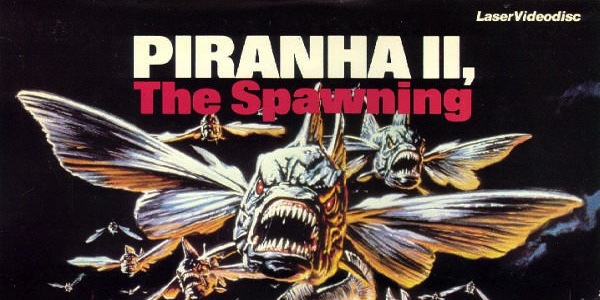
Well not exactly. According to Cameron when it came time to get things rolling on The Terminator, that one terrible line on his CV nearly cost him the project.
"We saw it as a low budget guerrilla-style production, but we had aspirations to do something that was somehow world-class within those limitations. It was pretty clear that the studios were only interested in buying the script; they were not interested in me as a film-maker. I was actually worse than a first-time director because I had directed a little bit on Piranha II and it was a piece of garbage."
At least Cameron is aware when he makes terrible movies.
1. OJ Simpson Was Nearly The Terminator

Its impossible to imagine anyone else in the role of the Terminator. Cyberdyne Systems T-800 model 101 is now, and shall forever be synonymous with Arnies leather-wearin, shades-stealin badass.
Thankfully, producer Mike Medavoys choice for the role didnt pan out: OJ Simpson. The athlete-turned-actor was a strong contender for the role in early days of casting. So confident was Medavoy that mock artwork of him as the cyborg was cobbled together. Yep, they did a poster with OJ as the Terminator. All of this took place before he was deemed too wholesome by the studio, a move thats now shaded by its morbid irony.
After that, the role didnt fall into Arnies lap. Simpson wasnt the only actor Cameron and co. considered before the beefcake signed on. Mel Gibson was offered the role and turned it down. As did Randy Quaid. Michael Douglas and Kevin Kline too.
Its still a damn shame Tom Selleck turned it down though. What we wouldnt give for a moustachioed killer borg.
Which other near misses and terrible moments almost ruined the Terminator franchise for you? Share your thoughts below in the comments thread.