18 Greatest Scottish Films

The vote may have been no to independence, but say "yes" to these amazing films.

With Scotland voting to remain a part of the United Kingdom on the historic Referendum day of 18th September, it seems a fitting time to look at some of the country€™s finest contributions to our culture and British cinema. Whilst Braveheart is clearly the film that most people worldwide would immediately associate with Scotland, Mel Gibson's William Wallace epic does not find its way onto this list due to it it being entirely financed by American money, written and directed by an Australian, produced by an American and largely shot in Ireland. Aside from that it is also nice to take the opportunity to shine a light on those great Scottish films that aren€™t Braveheart, and actually have a claim to being Scottish cultural products outside the setting for the story. Scotland may have given cinema a James Bond and an Obi Wan Kenobi but as you will see it has also given us some of the greatest and uncompromising British films, which cast a light on the socio-political issues that pervade this country. It isn't all doom and gloom though, in addition to having a social conscience Scotland also knows how to have a laugh and entertain, so in amongst the weightier material you'll find some of the funniest and heartwarming films this island has ever produced.

18. Small Faces (1996)

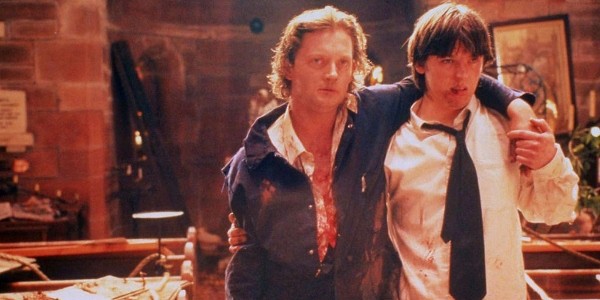
Not a biopic of the Mod legends but instead a look at the notorious Glasgow knife gang the Tongs, that ran in the Calton area of the city in the 60s. Small Faces was released in the slipstream of Trainspotting but it was actually completed before, and its probably fair to say that the success of Danny Boyle's film had a knock on effect - raising the status of the BBC co-production to theatrical status and a more widely publicised release. This is no bad thing as Small Faces is a tight, well observed passage of rites gang flick, which bar the odd inconsistency, and a decidedly TV drama aesthetic, does a decent job of capturing this violent period in Glasgow's history. Kevin McKidd, who had just been introduced to audiences as Trainspotting's Tommy, plays Malky the leader of the Tongs, and in a subversion of Trainspotting, the closest the film has to a Begbie character.

17. Restless Natives (1985)

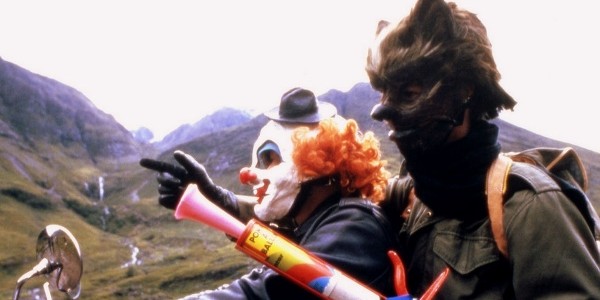
There are some films that could have probably taken the place of Restless Natives on this list, but the work of the directors in question is well covered elsewhere and for the sake of diversity Restless Natives is a worthy entry. Like a great number of the films listed here Restless Natives is the story of two disenfranchised young men who turn to alternative means to support themselves. In this case "alternative means" entails wearing a clown and a wolfman mask and holding up coach tours as a pair of modern day highwaymen. Will and Ronnie in their guises of Clown and The Wolfman quickly become folk heroes and media sensations. The sad realisation when watching such a quirky and entertaining film like Restless Natives is that it really is the kind of film they don't make any more, which is a shame as it is the kind of story that could be told just as well today.

16. My Name Is Joe (1998)

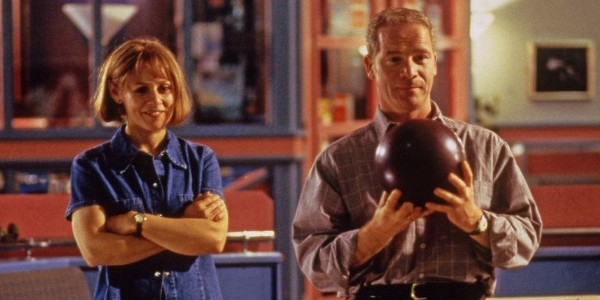
After his memorable performance as Renton's dealer Mother Superior in Trainspotting, My Name Is Joe was the first film to give Peter Mullan a leading role. After Carla's Song (which was partially set in Glasgow and Nicaragua) My Name Is Joe is part of what can be termed Ken Loach's 'Scottish Cycle', a series of films written by Scottish writer Paul Laverty and set in Scotland, which continued with Sweet Sixteen, Ae Fond Kiss and most recently The Angels' Share. Each examines some of the social deprivation issues that have no doubt contributed to the nation seeking a referendum in the first place. Mullan plays Joe Kavanagh an unemployed recovering alcoholic who embarks upon a relationship with his health worker. As can be expected from Loach, the film is unflinching in its treatment of alcoholism. The fact we meet Joe as an amiable and positive force during a period of recovery makes it all the more powerful and horrifying when he does lapse back into his old ways. As has been Loach's methodology for years the background characters of the film are made up of local residents from the area where it was shot. For My Name Is Joe this included many who were themselves former alcoholics or substance abusers, adding a level of authenticity scarcely found outside Loach's work.

15. Soft Top Hard Shoulder (1993)

Stefan Schwartz's comedic road movie is a chance to see an earlier performance by the new Doctor himself Peter Capaldi. Capaldi also wrote the semi-autobiographical screenplay and plays the lead character Gavin Bellini, a Glaswegian who left Glasgow for London to study art and after years living in the Big Smoke has lost touch with the family he left behind. Gavin finds himself having to confront his past though when he is given an ultimatum by his uncle to be in Glasgow for his sick father's birthday party or face being cut out of any inheritance from the family's successful ice cream business. Anybody who has left home to study or live elsewhere can relate to Gavin's sense of disconnection and the difficulties faced by being never truly able to go back. Soft Top Hard Shoulder isn't just worth revisiting for Capaldi, Schwartz has also experienced somewhat of a creative renaissance in recent years, garnering critical praise for his work on Being Human and later acclaimed American shows such as House, Dexter and The Walking Dead to name a few.

14. That Sinking Feeling (1979)

Bill Forsyth's first feature film came out in 1980 and is a heist caper involving a group of bored and unemployed Glasgow teenagers who plan to break into a warehouse to steal a batch of stainless steel kitchen sinks (hence the pun-worthy title). The film came out a year before Forsyth's break-out hit Gregory's Girl and involves much of the same cast. It is a highly entertaining film in its own right but it is also one of those curios that is a joy to behold simply for perfectly capturing and documenting a period in its setting's history, in much the same way Get Carter acts as a snapshot of Newcastle in the early 70s. When Gregory's Girl and Local Hero became international successes That Sinking Feeling was released in America four years after it was first released in the UK. The American version though had to be dubbed for audiences to be able to understand the thick Glaswegian dialect, a process which ended up costing more than the actual film did to make.

13. Morvern Callar (2002)

Lynne Ramsay's second film was an adaptation of Alan Warner's novel of the same name and starred Samantha Morton as the titular character, a supermarket check-out girl living in a small Scottish town who embarks on a journey of strange self discovery after finding her boyfriend dead in their flat. Leaving only his novel on their computer, Morvern makes the unusual decision of removing his name from the manuscript and replacing it with her own before heading off to the Costa Del Sol with her friend Lanna. Like all Ramsay's films Morvern Callar is a hypnotic, hallucinatory experience and like her first film Ratcatcher provides us with a protagonist the like of which we rarely see. Morton's Callar is almost impenetrable, her unusual actions and emotional responses make her extremely difficult to read. This results in a character who is more like the kind of person you'd meet at a party than the kind of transparent, overly motivated characters you find in film.

12. Red Road (2006)

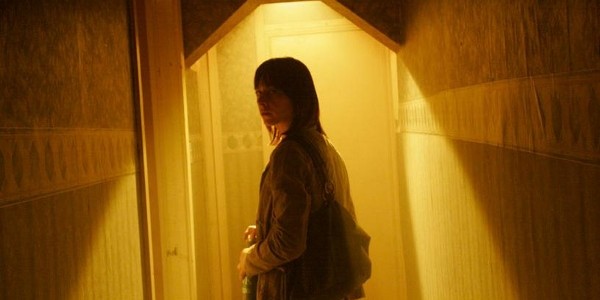
Andrea Arnold made her feature debut with Red Road after winning a Best Live Action Short Oscar for her short film Wasp in 2003. Red Road was to be the first of the Advance Party Trilogy, three films by different directors, which would use the same actors playing the same characters but in different stories. The second film Donkeys was directed by Morag McKinnon and came out in 2010 but didn't garner the praise and media interest afforded Red Road. The third film intended to be directed by Danish director Mikkel Nørgaard is currently still in development. The Red Road of the title refers to Glasgow's Red Road Flats, the setting for CCTV operator Jackie's (Kate Dickie) pursuit of a man from her past that she spots whilst observing her monitors. Kate Dickie's performance makes you sense all of Jackie's pain and sense of isolation, without needing the story explain her troubled past, displaying the kind of talent that won her memorable role on HBO's Game of Thrones.

11. Orphans (1998)

Peter Mullan's first film as a writer and director Orphans tells the story of four siblings in the direct aftermath of the death of their mother. Though the film was made not long after the death of Mullan's own mother he stated at the time that it was not autobiographical but rather the four characters had been constructed around the different emotions he had been experiencing since her death, and that the film was more of a response to her loss. Orphans is in the great tradition of independent films which captures something of the energy, humour and patois of the community it depicts, with an authenticity that only someone who has lived and experienced that world can bring. In the 16 years since it was made Mullan has only gotten behind the camera on a further two occasions with The Magdalene Sisters in 2002 and Neds in 2010, though hopefully he can balance his work as an in-demand character actor with future directorial outings.

10. Comfort And Joy (1984)

Sadly Comfort and Joy would be Bill Forsyth's last Scottish film before embarking upon an ill-fated period of working in America, and finally returning with Gregory's 2 Girls in 1999. His fourth film is a comedic fictionalisation of Glasgow's infamous Ice Cream Wars, a turf war which took place in the city in the early 80s between rival criminal organisations who were using ice cream vans as a cover for drug dealing and racketeering. Bill Patterson plays Allan "Dickie" Bird a radio DJ who gets drawn into the turf war by complete chance. Though the term "Ice Cream Wars" can't help but evoke a comical response the actual events that the film drew inspiration for were noted for their brutality, most significantly the murder by arson of six members of the same family. The public outcry at Strathclyde Police's ineptitude in controlling the situation led to one Glaswegian wag dubbing them the "Serious Chimes Squad".

9. Sweet Sixteen (2002)

One of the most common words that can be associated with Scottish film is "uncompromising" and it is this truthfulness that can be found in the nation's best films, that gives them an integrity and legitimacy that appears to be dwindling in recent British film. Sweet Sixteen is up there with the best Ken Loach films, another collaboration with Paul Laverty, it is the tale of young Liam, a "Ned" (non-educated delinquent) from the town of Greenock near Glasgow, whose sixteenth birthday is approaching as he finds himself drawn deeper into a life of crime than he had hoped or intended. Liam perfectly encapsulates the kind of disenfranchised Scottish youth who found themselves marginalised and pushed to the fringes of society, growing up in the shadow of a diminished industry, with very few prospects on the horizon with which to address their circumstances.

8. Shallow Grave (1994)

Danny Boyle's stunning, energetic debut arrived in 1995 and not only gave us Boyle but brought Ewan McGregor, Christopher Eccleston and Kerry Fox to the wider attention of the cinema-going public. Shallow Grave is a cautionary tale about not letting money and greed get in the way of friendship, masterfully played by its three leads. It gave a twisted Hitchcock-ian hint at the eclectic career Boyle would go on to have. Three friends living in an Edinburgh townhouse need a new flatmate, and after interviewing several candidates settle upon Keith Allen's shady Hugo. Not long after he moves in they find Hugo dead in his room with a suitcase full of money, and instead of reporting his death they opt to bury him in the titular shallow grave and share the money between them. So begins a descent into paranoia, distrust, betrayal, madness and further murder.

7. Culloden (1964)

Peter Watkins' groundbreaking "factional" film was first shown on the BBC in 1964 and remains as fresh, innovative and hard hitting today as when it was first broadcast. Culloden was Watkins first feature length production, and in a complete break from the approach to recreating historical events on film, he took the ingenious creative decision of filming the events as if they were being reported on by an actual film crew, using real people from the area to play the historical figures who would have fought for their ancestry in the battle that was said to have brought an end to the clan system in Scotland. Watkins went on to be one of film's great masters of the Docudrama, winning the Best Documentary Oscar for his similarly styled The War Game, which examined the effects a nuclear strike would have on Great Britain. Later he would go on to make Punishment Park, a fictionalisation of America's mistreatment of those deemed "subversives" at the height of the Vietnam War. Like Culloden before it Punishment Park is a prescient film which continues to influence both radical and mainstream filmmakers to this day.

6. Ratcatcher (1999)

After making her name with a series of haunting and atmospheric short films all set around her native Glasgow, director Lynne Ramsay made her feature debut with Ratcatcher in 1999. Set during the Glasgow Binmen strike of 1973, the film is a coming of age tale that follows the life of 12 year old James Gillespie as he negotiates poverty, the loss of his friend (for which he feels responsible), his father's alcoholism and his burgeoning sexuality. Ratcatcher recalls some of the best examples of coming of age cinema, in particular Francois Truffaut's similarly themed first film as director Les Quatre Cents Coups (The 400 Blows). Truffaut said of his film that it was "the chronicle of the thirteenth year, the most difficult since it marks the passage from childhood to adolescence", although Ratcatcher's James is in his twelfth year, this "thirteenth year" aspect of Truffaut's film feels equally applicable to Ramsay's elegiac work.

5. Local Hero (1983)

local hero For some Local Hero is Bill Forsyth's crowning achievement in a career that put Scottish cinema on the map, and its difficult to argue against when watching this quite magical film, which pits big business against small town concerns. Local Hero is the tale of an American oil company executive (Peter Riegert) sent by his eccentric boss (Burt Lancaster) to try and purchase an entire Scottish village in order to make way for a new oil refinery. Several years ago life actually began to imitate art in a bizarre way when Donald Trump's plans to purchase land including protected sand dunes of "special scientific interest" in Aberdeenshire to build a luxury golf resort were met with strong opposition from locals and environmental activists. Unsurprisingly, in the real world Trump got his way and the course opened in 2012. Not until Trump had voiced his own concerns though, over plans for an offshore wind farm that he felt would "blight the view for golfers".

4. Whisky Galore! (1949)

One of the great Ealing comedies Whisky Galore! was the first film by one of Ealing's most celebrated directors Alexander McKendrick, who would later go on to make beloved classics like The Man In The White Suit and The Ladykillers. Based upon the true story of the SS Politician, a cargo ship that sank off the north coast of Eriskay in the Outer Hebrides. The "Polly" as it was known happened to be carrying 28,000 cases of malt whisky, given the unspoken rules of salvage in the islands and the fact that wartime rationing had depleted the whisky supply, the islanders took to helping themselves, until falling foul of the spoilsport customs authorities. Whisky Galore! fictionalises the story to tell the tale of the SS Cabinet Minister which runs aground off the Isle of Todday. Like most Ealing films Whisky Galore! is a comfort film that should be watched on rainy Sunday afternoons, with a tumbler of whisky in hand.

3. Gregory€™s Girl (1981)

Bill Forsyth's most beloved coming of age film still holds up as one of the very best depictions of awkward teenage romance that any nation has produced. The streets and parks of Cumbernauld take on a quite magical quality as the back drop to shy eccentric teenager Gregory's infatuation with Dorothy, a seemingly unobtainable girl, who is the school darling after making it onto the football team. Like all Forsyth's films the authenticity and realism is balanced with an off-kilter, almost surreal quality, that places his work in a category all of its own. Gregory's Girl captures the essence of school days and summer nights, hanging about outside the chippy, and in the park, and realises them on screen. For such a uniquely Scottish film its themes had universal appeal and Gregory's Girl went on to be one of the most financially successful Scottish films ever making over £25 million profit on its £200,000 budget.

2. Trainspotting (1996)

The film that made it cool to be Scottish. Trainspotting is more than a great film, it has transcended that to become (along with the novel before it) a cultural phenomenon and part of the iconography of the decade every bit as much as Blow-Up was in the 60s. It is a near perfect film, so completely of its era but timeless enough to become a modern classic. Danny Boyle's sophomore effort demonstrated irrefutably that Shallow Grave was no flash-in-the pan, and Boyle along with his co-writer John Hodge and producer Andrew McDonald performed a miracle locating the perfect cinematic beats in their excavation of Irvine Welsh's book - essentially a series of interlinking vignettes that formed a novel. Trainspotting was often described as 'unfilmable' but Boyle and co found the film to make within the multitude of narrative possibilities and in the process conjured a masterpiece.

1. The Wicker Man (1973)

Despite not being the greatest advert for the Scottish tourist board The Wicker Man is a film that has brought fans from all over the world on a pilgrimage to the Dumfries and Galloway locations it was filmed in. Rightly so, as The Wicker Man isn't just one of the greatest British horror films ever made, it is one of the greatest films ever made full stop, and in a career spanning nearly 70 years and over 275 films Christopher Lee still considers it the best film he ever appeared in. As part of a short lived genre that Mark Gatiss termed "folk horror" alongside Michael Reeve's The Witchfinder General and Blood On Satan's Claw, The Wicker Man remains a unique experience. This despite endless parodies and homages, Neal LaBute's lamentable attempt to remake it with Nicholas Cage and director Robin Hardy's thematic follow-up The Wicker Tree, which was released in 2012. A third part of Hardy's Wicker trilogy Twilight Of The Gods is expected to surface in the next couple of years, whether it can recreate some of the original's magic formula remains to be seen, though it's Shetland setting could go some way towards evoking Sergeant Howie's ill fated "appointment with the Wicker Man". Any Caledonian classic you feel should have made the list? Tell us below:

Contributor
Contributor

As well as the odd article, I apply my "special mind" to scriptwriting for Comics, Films and Games... Oh and I cut down trees, I skip and jump, I like to press wild flow'rs, I put on women's clothing, and hang around in bars. Follow me on Twitter @DrRobertOtnik