20 2000s Movies That Could Never Be Made Today
The 2000s may seem cheesy and lame in retrospect, but the decade dropped some edgy flicks.
The noughties were, for some, halcyon days, when the internet, DVD and CGI had opened up the film world in ways hitherto unimagined. And yet, many of the social and cultural norms from this time fell to the sword of the 'tens, when politics and social mores shifted dramatically, with great strides made for sexuality in particular.
As a result, when we cast our eyes back, some of the films of yesteryear can make us uneasy, seem wild and over-the-top, or read as far more controversial than they did at the time. It can be as simple as the gross-out comedy sequences not seeming quite so funny, or as complex as the moral dynamics of gender and race being totally out of whack. Consider if The Dreamers' sibling incest would have as warm a reception today; if that scene in Irreversible would get past the producers, never mind the censors; and if the Wayans would be allowed to make any films at all.
There's no denying the industry has changed, and is far more responsive to public taste, morals and offence now than it has ever been. So, for better or worse, these are 20 films whose scripts wouldn't pass the supervisor, whose cast wouldn't sign on, or which simply wouldn't get funding today. Some good; some bad; all controversial.
20. Tenacious D in the Pick of Destiny (2006)

Comedy rock duo Tenacious D have been a little more Tenac and ious D in recent years following an ugly public spat over a Trump assassination joke. But 20 years ago, the boys could do no wrong, bringing forth a star-studded stoner comedy in the form of Tenacious D in The Pick of Destiny.
The film tells the fictional story of how Jack Black and Kyle Gass came to form the band, fight the Devil, and write, amongst other things, the best song in the world. Meat Loaf is Black’s father, Dio his guardian angel, and Dave Grohl plays the devil himself, in a rip-roaring 94-minute ode to the plight of the small-time rockstar.
But so much of what makes the film great is tied to the time it was released. This kind of stoner comedy was already a fading genre, only briefly revived by the Judd Apatow set before dying an agonising death in the 2010s. The humour is juvenile, the drug use casual, and the contemporary faux pas many. Certainly, jokes about Gass being r**ed in Hell by the Devil wouldn’t make it into a mainstream New Line Cinema release today. Society and Hollywood have moved on from bong hits, cock push-ups, and Satan's "hot demon gel", even if we haven't.
19. Crash (2004)

LA crime drama Crash has long been the butt of many jokes amongst the film community – and one only needs to watch it to see why.
The picture features a massive cast of Names, including Don Cheadle, Sandra Bullock, Matt Dillon, and Brendan Fraser, portraying a swell of characters whose lives and circumstances intersect in unexpected ways. The inciting incident of the film is the titular crash, in which several of the film’s characters exchange cliched racist insults, and this effectively becomes the template for the whole thing, with each narrative strand portraying ham-fisted race relations and equally clumsy resolutions.
At the time, this seemed groundbreaking to white, middle-class audiences, and Crash won a plethora of awards, including the Academy Awards for Best Picture, Best Original Screenplay, and Best Film Editing. But such contrite tripe wouldn’t get past any of the far more diverse awards juries these days. Ultimately, the movie is weak sauce and offers a shallow idea of different racial groups’ situations and their underlying pressure points (poverty, patriarchy, institutional inequality). This wouldn't even get picked up for production today, never mind scoring accolades.
18. Tropic Thunder (2008)

Tropic Thunder assembled some of the noughties’ greatest comedy talents for a meta, Vietnam War movie spoof that managed to come home safe… or so we thought.
Ben Stiller (also writing-directing), Jack Black, and Robert Downey Jr star as a troupe of precious Hollywood actors who are dropped into the Vietnam jungle to get some authentic, on-location footage for their war movie. But this Heart of Darkness-style folly brings them face-to-face with the Flaming Dragon heroin gang, and by the time they realise the other side aren’t shooting blanks, they’re lost, alone, and unable to contact the production team.
This seems a solid enough premise, one that would make a fine comedy today; except for just one or two things. Downey’s Aussie method actor Kirk Lazarus goes all-in on his part as Staff Sergeant Lincoln Osiris with, well… full blackface. And Stiller’s Tugg Speedman can’t help but return to what he feels was his most misunderstood role: Simple Jack, a farm boy with severe special needs.
Both elements were controversial at the time, yet the film managed to be a mainstream success, with fans and critics broadly understanding that it’s intended to satirise the film industry, extravagant productions, and the OTT actors who inhabit them. But Tropic Thunder's unabashed blackface, depiction of special needs, and use of the word "r**ard" completely rule it out for today's movie scene.
17. The Dreamers (2003)
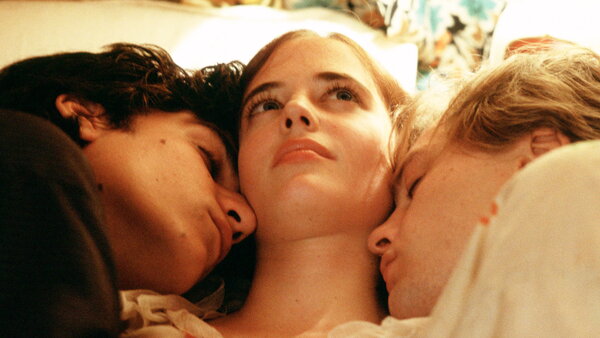
Bernardo Bertolucci was a controversial director thanks to so many of his projects, and yet it’s one of his most fondly remembered productions – erotic-romantic drama The Dreamers – that would prove challenging to make today.
Based on The Holy Innocents by Gilbert Adair, The Dreamers sees US exchange student Matthew (Michael Pitt) meet twins Théo and Isabelle (Louis Garrel and Eva Green) in Paris and embark upon the most bohemian chapter of his life. Left alone in the twins’ parents’ house for a month, he finds that the pair share an unusually close bond, spending time naked together, sleeping together and, yes, sleeping together.
What could be sinister and sleazy instead pans out as a curiously affecting tumble through a microcosm of life, as the trio play house, dream of revolution, and revel in their high-brow interests. And yet, even with all that said, there is little chance this film would be made today, let alone at a cost of €16 million. Fox Searchlight (now Disney) hasn't gone in for open sibling incest in decades – no matter how good the film – and neither they nor any other major studio or financier are about to start now.
16. Ghost Rider (2007)

Before the MCU was a thing, when Marvel was handing out licensing agreements like fun coupons, we were gifted something that would seem impossible by today’s standards: a Nicolas Cage-led Ghost Rider movie.
Decked out in biker gear, with dyed-black hair and an improbable six-pack, the 45-year-old Cage leapt into action as 38-year-old motorcycle stuntman Johnny Blaze. Having traded his soul to Mephistopheles at 17, the big guy comes back to claim his due and makes Johnny the Ghost Rider, a demonic skeleton that rides a flaming, Harley-style Hell Cycle, smiting those with evil in their hearts.
It's not the greatest film ever, but it's OTT, it's fun, and it doesn't take itself too seriously, with director Mark Steven Johnson letting Cage really do his thing, even in those scenes where CG covers his face. But the simple fact is that they just don't make superhero pictures like this anymore. This was one of the last truly pre-MCU hero movies, with Cage absolutely unleashed as Johnny Blaze, giving the film the free-wheeling sense of being able to go anywhere, no bigger narratives, and grand designs. Nobody, not least of all Kevin Feige, would be putting this thing on the slate today.
15. Superbad (2006)

Superbad was everywhere in the second half of the noughties, dominating teen culture pretty much as soon as it landed. And given how it nails high school humour and packs so many instant references into its 113 minutes, it’s not difficult to see why.
We join Seth and Evan (Jonah Hill and Michael Cera) on the cusp of graduating high school. The boys haven’t exactly made a name for themselves over the years, and are keen to get out there, hit a house party, hit on some girls, and lose their virginity. The resulting night is a cacophony of blunders and missteps, as Seth, Evan, and their friend Fogel (Christopher Mintz-Plasse) try to score some booze, get to the party, and get laid.
It’s American Pie for the Inbetweeners generation, showing just how uncool high school can be, while offering a shot at redemption and a little McLovin. But it’s not exactly au fait with contemporary social mores, with the female characters in the film mostly mere objects or devices, and the language and jokes rife with homophobia. And major studios’ reluctance to embrace this film now is borne out in 2019’s female-directed and female-led Booksmart, which takes the tropes and format of Superbad (and even stars Jonah Hill’s sister Beanie Feldstein) and redresses the balance with a core of inclusivity and gender parity.
14. Elephant (2003)
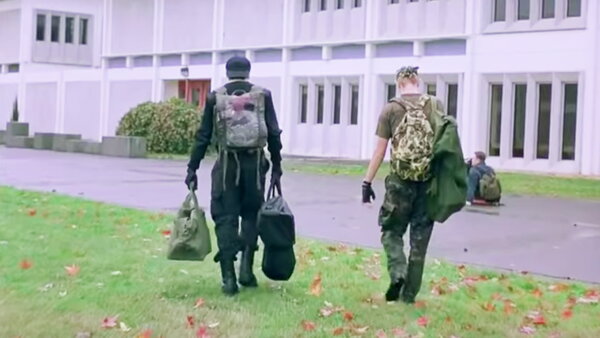
Elephant is an on-the-nose school shooter pic from Gus Van Sant, which goes headlong into its subject with grim determination. The film charts the intersecting lives of high schoolers in Portland, Oregon, portraying their struggles with eating disorders, bullying, alcoholic parents, and sexuality, before their worlds are torn apart by classmates Alex and Eric (Alex Frost and Eric Deulen) embarking on a mass shooting across the school grounds.
This is actually one instance of a controversial and extreme noughties film being even-handed and demonstrating exactly the kind of perspective we would want to see in a feature of its kind today. However.
Van Sant walking us right into the heart of a high school shooting was shocking at the time, when Columbine still felt like a singular and rare event. Showing the perpetrators and victims as young, human, and fallible is admirable, but it is also something few audiences, and even fewer financiers, have the stomach for in the current US climate, as in the years since Elephant gun production has spiked, politics has become intensely divisive, the tragedies have piled on, and several mass shootings have been accompanied by video evidence of extreme right-wing ideology.
13. Gran Torino (2008)
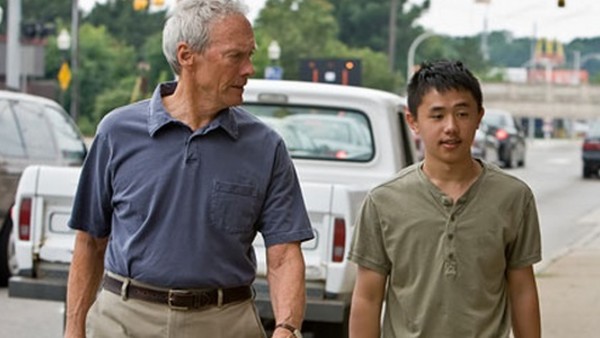
Gran Torino is one of the best films Clint Eastwood has made, and that’s saying something. Channelling his inner crotchety grouch, Eastwood himself stars as widowed Korean War vet Walt Kowalski, who likes to drink beer on his porch, polish his Ford Torino, and racially abuse his Asian neighbours. But after foiling Thao Vang Lor’s (Bee Vang) attempt to steal his car, he becomes instrumental in breaking the influence of a local gang over the neighbourhood, and comes to realise the interlopers he harbours so much hatred for are really not so foreign after all.
The film is a modern classic, but the currently highly polarised commentariat and Hollywood system means it would be unlikely to make it today. Watching from a contemporary standpoint, there are a variety of tropes we wouldn’t expect to see in a picture of this calibre, including the r**e of a young woman purely as a plot motivation. Then there’s the racism.
The language runs the gamut from perplexing to completely unacceptable, and while this wouldn’t exclude it from production today, the fact that Walt – the openly racist and xenophobic main character – gets a redemption arc would give producers second thoughts about shelling out $30 million for it. Walt never really rolls back his racism, and several of the other characters are merely instrumental in providing the path for what is, underneath it all, a white saviour narrative.
12. The Hangover (2009)
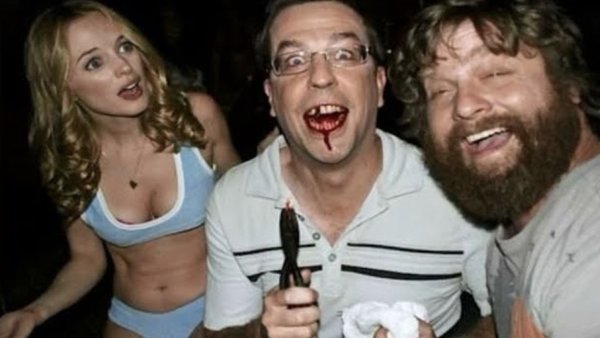
The Hangover: a contemporary of Superbad’s that had a similar level of impact on the comedy and culture, but aimed at a (slightly) older audience.
Todd Phillips’ film tells the story of Phil (Bradley Cooper), Stu (Ed Helms), Alan (Zach Galifianakis), and Doug (Justin Bartha), who head to Vegas for the ultimate stag do. But what begins with drinks on the roof of Caesars Palace, ends all too quickly with the hangover of the century. Unable to remember a thing, the gang have to retrace their steps from the night before and find Doug so they can get him back in time for the wedding.
Needless to say, a movie with a breastfeeding stripper, a caricatured Chinese gangster, and a drug dealer called Black Doug has shaky gender, racial, and sexual politics. Add in a primo spot for convicted r*pist Mike Tyson and, of course, "paging Dr. F**got" – a line so out of place in 2020s zeitgeist that it was recently satirised for this very fact in Nirvanna the Band the Show the Movie – and you’ve got a 2026 executive’s nightmare.
Indeed, it’s surprising that Phillips – the man who cast himself as a bus-based feet-licking stranger in Road Trip, and a man going down on a woman in an elevator in The Hangover – is still making movies. But the last picture of this nature he got greenlit was The Hangover Part III back in 2013, so that should say everything you need to know.
11. I Now Pronounce You Chuck and Larry (2007)

Buddy comedy I Now Pronounce You Chuck & Larry takes us to a New York fire station, where firefighters Chuck Levine and Larry Valentine (Adam Sandler and Kevin James) pretend to be gay and get hitched in Canada so widower Larry can provide life insurance for his children.
On the surface, this is a noble, feel-good premise, but given this film was directed by Dennis Dugan – who brought us You Don't Mess with the Zohan, and Jack and Jill – and was released in 2007, some eight years before the 50 states got same-sex marriage, it is, umm, not.
Chuck & Larry features a disastrous portrayal of the LGBT community, riddled with offensive cliches and stereotypes. Needless to say, it has its fair share of homophobia, deemed a necessary element to sell the mismatch between burly, manly, all-American firefighters and *gasp* homosexuals. It also has non-consensual sexual touching, and Rob Schneider doing yellowface, as marriage administrator Morris Takechi, for absolutely no reason. And it’s a comedy, so all this is played for laughs.
Well, few audiences would be laughing today, and certainly none to the tune of an $187 million box office – and the producers and execs in charge of greenlighting films know this only too well.
10. Sorority Boys (2002)
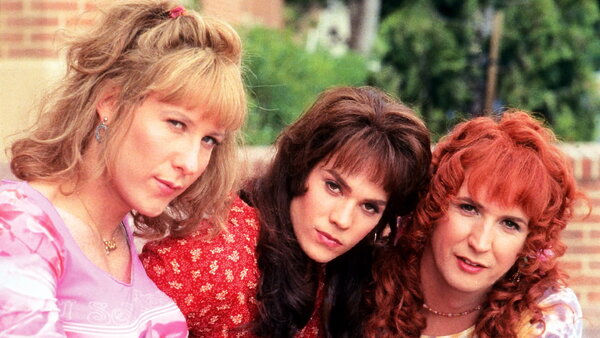
Before Disney began snapping up other studios like groceries, consolidating its many arms and properties in the process, it made and released some of its more adult-oriented films as Touchstone Pictures. And while the studio brought us classics all the way from Turner & Hooch to The Prestige, it also gave us Sorority Boys.
Frat boys Dave, Adam, and Robert (Barry Watson, Michael Rosenbaum, and Harland Williams) get unjustly thrown out of their fraternity (“KOK”) and take aliases as Adina, Roberta, and Daisy to find out what went wrong. Cross-dressed and ready to party, the three join a feminist sorority (“DOG”), employing secret cameras and dishing out roofies like candy. Fun stuff.
Now, in the noughties, gender identity wasn’t as much of a hot-button issue as it is today, but the struggle was still real. Terms like transsexual, transgender, drag, and cross-dressing were often used interchangeably, without the stricter boundaries and categorisations employed today, and this meant there was more space for harmful stereotypes and caricatures to arise.
With sex jokes and gross-out gags being its primary vehicle for comedy, Sorority Boys is insulting to pretty much everyone who isn’t a heterosexual man, but it especially revels in dragging women through the mud in order to deliver a film that, in all honesty, wasn’t worth the effort to make. And you can be damned sure the script wouldn’t get anywhere near a Disney producer’s desk today.
9. Black Snake Moan (2006)
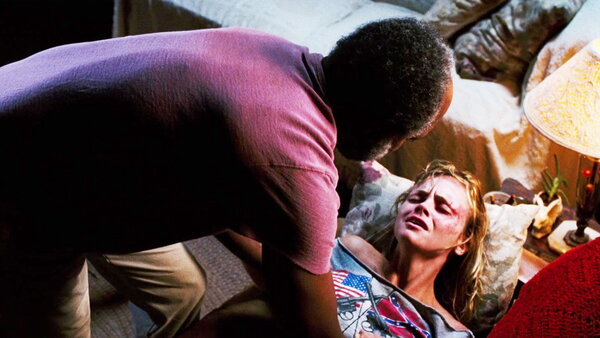
What do you get when you combine one-fifth of NSYNC, Wednesday Addams, and a bad mother*cker? Craig Brewer’s Black Snake Moan is what. And if that sounds wild, just wait for the film’s plot...
Christina Ricci is Rae Doole, a young, drug-taking, Deep South nymphomaniac who can’t help but get herself in all kinds of trouble, and while her military man Ronnie Morgan (Justin Timberlake) is away on deployment, she winds up beaten, unconscious, and half-naked by the roadside. Taking this as the sign and opportunity to intervene, reclusive local farmer and bluesman Lazarus Redd (Samuel L. Jackson) takes her captive to try and get her on the straight and narrow.
Black Snake Moan is a brilliant and often overlooked movie, thanks to the bonkers premise and salacious, exploitation-adjacent promotional imagery of an old black man in a string vest with a white woman chained at his feet doing little to sell the film at the time of release. But while its subject matter was on the line at the time, it would be way over it today. The optics of a black Southern man chaining a nymphomaniac white girl to his radiator aren't great, whichever angle you view it from, and the presently strained global racial politics would make this flick a risk no studio with the resources to hire this calibre of stars would be willing to take.
8. Meet the Spartans (2008)

The noughties did a thriving trade in spoof comedies aimed at recent blockbusters and pop culture, all thanks to the success of the Wayans’ Scary Movie in 2000. But while there were many imitators, few of the subsequent films in this genre came anywhere close to that already middling first offering.
By 2008, Scary Movie writers-turned-directing duo Jason Friedberg and Aaron Seltzer had built a career on passable parody films, and when they dropped Meet the Spartans, comedy fans were hopefully optimistic. Built around the plot of 300, the movie exclusively stars B- and C-list actors, and takes lazy potshots at a scattershot of other films and popular culture, including Rocky, American Idol, Ugly Betty, Ghost Rider, Paris Hilton, and Brangelina. But the picture fails to build the structure necessary for a good parody, with the script reading like a first draft and the acting improv, at best.
The more of these films the system spat out, the worse they got, with Spartans representing a turning point in public sentiment, beginning the gradual shunning of parody features that ensured their rapid decline. The next decade all but killed off the genre, with Meet the Spartans being one of the last major titles and one of the worst. While there’s still a sliver of space for a well-crafted parody today, the Meet the Spartans breed is dead and buried.
7. The Ringer (2005)
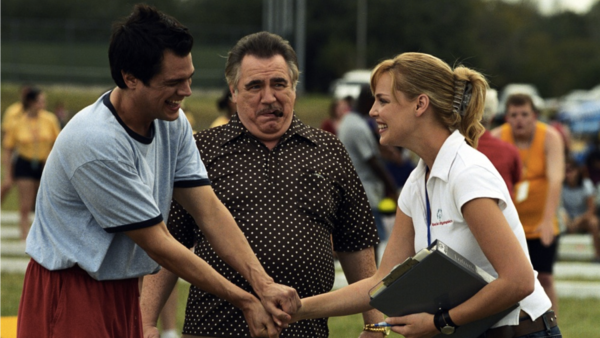
Johnny Knoxville has always imagined himself as more than a human punching bag, seeking to diversify his career early on and not get pigeonholed with the rest of the Jackass crew. And, to a certain extent, this worked, with the actor appearing opposite big names like Jackie Chan, Heath Ledger, and Burt Reynolds over the years. But if The Ringer had released in the 2020s, his career would have been over before it began.
The film puts Knoxville into action as Steve Barker, a well-meaning guy who tries to raise $28,000 in medical bill money when his immigrant handyman loses several fingers. Before the era of the GoFundMe, this meant finding creative routes to quick cash, and with his shady uncle Gary (Brian Cox) on board, Steve decides to enter and rig the Special Olympics. Thus, Knoxville assumes the guise of ‘Jeffy Dahmor’, and spends much of the rest of the film pretending he has a developmental disability – with all the gestures, expressions, and mannerisms this entails, in a catch-all offensive performance.
Needless to say, audiences don't go for this sort of thing anymore, and the people bankrolling the movie business know it. Knoxville defends it to this day, claiming it as a positive affirmation of those with special needs, rather than an attempt to poke fun at them, but whether the jury is out or not, this movie is never getting made again.
6. Team America: World Police (2004)

Trey Parker and Matt Stone have spent decades satirising American culture from an insider’s perspective via South Park, but it wasn’t until Team America: World Police in the mid-noughties that they fully captured how the world sees their country.
Using puppets and miniatures, Team America portrays the titular international counterterrorist organisation as they travel the globe, indiscriminately dropping into other countries and dispensing US justice – annihilating scores of innocents and entire cities in the process. After a botched mission in Paris, Broadway actor Gary Johnston is brought onto the team to help infiltrate a terrorist cell, and they wind up uncovering a world domination plot by none other than North Korean dictator Kim Jong Il.
Trey Parker voices Kim, the team is pursued by the Film Actors Guild (F.A.G.), the terrorists speak in “durka durka”s, and Matt Damon is portrayed as mentally handicapped; racism, sexism, xenophobia, misogyny, homophobia – you name it, this film has it. The gags are exploitative and crass, and the puppetry second-rate. Yet, these are precisely the elements that make the movie good. Team America was written to cast a spotlight on the United States’ all-action, world-police mentality, and all the deep and unresolved social, racial, and sexual issues that are part of the national psyche.
The film couldn’t and wouldn’t be made today, for ALL the reasons. And yet now more than ever is when America needs to take a long, hard look at itself.
5. Bamboozled (2000)

Released by New Line Cinema in the autumn of 2000, Spike Lee's cutting social satire Bamboozled barely got noticed by mainstream audiences, scoring just 2.5 of its $10 million budget back at the box office. Nevertheless, it’s one of the director’s best efforts and one of the more controversial films of the noughties.
Harvard-educated African-American Pierre Delacroix (Damon Wayans) is struggling to get his scripts developed at the CNS network. Under the thumb of a jive-talking white boss (Michael Rapaport’s Thomas Dunwitty), he devises a way out by proposing a modern minstrel show, with black actors in blackface, convinced he will be canned. But the executives, the live audiences, and the general public love it, launching Mantan: The New Millennium Minstrel Show with great fanfare and bringing Pierre and his actors to question everything about their place in society.
Given people got up in arms about Adam Driver shouting the N-word once in Lee’s BlacKkKlansman, it isn’t hard to see what audiences today would think about a picture in which white people use racial epithets indiscriminately, and jokes involving watermelons and ‘porch monkeys’ are part of the furniture.
Featuring black actors in blackface for a minstrel show would be too rich and risky for Hollywood to touch today. And yet, the very point is to paint a target on the contemporary film and television scene, highlighting the shaky racial politics at play in the kind of media that producers and executives regularly program.
4. Shallow Hal (2001)
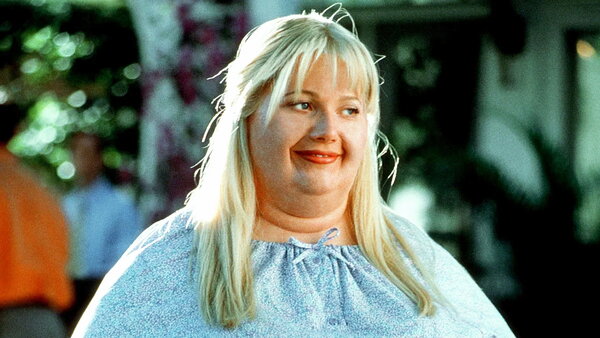
Shallow Hal stars Jack Black as the titular womaniser who is hypnotised against his will into only seeing a person’s inner beauty. When he meets Gwyneth Paltrow’s dainty blonde bombshell Rosemary, he thinks he has struck relationship gold, renouncing his old ways in the pursuit of love. The only thing is, everybody else seems to treat Rosemary as if she’s a hideous monster…
Paltrow is trussed up in a 25-pound fat suit for much of the film, and every other joke is about weight, because this is long before the era of body positivity, and overweight people were an ideal target for low-brow comedy. In the years since, the only people who haven’t expressed regret at making Shallow Hal are the Farrelly Brothers, who – with a rare exception in Green Book – never seem to be swayed by progressive morality or a call for higher creative standards.
The thing is, even if you can overlook the fat suit and fat shaming, the ethics of the film are still dire. There is the explicit message that perfection is one fixed thing, and this doesn’t include anyone (including children) with scars, disabilities, and physical differences that don’t conform to a certain celebrity-, influencer-, and glamour-magazine-endorsed ideal. It’s gross, it will make you feel gross, and not even the Farrellys, who are still making garbage like Balls Up and Ricky Stanicky, could get this greenlit today.
3. Little Man (2006)
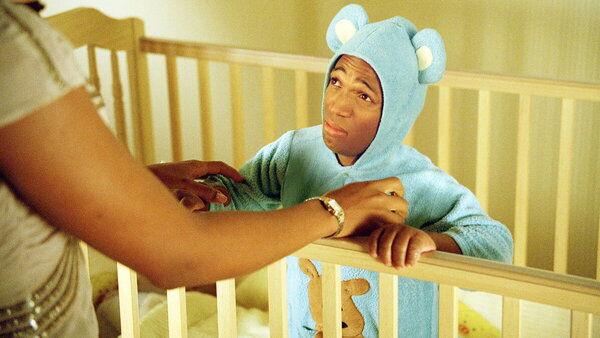
Between them, the Wayans family have a horde of accolades, from Damon’s turn in Bamboozled to Marlan’s in Requiem for a Dream. But, no matter what, the boys always seem to be able to scotch all the goodwill audiences have built up for them and reset the dial with one monumentally bad idea.
2006’s idea is called Little Man, and it features Marlon as Calvin “Babyface” Simms, a jewel thief with dwarfism who poses as a large baby in order to retrieve his misplaced diamond and avoid both the authorities and mobster Mr. Walken (Chazz Palminteri). Hilarity ensues…
Except it doesn’t, because Little Man is a melange of everything wrong with the noughties’ comedy scene. There are gross-out gags throughout, including an especially nasty one involving explosive diarrhoea, and that’s before we even get onto the moral standing of the film. Even in 2006, an average-size adult man pretending to be a dwarf was pushing things to the limit, but to then have him act as a baby is a disgusting way to represent and demean that community. No studio would touch this with a barge pole today, and good riddance, because the fewer movies like Little Man out there, the better.
Oh, and to make matters worse, the film was used as evidence of how images can be realistically tampered with by the defence in R. Kelly’s 2008 sexual abuse trial.
2. Irreversible (2002)

Gaspar Noé was one of the most exciting young directors of the early noughties, so much so that Euro megastar couple Vincent Cassel and Monica Bellucci were dying to work with him. After turning down the script that would become his erotic art film Love because it was too exposing, the pair instead settled for his ride-by-the-seat-of-your-pants thriller Irreversible – because that is, uhh, far less exposing?
The movie is revealed, scene by scene, in reverse chronology, opening on Cassel’s Marcus and his friend Pierre (Albert Dupontel) attacking the patrons of an underground BDSM nightclub, and beating one of them to death with a fire extinguisher. Following their journey back, we learn that they’re hunting the man who r*ped Marcus’ partner Alex (Bellucci) and left her for dead in an underpass – and then we are forced to watch it. Each scene is laden with foreboding, dragging us backwards in time and keeping us on the edge of our seats waiting to see what misery will next befall Noé’s characters.
When Irreversible was screened at Cannes, around 200 people walked out, and critics were divided on whether such a frank depiction of violence and brutality could be justified. Well, today it wouldn’t even be in question. The post-#MeToo film industry would bury this at the script stage (not that there was a huge script to work from), and censors would tear it apart before a nine-minute-long r*pe scene could make it near a cinema screen.
1. Tiptoes (2002)

What else could be more anachronistic for our present sensibilities than Gary Oldman in the role of a lifetime…
Matthew Bright’s Tiptoes sees Matthew McConaughey’s Steven fall for Kate Beckinsale’s Carol in a paper-thin romance, but their happy days are soon to be devastated by Steven’s greatest secret: his entire family has dwarfism. Steven can’t bear for his child to be a dwarf, and this causes a lovers’ rift as Carol meets and becomes close with his family – including his twin brother Rolfe (Oldman) – and opts to keep the baby.
Now, the premise is bad enough - average-size man despises dwarfism enough to keep his family a secret and wants rid of his unborn child - but, even if this weren’t the case, Oldman is literally acting on his knees for the duration of the film, shuffling and hobbling around with shoes glued on. And this is a movie full of actors who really have dwarfism, including future superstar Peter Dinklage.
Why did Oldman agree to act on his knees? Why didn’t they get Dinklage to play the twin brother? And why, oh why, was it selected for the Sundance Film Festival? The only answer can be that this was the noughties, and the film community thought anything was fair game.
Well, you can be damned sure this wouldn’t get the money, the cast, or the go-ahead today; everyone involved is interested in keeping Tiptoes buried for a reason.