20 Best Animated Movies Since 2000

From hand-drawn to cutting edge CG, here's the best animation of the 21st century.
The release of Pixar's Toy Story in 1995 marked a watershed moment in the history of animation, when the use of CGI to tell convincing - and convincingly emotional - stories which resonate with a wide audience became a reality. Since 2000, the use of computer generated imagery for animation has become increasingly refined and detailed, while at the same time several notable animation studios have kept the spirit of traditional cel animation and stop motion well and truly alive, producing rich and vibrant features every bit as spellbinding as their CG counterparts. While animation is a medium most often associated with family friendly movies, particularly in the West, it's also been utilised to tell some surprisingly mature stories aimed at an adult audience, a welcome trend which shows no signs of abating. As the techniques become more advanced and diverse, it's great to see filmmakers emerging to reflect that in new styles of filmmaking tackling more unconventional themes. From the best that major studios such as Pixar and Ghibli have to offer to some wonderful hidden gems you may have missed, here are the 20 best animated movies released since 2000.

20. The Tale Of The Princess Kaguya (2013)

Isao Takahata might not be a household name on the same level as his Studio Ghibli co-founder Hayao Miyazaki but his animations are still very much loved and admired by fans of the medium. His latest - and possibly final - movie The Tale Of The Princess Kaguya is perhaps his most beautiful movie yet, based on the Japanese folk tale The Tale Of The Bamboo Cutter and animated with literal brush strokes coming to life on screen. By Ghibli standards the pacing is more leisurely than most of the studio's output, with Princess Kaguya's mystical life delicately unfolding in a series of watercolour-inspired vignettes. Grave Of The Fireflies remains Takahata's true masterpiece, but The Tale Of The Princess Kaguya is about as visually lush as animation gets, and if this is to be his final movie it's a swansong any filmmaker should be proud of.

19. Waltz With Bashir (2008)

While animation is most commonly used to explore fantastical realms, Ari Folman utilised Adobe Flash and other modern animation techniques to explore the nature of memory and trauma in the context of the 1982 Lebanon War. Folman draws directly on his own experiences in the war and jumps between the event itself and his attempts years later to piece together what happened through interviews with his former comrades in the Israeli Defense Forces. This results less in a straight forward narrative and focuses instead on how memories are constructed and distorted by traumatic events. Waltz With Bashir is one of the most powerful and mature movies ever to use animation - and as if to undercut the way in which the medium has been used to tell an entirely subjective perspective of the events, Folman shifts to live action for the finale with chilling footage of the aftermath of the Sabra and Shatila massacre.

18. The Lego Movie (2014)

Few people were expecting a movie based on Lego to be any good - the fact that is turned out to be one of the funniest animated movies in recent years came as a complete surprise to virtually every film critic on the planet. Chris Pratt leads a perfectly selected voice cast as everyman construction worker Emmet Brickowski, the heart, soul and audience avatar of The Lego Movie who becomes embroiled in all manner of shenanigans involving pop culture references (and a little help from Batman) after accidentally acquiring the Piece of Resistance. Co-directors Phil Lord and Chris Miller conjure up an impressively detailed Lego-constucted world, but it's the witty script and charming characterisation which really elevates The Lego Movie well above the cheap and cynical product placement cash-in it could so easily have been.

17. Metropolis (2001)

An amalgamation of Fritz Lang's seminal science fiction classic and the later manga of the same name by Osamu Tezuka, Rintaro's anime update takes its inspired source material and transforms it into a visually gorgeous epic. As with Blade Runner and the more recent Ex Machina, Metropolis explores the nature of memory and identity through the eyes of a self-aware robot. While the story might not break any new ground, it's told with a grandiose sweep and in such style as to overcome any narrative shortcomings (the explosive ending set to I Can't Stop Loving You by Ray Charles is inspired filmmaking) Perhaps most impressive is the way in which director (and Madhouse Studios co-founder) Rintaro conceives the metropolis itself - this is an incredibly detailed, living and breathing city with as much character as the humans - and robots - which live within.

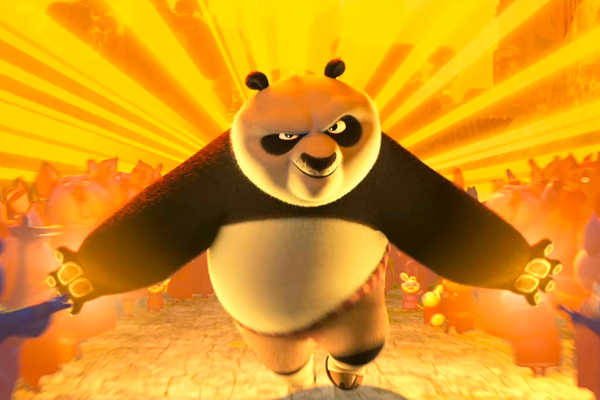
16. Kung Fu Panda (2008)

It took longer than expected for the influence of kung fu to be felt in the world of animation, with Kung Fu Panda coming several years after The Matrix, Crouching Tiger, Hidden Dragon and other mainstream martial arts movies exploded at the box office. It was certainly worth the wait - Dreamworks can be a little hit and miss when it comes to their blockbuster animated movies, but Kung Fu Panda represented a perfect blend of cutting edge animation with Chinese tradition and a script which made the most of Jack Black's slacker persona. Inevitable sequels have followed since, but unlike Dreamworks' Shrek franchise the Kung Fu Panda movies have managed to maintain a high standard (although Shrek The Third's notable drop in quality didn't stop it from becoming the fourth highest grossing movie of 2007...)

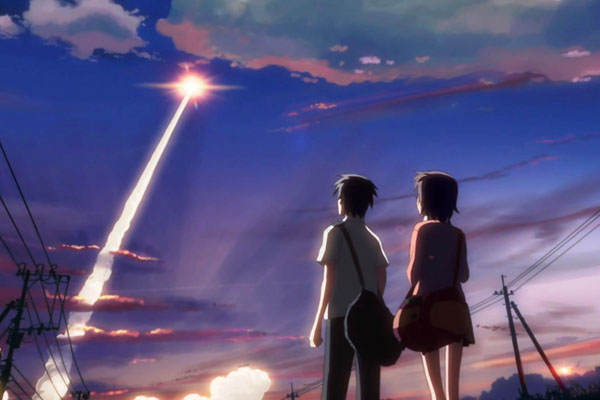
15. 5 Centimeters Per Second (2007)

If you're looking for an heir to Hayao Miyazaki then it's possible he's already been found in Makato Shinkai - his 2011 feature Children Who Chase Lost Voices is very much in the same spirit of Shinkai's favourite film of all time, Castle In The Sky. While Children Who Chase Lost Voices certainly captures the fantastical as impresively as any Ghibli imitator you can think of, his more grounded and contemplative features are far more interesting in their construction and execution. With its back and forth monologues between distant friends and expressionistic use of landscapes, 5 Centimeters Per Second is more cinematic tone poem than straight narrative. 5 Centimeters Per Second is a film for which the evocation of feelings counts for the most, the whimsical musings and poignant observations on life and love as delicately observed as the simple but profound shots of daily life Shinkai uses throughout the film.

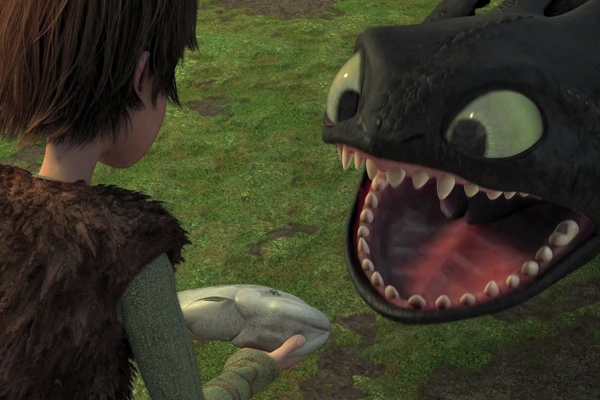
14. How To Train Your Dragon (2010)

Retelling the "hero's journey" might be as old as the hills in family-friendly blockbuster animated features, but few filmmakers make it look as effortlessly entertaining as Chris Sanders and Dean DeBlois did with How To Train Your Dragon. In order to establish his manhood and become accepted into his tribe, a young Viking called Hiccup first has to prove himself by capturing a dragon. Before long Hiccup has teamed up with Toothless, probably the most loveable dragon in cinema history (although admittedly cute dragons are hardly commonplace in movies). The archetypal rites of passage storyline is told with dizzying camerawork and a sense of scale and space rarely seen in animation (some of the aerial scenes are stunningly realised), and whereas often the theme of rebelling against conformity can feel forced in blockbusters, there's passion to the storytelling here which invites your emotional engagement.

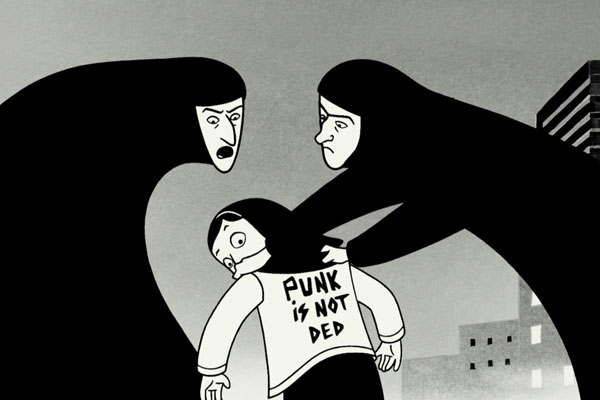
13. Persepolis (2007)

Persepolis's ultra-simplistic art style with its limited colour palette and neat lines works not only as a nod back to Marjane Satrapi's source graphic novel, but also as a visual metaphor for the universal aspect of the story being told. Co-directed by Satrapi and Vincent Paronnaud, Persepolis is an altogether different kind of movie about self-discovery than those found in most mainstream animated movies. Away from myths and legends, this is rooted in the 1979 Iranian Revolution as a younger, autobiographical version of Satrapi begins to explore new cultures against the backdrop of political turmoil. Persepolis is the kind of movie which can only be made as an act of remembering; a personal work in which the intimacy of the filmmaker's recollections and experiences give it its backbone. Unsurprisingly, with its lean towards a liberal, Westernized take on aspects of culture, the film was condemned in some circles for going against the tenets of Islam.

12. Wallace And Gromit: The Curse Of The Were-Rabbit (2005)
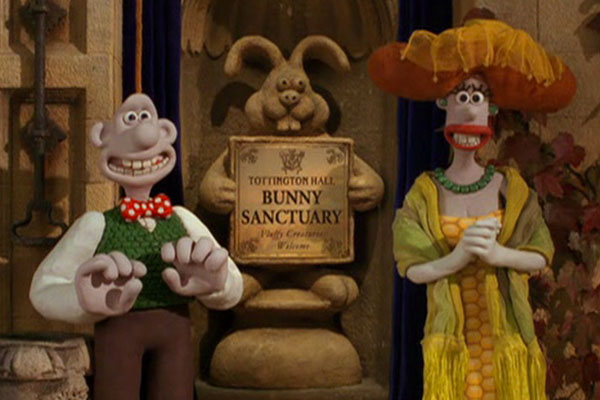
The early Wallace And Gromit shorts have been perennial favourites on British television for many years, with A Grand Day Out, A Close Shave and The Wrong Trousers family favourites on Christmas morning. Wallace And Gromit: The Curse Of The Were-Rabbit proves that not all short format comedy is doomed to failure on the big screen, with Nick Park and his team of stop motion animators at Aardman Animation putting together a feature every bit as charming, funny and distinctly British as the earlier shorts (the action sequences have the panache of Hollywood, made all the more amusing by the quaint visual references to pastoral England). The Curse Of The Were-Rabbit has the honour of being the only stop motion animated movie to have won an Academy Award for Best Animated Feature - sadly, the relatively weak box office performance and the poor health of Peter Sallis, the voice of Wallace, means that a new big screen outing for the duo is unlikely to happen.

11. The Triplets Of Belleville (2003)
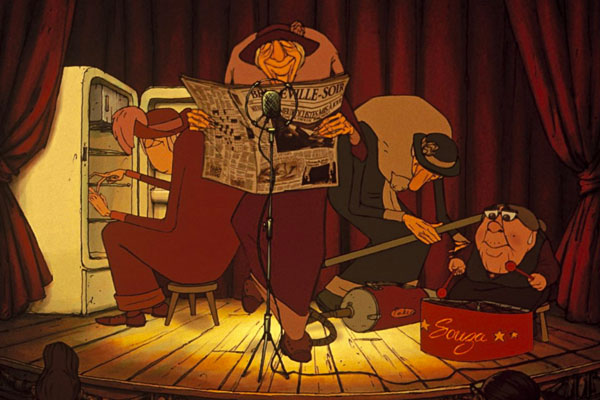
Another European animated movie which was nominated for an Academy Award, but failed to pick up the prize, is The Triplets Of Belleville, distinctly French in its styling just as Wallace And Gromit wore its Britishness on its sleeve. Writer-director Sylvian Chomet adopts a colourfully exaggerated cel animation technique to tell his story of a Tour de France cyclist Champion who is kidnapped by gangsters, leading his squat, elderly grandmother Madame Souza to set out in pursuit to rescue him (with a little help from Bruno the dog). With caricatured characters resembling something by Ralph Steadman and an absurdly funny finale (not to mention a wonderfully animated chase sequence), The Triplets Of Belleville is an entertaing and surreal animated Gallic trip well worth taking.

10. Anomalisa (2015)

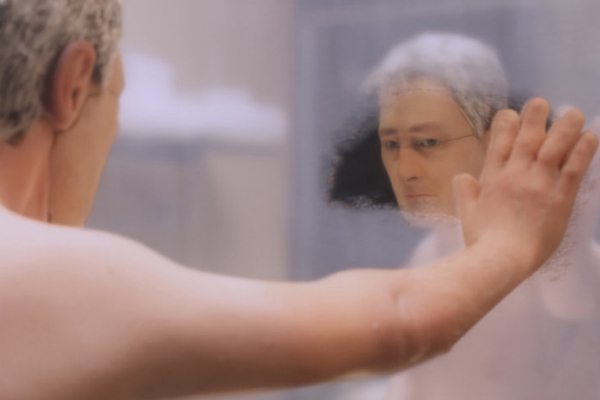
In the world of Michael Stone, the man at the cetnre of Charlie Kaufman's low-key but incredibly affecting film Anomalisa, everyone has the same voice and indistinct face. It's a measure of his level of alienation from the world around him, ironic (or perhaps inevitable) given his success as an expert in customer services. It's only when Stone (voiced with droll conviction by David Thewlis) meets Lisa (Jennifer Jason Leigh) that we meet another character with, well, character. Their awkward, tentative relationship plays out through the movie, peppered with Kaufman's trademark dark humour and intuitively echoing what it is to be lonely in a faceless city. Anomalisa is made an even more unique experience on account of its naturalistic production design, with drab hotels and sterile airports making up the locations. Stripped of any dominant colours it's a perfect setting for such a melancholy tale.

9. Paprika (2006)

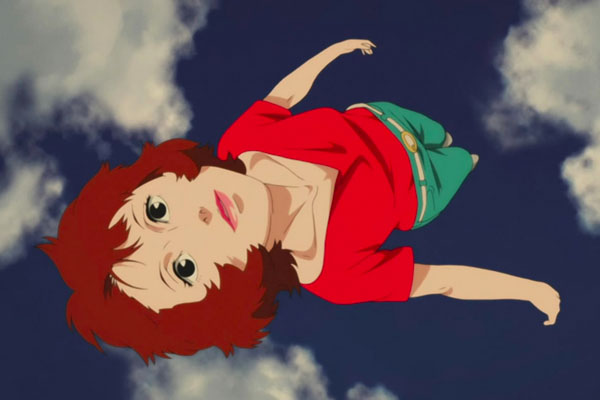
Whether or not Christopher Nolan had seen Satoshi Kon's Paprika before he made his brain-bending epic Inception, there's no denying that it bears a lot in common with Kon's animated foray into the subconscious world of dreams. Whereas Inception saw people entering one another's dreams for the purposes of extracting secrets or planting ideas, Paprika's dream machine is ostensibly intended as a tool for psychotherapy, the wearer of the DC Mini device being able to view people's dreams in the form of a sentient alter ego. When a DC Mini is stolen, the ensuing investigation sees reality and fiction becoming increasingly blurred. Kon's final feature (he tragically died of cancer in 2010) is his most ambitious, and untangling the weaving narrative is made all the more fun on account of the surreal, colourful imagery and weirdness familiar from our own dreams.

8. Waking Life (2001)

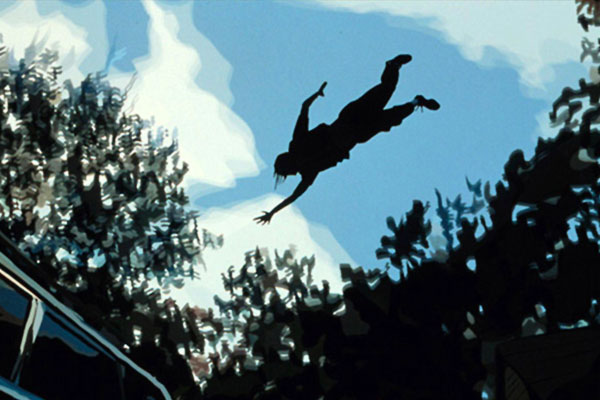
Like Paprika, Richard Linklater's experimental animated film Waking Life is concerned with the precipice between the conscious and the unconscious, but here the philosophising stands in the foreground and openly invites the audience to engage with its ideas. A young man crosses a street and spies a note floating across the ground; as he rushes to grasp it a car speeds towards him. Waking Life takes these enigmatic shots as a starting point for a serious of discussions about the nature of reality and existence. An exploration of the existential, in a sense this is an accumulation of Linklater's previous movies which have touched upon these questions, this time around exploring them in full. While Waking Life's animation was rotoscoped, the animators have chosen to exaggerate and embellish the actor's movements, resulting in something more appropriately dreamy and fluid and in keeping with the increasingly vague place the film inhabits.

7. Fantastic Mr. Fox (2009)

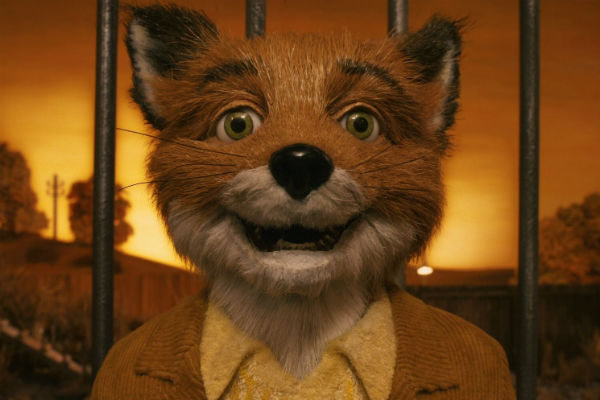
Perhaps only a director like Wes Anderson could have brought Roald Dahl's Fantastic Mr. Fox to life on the big screen - few directors possess the same idiosyncratic attention to detail in the production design department and love of dry, pithy humour. Fantastic Mr. Fox uses stop motion to tell Dahl's story, with George Clooney. Meryl Streep and Bill Murray among the all-star voice cast, bringing Mr. Fox and his family to life as they try to outwit the farmers who are desperate to rid them from their land. Intricately staged set pieces are impressive and we get to see Anderson's trademark bisected sets to great effect again, and while it might be lacking in Dahl's darker sensibilities it manages to be heartwarming without being sickly. Along with Nicolas Roeg's adaptation of The Witches, The Fantastic Mr. Fox is a high point for Roald Dahl's work in cinema - we'll have to wait until this July to see if Steven Spielberg can achieve the same success with his version of The BFG.

6. Inside Out (2015)

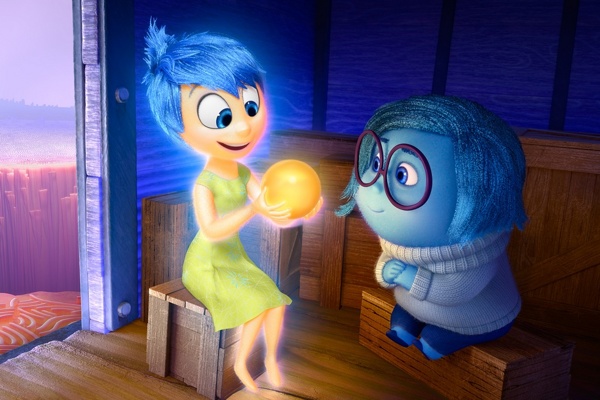
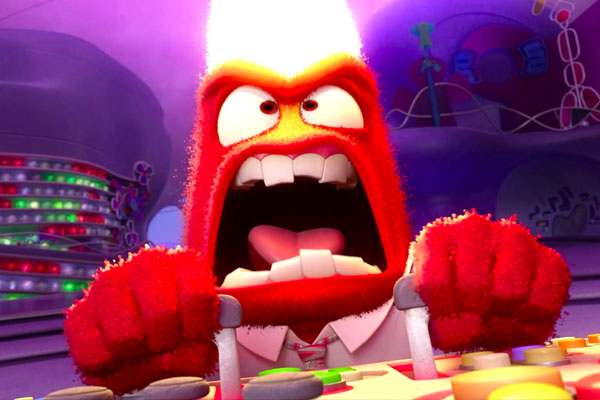
What can be said of Inside Out that hasn't already been said countless times upon its release last year? After a run of disappointing to average films this marked Pixar's return to form (provided you're willing to overlook The Good Dinosaur, of course). The key appeal of Pixar movies often lies in the care and thought put into the emotional journey of the characters, and with Inside Out the emphasis couldn't be more firmly in this direction. Young Riley's development into adolescence, played out from the perspective of the emotional states in her mind and exploring everything from depression to feelings of rejection, marks a turning point in family-friendly animation unafraid of breaking conventions. The critical praise heaped upon Inside Out was entirely justified and Pixar have certainly got their work cut out if they hope to better this in the future - with nothing but more sequels on the horizon it looks like it'll be a while before we get to see something this original again.

5. Mary And Max (2009)

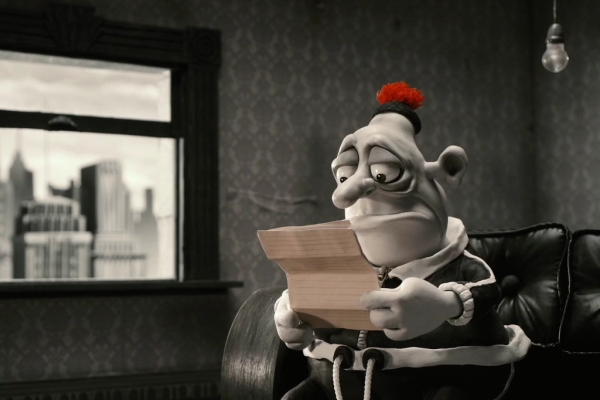
Like Inside Out, Mary And Max is also concerned with the loneliness that is often experienced in childhood, where the pressures of fitting in lead to depression and the desire to reach out and connect to someone. It's also about how friendship can come from the most unlikely places; even an agoraphobic, neurotic 44-year-old New Yorker. Mary (Toni Collette) strikes up this unlikely friendship with Max (Phillip Seymour Hoffman) after plucking his name at random from a telephone directory and sending him a letter, initiating a series of exchanges which will shape their lives. Darkly comic and full of hilarious observations about how people behave and acqwuire their strange habits, Mary And Max is also a thoughtful film about mental ilness which uses its humour to accentuate its humanistic message. The stop motion animation actively avoids flair and bombast, with the monochromatic worlds apt visual representations of the mental states of Mary and Max, yet ultimately the film is an uplifting experience which reminds you that even when things look bleak there's plenty to be hopeful about.

4. Mind Game (2004)

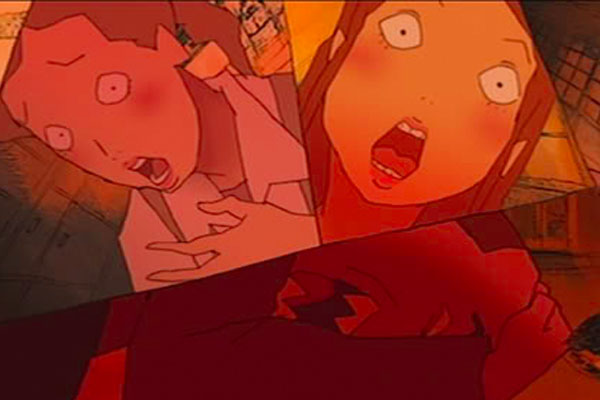
By far the most obscure movie on this list, Mind Game received rave reviews when it was screened in New York at the Museum of Modern Art then inexplicably failed to pick up a distributor in the West until it finally landed on Netflix in 2015 (with a disappointing whisper rather than a celebratory bang). After reuniting with his childhoos sweetheart Myon, manga artist Nishi finds himself literally facing death after a run-in with a hot-headed Yakuza and decides that he's done with being an underachiever, setting out to reinvent himself as the hero - even if that does entail leading his companions into the belly of a giant whale. Summarising the kaleidoscopic plot of Mind Game is almost irrelevant - it's the textures and rhythms of its characters, with scenes which plunge into their dreams and memories utilising a wild variety of animation techniques, which makes this among the most imaginative and engaging animated films of all time (and the dense, rapidly edited montage sequences make repeated viewing almost essential). Mind Game director Masaaki Yuasa is without a doubt one of the greatest animators working today, with his work on the TV series The Tatami Galaxy, Kaiba and Kenomozume cementing his reputation as the king of avante garde anime.

3. The Secret Of Kells (2009)

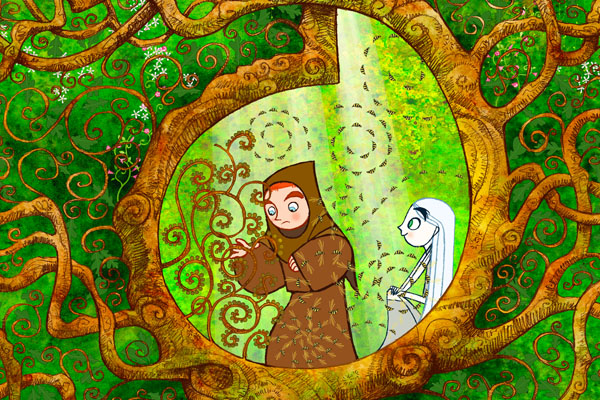
While some people continue to look to Japan for an heir to Hayao Miyazaki's throne, there's a chance that he's already arrived in the shape of Tomm Moore, the Irish-born writer and director of The Secret Of Kells. Just as Miyazaki often draws upon Japanese folklore and tradition, with The Secret Of Kells Moore turns to his counrty's religious roots and the ancient Book of Kells, crafting a tale deeply imbued with Celtic symbolism and Christian lore. Moore creates a dream-like, ephemeral world and isn't afraid to slacken the pace in favour of atmosphere - another aspect of his style which closely resembles Miyazaki's but feels like a compliment rather than a pale imitation. The Secret Of Kells confirms that traditional cel animation is alive and well, evoking worlds in a style of classical art and somehow imbuing them with a sense of timelessness that is thoroughly impressive for a directorial debut.

2. Up (2009)

There is more artistry and emotional depth in the opening montage sequence from Pixar's Up than you find in most other movies, animated or otherwise. That the film somehow manages to deliver a thoroughly compelling movie after such a strong start is a testament to the level of craftsmanship at work. Making the central character in Up a crotchety old codger was a stroke of genius - Carl Fredricksen (Ed Asner) is one of the most endearing characters ever to grace the screen and a perfect foil to his companion Russell, (Jordan Nagai) the Wilderness Explorer. Their Latin American adventure is a masterpiece of the medium, a heartfelt and frequently hilarious romp through some of the most gorgeously realised CG backdrops ever created. With Monsters Inc. and Inside Out already under his belt director Pete Doctor remains the brightest talent at Pixar, and fans of animation are no doubt waiting with baited breath to see what his fertile imagination can come up with next.

1. Spirited Away (2001)

Throughout his decades long career Hayao Miyazaki has sought to transport audiences back to a distant past, his fantasy adventures drawing on Japanese myth and folklore and morphing them into something entirely unique. More than most living filmmakers, Miyazaki's films demonstrate a distinct, instantly recognisable style. After taking a detour on the way to their new house, Chihiro and her parents find themselves in a strange abandoned amusement park. After eating forbidden food transforms her parents into pigs Chihiro is forced to work in a bath house in order to turn them back into their human form. The bath house and its assortment of godly and demonic patrons provides the backdrop for an archetypal coming-of-age fairy tale which felt timeless the day it was released and is now justly regarded as a masterpiece. After production on Spirited Away was completed Miyazaki announced his retirement from filmmaking - fortunately for fans of exceptional animation he went back on his word and his output has remained strong in the years since. Few filmmakers working in animation or live action have amassed such an impressive filmography - Miyazaki is a true master of animation. What other amazing animated movies have been released since 2000? Why not tell us about them in the comments?

In this post: 
Inside Out
 
Posted On: 
Contributor
Contributor

Andrew Dilks hasn't written a bio just yet, but if they had... it would appear here.