There's been two Spider-Mans, Batmans and Supermans apiece since the first X-Men movie, yet remarkably the mutants have managed to make it thus far without having to overtly reboot the whole thing; this year's X-Men: Days Of Future Past brought back many of the original cast from fourteen years ago. It's something of a marvel that the human-mutant divide can still feel fresh. Sure, along the way there's been alternate narrative directions taken (First Class was a soft reboot that's been further meshed into continuity here) and characters that were previous supporting players have become focal series characters (what do expect when you cast Jennifer Lawrence?), but this is still very much the same mutant band that kick-started the genre. Bryan Singer returned to the franchise he helped birth back in 2000 and delivers the best X-Men movie to date (don't worry X2 - you're a close second). There's a great a balance of backward-looking reverence and wide-eyed excitement for the future, but what really makes it work so well is the closed, tightly-plotted narrative that marks it out as a great time-travel movie in its own right. For fans of X-Men, this stands as the boldest movie in the franchise, resolutely writing the despised X-Men: The Last Stand and X-Men Origins: Wolverine out of continuity. For those less sold there is a lot that will go overhead, but objectively amazing scenes (Quicksilver's kitchen sequence can't be overstated) mean there's still a lot to love in the best superhero movie of the year.
10. Noah
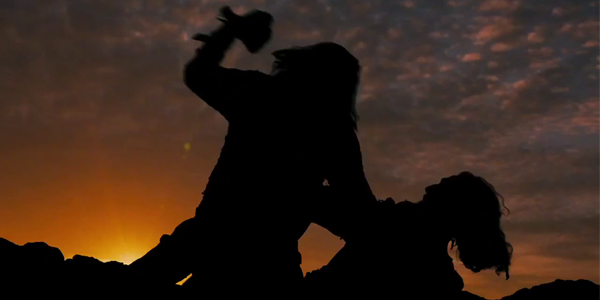
In Noah rock monsters help Russell Crowe build a big box that two of every animal magically convene on. If you can accept that then you're in for a treat. So much of the pre-release jabber about Noah went on about how the film was an adaptation of a Biblical text, ignoring that it was Darren Aronofsky in the director's chair. With Paramount giving him final cut on the film (their version, a ninety minute flick with ample hymns was reportedly a disaster), the man behind Requiem For A Dream and Black Swan could fully realise the passion project that had been gestating since his teen years. Not that that development got people excited. To be fair, the trepidation is understandable; general audiences feared a preachy tale, while religious types were expectant of something utterly blasphemous (which ignores that the Biblical epics of the fifties and sixties were only made because they were allowed more nudity). The latter have more of a potent reason to be irked by the film, with gross liberties taken (Emma Watson and Ray Winstone's characters are both movie-constructs), but to get hung up on those Hobbit-like problems misses Aronofky's goal. The film treats the Genesis passage as a fantasy story akin to The Lord Of The Rings, using it as the backdrop for a morality tale, which should really please any side of the argument. Set only ten generations from the Garden of Eden, the whole Cain and Abel falling out is still a topical historical event and the world is a scarred wasteland alien to the modern day Earth. Noah is visually striking and probes much deeper than the story brushed over in school. Even a creationism/evolution mash-up worked, no matter your belief in the content of the words or images.
9. The Lego Movie
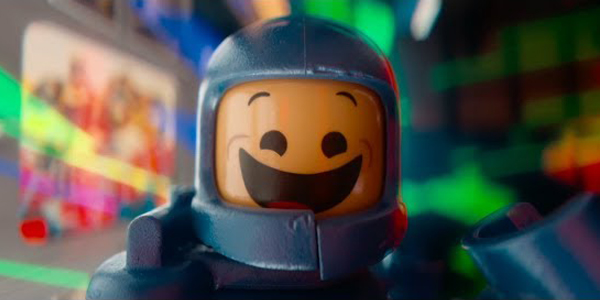
Yes, you're reading this right. The Lego Movie is one of the ten best movies of the year. Thanks to Phil Lord and Christopher Miller, who are marking themselves out as go-to men for hard-to-realise project (they're currently linked to a Spider-Man movie), what looked like a blatant product placement exercise that would give Transformers artistic merit by comparison ended up being a flick so subversive it's shocking the Danish foot-poker maker signed off on it. The humour is zany and ridiculous, while the visual style (it's all computer generated, but intended to look like traditional Lego stop-motion videos) is unrelentingly jaw-dropping, although The Lego Movie's real (and if anything, under-sung) strength is its script. Crafting a world with its own crazy, but in and of itself logical, rules, the third act pulls back to reveal the real order in the world. It's one of the year's best twists and retroactively highlights just how astute Lord and Miller's writing is. Touching on complex social ideals and the individual's role in society, the film is proof that you really can build anything with Lego. The only real slight against the film is that its overt message - use your imagination - is offset by Lego releasing seventeen building sets inspired by the movie.
8. The Two Faces Of January
Cinema has really struggled with bringing Patricia Highsmith anti-heroes to the screen. Tom Ripley has consistently been misunderstood, most prominently in The Talented Mr Ripley, where the asexual sociopath became a homosexual social climber (with movie-star abs), although even Alfred Hitchcock struggled with the child-like Bruno in Strangers On A Train. The misrepresentation is built on a fundamental misunderstanding of Highsmith; her characters aren't bad. Their moral compasses are simply skewed from north, which over-time sees them diverge further and further from the good path, but they still retain an acute sense of what's right and wrong (even if they choose to ignore it). So what a relief it was to see The Two Faces Of January, Hossein Amini's directorial debut, finally get it right. Initially playing things ambiguous over who exactly the film's dark personality is (Oscar Issac's Rydal initially appears to be the nefarious one), it's slowly unravelled that Viggo Mortensen's Chester is merely presenting the image of a happy-go-lucky tourist, with extreme moral confusion lying underneath. And, getting right to the heart of Highsmith, for all his questionable actions, it's impossible to not sympathise (and even root) for him until the end. Everything else in the film is spectacular - the suffocating heat of Greece and Chester's drunken haze are palpably realised - but it all plays second to just how spot-on the characterisation (finally) is.
7. The Babadook
Horror in 2014 was much like horror in any recent year; dominated by 15-rated movies built on a chain of jump scares that craft apprehension in the moment, but lead to a totally empty experience. Thankfully, the exception to the rule doesn't just eschew conventions, but crafts something that's both uniquely terrifying and a solidly directed film. There's so much to love about The Babadook. Its cinematic influences (the George Méliès-esque TV sequence was funded through Kickstarter) are worn on its sleeve, but prove to be more stylistically important than just name-checking, while the titular monster is an unnerving creation; only briefly glimpsed in the flesh, the film instead has horrifying illustrations kick the viewers imagination into gear. But as scary as Mister Babadook may be, it's what roots him in everyday life that makes the film so resonant. Far from just another vengeful spirit menacing innocents in the real world, he's the physical embodiment of Amelia's depression. Just as "you can't get rid of the Babadook", she's never going to be able to escape the shadow of mental illness, with the loss of her husband an ever present issue. However, with support it can be controlled, just as with the Babadook in the ending. If anything, the Mister Babadook is another version of the metaphors (the black dog, the black cloud) used to explain depression, realised from the point of view of someone still very much in its midst.
6. Gone Girl
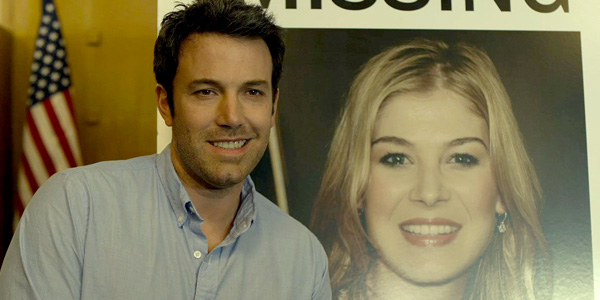
David Fincher's filmography is so expansive and varied that each new movie can be viewed as an amalgamation of his previous works (aside from Alien 3, obviously). His latest, Gone Girl, has music reminiscent of Trent Reznor's score for The Girl With The Dragon Tattoo, yellow-hued lighting conjuring up the Harvard of The Social Network, a long-gestating crime mystery straight from Zodiac and the trick of a well-known actor going full-creep pulled in Se7en, all mixed in with the narrative-dominating twist of Fight Club. Far from feeling just like a director coasting, however, his latest is brilliant thriller so impeccably constructed it's almost unfair to criticise. Like Jonathan Demme with The Silence Of The Lambs, Fincher has taken a novel adaptation that could have ended up being a pulpy B-movie and instead made something beautiful. When people look back on Gone Girl there'll be all manner of elements to discuss (it'll no doubt be a turning point in the careers of Ben Affleck, Rosamund Pike and Neil Patrick Harris), but as with Fight Club it'll be the rug-pull that affirms its place in pop culture history. That twist, taking the film to some very dark and contentious places, is a narrative tour-de-force, coming slap-bang in the middle of the run-time and turning the expectations of the story and belief in what's presented on its head. Sure, it's executed as in Gillian Flynn's source, but in the audio-visual medium of film it's a much trickier feat to pull off. For a run-down of the ending's lingering questions, check out What Does The Ending Of Gone Girl Really Mean?
5. The Wolf Of Wall Street
Since his 1990 magnum opus, Martin Scorsese has made several films that hew rather close to Goodfellas, ranging from the near identical (Casino) to neo-filtered (The Departed). But out of all them, the one that feels most like a genuine successor to the rise and fall of gangster Henry Hill is the rise of fall of banker Jordan Belfort. Picking up a few years after Henry Hill turns snitch, The Wolf Of Wall Street sees the passing of the torch of New York's rich criminals; before it was gangsters who held the power, now, in a global world, it's bankers. However, things are even worse. Whereas, by Hill's own admission, "when broke would go out and rob some more", the bankers in The Wolf Of Wall Street never face that issue - they already have all the money they need. And their antics are that much more extreme for it. Thankfully, the film is more than aware of this. Although it pulls the same hook-and-twist of making the life on screen initially appear alluring and the characters relatable, The Wolf Of Wall Street is definitely more of a comedy, realising that what it's portraying is just too over-the-top and vulgar to present with a straight face. This was sadly lost on the Academy, who not only typically snubbed Leonardo DiCaprio, but actively booed the movie after its Oscar screening.
4. Nightcrawler
Nightcrawler arrived with a plethora of comparisons. Empire proclaimed it as "this year's Drive", while comparisons between Jake Gyllenhaal's Lou Bloom and Taxi Driver's Travis Bickle were rife. And while that's certainly fair praise of Tony Gilroy's directorial debut, highlighting the similarities skirt by a lot of Nightcrawler's brilliance. What makes Lou different to Travis is that in the very first scene the monster lurking underneath that meticulously presented exterior is revealed, with Bloom attacking and presumably killing a security guard. The film is less about how far he can go, but when he'll go that far again. The monster in Bickle is slowly unravelled throughout the film, and he only ends up a hero through sheer dumb luck, whereas Lou has actively built his image up around him; by the film's ending everything is his design. It's refreshing that the film, which is on the face of it a dissection of the media's hunger for gore, defies expectations and goes incredibly introverted, dealing more with Bloom's psyche. Gyllenhaal is incredible, and his inevitable Oscar snub will stand as one of the biggest mistakes of the upcoming awards season. Oh, and while it has the same eighties style-reference as Drive, there's one big distinction to be made between it and Nicolas Winding Refn's cult hit; Nightcrawler's better. For a greater dissection of Nightcrawler's themes, take a look at What Does The Ending Of Nightcrawler Really Mean?
3. Her
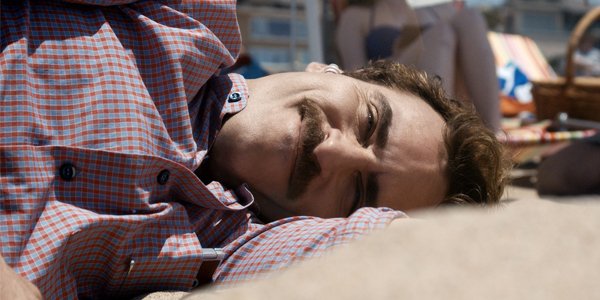
Another movie on this list that uses a populist topic to serve as a window into a much more interesting idea, Her sold itself as a cautionary tale about the growing role technology has in modern relationships, but wound up instead being something much more simple; a love story. If anything, the film almost delights in going further than the audience expects; five minutes in and you're watching Joaquin Phoenix having necro-zoophilic phone sex. These sort of moments (hookers act as physical bodies for romantically tied-up OS') sound churlish out of context, but it's all to build a well-rounded world, adding to the genuine emotion of Phoenix's Theodore's relationship with his Siri-like operating system. The central pair (Scarlett Johansson voices Samantha) are perfect in every regard, and although there's interest in seeing such a relationship become socially acceptable, it's the intimate moments that work separate to the technological divide which really stand out - a heart-breaking realisation of emotional differences or a "sex" scene that plunges the audience into darkness as the two groan. Spike Jonze continues to be a director whom the label of artist feels more than apt, delivering a fourth film it's impossible to not come out utterly changed after seeing.
2. Inside Llewyn Davis
Inside Llewyn Davis opens with Oscar Issac's eponymous character getting beaten up outside a bar following an unseen altercation. Inside Llewyn Davis ends a week later with him once again getting beaten up outside the same bar. In between, Llewyn is offered countless opportunities to set out a new adventure, but each time he's opted down the same old path. This is a movie where typically "nothing happens", which is most certainly the point. When the Coen Brothers are operating at their best, they present perfectly affable narratives that with greater thought post-viewing reveal an incredible level of insight. Inside Llewyn Davis is certainly one of their best and brings this in abundance. With multiples of everything (cats, pregnancies, fights and chances at the big time) it's a snapshot of a cycle of self-propagated destruction. Of course, with February New York wonderfully realised and the joys of folk music so delightfully presented even non-fans of the genre will be humming along, this is a great snapshot of a important time in social and musical terms, which is worthy of praise by itself. But that's all to an end; to highlight just how deep Davis' rut is, emphasised by a cheeky up-and-coming Bob Dylan cameo at the end. The film keeps showing moments where the narrative could pick up, but the character repeatedly tries to keep himself pinned down. At what would be the start of the conventional third act, Llewyn drives past the town where his estranged child lives, but because he is so averse to development he just keeps going. Tragic.