20 Best Studio Ghibli Characters
All beautiful creations, whether they're fish, humans, or something in between.
Stories of Studio Ghibli's demise were greatly exaggerated. When studio-head Hayao Miyazaki said last year that he was stepping down from making films, it led to fears that Ghibli was shutting down. Fortunately it turns out that the studio will remain open, with just Miyazaki taking a back seat. This is great news, as Ghibli have given the world some of the most inventive and beautiful animated films ever created - and hopefully will continue to do so! What sets Ghibli's work apart, its gorgeous simplicity aside, is its incredible array of characters. Some are fantastical beings that have the ability to make you feel like you're being transported to far away worlds. Others are inspiring people fighting against difficult situations. A few are truly terrifying. And some are just plain cute. All have been brought to life by the stunning animation skills of Ghibli's finest creators. This list highlights the 20 most fascinating characters and creatures from a wide range of Ghibli's films, with the self-imposed rule that no more than three characters from each can be included (there's a slight cheat with the multi-film Susuwatari though!). This gives a panoramic overview of the many masterpieces put out by a studio that has always followed the adage that "inspiration unlocks the future".
20. Jiro Horikoshi (The Wind Rises)

19. Arsène Lupin III (The Castle Of Cagliostro)
Moving from Miyazaki's final film to his first ever feature, Arsene Lupin III is the star of 1979's The Castle Of Cagliostro. Another example of Miyazaki drawing on a character from elsewhere, Lupin originally appeared in the manga series Lupin III. It wasn't until Miyazaki reinterpreted him, however, that he became a hugely popular character. In the original manga series, Lupin was a fairly unlikeable character. A thief, he was certainly prepared to hurt (and even kill) anyone that elected to stand in the way of his bullion. The comics tried to paint over his nasty streak with a slapstick edge, but there is no denying a distinct unpleasantness in his portrayal. Miyazaki changed that cleverly, transforming Lupin from a problematic anti-hero to a genuinely funny and loveable 'gentleman thief'. While plenty of his original character traits remain (he is obsessed with women, occasionally coming across as a bit creepy), the code of honour and sense of humour that run through the film makes The Castle Of Cagliostro far more family-friendly than the original manga. Lupin's pranks and capers in the film are no longer nasty or violent. They're funny and intelligent. This showcases one of Miyazaki's great talents - his ability to make characters captivating, no matter how problematic their actions may be.18. Jiji (Kiki's Delivery Service)

17. Kodama (Princess Mononoke)

16. Sieta And Setsuko (Grave Of The Fireflies)
Grave Of The Fireflies is a gorgeous film, despite rarely receiving the acclaim of Studio Ghiblis other masterpieces, and its beauty is primarily down to the interaction of its adorable and complex protagonists. Setsuka, a four year old girl, and Sieta, her fourteen year old brother, are effectively orphaned while their father is fighting in World War II and their mother is killed in an air strike on their home. The film follows their struggle for survival and, in doing so, creates two of the most heartbreaking figures in animated cinema. The relationship between the siblings is tender and compelling. This is a clear example of Ghiblis interest in exploring the impact that World War II, and the nuclear bombings in particular, continued to have in Japanese culture throughout the latter half of the twentieth century. A measured portrayal of civilian life during the war, it succeeds in becoming both a morality tale for adults and a story of defiance, love and strength for children.15. Yubaba (Spirited Away)

14. Princess Kaguya (The Tale Of The Princess Kaguya)
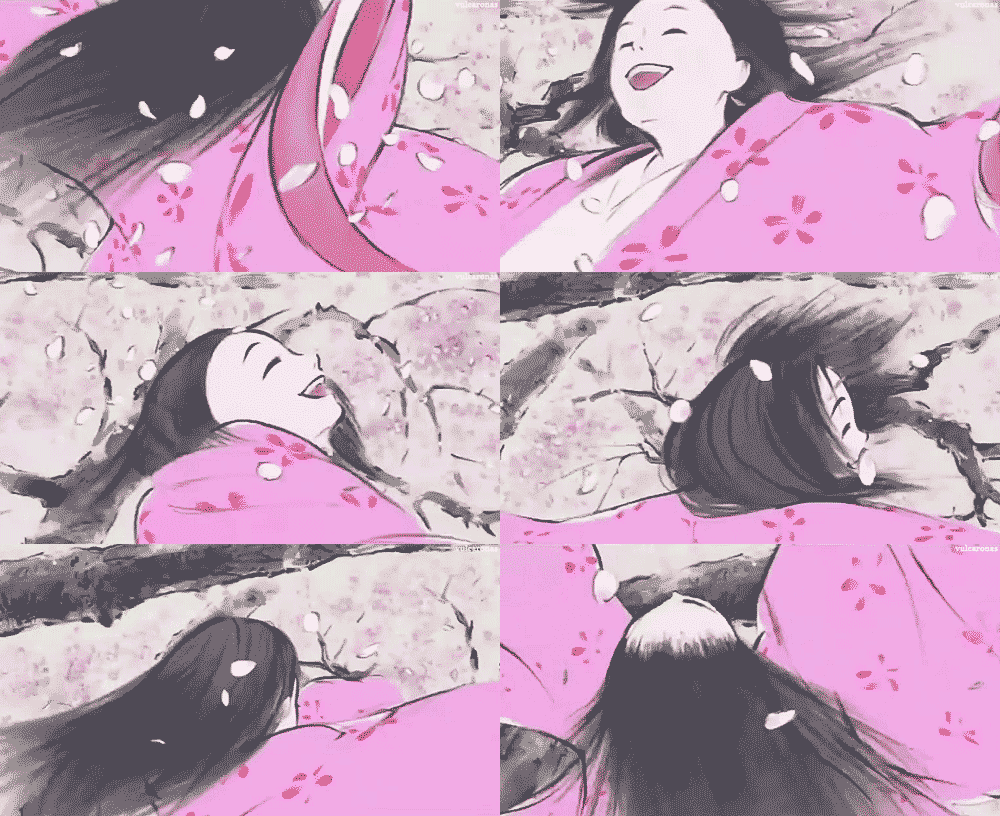
13. Kiki (Kiki's Delivery Service)
Kiki is a brilliant example of a female character in Ghiblis films, as she is a strong protagonist that is never treated in a patronising or sexist way. The story is a tender coming of age story which treats the childhood and teenage years of a young girl wonderfully. Although her tale is often wrought with sadness (the aforementioned loss of the ability to hear her childhood friend Jiji being one of them) she remains inspirational. She begins a rebellious figure, seeking to gain her independence through her own headstrong nature. However, by the conclusion of the narrative this has dissipated and she recognises that she actually requires the assistance of her friends and family in order to grow into a truly independent woman.12. Laputa Robots (Castle In The Sky)

11. Ashitaka (Princess Mononoke)
Princess Mononoke, with its violent imagery and remarkably dark narrative, does present at least one character whose intentions always seem to be fuelled by a belief in goodness. Ashitaka is the films hero, taking on the greedy humans that seek to drain and destroy the resources of the films forests. Possessed by a boar demon in the films early stages, he suffers throughout from his ailment (not least because he is forced to leave his childhood village) but refuses to allow it to overcome him. He remains a good character, despite the attempts of his demonic inhabitant to overwhelm him. His friendship with Yakul, his giant red elk, is one of the most popular Ghibli relationships, and it is a further sign of the studios belief in the importance of humanitys relationship with nature. While Ashitaka can appear stern and dangerously curious, his kindness and and belief in peace are admirable, making him a true hero in the eyes of Ghiblis fans.10. Susuwatari (My Neighbour Totoro/Spirited Away)

9. Nausicaä (Nausicaä Of The Valley Of The Wind)
Another example of Miyazaki drawing on a source from elsewhere (this time his own manga series), Nausicaä is also further proof of Ghiblis love of nature of interest in mans relationship to it. She is simultaneously a beautiful princess, a devoted priestess and a skilful warrior, making her one of the most rounded female characters in animation to date. But her most incredible powers are her ability to talk to the giant insects that inhabit her valley and to fly various fantastic forms of aircraft. She is a real heroine whose femininity is treated in a truly progressive and thought-provoking way. Unlike many female heroes, whose portrayal is often just that of a woman taking on a filmic role sadly usually dedicated to male characters, she is proud of her gender and displays a multitude of ambiguities and complex character traits. Crucially, she is absolutely likeable. There is little that can be said in criticism of her character. She is one of the most beloved protagonists in Ghiblis films, which are usually more famed for their incidental creatures than their central characters, and is always willing to assist her friends if they are in trouble.8. Catbus (My Neighbour Totoro)

7. Howl Jenkins Pendragon (Howl's Moving Castle)
Incredible fact about Howl from Howls Moving Castle: in the English translation, he was voiced by none other than Hollywood A-lister Christian Bale. Bale did a very impressive job of it, too! While Howls Moving Castle is one of Ghiblis most divisive films (many consider it their favourite, and it was nominated for an Oscar, but just as many regard it as a weak entry into the canon), there is no question that Howl himself is a very interesting and well-constructed character. A sorcerer that is doing everything in his power to avoid a war that he is supposed to be involved in, he begins as one of the most selfish and arrogant figures in Ghiblis oeuvre. He is so compelling, however, that the audience always takes his side. There is a recognition that he is a nice guy at heart, whose exterior emotions are just a defence mechanism. The films other central character, Sophie, finally begins to tease some of the humanity out of Howl as the film unfolds, finally unveiling a good guy who has been lonely for far too long.6. Porco Rosso (Porco Rosso)

5. Ponyo (Ponyo)
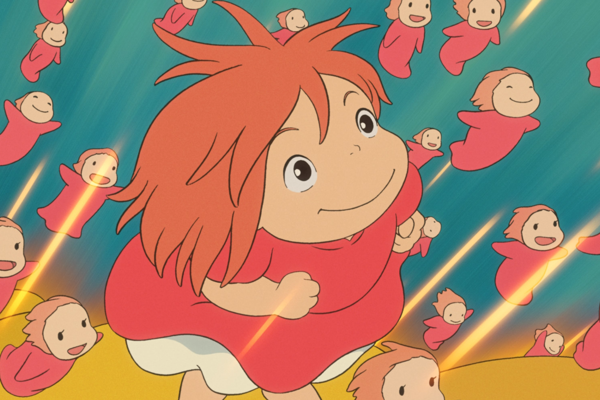
4. San (Princess Mononoke)
Where Ashitaka is Princess Mononokes unambiguous hero, always seeking to do the right thing and attempting to bring about peace for all, its title character (better known as San) is far more ambivalent in her portrayal - and she is all the better for it. A child of the woods with a strong friendship with its wolves, she is a staunch defender of the forest against the greedy human antagonists of the films towns. However, it is difficult to ever fully identify with or sympathise with her as a character given her bestial attitude and her strong belief in violence as a means to an end. A large element of Ashitakes role in the film is to bring San around to a more peaceful view of the world. Rather than wishing for humans and the forest to leave in harmony, she seems determined initially to rid the world of the people that would destroy her home. Ultimately she becomes calmer and more reflective, but she never loses that edge that sets her apart. The fact that she rides growling grey wolves into battle, in contrast with the majestic stag of Ashitaka, emphasises the darker and more animalistic side of her character. San is an excellent Ghibli character because she is strong in spite of her flaws. She does not always take the morally acceptable route, and yet she never repels the audience in the way that a villainous character might. Her heart is in the right place, even if her actions are frequently condemnable.3. No-Face (Spirited Away)

2. Chihiro (Spirited Away)
The greatest protagonist in Ghiblis oeuvre, without question, is Chihiro of Spirited Away. She succeeds in exemplifying practically every key trait of a Ghibli lead figure while exceeding every other example by some distance. Spirited Away bundles many of Miyazakis themes into one surreal, Alice In Wonderland-like narrative, and Chihiro is the creators Alice, stumbling through a world that she doesnt understand while trying to maintain a Chihiro is headstrong like Kiki, innocent like Ponyo, heroic like Ashitaka, occasionally selfish like Howl, and friendly to everyone like Nausicaä. She begins by believing she can be independent and get on without her parents, but soon learns (through the metaphor of losing her name) that her background and family are crucial to her development. It is testament to her character that she continues to retain belief despite the fact that her parents have been turned into pigs, and it is equally impressive that Miyazaki is capable of building such a strange and compelling story and cast of characters around a character that is, effectively a child. Without question, Chihiro is a child. She may be a central character, she may be heroic, but the film is filled with emotional scenes that resonate with the experiences of childhood. She is an utterly believable ten year old girl who acts in the exact way that any child would in such a scary scenario. That is what makes her so fascinating as a character, and that is what makes Ghibli such a standout studio: the fusion of innocence and experience, and the absolute honesty that drives every one of their creations.1. Totoro (My Neighbour Totoro)
