20 Most Controversial Movie Endings

“There is no real ending. It’s just the place where you stop the story." - Frank Herbert
The ending of any given motion picture is arguably the most important part of the experience - the point at which a story chooses to end, plotlines are wrapped up, characters are left to deal with the circumstances in which they have either gotten themselves into or have subsequently evaded, and you're left to make up your lasting impression of whatever it is you've just spent two or three hours watching. Endings come in all shapes and sizes, of course: happy, sad, ambiguous, and€ well, controversial. And it's the controversial endings that we're focusing in on for the length of this article. Controversial endings, by definition, are those that leave people shaking their heads, wondering what happened, feeling sick to their stomachs, wronged by the choice of the writers of filmmakers, or downright confused. In other terms, a controversial ending is one that people were totally not expecting, given what came before. The endings that caused an uproar amongst movie-goers and film critics alike; they might also happen to be those endings which were the cause of much debate and controversy during filming. Whatever the reason, then, here are our picks for the 20 Most Controversial Movie Endings to have graced cinema screens thus far. Obviously, there are many, many spoilers involved, so don't say you weren't warned.

20. What Actually Happened? - Sunshine

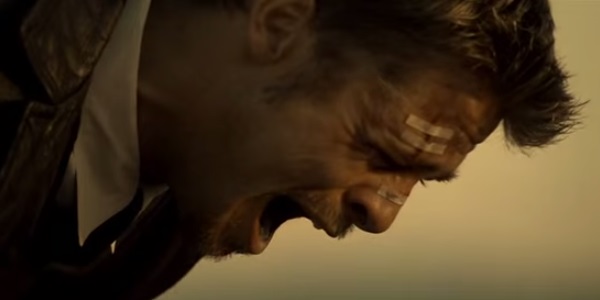
Sunshine is a great movie in search of a great third act - one that it, unfortunately, never manages to find, opting instead for mindless ambiguity in favour of things like "logic" and "coherency." So the problem with Danny Boyle's otherwise brilliant sci-fi movie is that it never really figures out what it's trying to say, and as result ends up feeling like a load of nonsense when in fact - for the majority of the film - it felt a lot like genuinely intelligent sci-fi fare. The ending, then, comes when a delusional, manic killer boards the ship containing our heroes (tasked with reigniting the sun using a specially designed bomb), and proceeding to kill them off one by one. In the end, our hero - Robert Capa - ends up staring into the very centre of the sun, and.. well, then what? It seemed like any ending for the sake of an ending, almost as if nobody could be assed to figure something out. Disappointing.

19. Liam Neeson Vs. The Alpha - The Grey

The trailers for The Grey pretty much promised movie fans one thing: Liam Neeson facing off against wolves in a snowy terrain, using whatever he could get his hands on to defeat them. And though there was a little of that inherent to the final movie, The Grey was more akin to a survival thriller in the vein of Alive!, where the cold conditions were the worst enemy. Basically, there wasn't enough Neeson vs. giant wolves to please everyone. And then came the ending, of course. Neeson, at the brink of death, finds himself face to face with the alpha wolf of a pack that has been hunting him for days. True to the trailer, Neeson straps broken bottles to his knuckles, and prepares to fight. This is the final battle we've been waiting the whole movie for, right? Wrong. Before the battle can begin, the screen cuts to black and audiences were - quite frankly - left feeling totally betrayed. Ouch.

18. The Neck Incident - Man Of Steel

Man Of Steel saw 300's Zack Snyder taking on the Superman myth to varying degrees of success - visually stunning but bombastic and unfocused, the movie certainly managed to rebrand Clark Kent for a new generation, but at what cost? After going at it with bad guy General Zod during the destructive climax of the film (in which Metropolis is blown to smithereens), Superman does something you really wouldn't have expected: he kills. Yes, fans of the superhero were shocked and dismayed over a key moment in which Superman snaps Zod's neck in an attempt to save a family from being fried by laser vision. Many argued that - quite simply - Superman would have never taken to such extremes, with director Snyder and writer David S. Goyer arguing back that this was a new interpretation of the character, and that the guy had no real choice. One hell of a controversy this was, then.

17. The Wave - Donnie Darko

Donnie Darko shouldn't have worked, really; it clings to a plot about a man in a rabbit suit predicting the end of the world, and fashions a story blending time travel and teen angst like that's the most normal thing in the world. And yet the results are undeniably brilliant. To try and explain the plot here would be something akin to an exercise in futility, but let's just say it ends with our hero - Donnie Darko - getting crushed to death with a falling jet engine. The movie, of course, has been leading up to this point via time loop, and we've come full circle at the end of the movie when Donnie's task - to save the world - has been completed. The final shot of the movie, however, depicts a small boy on a bike riding up to the Donnie's house after his death, and - along with Gretchen Ross - waving at Donnie's mother. She waves back, apparently comforted, suggesting€ well, suggesting something. Dream? Reality? Shared experience? What actually occurred?

16. The Spinning Top - Inception

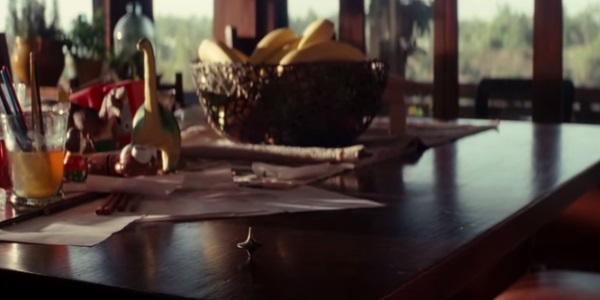
Inception served as a sort of message to Hollywood executives that movie-goers were totally okay with their movies being smart and intellectual - just as long as they were explosive and action-packed, too. Indeed, Christopher Nolan's complex and complicated blockbuster stirred up a hell of a lot of controversy with regards to its intricate and labyrinth-esque plot - and that's without taking the highly ambiguous ending into consideration. The image of that spinning top has become iconic as hell, of course, as fans were left to ponder as to whether or not Leonardo DiCaprio's "dream thief" Dominic Cobb has successfully pulled off Inception and had managed to reunite with his family. As the closing shot of the movie hones in on his totem, a spinning top, Nolan cuts away just as the thing is about to stop moving - a hint, perhaps, that the mission was a success, and all is right again? Hm.

15. "And Then I Woke Up" - No Country For Old Men

No Country For Old Men caused a lot of movie fans to feel frustrated on account of its ambiguous plot strands, the first of which decided to not show our main protagonist - Josh Brolin's Llewelyn Moss - in his dying moments. Instead, the Coens simply cut away and cut back to a time when he's already dead, depriving us of the scene in which he's gunned down by Mexicans. But the vague, dreamy ending left people feeling even more annoyed. Which is to say, No Country For Old men chooses to culminate in a way that purposely intended to provoke debate amongst movie-goers, with Tommy Lee Jones' defeated Sheriff Ed Bell recounting a coupe of dreams he had the night before, whilst eating breakfast on the first day of his retirement. After lamenting that - in one dream - he took a torch from his father, he says: "And then I woke up". We cut to black, wondering what it all really means.

14. New Ending - Watchmen

The strangest thing about Watchmen, really, is the fact that it's so, so faithful to the comic book on which it was based - to a fault, even - and then right at the very end, director Zack Snyder decides to divert from the source material in ways that could have only ever been controversial. So if you were fan of Watchmen, of course (and everyone who went to see this movie probably already was), it felt like something akin to a kick in the teeth. In the original graphic novel, then, it's revealed that Veidt has been experimenting with teleportation and inter dimensional stuff for a long while, and eventually manages to produce a giant squid monster. The hope, then, is that the world will unite to defeat this creature instead of destroying one another. In the movie version, though, Veidt uses this same plan, but Manhattan is poised as the "common enemy" - which didn't make much sense.

13. Head In A Box - Se7en

Se7en is a movie that thrives on its dark ending; in fact, the ending is so essential to the movie as a whole that both director David Fincher and star Brad Pitt said they wouldn't do the movie unless the original ending from Andrew Kevin Walker's script remained in tact. That ending, of course, meant Gwyneth Paltrow's head in a box, and this bleak finish has come to be known as one of the most horrific and unexpected in all of movie history. Originally, New Line tried to get Fincher to incorporate a far "happier" ending, which would have seen Morgan Freeman's Detective Somerset shooting John Doe instead of Brad Pitt's Mills, essentially ending his own career to stop Mills from making the same mistake. Nobody thought this worked very well, of course, and - thankfully - the depressing ending was incorporated instead, with one addition: Somerset's fairly unnecessary "optimistic" Hemingway quote.

12. Bruce Willis Is A Ghost - The Sixth Sense
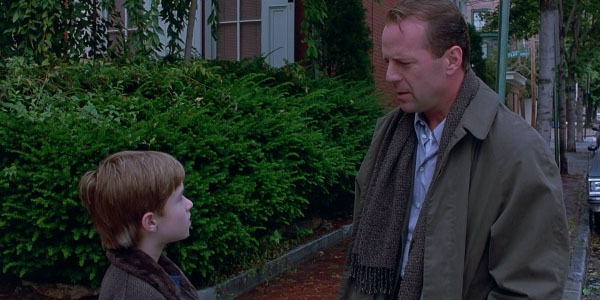
Well, it had to be here somewhere, didn't it? Nowadays, the "big twist" inherent to M. Night Shyamalan's best film feels like the stuff of parody, but back in the day this thing was so shocking and so downright unexpected that it pretty much changed cinema. The big reveal, of course, came at the end of the picture, when young Cole Sear (Haley Joel Osment) realises that his therapist, Dr. Malcolm Crowe (Bruce Willis), has been dead all along. So what made this particular twist controversial, then? Pretty much, the sensation factor alone was enough to mark it out as something to be debated and poured over. There are many out there who believe that the film only works once as a result of this revelation, whereas others claim that a second or third of four viewing of The Sixth Sense only enhances the experience. And then there's the fact that the plot was ripped off from an episode of "Are You Afraid of the Dark?"

11. The Guy In The Corner - The Blair Witch Project

The spookiest ending to any movie ever, or a complete and utter cop-out? After heading into the woods of Maryland to search for the elusive "Blair Witch," a bunch of students find themselves plagued by a series of increasingly bizarre attacks and pranks by an unknown assailant, before they find themselves terrified - and separated. Chronicling the events via handheld camera, the last scene leads Heather into an abandoned building, whereupon she spots her missing friend Mike facing a wall in the corner of the room. The movie literally ends on this image, as Heather is swept off her feet and the screen cuts to black, leaving us with a dozen unanswered questions about the nature of whatever it was that was just supposed to have happened. Why was Mike facing the wall? And what is it about such a stark and fairly basic visual that remains so darn creepy? Many lauded the ending for its ambiguous nature, though it remains highly controversial as many were left feeling confused and irritated.

10. The Bus - The Graduate

One of the most famous endings of all time remains one of the most poignant and beautiful. It's also one of the most controversial, given that people are still trying to work out what, exactly, it actually means. Having spent the sum of The Graduate going after the wrong woman in Anne Bancroft's cougar Mrs. Robinson, then, Benjamin Braddock (Dustin Hoffman) eventually pursues her daughter, Elaine, breaking up a large wedding in the process. Blinded by the passion of the moment, Elaine abandons her fiance and runs away with Benjamin, as the two board a bus to an unknown destination in an attempt to escape a furious wedding party. And then it comes: as they take a seat at the back of the bus, their laughter begin to fade, as they apparently realise they might've made a huge mistake. Today, people are still left wondering what those solemn, confused faces really mean.

9. Travis The Hero - Taxi Driver

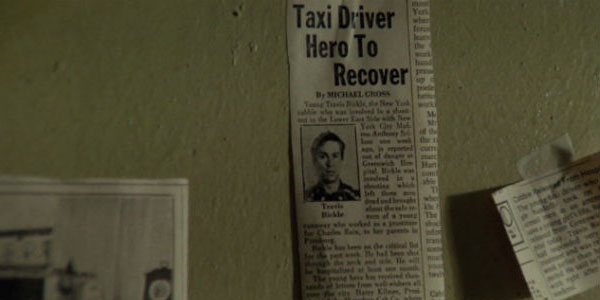
Martin Scorsese's undeniable masterpiece, Taxi Driver, contains what is arguably Robert De Niro's greatest performance as Travis Bickle, a Vietnam vet whose mental illness inspires him to scourge the streets of New York in order to cleanse it of its sins. Over the course of the film, Bickle interacts with a young prostitute (played by Jodie Foster), and eventually decides that it is his duty to free her from the constraints of her douchey pimp. The penultimate scene in the film, then, sees Bickle unloading his pistol in an apartment block in an attempt to "save" Foster, taking down not just the pimp (played by Harvey Keitel), but a number of his associates. Wounded in action, Bickle awakes to find that he's been branded a hero, and that his one true love - who previously abandoned him - is once again interested. The scene is vague and dreamy, thus provoking a lot of debate.

8. Overlook Hotel, 1921 - The Shining

The Shining is famous for being one of the best horror movies ever, and also for the fact that author Stephen King - who wrote the original novel - hated the hell out of it. That's pretty much because director Stanley Kubrick used King's novel as something of a springboard instead of as an adaptation guide, and as a result many of the ideas inherent to King's original vision were left out, leaving the motion picture feeling a lot more ambiguous. Which peeved a lot of people, including the author, as The Shining appears more like a collection of set-pieces and half-formed ideas than a motion picture with a coherent story. Still, as an "experience," it's undeniably terrifying. The ending, though, provoked controversy because it seemed like a final curveball for the sake of it, as we slowly zoom in on a picture from 1921 that shows '80s man Jack Torrance alive and well amongst the guests.

7. Happy Or Sad? - Army Of Darkness

Even diehard fans of Sam Raimi's brilliantly bonkers zombie film, Army of Darkness, might be shocked to learn that the film has two endings - both of which have been met with controversy, given that neither one has been cited as "officially" canon. So you kind of get to take your pick with this, rendering the great Evil Dead trilogy with whichever ending you see fit: the happy one, or the incredibly depressing - but somewhat apt - downer ending. The happy ending, coupled with US releases of the film, has Bruce Campbell's square-jawed hero Ash fighting off zombies in a supermarket back home, and becoming a true hero as a result. But the much darker ending - and the ending that Sam Raimi actually prefers, apparently, which was included on home video releases - has Ash waking up in a destroyed future, presumably destined to wander the desolate landscape forever and ever.

6. Did He Survive? - The Dark Knight Rises

The Dark Knight Rises polarised audiences in their masses upon its first release, many of whom felt that Christopher Nolan had constructed a movie so heavily reliant on plot holes and coincidences that it seemed somewhat ridiculous. Whereas those criticisms might have been spot on, one of the biggest concerns came in the form of the ending, whereupon Michael Caine's butler Alfred spots Bruce Wayne having lunch in a cafe in Vienna. Given the ambiguous nature of Nolan's ending to Inception, fans of The Dark Knight began to look into this ending with an exceptional amount of observation; did Bruce Wayne really survive that nuclear blast, or was Alfred simply imagining his old master as a means of confronting his own grief? Though the signs seemed to point to the fact that Batman was alive and well and enjoying his vacation, the debate surround Batman's death rages on today.

5. The Happy Ending - Blade Runner

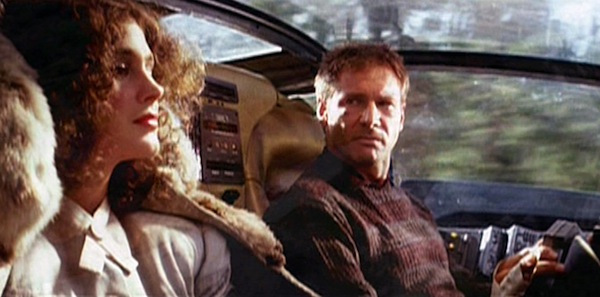
There have been so many "versions" and "cuts" when it comes to what is arguably the greatest of all sci-fi movies, Blade Runner, that it's hard to know where to begin. What you do know is that then original ending - which used archive footage from Stanley Kubrick's The Shining, would you believe? - was met with much controversy, given that nobody seemed all that keen on it. No surprise, of course, given that it didn't suit the tone of the movie at all. So the "original" ending of Blade Runner had Deckard (Harrison Ford) and replicant Rachel driving off into the sunset in a sequence that was very non-Blade Runner. The problem here, of course, is that it skirted around the fact that our hero was a replicant and not a human being, when in fact the movie makes a lot more sense when you concede that Deckard is all machine. Ultimately, then, it felt tacked on, and reeked of studio interference.

4. Into The Portal - 2001: A Space Odyssey

Despite the fact that it's been over 40 years since 2001: A Space Odyssey made its way into theatres, people are still pondering what the hell happened when protagonist Dave ended up flying through some kind of LSD-inspired portal and came out staring at an older version of himself in what can only be described as "the strangest room imaginable." Truth is, this ending remains immortally controversial, because WHAT THE HELL HAPPENED? In a lot of ways, the controversial nature of this ending has only succeeded in putting a bunch of people off of the movie: after defeating the menacing on-board computer HAL 9000, astronaut Dave travels through time - probably - and winds up at the beginning (or end) or the universe. 2001 ends with the embryo (?) of a baby floating into space, and with the minds of those who sat through the film feeling eternally puzzled and broken.

3. The Child Killer - The Mist

The ending to The Mist, an adaptation to the Stephen King novel of the same name, is something else entirely. When Frank Darabont set out to render the classic book on the big screen, he presumably had this ending conjured up in his mind, because it sure wasn't inherent to King's original story. If you haven't seen it, you're probably better off avoiding this movie altogether. Seriously - it might be the most traumatic in cinema history. After battling against a bunch of inter-dimensional alien monsters in an attempt to save his son, our hero - played by Thomas Jane - find himself in a desperate situation. The end of the world is nigh, the aliens have taken over, and there's only a few bullets left in his gun. So what does Jane do? He shoots everyone, including his son, and - just as he's about to do himself in - Darabont reveals that the army have arrived and are WINNING. So cruel.

2. Uh... Visit A Website - The Devil Inside

True, The Devil Inside is not the most famous movie on this list, and nor does it deserve to be. But if we're talking "controversial endings," there are very few that match up to the sheer infuriating power of this one. A poor and relatively amateurish handheld horror film, then, The Devil Inside has become highly notable for its lazy ending, in which the film just stops and instructs viewers to - yes - VISIT A WEBSITE if they'd like to know what happens. Seriously. The movie's protagonists are seen driving along, when - all of a sudden - the driver of the vehicle becomes suddenly possessed, crashing the car. Audiences are then treated to a title card that informs them that the case in question is yet to be solved, and that they should visit a website (www.therossifiles.com) to get more information. Who'd have thought that anybody could have such a cheek as to go down this route? Pathetic.

1. "I Am Your Father" - Star Wars: Episode V - The Empire Strikes Back

Well, what else was it really going to be? Arguably the greatest and best twist in all of cinema history came in the form of a family revelation that shocked the movie-going world to its very core: that of Darth Vader's paternal connection with Luke Skywalker. Today, this revelation still holds about as much weight as it did back in the early 1980s - Vader's "No, I am your father" line has so much gravitas attached that it's hard to know where to start. So, of course, the impact came from the fact that - throughout the original Star Wars - we'd been led to believe that Darth Vader was the one who killed Luke Skywalker's father. And then, with Empire, George Lucas pulled something of a retcon (c'mon - he did!) and made Vader Luke's daddy in an inarguable stroke of genius. At the time it was controversial, whereas now it remains wholly iconic: it's unlikely such a brilliant twist will ever be beaten. Like this list? Which controversial endings have we missed? Let us know in the comments section below.

In this post: 
Watchmen
 
Posted On: 
Contributor

Sam Hill is an ardent cinephile and has been writing about film professionally since 2008. He harbours a particular fondness for western and sci-fi movies.