20 Essential Coming Of Age Movies That Changed Your Life

These great movies speak to something universal about what it means to emerge from childhood and become an adult.

Throughout history various cultures have conducted rites of passage, initiating their younger members into the customs of their society, marking the transition between childhood, adolescence and adulthood. This transition often marks their full acceptance into a given group and is a clear turning point in their lives, from which point on it changes, often radically. In modern times and particularly in Western cultures many of these formal ceremonies have fallen by the wayside - in their absence it is often up to the individual to figure out their own way in life, sometimes with school proms or fraternities marking a point of transition, and sometimes without any clear event to mark the occasion. Left to our own devices, the process can be a difficult time for anyone, as we struggle to redefine ourselves in the adult world and forge ourselves a new path in life. Thankfully we were raised with films which addressed the many issues we faced as children growing into young adults; movies which reflect the many challenges we faced, whether it was becoming aware of our adolescent sexual urges, fitting in amongst our peers or recognizing our own individuality. The following 20 films are some of the best coming-of-age movies in recent years, which speak to something universal about what it means to emerge from childhood and become an adult.

20. Fast Times At Ridgemont High

Amy "Clueless" Heckerling's directorial debut based on a script by a young Cameron Crowe, who went undercover in a high school for Rolling Stone magazine, Fast Times at Ridgemont High is perhaps the coming-of-age teen comedy which kick-started them all. Featuring an ensemble cast of now-familiar faces, it also launched the careers of some of Hollywood's best known actors. Spanning a year in the lives of students at the titular school, Fast Times... deals with everything from drug use and low self-esteem to peer pressure and dealing with authority figures - in short, everything that sums up the expression "teenage angst". It's also very funny, with a sharp script matched by fine performances from Phoebe Cates, Forest Whitaker, Eric Stoltz and the excellent Sean Penn (proving he's more than capable of handling comedic roles). It also definitely caused more than a few copies of the VHS rental version to seize up at a certain points thanks to adolescent males hitting the pause button during the nude scenes.

19. Y Tu Mamá También

Audiences today might hear the name Alfonso Cuarón and immediately think of his visually extravagant theme park ride/movie Gravity, but his earlier coming-of-age movie Y Tu Mamá También is an altogether different affair; a lusty, exotic and sexually-liberated road movie set against the backdrop of Mexico's political upheavals in the late 90s. If Fast Times at Ridgemont High had the censors in a tiff over portrayals of burgeoning youthful sexuality, then Y Tu Mamá También saw them positively frothing at the mouth. But the sensational response to the sex scenes detracted from what is in reality an intimate study of disaffected youths struggling to define their principles. As Roger Ebert observed at the time of its release, the knee-jerk reaction to the depictions of sexuality reflected the skewed priorities of the ratings boards, who were more than happy to condone increasingly violent movies but coy at the sight of sexual intercourse.

18. If....

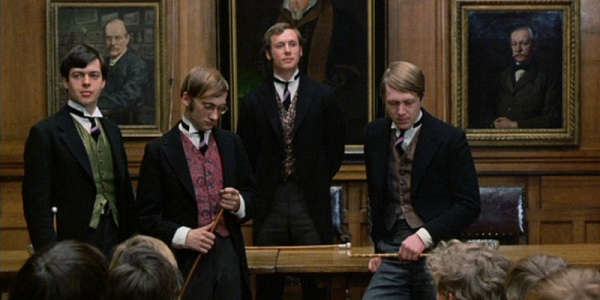
If Y Tu Mamá También played out against a backdrop of political turmoil, Lindsay Anderson's epic tale of public school boys railing against the system, If...., can be seen as a direct commentary on the youthful spirit of rebellion in the context of the student protests in Paris,1968 (the year the movie was made) and the counterculture movement at large. Winner of the Palme d'Or at the 1969 Cannes Film Festival, If.... stars a young Malcolm McDowell as the head of a group of non-conformist public school boys who instigate a "revolt" against the school masters. Heavily inspired by Jean Vigo's coming-of-age masterpiece Zero de Conduite, it's a trenchant dissection of the hypocrisy of education institutions, subversive and amusing in equal measure. McDowell's performance caught the eye of none other than Stanley Kubrick while he was working on A Clockwork Orange - the rest, as they say, is history.

17. The Dreamers

Whereas Lindsay Anderson took the Parisian student protests in May 1968 as a guiding influence for If..., Bernardo Bertolucci places his steamy, evocative film The Dreamers directly in the heart of France's capital. Starring Michael Pitt as an American student who meets up with twins (played by Louis Garrel and Eva Green), The Dreamers takes the concept of sexual liberation to the next level. Bertolucci already shocked audiences with his portrayal of unbridled sexuality in 1972's Last Tango in Paris, and with The Dreamers he appears to be covering familiar territory, albeit one which draws the sexual taboo of incest into the milieu. Eva Green was apparently shocked by the footage of her own nude scenes, but fortunately she didn't meet the same fate as Maria Schneider after Last Tango in Paris - rather than sink into obscurity, Green's career has been on the up ever since.

16. The Breakfast Club

Undoubtedly one of the most beloved coming-of-age movies to emerge from America in the 1980s, John Hughes's The Breakfast Club is a wonderfully low-key yet resonant portrayal of high school stereotypes spending an afternoon together in detention while coming to realise that they have far more in common with one another than they first assumed. Starring Judd Nelson (whatever happened to him?), Emilio Estevez and 80s teen comedy stalwart Molly Ringwald as the naughty kids forced to give up their Saturday afternoon, The Breakfast Club is a quintessential Brat Pack movie. Warm, charming and ultimately more insightful than it initially appears, it's a film which resonates with practically everyone who grew up in the 80s and 90s thanks to John Bender's (Nelson) defiant fist-thrust into the sky, capturing in freeze-frame at the end of the film an iconic moment of quiet rebellion.

15. The Way Way Back

If you've ever been forced to go on a holiday you'd rather not go on with people you don't really like, then The Way Way Back is the one that will most likely resonate with you. Starring Liam James as 14-year-old Duncan, the film tells of his summer away with his mother Pam (Toni Collette) and her overbearing, patronising new boyfriend Trent (Steve Carrell). There's a relaxed, laid back mood permeating throughout The Way Way Back which perfectly evokes the time and place, with lazy days on the beach leading to listlessness and boredom, as Duncan ventures beyond the social confines of his fellow holidaymakers and befriends Owen (Sam Rockwell), the manager of the local water park. It's a sweet comedy held together by fine, natural performances, particularly from Carrell as the judgemental boyfriend and Rockwell, who delivers the lines as if he's ad-libbing. Allison Janney as the alcoholic neighbour Betty deserves a nod, too - few other characters appear to be having quite as much fun.

14. Garden State

The characters in Zach Braff's 2004 drama Garden State seem to have a much harder time of it than most of the other characters featured on this list so far. For them, coming-of-age means coming to terms with mortality and severe emotional problems - their lives are fractured and incomplete, and their search for meaning vague and seemingly unobtainable. Braff plays Andrew Largeman, a struggling actor who plies himself with psychoactive medication in order to subsume the guilt he felt for paralysing his mother in an accident as a child. The drugs have left him incapable of feeling or expressing emotions, and the other characters in the movie are equally damaged; not least habitual liar Sam (Natalie Portman). Garden State has justly earned its cult following, and despite the existential themes which run throughout it ends on an optimistic note, as Andrew snaps out of his fugue state and becomes the architect of his fate.

13. Submarine

Richard Ayoade's debut as writer and director is one of the most assured and polished to emerge from British cinema in recent years. Based on the novel of the same name by Joe Dunthorne, Submarine explores the ins and outs of a teenage boy's first love, with a slick and stylish visual style which recalls the works of Wes Anderson without ever feeling derivative. Oliver Tate (Craig Roberts) stars as the teenage boy who harbours an infatuation with Jordana (Yasmin Paige) and finds himself in a relationship with her after an attempt to make one of her ex-boyfriends jealous backfires. Ayoade's handling of both the trials and tribulations of first love and a young boy's confusion at the manner in which the adults around him behave is both sensitive and insightful, and Submarine marks another success for Warp Films who seem to have a preternatural gift for producing low budget but artistically meritorious films.

12. Napoleon Dynamite

Few low budget comedies have achieved such wide acclaim as Jared Hess's debut feature film Napoleon Dynamite. An ode to the nerds and the geeks, it's an off-beat masterpiece with countless memorable scenes and is undoubtedly destined for the annals of comedy history. John Heder stars as the eponymous student with a penchant for making extravagant claims about his life when he isn't fending off bullies and creating weird and wonderful imaginary creatures. He befriends two other outcasts at the school; shy girl with an unusual approach to hairdressing Deb, and transfer student Pedro - who decides to run for class president. Napoleon Dynamite is a film full of quirky and eccentric characters - Hess often veers towards the absurd but it is in this approach that the film's charm lies, embodied in the character of Napoleon Dynamite himself, a fantastic oddball creation if ever there was one.

11. The Last Picture Show

Peter Bogdanovich's 1971 movie The Last Picture Show demonstrates how universal the themes surrounding coming-of-age are across the generations. Set in a small town in Texas in the early 1950s it is also a comment on the changing face of America in the aftermath of the Second World War, hinting at the sexual liberation which would emerge in full over the following decades. Starring Timothy Bottoms and Jeff Bridges as friends Sonny Crawford and Duane Jackson, The Last Picture Show charts their progression into adulthood and yearning for sexual and emotional satisfaction as they prepare to finish high school. Shot in beautifully composed black and white, Bogdanovich - working from Larry McMurty's semi-autobiographical novel of the same name - is as much concerned with the exploration of youthful sexuality as he is with depicting America in the throes of dilapidation and exhaustion. The result is a classic, and comparisons to the great Hollywood directors of old - John Ford, Howard Hawks and more - are fully justified.

10. Rushmore

Wes Anderson has justly earned a reputation for crafting visually distinct movies featuring an ensemble cast of quirky and unusual characters, and Rushmore - his second feature - is no exception. Starring Jason Schwartzmann as Max Fischer and Bill Murray as the local rich industrialist Herman Blume, it's a defining coming-of-age movie of the late 90s which remains to this day one of the finest of Anderson's illustrious career. Max Fischer is an unusual character to say the least - aware of the fact that he's from a far more humble background than most of his schoolmates, he overcompensates for his perceived shortcomings and involves himself in every activity and group under the sun, yet somehow remains an outcast among his peers. Things change when he befriends Blume; the surly, depressive businessman who comes to admire his indefatigable optimism. Beautifully shot and boasting an exceptional screenplay by Anderson and Owen Wilson, Rushmore reminds us all that popularity is no measure of a person's worth, and that friendship can come from the most unexpected of places.

9. Ratcatcher

Sometimes life doesn't deliver the clear-cut happy ending we're often familiar with from films. Lynne Ramsay's extraordinary directorial debut, Ratcatcher, is a film far less concerned with rose-tinted romanticizing than it is with exploring the raw, often harsh truths of emerging from childhood into the adult world. James Gillespie (William Eadie) lives on a run-down 1970s Glaswegian housing estate in the process of being torn down, a squalor only worsened by a strike by bin men, with mounds of rubbish lining the streets. Opening with a stirring scene in which his friend drowns in the nearby canal, it's tempting to assume that we're deep within the territory of miserablist social realism in the vein of Ken Loach. But Ramsay wrong-foots the audience to some degree, and Ratcatcher offers moments of poetic transcendence mirroring James's own flights of fantasy as he escapes his downtrodden life, and if the final realisation is that physical escape from the world he lives in is unattainable, it's delivered with haunting resonance.

8. The Graduate

Love and lust can be fickle things, leading us to do things we know that we shouldn't but somehow find ourselves unable to resist. That's certainly the situation Ben Braddock (Dustin Hoffman) finds himself facing in The Graduate, Mike Nichols's 1967 adaptation of Charles Webb's novel of the same name. When Braddock finds himself seduced by an older woman, Mrs Robinson (the sultry and alluring Anne Bancroft) the last thing he expects is to fall in love with her beautiful daughter Elaine (the stunning Katharine Ross). But when this inevitably happens it doesn't take long for Braddock to cock things up, and in spectacular fashion. The "older woman" fantasy has never been so perfectly captured in film as it is in The Graduate - Bancroft herself admitted years later that "men still come up to me and tell me 'You were my first sexual fantasy'". No doubt some readers can identify with this.

7. Kes

If Lynne Ramsay's Ratcatcher had shades of Ken Loach's trademark social-realism, it is to Loach himself we must turn to see that dynamic play out fully in the coming-of-age context. Based on the novel A Kestrel for a Knave by Barry Hines, Kes has come to epitomise the gloomy, brooding character studies which the British realist tradition of filmmaking is noted for. David Bradley stars as Billy Casper, the young, disillusioned schoolboy in run down Yorkshire who offsets the woes of victim-hood from bullying with a mischievous streak. A ray of hope enters his life in the form of a kestrel, whom Billy decides to rear and learn the art of falconry. Predictably, things end in disaster - escape from the depressing realities of life, it seems, is not permissible. A word of mouth hit upon its release, this is bitter and unrelenting British cinema at its finest, telling an intensely personal story to reveal much more about the wider society at large in which it takes place.

6. The Goonies

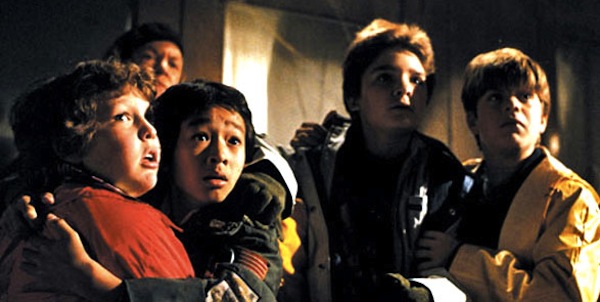
It's unlikely that anyone who grew up in the 80s isn't familiar with Richard Donner's The Goonies. A classic kids' adventure movie from an era when the genre was going through its most prolific period, it captured the imagination of an entire generation - few movies speak to the spirited, adventurous nature of childhood more memorably. The coming-of-age aspects of The Goonies might be delivered with broad brush strokes - like The Breakfast Club it plays on adolescent stereotypes with the jock, the nerd and so on pulling together and recognising their shared aims rather than focusing on their differences - but it's the unadulterated fun the film exudes which makes it so entertaining. It's as if Donner and writer Chris Columbus have taken this ideal of childhood fantasy and made it a reality, and its cheesy, silly qualities are what lends it its irreproachable charm. Let's hope they don't spoil our memories with a pointless remake any time soon.

5. Ferris Bueller's Day Off

If there's a coming-of-age movie which best sums up the teenagers' defiance of authority figures then Ferris Bueller's Day Off is without a doubt a contender - Bueller's (Matthew Broderick) breaking of the fourth wall as he explains to the audience his motivation and book of tricks for avoiding his family and teachers as he skives off school is a stroke of genius which makes the audience feel complicit in his exploits, cheering him on from the comfort of our seats. We've already seen how John Hughes helped to define the 80s Hollywood coming-of-age movie with The Breakfast Club, but Ferris Bueller's Day Off is a progression of the genre to a whole new level. As much a celebration of the city of Chicago as it is of the free-spirited nature, few films are as eminently watchable, leaving a warm and contented afterglow once the credits have rolled. As an aside, it's worth watching Matthew Broderick in Election after Ferris Bueller's Day off - it's as if Bueller has succumbed to the system he despised and found himself battered down by it into submission, making for a wonderfully contrasting double bill.

4. Stand By Me

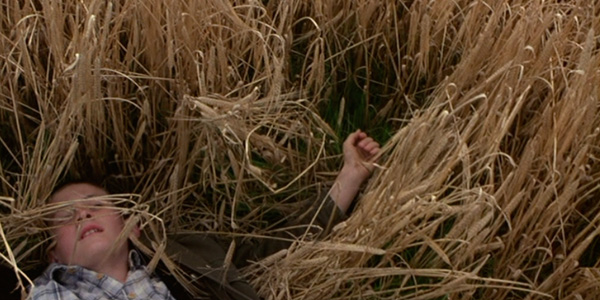
The 1980s was undoubtedly the decade when Hollywood coming-of-age movies reined supreme, and perhaps the most moving and insightful of them all was Rob Reiner's Stand By Me, adapted from the short story The Body by Stephen King.In King's opinion, Stand By Me was the first movie adaptation which successfully translated his work to the screen. Telling the story of four boys who set out in search of the body of a missing dead kid, it's a poignant reflection on both childhood and mortality which bridges the gap between the two, where innocence and fatalism converge. Featuring a superb cast of young talent including Wil Wheaton, Corey Feldman and River Phoenix, its legacy is all the most potent considering the fate which befell Phoenix - the untimely death of his character, revealed in the opening monologue, mirroring to some extent the all-too-brief life the actor led in real life

3. The Squid And The Whale

One of the most difficult situations for any child to face is the separation of their parents. It is a traumatic event which throws the lives of all involved into turmoil, placing them in the unenviable position of having to radically adjust their lives and make a choice between which parent they want to live with. Noah Baumbach's excellent film The Squid and the Whale takes this uncomfortable subject matter and injects it with wit and style, elevating it far above the conventional kitchen sink domestic drama it could have become. He's helped considerably by a host of fine performances - Jeff Daniels and Laura Linney as Berhard and Joan Berkman are joined by Jesse Eisenberg as their son, Walt, all of whom invest a degree of nuanced emotions into their roles which stand as career highs. They're helped, of course, by Baumbach's excellent semi-autobiographical script - witty and searching, it glides effortlessly between the mundane and the moving.

2. This Is England

Just as Noah Boambach took audiences back to New York in the 80s to show us a semi-autobiographical insight into the break up of a marriage and how this affected the children, so too does British filmmaker Shane Meadows return to his own childhood in that decade, resulting in an altogether different kind of movie: This Is England. Thomas Turgoose stars as Shaun Field (an obvious variation on Shane Meadows), a young boy whose father was killed during the Falklands War who joins up with a group of skinheads, only to find them taken over by an older man by the name of Combo, who begins to espouse racist and nationalistic views while showing an increasingly sociopathic tendency. Fusing eclectic music of the era such as ska and reggae - itself a reflection of how one subculture borrows from another - with astutely observed political and social commentary, This is England is by turns both bleak and amusing and never short of insightful.

1. Dazed And Confused

Few movies better capture what it's like to be a young teenager venturing into the adult world than Richard Linklater's cult classic Dazed and Confused. Featuring a talented ensemble cast - including Milla Jovovich and Matthew McConaughey in two of their earliest performances - it's about as free-wheeling and joyously spirited as you're likely to find on film. Beginning on the last day of school and concluding after a keg party which rounds off the day's celebrations as summer begins, Dazed and Confused shows the audience the full spectrum of student life, from enthusiastic young freshmen eager to grow up to beer-guzzling jocks and philosophising nerds. But unlike the stereotyping which characterised much of John Hughes's The Breakfast Club, here Linklater is clear to demonstrate from the beginning the ethos that unites them all - the desire to let their proverbial hair down and have fun. As an evocation of the hedonistic-minded spirit of youthfulness, few films are as endearing as Dazed and Confused - and the soundtrack is fantastic, too.

In this post: 
The-Goonies
 
Posted On: 
Contributor
Contributor

Andrew Dilks hasn't written a bio just yet, but if they had... it would appear here.