20 Foreign Language Films You Must See Before You Die
They have subtitles. Get over it.
 One of the biggest shames following on from the emergence of the multiplex was the lack of screens allocated for independent and foreign language cinema. Given the commercial nature of the huge complexes it's perhaps understandable that screenings would only be reserved for popular movies guaranteed to get bums on seats, but nevertheless there is something sad about the way in which the pursuit of money has led to foreign language movies being consigned to independent "art house" cinemas. While many people shy away from such movies from an unwillingness to read subtitles - not to mention the (mis)perception that foreign movies are heavy-going and inaccessible to a mainstream audience - non-English language cinema offers a huge diversity of genres and styles, from epic historical dramas through to laugh out loud comedies and intense, hyper-stylised action movies. If you can get past the subtitles there's something for everyone. Here are 20 foreign language movies every film fan should find the time to see - proof that language is no barrier to great films and representing cinema at its finest.
20. La Haine
 Canal +Racial tensions, riots and police brutality converge in Mathieu Kassovitz's acclaimed drama La Haine. Starring Vincent Cassel in his breakout role as a fired-up Parisian youth desperate to kill a police man to secure his gangster credentials, few films are quite so energetic and politically charged. Shot in crisp black and white, La Haine is a visually arresting movie; Kassovitz deploys every camera trick under the sun to stunning effect without deflating the tension and attention to character that other stylised movies tend to diminish. A slick portrait of an urban subculture existing on a knife edge, La Haine packs an unforgettable punch - the denouement reveals the tragic banality of the racial tensions better than most socially aware movies out there.
19. Andrei Rublev
 MosfilmThe concept of "pure cinema" is epitomised in Andrei Rublev, Andrei Tarkovsky's seminal movie in which the medium of movies became transformed into something never seen before. Ostensibly based on the life of the eponymous painter, it amounts to something far more broad and ambitious than the sum of its parts. Tarkovsky is a director often considered "difficult" to appreciate, since he eschews cinematic conventions in favour of tonality and sweeping impressionistic gestures. While Andrei Rublev is certainly challenging, when viewed as a sprawling portrait of medieval Russia and the nature of art in the context of a rich historical tradition and allowing the awesome imagery to wash over you, its raw authenticity and power can't fail to impress. The final explosion of colour on the screen, as Tarkovsky reveals Rublev's paintings in all their glory, is one of cinema's most luscious and striking moments.
18. I Saw The Devil
 Showbox/MediaplexA flat tyre sets up the opening scene of I Saw The Devil, a dark and twisted serial killer/revenge thriller from Korea directed by Jee-Woon Kim in which a depraved psychopath Kyung-chul (played by the ever excellent Choi "Oldboy" Min-sik) is hunted down by secret service agent Kim Soo-hyeon (Byung-hun Lee). Much has been made of the level of violence in I Saw The Devil and without a doubt the film contains some truly brutal sequences. Its certainly not a film for the squeamish, but Jee-Woon Kims handling of the action is so masterful that any charges of crude exploitation fall flat the entire look and feel of the film is polished to perfection while the performances are intense and mesmerising. As it builds to a climax, the ending delivers an unpredictable twist with a surprisingly melancholy undertow.
17. The Apu Trilogy
 Edward Harrison
Widely considered the greatest achievement in Indian cinema by critics around the world, Satyajit Ray's Apu Trilogy conceals its shoestring budget behind some of the most luscious compositions ever committed to celluloid, proving that big budget gloss isn't a prerequisite for sumptuous visuals.
Pather Panchali, Aparajito and Apur Sansar comprise the trilogy, telling the tale of Apurba Kumar Roy at the turn of the 20th century as he grows up in rural Bengal. Effortlessly gliding between moments of realism and elegant lyricism, this is earnest and touching filmmaking, capturing people loving and living in a time and a place which is perfectly realised. It remains to this day one of the greatest trilogies of all time - set aside a Sunday afternoon and allow Ray's mastery of atmosphere and his self-evident humanism to transport you far away from your living room.
16. The White Ribbon
 FilmladenMichael Haneke's boldly challenging movies are often something of a litmus test for the patience and endurance of an audience, with movies such as Funny Games and Cache dividing critics and the general public alike with their confrontational approach to the way in which we absorb cinema. The White Ribbon still seeks to challenge, but it does so within a more conventional framework whilst still retaining his trademark potency and vitality. Set in the early 20th century in a fictional German village, Haneke again delves into the nature of evil, but this time with a sensibility which recalls some of the best work of Ingmar Bergman. A number of increasingly sadistic events rock the small village of Eichwald and the evidence increasingly points towards the involvement of the children, but a collective blindness - exaggerated by the puritanical zeal which permeates throughout the village - prevents the culprits from being exposed. The exceptional performances and wonderful monochrome cinematography enhance the chilling implications as to the nature and origin of German fascism which was to come.
15. The Triplets Of Belleville
 Sony Pictures ClassicVisually striking, Sylvian Chomet's The Triplets of Belleville tells the story of a grandmother called Madam Souza who sets out to rescue her grandson Champion from gangsters who kidnapped him for his cycling ability in a gambling scam. Accompanied by music hall singers the Belleville Triplets and her dog, this wonderful fast-paced animated feature trades dialogue for slapstick. In an era when animated movies are largely made up of CGI, The Triplets of Belleville's predominant use of traditional cel animation makes a welcome change. Chomet's approach to humour is a breath of fresh air, too - clearly influenced by French comedy giant Jacques Tati, the gags are often subtle and clever and all the more appealing because of it, while the grand finale, in which the gangsters hotly pursue Champion and the old ladies, is a real hoot. Chomet went on to make the glorious L'Illusioniste with Tati in the central role, quite literally reanimating the legendary comic actor many years after his death.
14. The Three Colours Trilogy
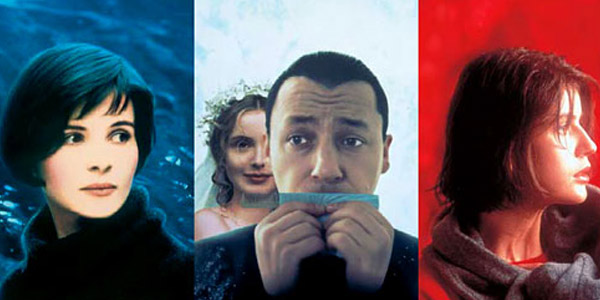 MK2 DistributionAnother essential foreign language trilogy, this time heralding from Poland, is Krzysztof Kielowski's complex and probing interpretation of the ideals of the French flag - liberty, equality and fraternity - with the films Three Colours: Blue, White and Red. Juliette Binoche stars in Blue as a woman coming to terms with surviving the car crash which killed her husband and son; in White, Zbigniew Zamachowski stars as Karol Karol, a penniless Pole who travels back home in a trunk; Red concludes the trilogy with the radiant Irene Jacob as a model who strikes up a tentative friendship with an eavesdropping judge. Ambitious both in their ideas and the visual presentation of them, Kielowski effectively uses the concepts as a vehicle for nothing less than an examination of the human condition in all its varied, contradictory interplay of vices and virtues.
13. Fanny And Alexander
 GaumontLike Andrei Tarkovsky, Ingmar Bergman has a reputation for being a director of challenging, pretentious and often impenetrable films which deal with deeply spiritual and philosophical themes in a way which refuses to pander to the audience. But not all of his films are hermetically inaccessible, and Fanny and Alexander is perhaps the greatest example of one which audiences new to his work can engage with and enjoy. While it comes in at a daunting 3 hours for the theatrical cut, the story of the titular siblings as they celebrate Christmas and later find themselves under the iron rule of their Puritanical father-in-law instantly grabs your attention with its rich array of characters. Bergman's long-standing preoccupation with childhood, religious dogmatism and escape into fantasy is explored with a less foreboding attitude than in much of his other films, ending on a surprisingly tender and optimistic note. For the full experience, check out the 5 hour TV version - another Sunday afternoon marathon you won't regret.
12. Sansho The Bailiff
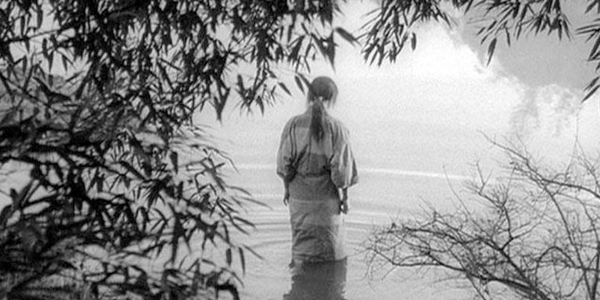 Daiei FilmWhen most people think of classic Japanese cinema the name Akira Kurosawa immediately springs to mind, and with movies such as The Seven Samurai and Rashomon featuring on dozens of Top 100 Movies of All Time lists it's easy to see why. Kurosawa's popularity has sometimes meant that other great Japanese directors are unfairly overlooked - Kenji Mizoguchi is one such director, and Sansho the Bailiff is perhaps his finest film. Set in feudal Japan, it tells the story of the wife and children of a banished governor sent to stay with her brother, who are captured by bandits along the way and sold into slavery and prostitution. If Kurosawa is the filmmaker renowned for his exploration of masculinity - frequently mirroring the likes of John Ford and Howard Hawks with his stoic male protagonists - then Mizoguchi is the humanistic poet. Sansho the Bailiff is shot with a precision and beauty which belies its aching melancholy just as its apparent simplicity does its overarching wisdom, proving that Mizoguchi is every bit the master of cinema as Kurosawa.
11. Incendies
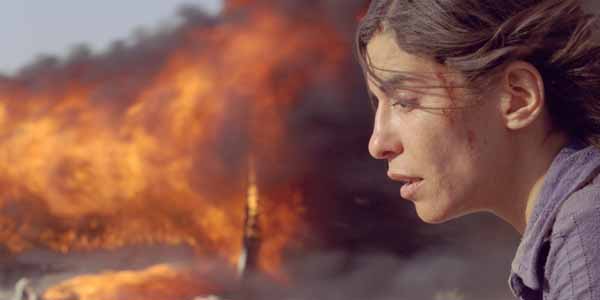 Sony Pictures ClassicsDenis Villeneuve impressed mainstream audiences with Prisoners, his dark allegorical tale of abduction and hypocrisy, and his follow-up film Enemy in which Jake Gyllenhaal plays a listless lecturer and his mysterious doppleganger. But it is with Incendies that his full potential as a great director really shines through. Adapted from Wajdi Mouawad's play it tells the story of twins who are given the task of tracking down their father following on from the death of their mother. The trail of evidence leads them to discover that they have a brother they never knew about, as well as other revelations with far more disturbing implications. Tragic yet at times tender, Incendies unfolds like a mysterious puzzle (Villeneuve's puzzlebox approach to structure is evident in his later movies) which culminates in a haunting conclusion. Why it didn't walk away with the Academy Award for Best Foreign Language Film only the Academy will know.
10. L'Atalante
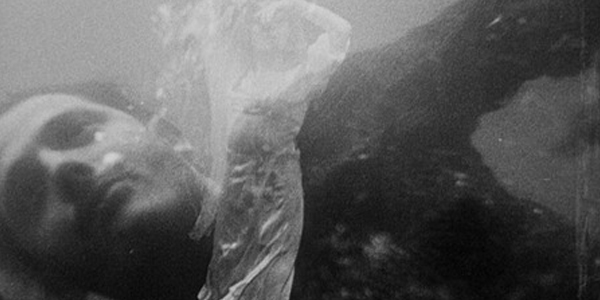 Gaumont Film CompanyJean Vigo followed up his 1933 short masterpiece about anarchy at a boarding school, Zero de Conduite, with L'Atalante the following year, a film which has gone down in cinematic history as perhaps as significant as F. W. Murnau's milestone Sunrise: A Song of Two Humans, a film which L'Atalante shares similar themes. Where Sunrise saw the young wife escape to the city after her husband attempts to murder her, in L'Atalante the newlywed wife's jaunt into Paris is motivated by something far less obviously dramatic - idle curiosity. But the film is no less astonishing for its lack of conventional drama; it captures a more pedestrian aspect of love and longing but does so with an impressionistic flair which makes the episodes of daily life seem almost magical. Tragically this was Vigo's first and last full length feature; a film which has rarely been matched.
9. The Spirit Of The Beehive
 Bocaccio DistribuciónHundreds of movies have been made about childhood, some fantastic, many others substandard and cliched, but few match up to the standards set by Victor Erice's 1973 movie The Spirit of the Beehive, which tells the story of the little girl Ana who, after watching the 1931 film version of Frankenstein, becomes convinced that the monster is lurking somewhere in the village. The obvious challenge for any adult when it comes to capturing the innocence and naivety of childhood is that we're no longer kids ourselves - by our very nature we lack the innocence and ignorance that defines them. Erice manages to transcend this limitation and takes us inside the dark, complex mind of a young girl in a way which feels completely earnest and authentic, while the pristine cinematography assists the blurred line between reality and fantasy.
8. Hard Boiled
 Golden Princess Film Production LimitedIf you're looking for an action film which puts the body count of Robocop to shame you couldn't do much better than Hard Boiled, arguably the pinnacle of legendary Hong Kong action director John Woo's impressive career. To describe it as a near-relentless orgy of shoot outs would almost be an understatement. Woo regular Chow Yun-Fat stars as a maverick cop alongside Tony Leung, an undercover cop ingratiating himself with the local mob boss. Beginning with an incredibly choreographed shoot out in a crowded tea house, Woo's handling of violence - in which bullets and leaps drop into graceful slow motion, featuring some of the best editing you'll ever see - marked him out as one of the hottest directors of his time. It's a shame his potential was wasted when he made the inevitable move to Hollywood, never quite matching the visceral thrills found in Hard Boiled.
7. Come And See
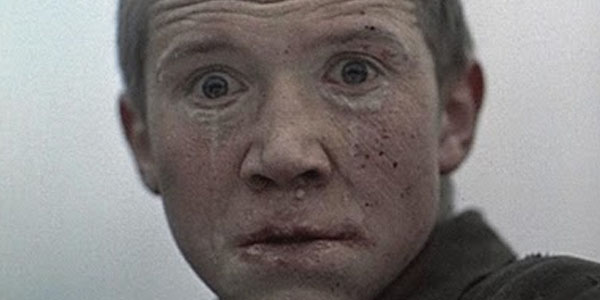 SovexportfilmOne of the greatest anti-war movies of all time, Come and See is a masterful piece of cinema which examines war from the perspective of a teenage boy whose entire world is throw into turmoil by the arrival of the German army in Belorussia. Starring Aleksei Kravchenko in the central role, few actors have conveyed so much emotion with so little dialogue - it's a heartbreaking performance which lingers in the mind long after viewing. Directed by Elem Klimov, Come and See is a bravura piece of filmmaking which deserves all the comparisons to the legendary directors of all time, most notably Stanley Kubrick, and it's perhaps unsurprising that Klimov felt that he could never achieve anything quite so impressive and stopped directing after it was completed. War has rarely been condemned in cinema with such powerful conviction as here, as the true horrors of the Nazi genocide fills the screen and Klimov quite literally tears apart the past and the present.
6. Ran
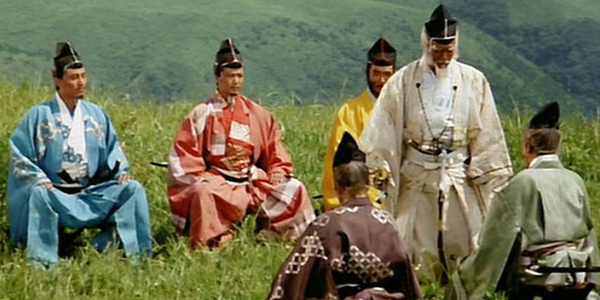 Orion PicturesHaving already tackled Shakespeare in Throne of Blood (adapting MacBeth) and The Bad Sleep Well, in which he updated Hamlet to contemporary Japan, he revisited the great bard once again in 1985 for his feudal Japanese interpretation of King Lear, Ran. Foolish pride leads an aging warlord to banish the only son with the integrity to speak to him with honesty, leaving his other far more duplicitous sons to trick and deceive their way into power. The sharp black and white of Kurosawa's previous Shakespearean adaptations has gone, in its place a rich and detailed colour palette which at is at its most striking in the incredibly staged battle sequences. It marked a tremendous return to form for the director and is all the more impressive considering that such an epic production was made when he was in his mid-70s.
5. Mind Game
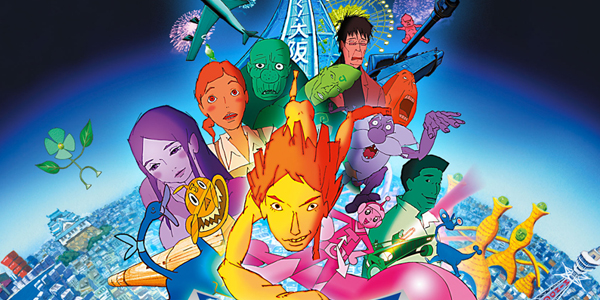 Asmik Ace EntertainmentWhat would you do if you were shot in the ass by a gangster and somehow managed to outwit god and get a second shot at life? If you're anything like Nishi, the hero of the criminally underrated anime movie Mind Game, you'd make sure you'd live life to the fullest and never look back. Mind Game director Masaaki Yuasa gave his artists and animators free reign to experiment with the films visual style and the result is a stream of consciousness film packed to the brim with tour de force imagery which effortlessly fuses comedy, action and flourishes of surrealism. Its message of non-conformity and making the most of everything we have is wonderfully presented, and few films deliver such a beautiful, life-affirming tale with such flair and panache.
4. The Battle Of Algiers
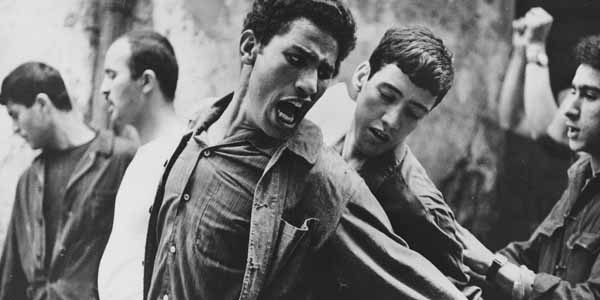 Rizzoli Rialto PicturesThe struggle against colonialism has waged for many years, but few attempts have been made to get deep under the skin of the many revolutionaries fighting against it. The Battle of Algiers - Gillo Pontecorvo's 1966 film about the Algerian War - is one which does so with remarkable maturity. Told largely in flashbacks, it recounts the path of a man by the name of Ali into the Algerian Front de Liberation Nationale (FLN), where he eventually became the leader of the fight against the French colonialists. Pontecorvo recreates the events with a meticulous attention to detail that gives the film the feel of a documentary - not surprisingly, he fell foul of the French authorities at the time of its release. And yet the film never feels heavy handed, with Pontecorvo allowing the imagery to speak for itself.
3. Fallen Angels
 Kino InternationalAnyone who's seen Wong Kar-wai's In the Mood for Love will be aware of the director's preoccupation with lovelorn loners living in the big city struggling to attain happiness. But whereas In the Mood for Love has shot at a languorous speed, Fallen Angels is dizzyingly fast-paced and energetic. Tell two roughly intertwining stories about a hitman and his agent and a troubled mute and the woman he becomes infatuated with, Kar-wai - assisted by Christopher Doyle's insistent wide angle camerawork - follows them around a neon-soaked nocturnal Hong Kong with a relentless fervour. To top it all off he throws up action scenes which rival John Woo at his best, with flashes of blood smearing over the lens as high speed and slow motion inter-cut to incredible effect.
2. Sonatine
 Miramax Films
Takeshi Kitano is perhaps best known to mainstream audiences for his cross-over movie Brother, in which he played a Yakuza gangster who heads to Los Angeles after a crippling defeat in a turf war. While Sonatine resides in the Yakuza thriller genre, it is an altogether more subtle and nuanced movie which demonstrates Kitano's keen eye for comedy and pathos.
Kitano plays Yakuza enforcer Murakawa, sent to Okinawa to mediate a turf dispute but forced to go into hiding after being double crossed. As the title implies, Sonatine follows the structure of a musical sonata, with a strong, dramatic opening "movement" and a bombastic conclusion. But it's the second act which Kitano uses to transcend the conventions of genre cinema - as the Yakuza hide out on a beach they revert to childhood, playing games on the sand and setting up pranks to stave off boredom. But the frivolity is something of a mask, and the violence of their profession - and Murakawa's increasing disillusionment with it - soon catches up. Few films deliver such unmatched moments of cinematic poetry.
1. The Conformist
 Paramount PicturesBernardo Bertolucci's study of fascism in Italy, The Conformist stars Jean-Louis Trintignant as Marcello Clerici, a weak-willed man lacking in morals who desires nothing more than to be normal, but instead finds himself conforming to the destructive ideology of dictator Mussolini and setting out to lead his former philosophy professor - now an anti-fascist - to his death. Superbly acted (co-star Stefania Sandrelli is particularly ravishing as fiancee Giulia), the real star is Vittorio Storaro's cinematography. Rarely has such jaw-dropping imagery ever been captured on film; it's almost impossible to think of a movie which matches its perfect compositions and camera moves, and its intrinsic grasp of colour and balance - not surprising from a DoP who would later go on to shoot another masterpiece, Apocalypse Now. Made in 1970, The Conformist became the style guide for a generation of filmmakers, an accolade which it fully deserves. Which are your favourite foreign language movies? Agree or disagree with the selection on this list? Why not let us know in the comments below?