20 Greatest Directors Of The New Millennium

The cinematic masters are starting a revolution.

In the early 20th century, when the public's love affair with cinema began, we were first introduced to this beguiling new art form through its stars, and this is exactly how the powers that be wanted it. When the Hollywood studios ran the film industry like a tightly controlled, upper-class bordello, the emphasis was placed on the faces you could see, the actors, and a films director existed in some theoretical dark corner of the silver screen, practicing some ethereal cinematic wizardry that the plebeian film fan could never even hope to understand. As the Hepburns', Davis', Borgarts', and Gables' of the world began to age though, and their box office power diminished, the studios were briefly forced to let the inmates run the prison, handing over the keys to the pesky directors. Suddenly, the auteur was born. While technically speaking, Auteur Theory, the belief that a films director is its author and is primarily responsible for its success or failure, started with the essays of the French New Wave director Francois Truffaut, it didn't burrow its way into the minds of mainstream moviegoers until the 1970s when directors such as Francis Ford Coppola, Stanley Kubrick, Steven Spielberg, and George Lucas became household names. This was not to last though, for as the money came rolling in from the box office receipts of films such as Jaws and Star Wars, the multi-national corporations that took over the film studios more or less replaced the auteur with high-concept blockbusters and film franchises. However, even as the public has gorged itself on mind-numbing popcorn flicks, a significantly large group of cineastes have kept the idea of the auteur very much alive. For these film fans, debating the merits of this director's filmography over an others is a discussion of pure joy, but while it's easy to look back a few decades and declare this or that auteur a "genius", it's a little harder to build consensus around contemporary filmmakers and their work. The difficulty of this task is exactly what makes it worthwhile though, so what proceeds is a list, only considering films made post-1999, of the 20 greatest directors of the 21st century.

20. Jacques Audiard

Filmography: Read My Lips (2001); The Beat That My Heart Skipped (2005); A Prophet (2009); Rust and Bone (2012) European filmmakers have been focused on "social realism" since the Italian Neorealist movement that sprung out of the desperate poverty in the immediate chaos of post-WWII Italy. However, while strands of this realist movement would always remain prevalent in European cinema, the masters of continental cinema, such as Fellini, Truffaut, and Bergman, combined much of the subject matter of realist films with some of the techniques of classic Hollywood. Far from shunning the "artifice" of movie magic, these auteurs used the ethereal qualities of film to better highlight the lives of their "typical" characters. They embraced the unique qualities of cinema instead of viewing them as a problem to work around. Sadly, this attitude has seemed to dissipate among contemporary European filmmakers, but one exception to this has been Jacques Audiard. The French director behind such films as A Prophet and Rust and Bone still tends to focus on characters living on the margins of society, but, he does so in a manner that isn't obsessed with emphasizing just how REAL his characters' circumstances are. Instead, Audiard's films tend to be infused with a certain amount of humanism that could almost be described as Capra-esque, and Audiard doesn't shy away from employing cinematic flourishes such as the use of licensed music and montage sequences when he feels it appropriate. For these reasons, Audiard earns a spot on the list.

19. Ben Stiller

Filmography: Zoolander (2001); Tropic Thunder (2008); The Secret Life of Walter Mitty (2013) Before you scoff and move on to the next entry (or another article), really give this some thought for a moment. The egos of actors tends to make it easy to dismiss them when they move behind the camera. "What, just 'cause the guy can act a little bit, he thinks he can direct too. What an arrogant jerk!" This sort of attitude is understandable and somewhat justifiable, as the history of cinema is filled with bad films directed by actors that would best be forgotten. However, some actors prove to be quite adept at the position, and though rarely publicly stated by many, Ben Stiller is one of these cases. Comedy being something that tends to be very unique and personal to the individual, it can be hard to build much consensus around a comedic director as an "auteur", particularly when they work in broad comedy. However, they do exist, and in the 21st century, no director has accomplished this task as deftly as Ben Stiller. What Stiller accomplishes in his films is the difficult alchemy of mixing "stupid" comedy with intelligent satire. His parodies of the fashion and film industries, Zoolander and Tropic Thunder respectively, use over-exaggerated caricatures of cliché figures in both industries to poke fun at the excesses of those businesses, but in a manner that still exudes love for the industries and the people in them. There's a stealthy intelligence behind the goofy surface of Stiller's work, and for those looking for it (such as Zoolander devotee Terrence Malick), the subtlety is greatly appreciated.

18. David O. Russell

Filmography: I Heart Huckabees (2004), The Fighter (2010), Silver Linings Playbook (2012), American Hustle (2013) The reinvention of David O. Russell has been a fascinating and contentious one. For early Russell devotees who were proclaiming the brilliance of films such as Three Kings and I Heart Huckabees, Russell became a cause of the perpetually underappreciated director. However, audiences weren't biting and Russell's publicly abrasive attitude towards some of his actors gave him a bad reputation in Hollywood. In order to overcome this, Russell had to reinvent himself, and what came out of this rebirth was a trilogy of films (The Fighter, Silver Linings Playbook, and American Hustle) that scored big at the box office and even bigger with critics and the Academy Awards. Russell's newfound success has been a controversial one in some quarters though, as the most ardent defenders of his early work have begun to brand him with the "sellout" label, claiming his new films are nothing but cotton candy fluff. Wherever you fall on the Russell divide though, one thing that is undeniable is that the man has a style of his own. With a madcap sense of pacing, full of quick and snappy dialogue, Russell is the post-modern inheritor of the screwball comedy. The relative success of a Russell film largely depends on how well his unique style of up-tempo comedic beats blends with the genre he's working in, but when the fit is right, he can really hit it out of the ballpark.

17. Spike Jonze

Filmography: Adaptation (2002), Where the Wild Things Are (2009), Her (2013) Spike Jonze (aka Adam Spiegel), the former skater and music video director, probably wouldn't strike someone as a great auteur if you happened to pass him on the street, but the man's work speaks for itself. Jonze made his debut just prior to the new millennium in 1999, introducing the world to the mind of Charlie Kaufman by bringing Kaufman's bizarre script, Being John Malkovich, to life. Jonze's first work of the 21st century saw Jonze reteaming with Kaufman again to make Kaufman's super-meta script Adaptation, the story of Kaufman and his fictional twin brother writing the script for the film Adaptation, into a feature film. Adaptation is basically the writers' equivalent to the Fellini classic, 8&1/2, and is almost as good to match. One of the best films of the new millennium, Adaptation not only stands out for Kaufman's incredibly intelligent script, but also for Jonze's terrific direction, that manages to perfectly pace and shape all the neurotic twists and turns the films story takes. After a bit of a hiatus, Jonze forged his own path sans Kaufman, first adapting Maurice Sendak's classic childrens book, Where the Wild Things Are, and then writing his first wholly original work, Her. While his adaptation of Where the Wild Things Are received mixed notices and did poorly at the box office, the response to Her was quite the rebound. Telling the near-future story of a man who falls in love with his self-aware operating system, Her became Jonze's first film to receive an Oscar nomination for Best Picture and won Jonze his first Academy Award for writing the films script. While Jonze's work post-Kaufman has tended a bit too much toward the airily fanciful, losing some of the dark humor prevalent in Kaufman's scripts, Jonze is an immense talent in his own right, and what he has planned for the future will be eagerly awaited by many.

16. Hayao Miyazaki

Filmography: Spirited Away (2001); Howl's Moving Castle (2004); Ponyo (2008); The Wind Rises (2013) If you talk about animation in the 21st Century, most people's first thought will likely go to Pixar, and for good reason. The Disney-owned animation studio has made many good movies since the year 2000 and has built a reputation as the top name in animation. However, if you had to point to a single individual who has most advanced the medium of animation in the new millennium, it is hard to accept any other answer than Hayao Miyazaki. The Japanese director, who had already built a good reputation for himself in the previous century, started the latest century with a smash hit in his film Spirited Away. Even those previously unfamiliar with or resistant to Japanese animated cinema were won over with Miyazaki's Alice in Wonderland-esque tale of a young girl who strays from her parents to find a world of fantasy and mystery. The film became only the second movie ever to receive the Oscar for Best Animated Feature Film and was so successful financially that Disney ended up distributing the rest of Miyazaki's films in America. After Howl's Moving Castle and Ponyo, Miyazaki announced that his newest film, The Wind Rises, a fanciful biopic of the man who designed the infamous Zero plans for the Japanese during WWII, would be his last. The film was one of the greatest biopics of the last few years, but was unfortunately overlooked relative to some of Miyazaki's other most recent films (if you haven't seen it yet, do so). While we may never again see a new Miyazaki premiere, the man has already left an indelible mark on cinema in the 21st century, animated or otherwise.

15. Richard Linklater

Filmography: Waking Life (2001); Tape (2001); School of Rock (2003); Before Sunset (2004); Bad News Bears (2005); Fast Food Nation (2006); A Scanner Darkly (2006); Me and Orson Wells (2008); Bernie (2011); Before Midnight (2013); Boyhood (2014) Richard Linklater is a bit of a directorial chameleon. The majority of his films have a preoccupation with very philosophical issues and consist mostly of conversations between two or more people. This is certainly the case with Linklater's "Before trilogy", of which the second and third films in the series, Before Sunset and Before Midnight, premiered in the 21st century. His highly unorthodox Waking Life, using rotoscope-animation to recreate the feeling of lucid dreaming, consists of nothing other than a man having a myriad of conversations with a wide range of people about a number of different, and highly abstract, topics. Linklater has also dipped his foot into mainstream territory from time to time, most successfully so with the Jack Black ode-to-rock film, School of Rock. His Bad News Bears remake starring Billy Bob Thornton seemed to be in the same vein, but its oddly sterile feel failed to win the approval of both audiences and critics. The next few years (and three films) saw Linklater in a relative funk, but the auteur got his groove back with the documentary/narrative hybrid Bernie in 2011, earning some strong notices and staunch supporters. After receiving another writing nomination from the Academy Awards last year for scribing Before Midnight, Linklater is back at it again this year with the intriguing Boyhood, a movie that was filmed every summer over 12 years in order to track the real-time growth of its young male adolescent star. Linklater may not be the most consistent director, but he's one of the most fascinating, unafraid to try anything and curious about almost everything. There are few directors who have as much on their minds as Linklater does, and when he communicates it well, cinema doesn't get much better.

14. Woody Allen

Filmography: Small Time Crooks (2000); The Curse of the Jade Scorpion (2001); Hollywood Ending (2002); Anything Else (2003); Melinda and Melinda (2004); Match Point (2005); Scoop (2006); Cassandra's Dream (2007); Vicky Cristina Barcelona (2008); Whatever Works (2009); You Will Meet a Tall Dark Stranger (2010); Midnight in Paris (2011); To Rome With Love (2012); Blue Jasmine (2013); Magic in the Moonlight (2014) Say what you want about Woody Allen, but one thing's for sure, the man knows how to get work done. Having made one film every year since 1982, Allen remains one of the most prolific directors of the new millennium. Of course, with so many films at such a quick rate, it's inevitable that they're not all going to be zingers, which seems to be the excuse many use to dismiss Allen as yesterday's news. This severely ignores the fact that many of Allen's post-2000 films have been quite good. Vicky Cristina Barcelona, Midnight in Paris, and Blue Jasmine are all modern classics. Others found much to like about Allen's more weighty dramatic work, such as Match Point and Cassandra's Dream, and even those who felt these efforts were a bit heavy handed are able to appreciate aspects of these films such as the performances. The biggest attack against Allen's contemporary work though is usually saved for some of his sillier features. While these films are definitely not top-notch Woody Allen, they tend to unfairly suffer from comparisons to Allen's early comedic work, which rank as some of the greatest comedies in the history of cinema. Films like Small Time Crooks and Anything Else are far from the heights of Annie Hall and Manhattan, but they're better than most give them credit for and contribute to a robust oeuvre that has made a bigger impact on 21st century cinema than most want to admit.

13. Noah Baumbach

Filmography: The Squid and the Whale (2005); Margot at the Wedding (2007); Greenberg (2010); Frances Ha (2012) While Noah Baumbach has yet to garner the sort of universal praise around any one of his films that the previous directors' on this list have for their films, Baumbach has nevertheless managed to build a significant fanbase. The sometimes writing partner of director Wes Anderson made his first directorial foray into the new millennium with the excellent The Squid and the Whale. Starring a very young Jesse Eisenberg, the semi-biographical story about an emotionally troubled family in New York City gave Baumbach his lone Oscar nomination for writing the film's script. While his follow-up, Margot at the Wedding, didn't spark too many fires, his partnering with Ben Stiller for the film Greenberg, about a malcontent who returns to Los Angeles in order to house sit for his brother, earned a number of good notices. It was Baumbach's next film though, Frances Ha, that really lit passions for Baumbach's particular style of filmmaking. Shot in beautiful black-and-white, Frances Ha detailed the misadventures of a young twenty-something woman adrift in New York. A zeitgeist film that still managed to pay tribute to influences such as Woody Allen and François Truffaut, the film captured the awkward temporal stasis of the Millennial generation. Frances Ha appeared on a number of critics top ten lists, including the illustrious Sight and Sound top ten, but failed to catch on beyond the hardcore cinephile crowd. Despite making a number of impressive films, in some ways, Baumbach still feels like cinema's best kept secret. Hopefully, this will change soon.

12. Steven Spielberg

Filmography: A.I. (2001); Minority Report (2002); Catch Me If You Can (2002); The Terminal (2004); War of the Worlds (2005); Munich (2005); Indiana Jones and the Kingdom of the Crystal Skull (2008); The Adventures of Tintin (2011); War Horse (2011); Lincoln (2012) People love to hate on Steven Spielberg, and it's understandable, because when you have been number one for so long, it is inevitable that you will create a lot of detractors. It's unfortunate though that so many have a negative knee-jerk reaction to Spielberg, because it makes it hard to objectively discuss his recent filmography, which contrary to popular belief, is actually quite good. Of course, comparing Spielberg's recent work to his early films is always going to be a losing proposition for his new films, but put those expectations aside and you will discover a director who has still got it. Spielberg started the new millennium with what is actually the greatest three-film stretch of his career: A.I., Minority Report, and Catch Me If You Can. The best of these almost rank with Spielberg's classics and stand out as some of the top films of the 2000's. After this, however, is where things start to get dicey. The Terminal was a complete non-entity, War of Worlds has more going for it than most want to admit but does have issues, and Munich is a good film that suffers from being overly didactic. Then there is the big black eye that many will hold against Spielberg to the day he dies: Indiana Jones and the Kingdom of the Crystal Skull. There is no defending this film other than to say that perhaps Spielberg was coerced into making it by his longtime friend George Lucas. Finally, Spielberg's last trio of films, The Adventures of Tintin, War Horse, and Lincoln, have been largely respected but not loved. Due to their stodgy subject matter, it is easy to dismiss War Horse and Lincoln as inconsequential middlebrow fluff, but this ignores how well these films are actually made. In any other hands, these films would be barely watchable, and the fact that both films are as dynamic as they are is just proof of Spielberg's irrefutable talent.

11. Steven Soderbergh

Filmography: Erin Brockovich (2000), Traffic (2000); Ocean's Eleven (2001); Full Frontal (2002); Solaris (2002); Ocean's Twelve (2004); Bubble (2005); The Good German (2006); Ocean's Thirteen (2007); Che: Part One (2008); Che: Part Two (2008); The Girlfriend Experience (2009); The Informant! (2009); Contagion (2011); Haywire (2011); Magic Mike (2012); Side Effects (2013) Steven Soderbergh is an amorphous, jack-of-all-trades auteur. Directing an astounding 17 films in a 13 year span before declaring himself "retired", Soderbergh's post-millennium oeuvre contains films in a number of different genres and styles. His most immediately recognisable films are the Ocean's series trilogy, a super-star reimagining of the original, Rat Pack-staring Ocean's Eleven movie. These are irresistibly fun films that are made all the more impressive by the contrast they stand in comparison to some of Soderbergh's other work. Of course, when you make so many films in such a relatively short time frame, there are bound to be a number of films people won't remember. For instance, if you know more than ten people who saw both Full Frontal and Bubble you deserve a prize. However, despite these "blemishes" on Soderbergh's record, the primary reason he belongs on this list is due to his unique ability to make entertaining genre flicks that tangentially tackle fascinating topics. Whether it be the war on drugs (Traffic), corporate corruption (The Informant!), potential epidemics (Contagion), or the pharmaceutical industry (Side Effects), no director in the history of film has been so accomplished at marrying the aspects that make cinema fun and issues of contemporary importance. If Soderbergh really is "retired" from making feature films, it will be a shame, but at least he left a terrific record.

10. Terrence Malick

Filmography: The New World (2005); The Tree of Life (2011); To The Wonder (2012) Compared to the astounding seventeen films Steven Soderbergh has churned out, a measly three films in a span of fourteen years may not seem like much, but for a man who took a twenty year break from movies from 1978 to 1998, that's Joey Chestnut-hot-dog-eating level speed. The ever enigmatic and intensely private Malick (the man has rarely been photographed) may take his sweet time in developing his films, but when they are finally released, they're usually worth the wait. Malick's unmistakable style is marked by hushed voice-overs, beautiful cinematography filled with shots of nature, and a sincere and deep concern with man's spiritual place in the world. While the more cynical cineastes claim Malick's mise en scene has become so predictable to the point of self-parody, those that can surrender themselves to the spiritual meditations of Malick's mind will find themselves better for the journey. No matter what subject matter Malick tackles, his gaze is always fixed on something beyond the fleeting confines of human existence. Particularly in Malick's divisive Palme d'Or winning masterpiece, The Tree of Life, we see Malick's ability to conjoin such seemingly disparate topics as the story of a boy growing up in 1950's Texas and the creation of the cosmos into one thematically resonant piece. Malick is definitely not everyone's cup of tea, but for those in tune with the wavelength he operates on, there are few directors who can elicit such powerful emotions.

9. David Fincher

Filmography: Panic Room (2002); Zodiac (2007); The Curious Case of Benjamin Button (2008); The Social Network (2010); The Girl with the Dragon Tattoo (2011) David Fincher has carved out a nice little section of cinema for himself. The master of a sleek digital hue that manages to preserve the cinematic aspects of movies that are actually made on film, Fincher might almost be thought of as a 21st Century Hitchcock. While he doesn't outright crib elements of The Master of Suspense's technique, like some directors have done in the past (we're looking at you Brian De Palma), Fincher's films often deal with criminal elements and the mentally unstable, as Hitchcock's films usually do. Unlike Hitchcock though, Fincher doesn't use suspense to look down on his audience or slyly wink at them, instead preferring to get right up in their face and speak bluntly and plainly. As great of a stylist as Fincher is, he's at his best when there is some thematic meat on the bone. Fincher is a master at tangentially touching on subjects dealing with cultural malfeasance without ever veering off the course of his tightly wound narratives. The most obvious example of this is The Social Network, but even when he is working in fiction (like Fight Club), or a period piece (Zodiac), Fincher's films have a lot to say about society. The man isn't infallible, as the mostly forgettable Panic Room proved, and even when he operates at his high-standards, a film's story may hold him back a bit (The Curious Case of Benjamin Button and The Girl with the Dragon Tattoo), but Fincher has shown himself to be one of the most important voices of contemporary cinema.

8. Edgar Wright

Filmography: Shaun of the Dead (2004); Hot Fuzz (2007); Scott Pilgrim vs. the World (2010); The World's End (2013) As mentioned in the Ben Stiller entry, it's hard for comedic directors to get much recognition, so it's a testament to the talent of director Edgar Wright that he has built himself such a cult following over such a short time. The man behind the self-proclaimed Cornetto Trilogy (Shaun of the Dead, Hot Fuzz, The World's End) has established a unique brand of comedy that could only be associated with Edgar Wright. His trademark use of quick cuts, running gags, and super subtle inside jokes only hardcore cinephiles can appreciate, make him the perfect comedic visionary for a 21st century where meta-irony has become its own sub-genre of comedy. Unlike many directors who made parodies preceding Wright, Wright's films never go for the easiest jokes that even 5th graders could make. The brilliance of Wright's films lie in the fact that instead of merely mocking whichever genre is his choice du jour, they actually operate as legitimately great movies in the genre itself. For instance, Shaun of the Dead is a terrific zombie movie (and is probably partly responsible for the renewed zombie craze) even as it ribs some of the clichés the genre is known for. This is because Wright's work, like all truly great directors, comes from a place of absolute love for cinema. Sample any one of the of the auteur's four feature films and his adoration for the silver screen is, thankfully, all too apparent.

7. Christopher Nolan

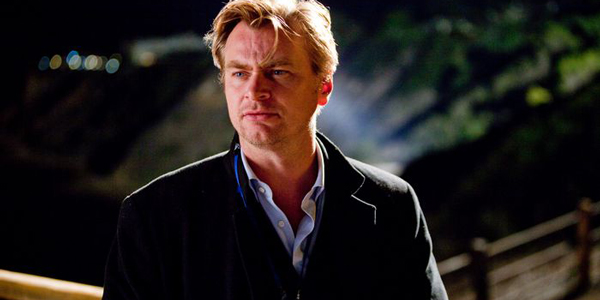
Filmography: Memento (2000); Insomnia (2002); Batman Begins (2005); The Prestige (2006); The Dark Knight (2008); Inception (2010); The Dark Knight Rises (2012) Undoubtedly many would rank Christopher Nolan at the top of this list, and while he doesn't get the top spot here, it is understandable why many would wish to see him ranked first. Nolan is an immensely talented director who has inconceivably managed to fuse populist elements of summer blockbusters with cerebral subject matter such as existentialism, nihilism, and the fractured and compartmental nature of the self. How he has managed to do this is hard to say, but with a dash of Kubrick, and pinch of Bergman, and a good dose of Spielberg, Nolan's outlook on film is a winning combination. For cineastes, Nolan first came to the forefront with his immaculately structured, film-noir-esque Memento. The story of a man incapable of forming new memories trying to avenge the death of his wife is a fascinating puzzle piece of a motion picture that many still feel is Nolan's crowning achievement. The more casual filmgoer will most likely know Nolan for his reimagining of Batman in his Dark Knight trilogy, of which the middle film, The Dark Knight, was one of the few cinematic cultural phenomena of the new millennium. The fact that Nolan could get so many people intrigued by a character as utterly nihilistic as Heath Ledger's The Joker is still a feat that is hard to comprehend. Herein lies Nolan's primary talent though, a man clearly interested in the inner and outer workings of the universe, but still enough of a member of popular culture to be able to create works of art that almost everyone can enjoy, regardless of where on the spectrum of cinematic fandom they belong.

6. Andrew Dominik

Filmography: Chopper (2000), The Assassination of Jesse James by the Coward Robert Ford (2007); Killing Them Softly (2012) If you're scratching your head on this entry, you're most likely not alone. While some of you may be wondering what Dominik's name is even doing on this list, others will definitely be surprised at the high rank, particularly given the fact the man has only made three films in his career thus far. However, in the cineaste's never ending quest to find the heir apparent to the great Stanley Kubrick, we may come as close as we're ever going to with the New Zealand-born Andrew Dominik. Dominik's most "successful" film financially was 2012's Killing Them Softly, a film that, despite starring Brad Pitt, grossed a measly $15 million in the U.S. Many people then have not had the pleasure of seeing his work. Dominik's style is visceral and brutal, which makes for uneasy digesting for some viewers. In fact, while his unrelenting focus and acerbic outlook is one of Dominik's primary strengths, he can be blunt to a fault. The on-the-nose narration of The Assassination of Jesse James held back a terrific film from being one of the best films of the last few decades, while Dominik's need to constantly throw in snippets of political speeches from George W. Bush and Barack Obama made the allegorical nature of Killing Them Softly so obvious as to become annoying. Despite these weaknesses though, other elements of Dominik's films are so strong, that to let these minor quibbles blind us to the genius of Dominik as a filmmaker is absurd. And if he ever does gain a tad more subtlety, expect Dominik to shoot up to the top spot on this list.

5. Paul Thomas Anderson

Filmography: Punch-Drunk Love (2002); There Will Be Blood (2007); The Master (2012) Another likely popular choice for the best director of the new millennium for many, Paul Thomas Anderson is a filmmaker who likes to push the boundaries of the human psyche. Whether it be someone as "pedestrian" as Adam Sandler's Barry Egan in Punch-Drunk Love, or someone as larger than life as Daniel Day-Lewis' Daniel Plainview in There Will Be Blood and Philip Seymour Hoffman's Lancaster Dodd in The Master, Anderson's foremost obsession appears to be obsessive personalities. The darkest crevices of the human soul, where unspeakable fear and anxiety exist, is where Anderson likes to explore, sometimes in order to alleviate, and sometimes in order to exacerbate. Journeying through the deep recesses of the human mind may not be for everyone, but even those who find Anderson's preoccupations off-putting have to admire his technical ability. Along with the likes of Christopher Nolan and Quentin Tarantino, Anderson is one of the few lone film holdouts in the film vs. digital debate, and his devotion to the power of actual film is very apparent. No one since Stanley Kubrick has been able to consistently shoot such epic looking films, which even in their dullest moments, still take your breath away just from the sheer scope of the image. Anderson is a natural born filmmaker in the purest sense of the word and whatever he has in store for the future of cinema, you can bet that avid filmgoers will be eagerly awaiting to devour it.

4. Quentin Tarantino

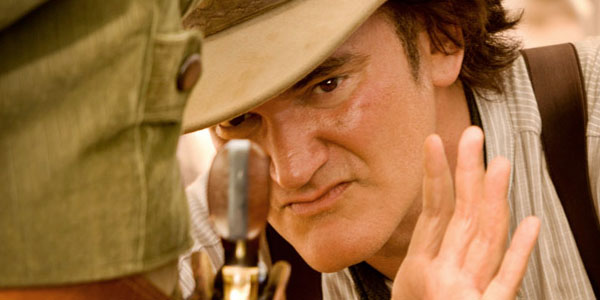
Filmography: Kill Bill Vol. 1 (2003); Kill Bill Vol. 2 (2004); Death Proof (2007); Inglourious Basterds (2009); Django Unchained (2012) Much like Christopher Nolan, Quentin Tarantino is one of the few directors who can unite almost all the disparate elements of film fanatics. Tarantino's trademark dialogue, imbued with a unique, crude sense of poetry that make the delivery of his lines zip with the sort of energy that can only be compared to world-class singing, is an unmistakable aspect of Tarantino's work that even the most laymen of film fans can immediately identify. The characters that inhabit the Tarantino-verse are so larger than life, and so particularly suited for cinema, that the second they appear on the flickering silver screen, they automatically enter the halls of film immortality. The performances, the music, the narrative structure, the editing, the cinematography, they all scream THE MOVIES!, and it's hard not to appreciate this love for cinema. In fact, you'd be hard pressed to find a single individual who knows more or cares as much about the movies as Quentin Tarantino. The man was simply born to make films, and his love of genre filmmaking, and his tip of the hat to the films that inspired him, make this very clear. Whether it be kung fu, grindhouse, or western flicks, Tarantino has references abound. Particularly in the new millennium, Tarantino has jumped into the more fantastical elements of genre filmmaking, leaving behind some of the gangster chic façade of his previous work. The trio of films Tarantino made in the 1990's still stand as his best work, but the more over exaggerated version of Tarantino is still a blast and he is still is one of the best auteurs making movies today.

3. Martin Scorsese

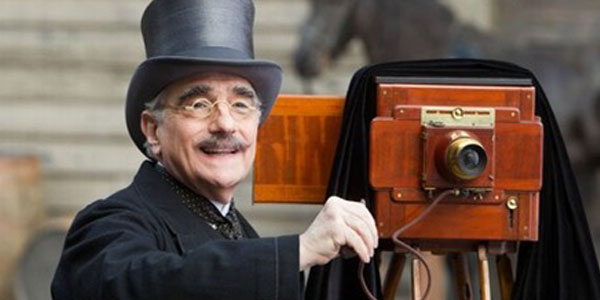
Paramount PicturesParamount PicturesFilmography: Gangs of New York (2002); The Aviator (2004); The Departed (2006); Shutter Island (2010); Hugo (2011); The Wolf of Wall Street (2013) It's easy to forget now, because Martin Scorsese's name is synonymous with the public consciousness' idea of a director, but out of all the famous auteurs to come out of the 1970's, Scorsese struggled almost more than anyone. Even his films that are now regarded as classics, like Taxi Driver and Raging Bull, never made the sort of money that the films of some of his contemporaries made, and despite many critical kudos, Scorsese failed to win an Oscar until late in his career. In the 1980's, Scorsese even had to fight tooth and nail just to get some of his films made. It is a bit ironic then (or perhaps it is because of these difficulties), that among all his peers, Scorsese has seen more success late in his career than anyone else. You will hear from some corners that Scorsese has gone too mainstream, but this is utter hogwash, as proved by the hail storm caused by the nearly NC-17 rated The Wolf of Wall Street. The man is as interested in film as he has ever been and the subject matter he is interested in exploring is still as cutting edge and thought provoking as it was in the 1970s. Scan Scorsese's 21st century filmography, and while some films are definitely better than others, you'll notice there is not a bad film in the bunch. The man is a consummate director, a true American icon, and the fact that, at the age of 71, he is still continuing to test himself as an artist is an incredibly remarkable feat.

2. Joel And Ethan Coen

Filmography: O Brother, Where Art Thou? (2000); The Man Who Wasn't There (2001); Intolerable Cruelty (2003); The Ladykillers (2004); No Country for Old Men (2007); Burn After Reading (2008); A Serious Man (2009); True Grit (2010); Inside Llewyn Davis (2013) There is no one on this Earth like the Coen Brothers, and thank God for that, because the world could not likely handle that amount of genius at one time. What's fascinating about the Coens is their versatility from screwball, and even slapstick, comedy, to austere work pondering issues of existential crisis, to sometimes, a mix between the two. The Coens' brand of black humour is hard to categorise, yet so tangibly them, that the Brothers practically constitute their own genre. Remarkably, despite their peculiarities and sometimes intellectually esoteric references, the Coen Brothers films are often very popular with the public at large as well. The Coens' are at their best when they are the most intellectually challenging. Films like No Country for Old Men and A Serious Man not only stand as some of the finest cinematic art of the 21st century, but compare favourably to the greatest films of any era. The former's chilling existential nihilism, and the latter's beguiling theological quandaries evoke such powerful emotional responses, that the mere mentioning of their names can create a feeling that hits the gut. Simultaneously, even the Coens' silliest work, like O Brother, Where Art Thou? and The Ladykillers, is so immaculately written, so entertainingly executed, that these films stand not far behind their best work. It may hurt your head to try to comprehend the types of minds that can store such seemingly oppositional moods, but thankfully for filmgoers everywhere, the Coen Brothers seem to be able to reconcile these elements without breaking a sweat.

1. Wes Anderson

Filmography: The Royal Tenenbaums (2001); The Life Aquatic with Steve Zissou (2004); The Darjeeling Limited (2007); Fantastic Mr. Fox (2010); Moonrise Kingdom (2012); The Grand Budapest Hotel (2014) Wes Anderson tends to be a very divisive filmmaker, as those with a gag reflex to anything the slightest bit twee or "hipster" love to rag on his weaknesses. They claim his obsessively symmetrical art direction to be a fastidious neuroticism. They claim the deadpan reactions of his emotionally unstable characters to be an unrealistic artifice used for cheap comedic purposes. Finally, they claim Mr. Anderson continually makes the same film over and over again. At the risk of being a tad hyperbolic, these people are wrong, and probably have no souls. Certainly, some of the immediately preceding directors would be easier to build consensus around as The Greatest Director of the New Millennium, but Anderson earns the top spot because more than any other director, Anderson's work is filled with unadulterated love. No director other than Wes Anderson could take inspiration from classic Hollywood films like The Grand Hotel and You Can't Take It with You and make something that is not a simple homage, but rather a film that uses elements of these classics to tell stories befitting contemporary times. Particularly, what Anderson borrows from classic Hollywood that few contemporary directors express anymore is an unabashed humanism. For all his urban chic sophistication, no auteur has taken up the mantle of Frank Capra's passionate pleas for existence more than Wes Anderson, albeit in a post modern context. It is this love of life and the characters in it, despite their imperfections and flaws, that puts a smile on the face of Anderson's fans, and for this reason, Wes Anderson tops the list as the best director of the new millennium.

Contributor
Contributor

A film fanatic at a very young age, starting with the Teenage Mutant Ninja Turtle movies and gradually moving up to more sophisticated fare, at around the age of ten he became inexplicably obsessed with all things Oscar. With the incredibly trivial power of being able to chronologically name every Best Picture winner from memory, his lifelong goal is to see every Oscar nominated film, in every major category, in the history of the Academy Awards.