20 Greatest Final Shots In Movies Ever
Perfect endings.
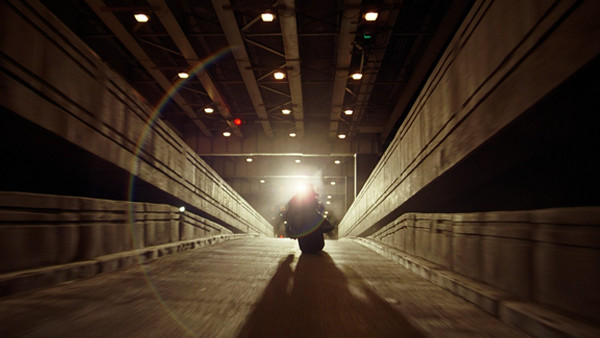
What would any movie be without its final shot? Incomplete, that's what. But seriously, a memorable, impactful final image can make sure a movie resonates even deeper with audiences, enduring in their brain even many years after they last watched it.
Whether visually stunning, thematically provocative, endlessly enigmatic or straight-up shocking, these 20 final shots represent the very best that cinema has ever offered up. They are note-perfect examples of how to leave audiences elated, shocked and just generally blown away.
Opinions are sure to vary on what's truly the best, of course - after all, there are so many mesmerising final images to choose from - but these are the 20 that have surely most penetrated the cultural consciousness and so decisively elevated the rest of their movie.
From final glimpses of unstoppable heroism to abject horror and every torturous ambiguity in-between, once you've seen these movies, you'll never be able to get that last shot out of your head...
20. Fight Club (1999)

David Fincher's sublime meditation on toxic masculinity concludes in suitably bombastic, visually stunning style, as the unnamed protagonist (Edward Norton) is finally freed from Tyler Durden's (Brad Pitt) grip, and watches every building in the financial district explode, hand-in-hand with his kinda-love interest, Marla Singer (Helena Bonham Carter).
The use of The Pixies' "Where Is My Mind?" helped make the ending instantly iconic, but the sheer visual majesty of the final shot's destruction is a mini-masterpiece in its own right. Plus, as an added final stinger, there's also a brief subliminal glimpse of a penis, because why not?
A tantalising closing image that begs so many questions even as it represents the ultimate culmination of Project Mayhem's plan. Simply unforgettable.
19. The Texas Chainsaw Massacre (1974)

Tobe Hooper's inimitable horror classic gives viewers a suitably rough-and-tumble finale, where final girl Sally (Marilyn Burns) just barely escapes the Sawyer house in tact, speeding away in the back of a pickup truck while maniacally laughing at her own incredulous survival.
Cut to Leatherface (Gunnar Hansen), who swings his chainsaw around in the air in perhaps cinema's most demented dance sequence ever, Hooper lingering on the beautifully ugly image for more than 10 seconds before smash-cutting to black.
Though the horror genre typically hurls "one last fright" at audiences with a calculated jump scare, Hooper instead opted to keep the story - and, yes, the chainsaw - running past the final shot, a visage at once haunting and oddly charming.
18. Oldboy (2003)

Park Chan-wook's infamously shocking thriller climaxes with the revelation that protagonist Oh Dae-su (Choi Min-sik) has been manipulated into having sex with his own daughter, Mi-do (Kang Hye-jung), by the movie's vengeful villain Woo-jin (Yoo Ji-tae).
At the very end of the film, Dae-su visits a hypnotist to have his memory of this revelation erased, so he can continue to have a relationship with Mi-Do. Father and daughter lovingly embrace, and in the very final image, Dae-su smiles, before the smile gradually transforms into a pained grimace.
It's a savagely ambiguous way to close things out: did the hypnosis fail, and Dae-su's residual memories are coming back to the surface? Or could it mean something else? After the insane bombast of the big reveal and its fallout, this was a wonderfully subtle way to wrap it all up (or rather, not to).
17. Back To The Future (1985)

After Marty (Michael J. Fox) arrives back in October 1985 and everything seems to be right with the world, Doc (Christopher Lloyd) shows up in the DeLorean, insisting that Marty and his girlfriend Jennifer (Claudia Wells) need to travel with him to 2015 in order to rescue their kids.
The three jump in the iconic time travel vessel, as director Robert Zemeckis lingers on a gorgeous final image of the DeLorean raising its wheels and hovering in the air, before flying towards the camera.
It's a visual that's burned into the brains of just about every 80s kid, and even today, the visual effects have aged spectacularly well. It leaves audiences on a high while also directly setting up the sequel.
16. A Serious Man (2009)

The Coen Brothers' Best Picture nominee fascinatingly muses on the nature of faith and the possible carelessness of the universe, and ends with protagonist Larry Gopnick (Michael Stuhlbarg) changing the grade on a student's paper for his own benefit, unknowingly bringing about his own, possibly divinely mandated, demise.
After Larry receives a concerning phone call from his doctor, the scene shifts to Larry's son Danny (Aaron Wolff), who is due to be imminently wiped out by a pursuing tornado. The ultimate, absurd punishment for Larry's misdeed.
You always know you're going to get a memorable closing image with Oscar-winning DP Roger Deakins at the lens, and the destructive beauty of the shot is underlined by the darkly comic, slow-building reprise of Jefferson Airplane's "Somebody to Love".
15. The Usual Suspects (1995)

Though the one-two punch of Bryan Singer and Kevin Spacey might make this ingeniously-conceived thriller a little tough to watch nowadays, there's little argument that its climactic revelation - that the enigmatic baddie Keyser Soze was indeed Verbal Kint (Spacey) all along - is one of the best-wrought twists in cinema history.
It's all tied together by a fantastically-edited final sequence, in which Kint's deception is fully revealed, before he escapes the clutches of Agent Kujan (Chazz Palminteri) and disappears into the ether.
The final shot replays a sequence from earlier in the movie where Kint explains Soze's shadowy nature - "And like that...he's gone" - before we cut to black.
That is how you end a movie.
14. Call Me By Your Name (2017)

It's hard to think of a more soul-stirring and downright memorable final image in recent years than that of Luca Guadagnino's deeply felt romantic drama.
After young Elio (Timothée Chalamet) receives a phone call from his summer lover, Oliver (Armie Hammer), explaining that he's engaged, a heartbroken Elio sits by the fireplace to think it all over.
While dinner is prepared in the background, Guadagnino lingers on this visage for more than three unbroken minutes while the film's end credits play out, set to Sufjan Stevens' ethereal track, "Visions of Gideon".
It's one of cinema's finest ever depictions of romantic devastation, and pretty much cemented Chalamet's Best Actor Oscar nomination.
13. The Thing (1982)
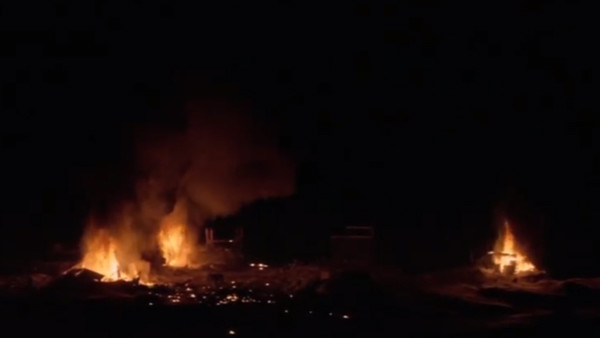
Though you probably wouldn't want to hang the final image of John Carpenter's 1982 sci-fi classic on a wall, what it lacks in context-free finesse it more than compensates for with its sheer, pervasive bleakness.
The film ends with the two remaining men, MacReady (Kurt Russell) and Childs (Keith David), sat amid the fiery remains of the exploded Norwegian base, slowly succumbing to the icy elements as they appreciate that their mutual distrust of one another will surely mean both their deaths.
As Carpenter's ominous, minimalist synth score kicks in, the eerie calm of the burning base leaves the prospect of death percolating in the viewer's brain: not only MacReady and Childs, but also any potential rescue teams who may show up.
12. Blade Runner (1982)

An agonising cinematic mystery that's endured for almost four decades, Blade Runner's tantalising final moments see Deckard (Harrison Ford) find an origami unicorn in his apartment, presumably left there by Gaff (Edward James Olmos).
This has of course been interpreted by fans as a suggestion that Gaff knows Deckard is a replicant - due to Deckard's dream of a unicorn potentially being an implanted replicant memory - while many fans swiftly deny it as undermining the movie's core interplay between humans and replicants.
Whatever side you fall down on, the lingering image of Deckard staring intently at the unicorn and disappearing into the elevator with replicant lover Rachael (Sean Young) is thoughtful and intense, leading into Vangelis' magnificent end credits score.