20 Horror Movies You Must See Before You Die

"The horror... the horror..."
It's strange that we're able to derive so much pleasure from scaring ourselves senseless... and yet, fundamentally, that's why we're so fascinated with the idea of horror movies, isn't it? To see how much we can take? To tap into our darkest fears? To buy into a sort of unwritten challenge posed by the associated filmmakers... to prove something to ourselves about the nature of terror? To probe and deconstruct the boundaries of taste? Is that what horror's about? Without question, the horror genre remains one of the most universally appealing of all genres - there's something about it that seems to tap into our innate desire to torment ourselves. We like to rejoice in the aftermath of being scared (after all, having been made to jump, our next reaction is usually to smile or laugh). And horror movies have been around from the very beginning of cinema, of course, harking back to the silent era. In a controlled zone, fear is apparently fun. Horror is known for its ability to encompass a variety of themes - despite that fact that many critics and movie-goers are quick to write it off as one of the lesser cinematic genres, horror has been used to probe, dissect and cut into the fabric of our lives on countless occasions. It's true that some horror is tasteless, but isn't that real of all genres? True horror taps into our deepest anxieties, digs up old graves, pulls skeletons out of the closet, gives a face to our nightmares. So what makes a horror movie a horror movie? The lines are somewhat blurred (and you could argue about them for hours, no doubt), but for the titles we considered, we used one simple criteria, and one that marks the most essential element of a true horror film: it must have been made with the intention to genuinely frighten the hell out of you. We also left off any movies included on our sci-fi list that might've slotted in here. Also: no comedy/horror hybrids...

20. Poltergeist (1982)

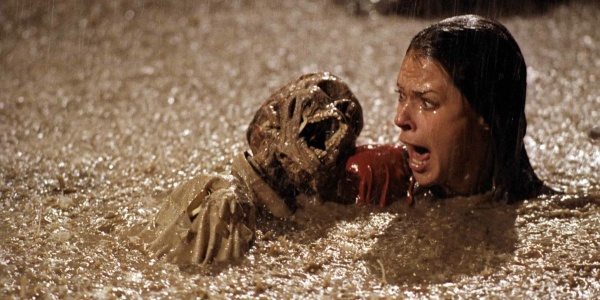
What if Steven Spielberg directed a full-blown horror movie? Chances are it would end up looking a hell of a lot like Poltergeist. Indeed, it has long been rumoured that Spielberg - who served as an executive producer on this movie and was frequently seen hanging around the set, offering his expertise - co-directed the thing alongside Texas Chainsaw maestro Tobe Hooper. Poltergeist is classic Spielberg in so many ways, of course; everything, from the suburban setting, the family unit serving as protagonists, and the crisp, clean direction, seems to mark it out as one of his own. And yet Poltergeist possesses a far darker heart than the usual Spielberg fare (presumably the reason why he set Tobe Hooper onto the task) - it's a relentlessly entertaining movie, sure, filled with charm and humour, but several of its most famous sequences are downright terrifying. Who could forget, after all, the old tree smashing through the window, or the clown attack? As a haunted house movie, then, Poltergeist is one of the best, a landmark film, imitated to this very day. And it's also one of very, very few horror movies bold enough to end on a bonafide joke.

19. A Nightmare On Elm Street (1983)

A Nightmare On Elm Street is often credited as taking certain overused tropes from the horror movies of the '70s an early '80s and successfully revitalising them; indeed, Wes Craven's endlessly inventive yarn - which clings to a horrifying premise that has a murderer pursuing victims in their sleep - clings to a ton of ideas that audiences had seen time and time again already, but pulls them together in a way that feels fresh and new. And then there's Freddy Krueger, of course; a nightmarish creation of pure evil if ever there was one, since made iconic. Shamefully, A Nightmare On Elm Street led to an insane amount of unwarranted sequels, which have somewhat shallowed the reputation of the original classic which started it all. Thing is, the first chapter is actually frightening in all the ways its sequels are not. This isn't schlocky horror for the sake of it; Craven's script is genuinely intelligent, a point proven by the way in which Krueger delves into the dreams of his victims to get at them. It has a few flaws, of course, but ultimately A Nightmare On Elm Street lives up to to the sinister promise of its title... and then some.

18. 28 Days Later... (2002)

The second collaboration between novelist Alex Garland and director Danny Boyle proved far more successful than their first, perhaps due to the fact that Garland wasn't reduced to a passive role (John Hodge penned the script for the film version of The Beach). Garland's script for 28 Days Later envisions London as it succumbs to a terrifying plague, in which the majority of the population have been infected with a virus known as "Rage." Often mistakenly billed as a zombie flick, 28 Days Later is a brutal, sobering experience; a horror movie that drains you whole. Cillian Murphy stars as Jim, a bike messenger who wakes up in a hospital room after a car accident leaves him in a coma, to find that London has gone to hell. Boyle shoots the city - which was meticulously emptied, shot by shot, to achieve the desolate atmosphere - with digital cameras, imbuing the film with a strange, dream-like quality. This low budget flick is genuinely nail-biting stuff; the infected - eyes red, relentless - will give you nightmares for weeks. It's a horror film so packed with scares that it should come with a obligatory cushion to hide behind.

17. Freaks (1932)

"Gooble-gobble, gooble-gobble. We accept her. One of us, one of us." You won't forget those words once you've sat through a screening of Tod Browning's strange, terrifying and (ahem) freakish movie, Freaks, whose tagline was legitimately: "Can a grown woman truly love a midget?" It's hard to know what genre Freaks really falls into, given the weird nature of the material, but there's no denying that there are some truly horrifying moments to be had, in and amongst the scenes of humour, drama and tragedy. Initially panned, Freaks has since been reappraised. Our story, set in travelling circus, explores the relationships between the assorted performers, many of whom are disabled - either mentally, physically, or both. In a controversial move, Browning opted to use actually deformed persons to assemble the "freaks" of the film's title. Running at a lean 64 minutes, Freaks genuinely stands alone in the horror pantheon as a singular obscurity - where oddness is concerned, very little compares. And in its thunderous, soaked, mud-splattered ending, you'll find one of the most nightmarish sequences in all of horror cinema.

16. The Blair Witch Project (1999)

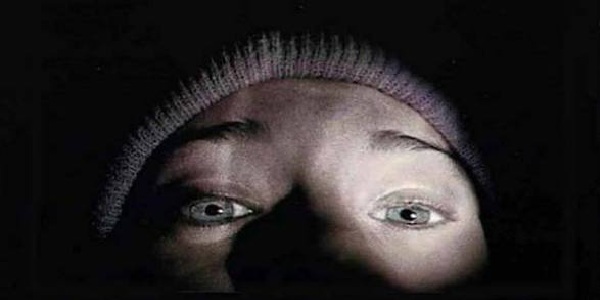
If hundreds of copycats have since dulled the impact of The Blair Witch Project in the wake of its original release, it doesn't hurt to close your eyes, cast your mind back, and remember how seminal this movie really was. Nowadays, it's often lambasted for its handheld camera style, as person after person recalls how it didn't scare them when they first watched it. But those people are liars: put The Blair Witch Project on whilst home alone, in the middle of the night, with the lights switched off, and let's see who's not scared. This is modern horror as its most terrifying. Aside from its inherently creepy title (still one of the best ever), the set-up is innately creepy, too: a bunch of kids head out into the woods in Maryland in hopes of capturing some footage of a local legend, the Blair Witch. The purposely amateur nature of the production brought horror closer to audiences than ever before, many of whom were duped into thinking that the "found footage" they were watching was actually real. The trick is that we don't get to see the Blair Witch; all the "action" happens off camera. And we buy it all because the performances are chillingly real.

15. Audition (1999)

Audition sits alone on this list in the sense that it's the only movie here that starts out as a genuine rom-com, before slowly descending into a horror experience unlike no other. As one of the best and most intriguing J-horror films of recent times, director Takashi Miike's intention seems to be to lure you into a false sense of security, before unleashing a bag of nightmares - quite literally. So Audition begins with a widower, Aoyama, teaming up with his film producer friend to hold auditions for a fake production, whilst concealing their true purpose: to find Aoyama a wife. And for roughly half the film, we follow Aoyama's light-hearted antics as he goes about his task. Indeed, the premise could easily find itself repackaged across seas with Hugh Grant in the lead role. Soon enough, however, things start to get a little weird: when Aoyama believes he's found the perfect girl, she turns out to be quite different. The storyline slowly moves towards the movie's final scene, in which several terrible acts are committed. "Kiri, kiri" - translated into English, these words mean "deeper, deeper." After the finale, they're two words you're never going to forget.

14. Don't Look Now (1973)

There are few horror films imbued with the ability to get under your skin in quite the same capacity that Nicholas Roeg's strange, dreamy and anxiety-clad masterpiece Don't Look Now does, which follows a couple - played by Donald Sutherland and Julie Christie - who travel to Venice in the wake of their child's death. Based on a short story by Daphne du Maurie, it's chilling, intoxicating and uncomfortable to watch from start to finish, as Venice becomes the spookiest city ever featured on film, and a deformed serial killer, clad in a red coat, stalks the cobbled streets. Much of Don't Look Now is ambiguous, but the suffering experienced by Sutherland and Christie's noticeably realistic couple generally serves as a metaphor for their internal torment, the result of their having sex whilst - unbeknownst to them - their child drowned outside. Don't Look Now is all about mood; Roeg paints the entire film in such a memorable shade of red that it's impossible to think of it without thinking of its colour palette. At the centre of the movie are two remarkable performances from its leading actors, and a chilling finale that will lodge itself in your brain forever.

13. Carrie (1976)

Brian DePalma set out to adapt Steven King's short but undeniably brilliant first novel, which tells the story of Carrie White, a bullied schoolgirl who realises she has psychic powers, into a motion picture, and the results - fiery, tense, and bordering on the dream-like - proved inspired. Sissy Spacek stars as the troubled character of the title, who finds herself asked to the prom by the coolest kid in school to famously disastrous results, and offers up a truly immersive and tortured portrait of loneliness, with John Travolta and Nancy Allen rounding out the cast nicely. There are many great moments inherent to this classic, which only seems to get better with age, but the centre piece of the film - and indeed, King's book - occurs towards the end, as Carrie is humiliated in front of the entire student body, most of whom subsequently come to feel the full force of her powers in one of horror cinema's most gut-wrenching finales. Style-wise, DePalma takes his cues from his long time inspiration Alfred Hitchcock; the camera is never placed anywhere else but perfectly, and every shot a lesson in composition. Tragic and very chilling.

12. The Birds (1963)

There are countless readings into what, exactly, The Birds is all about. Indeed, the fact that this is a Hitchcock film - one with a production history just as interesting as the film itself - marks it out as one of those pictures to be met with endless analysis. But even taken at face value, The Birds is a clawing masterpiece of horror invention; one that hones in on our inherent human fear of the unknown, and what happens when forces that are ordinarily fixed fall out of line. In this case, the birds of the world began to strike back against humanity with violent force for no reason. Over the course of production, Alfred Hitchcock famously tormented his leading lady, Tippi Hedren, until she could be tormented no more. Sad as that is, every inch of her frustration and anger at the director is right up there on screen, which ultimately serves to make The Birds are far more raw and thunderous experience. Because the idea could have fallen flat. Birds aren't scary, after all... and yet that was the point. Hitchcock's masterstroke here was in the slow reveal of the birds; he has them looming in the background, building their ranks, until it's finally time.

Contributor

Sam Hill is an ardent cinephile and has been writing about film professionally since 2008. He harbours a particular fondness for western and sci-fi movies.