20 Horror Movies WAY More Successful Than Anyone Expected
No stars. Zero marketing. Niche audience. And yet, these horrors made a fortune.
Every film studio obviously hopes each of its properties generates as much cash as possible. With that said, expectations need to be realistic.
This goes double for the horror genre, since R-rated flicks have a limited audience. To maximise ticket purchases, most slashers and creature features are done on the cheap. That way, it's more likely they'll see a decent box office return, even if they only bring in a few million.
But other times, these kinds of movies go against all predictions. When a nail-biting feature gets hyped like crazy, it can bloom into a cultural phenomenon, pushing sales beyond what the most positive projections suggested. A horror movie with a jaw-dropping twist can be considered a "must-see-twice" experience, leading to multiple viewings. If the film takes off in a heavily populated country, it can lead to a huge boost in profits. Streaming platforms and social media further amplify this effect, which can help unknown titles explode in popularity.
Looking back, little was expected from the following 20 entries, since they were barely advertised, had a niche market, or were simply not that good. Against the odds, though, each and every one of them made a killing at the box office.
20. Open Water

Written and directed by Chris Kentis, Open Water revolves around two scuba divers who get lost in a particularly shark-infested area of the ocean.
The survivalist drama relied on natural light, digital video, and a minimalist crew, which kept costs down (reportedly half a mil). At a time when the horror and thriller genres were swamped by big-time studio releases, few envisioned an independent project would get much notice.
However, Open Water's stripped-down realism resonated with the masses. The fact that real sharks were used throughout filming intrigued moviegoers, increasing Open Water's marketing appeal exponentially. Critical praise and positive buzz at festivals allowed the nerve-wracking indie to gain even more traction.
Ultimately, Open Water grossed $55 million, making every cent back a hundred times over. This accomplishment was deeply inspirational, since it demonstrated that independent thrillers were able to compete with the big leagues. On top of that, it encouraged small-time filmmakers to take risks and be ambitious with their own material.
The loose follow-ups mightn't have had similar results, but the original Open Water is a shining example of how a non-studio movie can bring in the big bucks.
19. Friday The 13th

On paper, Friday the 13th seemed like a run-of-the-mill slasher, hoping to replicate Halloween's success. Even with the $650,000 budget, the campy whodunnit was considered a financial risk, since it had no major stars and was contending against a wave of similar horrors.
And yet, Friday the 13th captivated the slasher community with its striking premise, intriguing mystery, inventive practical effects, and memorable kills. Even though jump scares can be cheap, Friday the 13th has some of the most heart-stopping moments in the genre (especially the film's final shot). Rather than having a generic killer, the antagonist was treated like a ghost story, tapping into the generation's fascination with campfire-style terror.
Friday the 13th raked in almost $60 million, showcasing the viability of slashers. It spawned 11 further instalments, highlighting the lasting power of an unassuming indie. It took over 20 years before a follow-up earned more than the first Friday the 13th - that would be Freddy vs. Jason - reaffirming how absurdly profitable that original was.
Despite the fact that there hasn't been another Friday the 13th movie since 2009, that original film and subsequent franchise still remain a cornerstone in horror.
18. Saw

Inspired by micro-budget flicks like Pi and The Blair Witch Project, Leigh Whannell and James Wan created a nine-minute short called Saw in 2003. Its positive reception led to Lionsgate green-lighting a feature based on the property, with Whannell and Wan at the helm.
However, the odds were stacked against the pair, since they had little experience in the industry and were forced to work with a shoestring budget. Also, Saw was part detective drama, part body horror, making it an absolute nightmare to market. To top it all off, the trailers emphasised the film's gore, which could've turned off casuals.
Contrary to predictions, the million-dollar gamble was a smash, bringing in over $100 million. Word-of-mouth from fervent fans combined with a startling twist ending propelled the mystery thriller to instant classic status, and it quickly spawned a long-running franchise and annual Halloween releases, dominating October every year for the next six years.
Furthermore, Saw popularised the torture genre, which may have helped similar titles like Wolf Creek, The Devil's Rejects, and Hostel receive recognition. Sure, Saw's content is disturbing as hell, but its unexpected success is deeply uplifting.
17. Lights Out

In 2013, David F. Sandberg released his Lights Out short film, which centres around a demonic entity that can only exist in darkness. Despite the minimalistic approach and lack of dialogue, the three-minute clip went viral, leading to Sandberg adapting it into a full feature film.
Even though fans of the short were gunning for the feature-length version of Lights Out to succeed, it didn't exactly have universal appeal. Worse still, Lights Out hit theatres in the summer of 2016, meaning it had to go up against heavy hitters like Captain America: Civil War and Finding Dory. Just to rub salt into the wounds, Lights Out came out around the same time as The Conjuring 2, too, which had way more hype.
Taking all of this into account, it's impressive that the movie recouped almost 30 times its budget. Even though it looked like Lights Out was doomed, its loyal fanbase, tight storytelling, and genuine scares let it stand out in a crowded market. Ironically, Sandberg's success led him to work on the same types of blockbusters that Lights Out was competing against, including Shazam and Annabelle: Creation.
16. The Evil Dead

The 1980s are considered a golden age for horror, thanks to masterpieces like Aliens, Predator, A Nightmare on Elm Street, and so forth. But with so many great frightfests jostling for the top spot at the time, even the best struggled to receive recognition.
For this reason, Sam Raimi knew his directorial debut, The Evil Dead, could get lost in the shuffle. The teen horror was overflowing with creativity, but it was still a horror indie made by a first-time director that was fighting against mainstream features. However, The Evil Dead had a secret weapon. Rather than being a conventional paranormal thriller, Raimi made his project into a horror-comedy. Rarely had anybody seen horror embrace slapstick on this level before, urging viewers to march to theatres in droves.
Based on its reputation, it's no surprise to learn that The Evil Dead was a hit. But even veterans mightn't realise the original made significantly more than Evil Dead II. The sequel is usually rated better, but it barely recouped anything, while its predecessor raked in almost $30 million on a $325,000 budget. Evil Dead II is a treasure, but the first one is the victor in terms of return on investment and overall profit.
15. The Devil Inside

Although there are various reasons why low-budget horrors sometimes blow their competition out of the water, it usually boils down to the fact that they're awesome.
But there are exceptions to the rule, especially when it comes to The Devil Inside. Whether it's the predictable scares, overused tropes, or the weak story, it's hard to find anything redeemable in this trash. Due to its controversial climax (or lack of), the story had no resolution whatsoever, which is why The Devil Inside is considered to have one of the worst endings in horror history. Despite costing a measly million, the critical backlash and low audience scores should've been enough to make this clunker tank.
However, The Devil Inside had the perfect release slot, since it had no major films to contend with. As such, it earned 20 times its budget within a few days and a hundred times its $1 million budget overall.
In a funny way, it's fascinating to see The Devil Inside prosper the way it did, since it proves any horror indie can make a fortune, even if it's really, really, really bad.
14. One Cut of the Dead

One Cut of the Dead centres around a frustrated director who's trying to make a zombie flick called True Fear. Unimpressed by the actors, he forces them to face real ghouls, believing it'll be more convincing.
Even though the Japanese zomcom is hilarious and incredibly imaginative, the chances of mainstream success seemed slim. Shot for around $25,000 with a cast of unknown actors, it premiered quietly on the festival circuit. Early audiences were charmed by One Cut of the Dead's subversive structure, but nobody involved anticipated more than an adequate run.
However, One Cut of the Dead is so unique, positive word-of-mouth turned this zany zomedy into a must-see experience. Buzz spread across the world - especially about its bonkers twist - compelling even casual horror fans to check it out.
In the end, One Cut of the Dead grossed $31 million. That doesn't sound like much, but the fact that this gem earned over a thousand times its production budget is outrageous. Because of this, One Cut of the Dead's transition from obscure student-level project to international phenomenon should be considered one of the most impressive underdog stories in modern horror.
13. The Conjuring: Last Rites
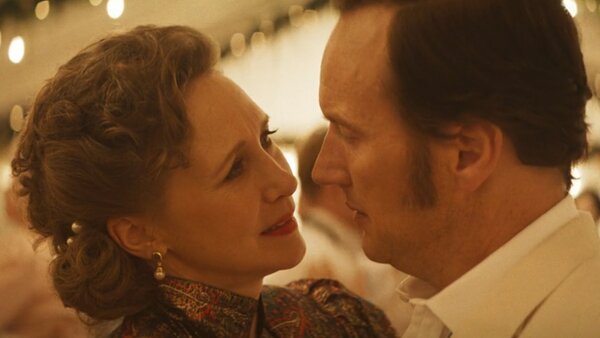
The Conjuring has proven to be one of the biggest horror brands in recent history. James Wan's billion-dollar franchise follows Lorraine and Ed Warren, a couple who investigate supernatural cases across the US. Due to the saga's innovative stories, focus on characterisation, and consistent world-building, The Conjuring organically expanded into a cinematic universe.
But as is often the case, there was an inevitable wane in quality, which saw a drop in profits. The third official instalment, The Conjuring: The Devil Made Me Do It, earned $100 million less than the previous ones, implying the series was on the way out. So, when The Conjuring: Last Rites was announced, few thought it would be a moneymaker.
That's why it was perplexing when Last Rites secured almost half a billion dollars, making this needless sequel the most lucrative entry to date.
To be fair, die-hard fans probably flocked to the theatres since Last Rites was the finale of the Warrens' story (as the title indicates). However, this film brought in so much money, it wouldn't be surprising if we see the Warrens again in the near future.
12. Split

M. Night Shyamalan's early work was magnificent, which is why his fanbase gave him the benefit of the doubt when he tossed out the occasional dud. But after churning out absolute slop like The Happening, The Last Airbender, and After Earth, it seemed like the Oscar-nominated auteur had lost his touch.
For this reason, Split was shaping up to be another turkey. The psychological thriller follows a teen, Casey (played by a pre-famous Anya Taylor-Joy), who is abducted by James McAvoy's Kevin, a DID sufferer with 24 personalities. Intriguing premise aside, former fans of the director had been let down too often to have any faith in this project.
But unlike much of Shyamalan's work, Split wasn't bogged down by inconsistent performances, AI-sounding dialogue, or distracting cameos. Instead, it told a tightly-written story, which was accentuated by Taylor-Joy's career-making performance. And even though the antagonist could've been goofy, he's the best part by far, thanks to McAvoy's utter conviction in the role.
Due to its $9 million budget, it seemed like Shyamalan was playing it safe with Split, though he had nothing to worry about, since Split brought in $300 million, becoming one of the biggest films of his career.
11. Get Out

Over the years, Jordan Peele has established himself as quite the polymath in terms of acting, writing, producing, and directing.
But for the longest time, he was best known for sketch comedy, due to his Emmy-winning show, Key and Peele. As a result, it was odd when Peele announced he was directing a horror feature called Get Out, which centred around racial discrimination. Even though it was ambitious for the talented funnyman to throw his hat into the filmmaking ring, hype for his directorial debut was pretty tame.
However, due to its golden cast, airtight writing, lingering mystery, and relevant social commentary, Get Out resonated on a global scale, earning a quarter of a billion dollars worldwide on a $4.5 million budget, making an extraordinary ROI for a debut horror. Get Out received multiple Oscar nominations, and Jordan Peele won for Best Original Screenplay, making him the first black writer to obtain that award.
What was initially thought to be a clever but limited horror project transformed into a cultural landmark that didn't just exhibit Peele's skills but redefined a genre.
10. A Quiet Place

It's extremely commendable but risky when an actor decides to step into the director's chair. After all, talent in front of the camera doesn't necessarily translate into talent behind it. Even though John Krasinski had proven to be a class act in The Office, there was no guarantee his foray into filmmaking, A Quiet Place, would hit.
To be fair, the film had an intriguing hook, since it took place in a post-apocalyptic world populated by aliens with hyper-hearing, meaning the survivors could die if they made the slightest sound. It was a great idea, but Krasinski's background was in comedy, so it was uncertain whether he had the chops to pull it off. The fact that A Quiet Place wasn't heavily marketed indicated even further that this project wasn't going to be anything special.
However, audiences were completely blown away by A Quiet Place's endless tension, masterful world-building, and subtle performances by the mostly mute ensemble. The end result couldn't have been better, as A Quiet Place made a fortune, nabbed an Oscar nomination, kickstarted a franchise, and established Krasinski as a gifted filmmaker.
9. The Meg

Even though Jason Statham's action-packed blockbusters usually make a reasonable profit, they don't exactly scream megabucks unless Fast and the Furious is in the title.
As a result, nobody thought The Meg would be anything spectacular, since the premise can be summed up as "Man Versus Prehistoric Shark". The concept is so silly, you'd swear it came from the Asylum studio.
However, Warner Bros. seemed confident in the daft kaiju flick since they spent at least $130 million on it (although some reports suggest it could've been as much as $178 million). With the studio forking over an additional $140 million on marketing, The Meg would be lucky to break even, especially since it debuted during an overstuffed summer.
On the contrary, the over-the-top thriller made a big splash at the box office, especially in China, where it brought in $150 million. The Meg's final tally was upwards of $500 million, grossing more than any entry from Statham's other recognised brands, like The Transporter or The Expendables.
The reviews weren't anything to write home about, but that just goes to show that sheer spectacle can sometimes outweigh critical reception.
8. Bird Box
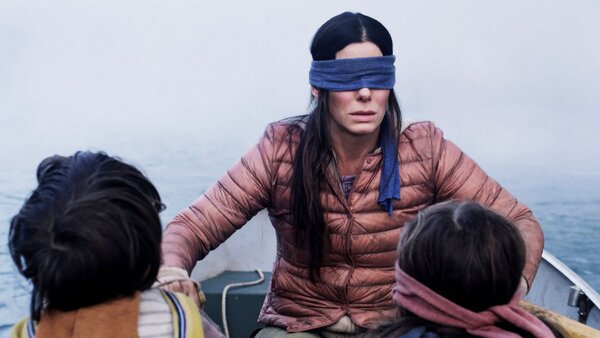
For better or for worse, streaming services changed the way society watches content forever. Not only that, but they also altered what type of films get attention, as Bird Box proves.
Based on Josh Malerman's novel of the same name, the supernatural horror opens with interdimensional entities invading our world, causing anyone who gazes upon them to kill themselves. It's an inventive premise, but not the kind of story that would encourage the masses to gallop to theatres, especially with its mixed reception. But since Bird Box was easily accessible through Netflix, users were curious to check it out.
Amazingly, reports show the film was viewed 45 million times within the first week. Its unexpected prosperity was amplified by the infamous Bird Box Challenge, where fans performed everyday tasks while blindfolded.
Memes, reactions, and debates about the story’s ambiguity helped Bird Box spread beyond Netflix’s internal audience, giving it a viral boost that nobody predicted. Within a month, Bird Box became the most-watched Netflix movie of all time. Although it's impossible to know how the monster flick would've fared with a theatrical release, it's safe to assume it wouldn't have been the same.
7. Insidious

After Saw became a horror juggernaut, James Wan and Leigh Whannell could've sat on their laurels and counted their well-deserved earnings. Instead, they got to work on a new horror called Insidious, which revolved around a family being tormented by spirits from another dimension.
Though Wan and Whannell had already proven themselves, they weren't mainstream names yet. Also, even the biggest horror directors struggle to create more than one long-lasting franchise. So, if Insidious made a strong impression, the chances of capturing lightning in a bottle twice seemed unlikely.
But just like Saw, Insidious recouped a hundred times its budget. Audiences responded strongly to its atmosphere-driven scares, restrained use of effects, and fresh take on astral-projection horror. Encouraging buzz spread fast, helping Insidious gain a reputation as one of the scariest films in years (mainly thanks to that jump scare). What could've been a one-off scare-fest turned into a brand that's lasted over a decade.
Insidious' success led to two sequels and two prequels, allowing the IP to score over $700 million. Considering the combined budget for all five Insidious instalments is under $50 million, that's an astounding return.
6. World War Z

World War Z wasn't expected to just fail, but to fail on a monumental level. The decision to turn this adaptation into a fast-paced action thriller alienated lovers of the source material. However, that was merely the tip of the iceberg.
Based on early screenings, World War Z's third act was confusing and tonally inconsistent with the rest of the story, leading to Paramount ordering extensive rewrites and reshooting nearly 40 minutes of footage mere months before the planned premiere.
Massive late-stage changes like this signalled deep creative problems and drove the budget sky-high. Due to the negative buzz, it seemed unfeasible for the zombie blockbuster to earn anything back, but after receiving surprisingly consistent reviews, World War Z earned $540 million, making it the most successful zombie film ever, as well as Brad Pitt's most profitable movie at the time.
Now, World War Z didn't make as much of a profit as you'd expect, since it cost over $190 million. But considering the undead blockbuster seemed destined to become one of Hollywood's biggest financial disasters, it's a miracle it didn't lose any money at all.
5. Psycho

During the 1950s, Alfred Hitchcock released a slew of defining thrillers, including Dial M for Murder, Rear Window, Vertigo, and North by Northwest. With Hitchcock at the top of his game, moviegoers were eager to sprint to any feature with his name slapped on it.
But when the master of suspense announced he was adapting Robert Bloch's gruesome page-turner, Psycho, the whole world turned against him. Although much of Hitchcock's repertoire is horror adjacent, he'd never fully plunged into the genre before. At the time, a film based on Bloch's novel was considered trashy and thus, beneath a man of Hitchcock's calibre.
For this reason, studios weren't willing to back Psycho, forcing the London-born auteur to remortgage his house to fund the project. The censor board were nipping at Hitchcock's heels every step of the way, dismissing any idea deemed inappropriate.
Due to its lack of universal marketability, it felt like Psycho was set up to fail. And yet, this 1960 classic became Hitchcock's most lucrative movie by far. Even though Hitchcock had proven himself countless times, it was satisfying to see his biggest gamble blossom into his greatest triumph.
4. The Exorcist

One of the reasons why The Exorcist has left such an impact on the industry is that there was simply nothing else like it. Because something like that had never been done before, nobody was anticipating the legacy it would leave.
This adaptation of William Peter Blatty's novel was initially deemed tastelessly grotesque based on its petrifying premise, excessive obscenities, and unmatched vulgarity. Still, The Exorcist defied expectations, drawing massive crowds and sparking conversations that transcended typical moviegoer chatter. It generated debates about morality and cinematic realism, with religious groups condemning The Exorcist while others praised its psychological depth.
The intensity of audience reactions created a phenomenon akin to a social event, where seeing The Exorcist became a rite of passage for many. The impression The Exorcist left also paved the way for more daring horror flicks in Hollywood, showing that audiences were hungry for stories that challenged them and broke the mold.
With a mild budget of $12 million, The Exorcist went on to gross $431 million worldwide, making it the most successful horror film ever. Well, until another movie took the crown. Which brings us to...
3. IT

Look, nobody was surprised IT made bank. Firstly, it's adapted from one of Stephen King's most famous novels. Also, the nostalgia factor was present, thanks to the TV mini-series starring Tim Curry as Pennywise.
Based on the trailers, it was clear that director Andy Muschietti had captured the spirit of the source material. Even though Muschietti only had one film under his belt, his directorial debut Mama was well-received and made a sizeable profit. For this reason, the 2017 adaptation of IT was sure to be a hit. But nobody anticipated IT would earn $720 million, making it the most successful horror ever.
Looking back, several factors contributed to the supernatural extravaganza's glowing reception. The casting of the young ensemble brought authenticity to the coming-of-age storyline, fine-tuning the horror elements with moments of emotional depth. Bill Skarsgård’s career-defining portrayal of Pennywise added a staggering level of menace, blending creepiness with unpredictability in a way that's lingered in viewers’ minds for years. And though jump scares can be annoying, every one of them is deserved here, since they're built up effectively and creatively.
Though many were anticipating a solid result, IT's commercial impact was nothing short of historic.
2. Paranormal Activity

The Blair Witch Project is iconic, not just for popularising found-footage horror, but for having the highest box office return in cinematic history, grossing over 4,000 times its budget. Due to its minuscule budget and immense financial success, it didn't seem feasible for that record to ever be broken.
And then Oren Peli changed everything with Paranormal Activity.
Due to the minimal cast, amateur actors, and lack of elaborate effects, few people believed anything worthwhile could come from the supernatural B-movie, especially after it got rejected from Sundance. However, DreamWorks exec Adam Goodman and Steven Spielberg saw potential in the project, believing it should be remade with a bigger budget and A-list stars.
Despite being offered the deal of a lifetime, Peli stuck to his guns and released his original version. Even though this should've backfired, Paranormal Activity went on to earn $194 million. Because the initial budget was $15,000, the ROI was (hold on, need a calculator) an unheard of 1,279,900%.
Also, that's only the profits of the first movie. Taking all the lucrative follow-ups into account, it's likely that Oren Peli has been laughing all the way to the bank ever since.
1. Jaws

50 years after its release, Jaws still remains the go-to example of a money-printing movie that was expected to bomb.
Though Steven Spielberg has been an icon since... well... Jaws, he was a young, unproven director when he was put in charge of this cursed production. The mechanical shark frequently malfunctioned, which led to massive delays and a ballooning budget. Lead actor Richard Dreyfuss had zero belief in the project since, "We started the film without a script, without a cast, and without a shark.” Bringing Jaws out in June was also considered unwise, since summer releases weren't particularly profitable at the time.
Despite the overwhelming cynicism, Jaws earned $123 million in the United States and Canada, making it the first movie to make $100 million domestically. By the end of its initial run, Jaws made $495 million on a $9 million budget (not including its many, many re-releases).
Jaws' unprecedented success reshaped the industry, since it's directly responsible for popularising summer blockbusters. It must've been hell on Earth to put together, but the end result demonstrated that chaos in production doesn't always spell disaster.