20 Idiotic Decisions Made By Characters In The Lord Of The Rings Trilogy

A trilogy of fantasy films about a hobbit, a wizard, and a sh*t load of terrible decisions. Fool of a took!

People seem to forget that back in 1999, when production on the Lord of the Rings trilogy began, it was thought to be something of a risky undertaking. Jackson was a relatively unknown writer and director from New Zealand, after all, with a penchant for horror, splatter comedies, and the occasional mockumentary - hardly the sort of person one seeks out to adapt several beloved fantasy novels into a trilogy of three-hour long films. Yet despite the initial misgivings of critics, the trilogy was released into theaters to great critical and commercial success. Not only was it massively entertaining, it proved to be the new gold standard in fantasy cinema, gaining a reputation for providing both thrilling adventure and earnest drama in equal measure. The three films won a total of 17 Academy Awards and poised Peter Jackson as the premier epic filmmaker of his generation - a modern David Lean, if you will. However, with more than a decade of perspective later, it's possible to look at these films with a new eye. While the trilogy is as close to perfect as it can possibly be, the characters within it are not. The lengthy runtime of these films leaves plenty of time for every character in the ensemble cast to make blunders, mistakes, and just plain stupid decisions - all of which are rather problematic when the fate of Middle Earth hangs in the balance! Here we've compiled the most obvious instances in which Lord of the Rings characters, good or evil, made choices that are questionable in retrospect, often with quite severe consequences...

20. Frodo & Sam Walk Directly Through Farmer Maggot's Crop - The Fellowship Of The Ring

When transporting a valuable and dangerous magical artifact, what is the most important thing one must remember? Not to get caught. When Gandalf first sends Frodo out to take the One Ring away from the Shire, he instructs that they must stay off the road at all costs. Despite these instructions, the off road path Frodo and Samwise chose turns out to be far from a wise one. They find themselves in the middle of a cornfield, where Merry and Pippin are being chased by the angry farmer who owns it. The Hobbits are chased all the way out of the field, and onto a road, where they encounter the Nazgul for the first time. Ever since then, they experience more and more frequent near misses with the Black Riders until barely making it to Bree before them. Does this count as an idiotic decision if they had no way of knowing Farmer Maggot's crop was so close to a well traveled road? Well, since Sam and Frodo seemed to know who's crop it was, yes. When carrying such an important item as the One Ring, it is always best to avoid trespassing on other people's property.

19. Hobbits Cook Bacon When On The Run, Alerting The Nazgul To Their Presence - The Fellowship Of The Ring

Hobbits have a tendency to think with their stomachs. Why else would they have six meals a day? When they take their rest-stop at Weathertop, Aragorn must not have realized the danger of leaving four Hobbits behind with cooking supplies and food. He leaves to scout, the most responsible Hobbit goes to sleep, and moments later Sam, Merry and Pippin are making themselves a meal of "tomatoes, sausages, and nice, crispy bacon". As delicious as that sounds, their fire alerts five of the Nazgul to their presence, who descend upon the ruined Watchtower almost immediately. The result of four untrained Hobbits facing off against five Ringwraiths is not entirely unexpected. Although Aragorn bails them out at the last moment, Frodo ends up getting stabbed in the chest with a Morgul blade. Arwen needs to race against time to save the rapidly fading Frodo, and never has the time to tell the Hobbits how their meal nearly cost their friend his life. On top of that, the poison never quite leaves Frodo's system, continuing to cause spasms of pain when he is too close to the Nazgul later in his journey, particularly the Witch-King of Angmar. It even persists after the Ring has been destroyed, because some wounds stay with you forever.

18. Arwen Poses Dramatically When Frodo Is Dying Of Poison - The Fellowship Of The Ring

Arwen deserves complete credit for saving Frodo from his mortal wound, but the way she handles it is a bit bonkers toward the end. Following an intense and desperate chase, she takes him to the very border of Rivendell, the very place Frodo needs to get before he can be healed, and then she stops to have her dramatic confrontation with the Ringwraiths. She takes a great deal of time time exchanging taunts with the Nazgul before drawing them into Rivendell's magical defenses. There are some flaws with her thinking here. She has a rapidly fading Hobbit on her horse, so every moment is precious. And yet she does not trust the Magic surrounding Rivendell to work on its own. By the end of her dramatic showdown, Frodo is agonizingly close to succumbing to his wound, and she has to pray for her father to come and bail them out at the last possible second. Frodo lives, and everything turns out right, but surely there could have been a more considerate way to handle this "magical defences" act.

17. Gandalf Forces The Fellowship To Take The Pass At Caradhras - The Fellowship Of The Ring

Detours are always a pain. Case in point, the journey to Mordor to destroy the One Ring - it contains hundreds and hundreds of tiny detours that prevent Frodo and company from taking the most direct route to Mount Doom. When they first set out on their journey, the Fellowship of the Ring intends to take the Gap of Rohan as their main route, a fairly strait shot southeast toward Mordor. However, they are forced to desert it when they realize Saruman's spies watch the Gap, which is mercilessly devoid of cover. They have two choices: the Mines of Moria, or the Pass at Caradhras. Neither are particularly appealing. The path that Gandalf chooses takes them over snowy cliffs, which appear to be quite vulnerable to Saruman's magic, as he strikes them with avalanches and storms all the way from the roof of Isengard. Gandalf is so desperately afraid of going through Moria he forces the rest of the Fellowship to endure blistering cold and dangerous terrain. Eventually they give up on this route, because even the Mines of Moria would be safer than the path Gandalf chose here.

16. Gandalf Knows About The Balrog, Does Not Tell Gimli - The Fellowship Of The Ring

Gandalf may be wise, but he is too easily ruled by fear. He hesitates to enter Moria because of tales he heard about the Balrog of Morgoth that the dwarves awoke with their mining. Saruman is well aware of this, and their appears to be quite well documented evidence of the Balrog's existence, or at least substantial enough rumor to strike fear into the hearts of wizards. With that in mind, Gandalf tells the fellowship that he would not go to the mines of Moria unless their was no other choice, which makes one wonder: What did Gimli think of this? Gimli spends a good portion of their road trip talking about how wonderfully hospitable Balin and the other Dwarves of Moria would be if they visited, but never once questions Gandalf's fear of the mines. Perhaps he wrote it off as intense claustrophobia... At any rate, Gandalf never told Gimli that the realm his cousin lived in was also home to one of the most dangerous demons alive in Middle Earth. While Gimli wouldn't have listened, perhaps it may have prepared him for the heartbreak he experienced when he found that Moria was essentially a mass grave for his kin.

15. Pippin Awakens All The Dangerous Creatures In Moria - The Fellowship Of The Ring

A key part of Peregrin Took's character arc is his progression from an innocent fool to one of the most openhearted and wise people in this story. Because of this, it is undeniable that towards the beginning he makes some quite idiotic decisions that cost the Fellowship dearly in both time and injury. The most obvious of these is in Moria, when Pippin inadvertently awakens not one, but two slumbering evils that are larger and more dangerous than the nine companions (who are trying to remain as inconspicuous as possible). The first of these creatures is outside the doors of Moria, where Pippin idly throws rocks in the lake while Gandalf puzzles through the riddle on the door. Little do they know that a giant tentacled beast lived under the water, and the stones Pippin throws wakes it up. Because of this, Pippin's actions essentially force them to take the route through Moria even after they discover the massacre within. That is not the first time Pippin risks his friends' lives in the mines however, as he accidentally pushes a dwarf skeleton into a well, alerting every Goblin in Moria of their presence. If this episode in Moria is anything to go by, trying to keep a low profile with a Took in your group can be quite a challenge.

14. Gandalf Knows Gollum Is Tracking Them, And Tells No One - The Fellowship Of The Ring

Gandalf has a bad habit of keeping things to himself. In Moria, he reveals to Frodo that Gollum has been following them... but only after Frodo notices! Gandalf justifies his reasoning for not taking action well - "My heart tells me Gollum has some part to play yet, for Good or Ill." However, there is one tiny oversight that he neglects to mention: Gollum is a crafty and dangerous being, capable of murder for what he desires most. And what he desires is on a chain around Frodo's neck. It takes until Frodo and Sam are on their own for Gollum to make his move and try to steal his "Precious" from them, but what could have happened if he decided to act earlier? Gandalf may have been wise to warn Frodo about the addicted sociopath following them, because any moment Frodo was alone after then, he could have been strangled by Gollum. Let's just face it, Gandalf the Grey is terrible with keeping the Fellowship informed about dangerous creatures.

13. Gandalf Confronts The Balrog Unnecessarily - The Fellowship Of The Ring

Gandalf is most definitely at his most fallible in the mines of Moria. The Fellowship spends a good chunk of time fleeing from the Balrog, and just when they are nearly at the exit, Gandalf chooses to face the demon in a long and climactic battle, and gets himself killed. Yes, he is brought back soon after, but having the leader of the group killed is quite an inconvenience, especially when it may not have been a necessary sacrifice. How much of a threat to Middle Earth did this creature really pose? Saruman has an ancient text about this specific creature, hinting that Durin's Bane had been awoken a long time ago, and still had yet to leave the mines of Moria. In Tolkien's own notes, it reveals that this creature had been awoken by the Dwarves over a thousand years before the War of the Ring. It had not stepped out of the mine a single day in that massive time span. Would it have pursued them outside into the light of day, where it would be weak and far less intimidating? Doubtful. While it's certain Gandalf was only trying to do what is right in ridding Middle Earth of an evil foe, his death caused a major fracture within the Fellowship, and they never quite recovered.

12. Merry & Pippin Try To Help Frodo And End Up Getting Themselves Captured - The Fellowship Of The Ring

Merry and Pippin are often distinguished by their willingness to help without thought of the consequences of their actions. They are the only members of the Fellowship (save Samwise and arguably Aragorn) who learn that Frodo was going to go off on his own before he actually went and did it. When they did, a party of Uruk-Hai is bearing down on them. So Merry and Pippin do the helpful thing and distract the Uruk-Hai in order to allow Frodo to escape. What are friends for? But this is the point where the consequences start to outweigh the benefits. After the Orcs notice them, Merry and Pippin find themselves set upon by the entire horde of Uruk-Hai. Boromir defends them valiantly and dies, and they are abducted and taken away. Aside from splitting the fellowship even further, this decision directly prevented Aragorn, Legolas, and Gimli from helping Frodo and Sam accomplish the ultimate goal of their quest, as well as leading them on quite a lengthy wild Goose chase throughout Rohan.

11. Saruman Cuts Down The Forest Of Fangorn - The Two Towers

For most of The Fellowship of the Ring and The Two Towers, Saruman is one of the most effective antagonists the good peoples of Middle Earth could possibly have. A powerful wizard, he builds one of the strongest armies possible from the ground up, using everything from mind control to manipulation to gain allies from the Wild Men of Rohan and the Dark Lord of Mordor. But during the course of all this scheming, he makes one small mistake that costs him dearly. Saruman is guilty of perhaps the most cliche of villain flaws: Hubris. His pride turns him to the industry of war, and he turns Isengard into a veritable war machine - churning out weapons and armies of Uruk-Hai to use them. However, fuel is quite important when churning out armies, so Saruman uses the nearby forest of Fangorn as fuel for his furnaces. What he doesn't figure on is how the Ents will react once they see the damage he caused. The consequences Saruman experiences due to this little oversight are drastic and unforgiving: The Ents come and attack Isengard, destroying his factories, flooding his grounds, and effectively destroying any chance he ever had of recovering from the defeat at Helm's Deep. As Treebeard said, "A wizard should know better."

10. Aragorn Lets Grima Wormtongue Live - The Two Towers

Tolkein's characters tend to spare the lives of the wrong person at the wrong time. There is no better example than this: When Gandalf frees Theoden from Saruman's spell, Theoden's first instinct is to kill Grima Wormtongue, the spy who has been whispering lies in his ear ever since he fell under Saruman's spell. Aragorn persuades him to let Grima live, and Grima immediately runs to Saruman. The downside of this? Wormtongue knows Theoden's strategies, and even tells Saruman the one weakness of Helm's Deep: a small drain just big enough to fit an Orc demolition team into. Aragorn's nobility is one of his stronger traits, but also can be a painfully obvious character flaw at times. He persuaded Theoden to let the man live because "enough blood has been spilt on his account." In retrospect, this argument can easily be used to persuade Theoden to kill the traitor anyways, for all the deaths his information caused at Helm's Deep. Not killing Wormtongue cost them countless lives, and quite nearly cost them the battle. Mercy is a dangerous tendency.

9. Gimli Tries To Be A Rider Of Rohan And Nearly Gets Himself Killed - The Two Towers

Gimli is a quite capable warrior, that much is beyond dispute. However, quite often his pride gets in the way of his effectiveness on the field of battle. While on the road to Helm's Deep, the column of Rohirrim and their families is beset by a pack of Warg Riders, intent on intercepting the people of Rohan. The Riders of Rohan go out to meet them in the field, and Gimli tries his very best to mount up and join them. Dwarves are not generally known for their horsemanship. Gimli almost immediately falls off his mount when the skirmish commences, grounding himself amongst mounted fighters. Throughout the course of this battle, Gimli is saved repeatedly by his friends on horseback, and finds himself buried under a mountain of Orcs and Wargs. He was quite outmatched in this battle, yet he was too proud to admit it. Dwarven egos are quite stubborn things.

8. Saruman Invents Gunpowder, Only Uses It Once - The Two Towers

When informed of Helm's Deep's weakness, Saruman developed a simple, yet effective, method of dealing with it: By using some magical form of Gunpowder (which Tolkien ambiguously referred to as "some devilry of Orthanc" in the source material). Saruman's bomb is quite a contraption, but it is only employed at one point in the The Two Towers - to break the walls of Helm's Deep. It was good strategy on its own, but imagine what other sorts of things Saruman could have accomplished if he'd used it for more purposes other than a siege weapon. All logistical concerns about developing gunpowder aside, would it not have come in handy to Saruman when Isengard comes under attack from the Ents? Instead, his orc workforce attempts to use flaming arrows and small axes to take down the giant Treelike beings, and that doesn't quite cut it. Saruman would have been wise to keep some of this material back at Isengard in case such a need arose again to use heavy ordinance.

7. Everyone Relies On Blind Faith That Frodo Will Destroy The Ring - The Two Towers

Ever since Frodo and Sam are separated from the rest of the fellowship, none of the remainder of the Fellowship even pause to consider going after Frodo and Sam and continue the task they set out to do. Instead, they opt to sit around and wonder about whether Frodo actually is going to make it without any sort of information. True, it would be a logistical impossibility to track down Frodo and Sam at this point, but they get to easily wrapped up in their own struggles until the end of Return of the King, when they realize that they should probably take some affirmative action to assist Frodo on his quest. Gandalf makes a habit of constantly saying, "All our hopes lie with two young Hobbits." For a wise and ancient wizard, Gandalf's faith in Hobbits as a species capable of great things may be a tad excessive at times.

6. Denethor Sends Faramir To Certain Death, Along With A Large Chunk Of Gondor's Army - The Return Of The King

Denethor, Steward of Gondor, is an emotionally unstable lunatic. Grieving over the death of his oldest son, and resenting the very existence of his younger son, his entire role in The Return of the King is to sit around and make irrational and judgmental decisions. When Faramir looses Osgiliath to the armies of The Witch-King, Denethor's punishment of his son is not only cruel, but also quite stupid. He sends his only remaining son in a suicidal charge to retake Osgiliath, along with a sizable complement of soldiers. Sending Faramir to certain death is an emotional and spiteful decision, but the decision to send a large chunk of Gondor's standing army with him is an outright stupid one. In a city facing certain annihilation by orc army, they need every soldier they can get their hands on, no matter how resentful the steward is at his son. Not exactly a master tactician, this one.

5. Gollum Turns Frodo Against Sam, Sabotages His Own Plan - The Return Of The King

Let's look at Gollum's plan to get the ring back. On paper, it is pretty straightforward; win the trust of Frodo and Sam, then lead the two of them into Shelob's lair, where the Giant Spider devours both of them and he can take the ring for himself. It seems like a fairly straightforward plan, except Gollum overthinks it quite a bit on the way. As Sam gets more and more distrustful of Gollum, Gollum begins to turn Frodo against Sam to separate the two of them. This plan works on its own, but it directly contradicts his other plan and allows both Frodo and Sam to survive. If Gollum had committed to leading both Frodo and Sam to Shelob's lair, there is no way they would have been rescued. However, because Sam is turned back by the disillusioned Frodo, he can then catch Shelob by surprise - something that is theoretically impossible when Shelob isn't occupied with her prey. This can all be attributed to poor planning on Gollum's part. He out-schemed himself, and paid quite the price for it.

4. Aragorn Dismisses The Army Of The Dead A Little Too Soon - The Return Of The King

Never doubt the utility of an army of invincible dead men who are sworn to do your bidding. While the Rohirrim do their part, the victory at Minas Tirith is largely due to the appearance of Aragorn, Legolas, and Gimli with the army of dead men. When the battle is over with and they have destroyed every single orc that was attacking Gondor's capitol, Aragorn is confronted by the King of the Dead men who requests to be freed from his oath now that they have saved Gondor from certain annihilation. This is another instance in which Aragorn's honor gets in the way of him choosing the smartest path. Despite some protests from Gimli, who insists that they could come in handy, Aragorn dismisses the dead men and allows them to pass on. The uses he could have gotten out of such an army are nearly limitless - he could have swept Mordor with them and made the destruction of the ring a certainty, but instead he stood by his values and let this obvious advantage go to waste.

3. Sam Doesn't Check If Frodo Survived His Spider Sting - The Return Of The King
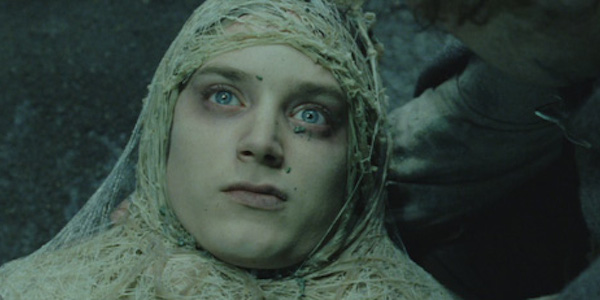
Do they know about checking for a pulse in Middle Earth? Either way, after managing to fight off Giant Spider Shelob, Sam jumps far to quickly from desperation to grieving when he discovers Frodo has been stung. As a gardener, he should know better than to think Spider stings kill instantly - especially if Spiders in Middle Earth bear any similarity to the spawn of Ungoliant that we see in Mirkwood and Cirith Ungol. He berates himself on his own foolishness when he overhears the orc commander Gorbag describe how Shelob does not eat dead meat. Samwise Gamgee's quick thinking does save the ring, but leaving Frodo behind leads to yet another unnecessary detour for them. Although the Orcs' tendency to fight amongst themselves made Sam's rescue of Frodo a lot easier, it was still a detour that makes things a lot more difficult than they already are.

2. Sauron Doesn't Station Any Guards At Mount Doom - The Return Of The King

Sauron, the Dark Lord of Mordor, enemy of the Free Peoples of Middle Earth, and creator of the One Ring shows some extreme oversight problems here. The mountain where he forged the One ring, the one place where it can be destroyed, is completely devoid of any sort of protection by the time Frodo, Sam and Gollum arrive. Besides for the sake of drama, why is this? Sauron may not have known that they were aiming to destroy the ring until the very moment it was destroyed, but some precautions would have paid off hugely in the long run for this Dark Lord. What makes this oversight even more embarrassing is the fact that Barad-Dur, Sauron's fortress, is the only stronghold anywhere close to Mount Doom, and still too far away to immediately access it. Perhaps being embodied as a giant flaming eye gave Sauron some overconfidence issues when it came to the safety of his own domain, but the eye of Sauron surely could have benefitted from a little garrison closer to his weakest point. When planning the giant diversion at the end of Return of the King, Gandalf warns Aragorn that Sauron "will not take the bait." He does not only take the bait, he swallows it hook, line, and sinker, sending every orc in all of Mordor to the Black gate to confront the relatively tiny army of men, and not leaving a single one behind to watch his most vulnerable spot. Checkmate, Sauron.

1. Any Time Frodo Puts On The One Ring - The Whole Trilogy

Nowadays, Frodo gets a lot of criticism from fans for not being a particularly proactive protagonist. A lot of this criticism is fair - he does exist more to bear the burden of the Ring than anything else. However, most of his idiotic decisions throughout the course of the saga are due to the direct influence of the One Ring, so hardly his own fault. But the one decision it is always possible to fault this unfortunate Hobbit for is the tendency to slip the Ring on his finger as an easy getaway when things start to get rough. The One Ring is a quite obvious metaphor for addiction, and as such, robs individuals of their better judgement in favor of an overwhelming desire to use it. But even Gollum, a creature so obsessed with the Ring that he withered beyond recognition, knew better than to put it on, because that draws Sauron's gaze to you. Even when Frodo is tricked into putting on the One Ring by succumbing to temptation, it is not a smart move, because he wants to keep it for himself. The destruction of the Ring at the end of the saga is the conclusion of a long line of bad decisions by Frodo to put the Ring on and quickly escape from pursuers. Like this article? Agree or disagree with the points mentioned here? Let us know in the comments section below.

Contributor
Contributor

Self-evidently a man who writes for the Internet, Robert also writes films, plays, teleplays, and short stories when he's not working on a movie set somewhere. He lives somewhere behind the Hollywood sign.