20 Mind-Blowing Facts You Didn’t Know About Groundhog Day
11. There's A Band Named After One Throw-Away Line

As an indication of the film's cultural saturation, there's an indie band from Washington DC called The Dismemberment Plan who took their name from one of Stephen Tobolowsky's lines during his exchanges with Phil. The actor himself - who wrote the scene - wouldn't accept the credit however, as he based the character on his own insurance agent, called Dennis.
Ramis and Rubin wanted to add another Ned Ryerson scene at the last minute, so Tobolowsky wrote the scene where he rattles off a number of insurance policies including the Dismemberment Plan. After the movie's release, the same agent called to thank him for portraying agents so accurately instead of just making fun of them as most movies do.
It's not surprising Ramis wanted more from Tobolowsky: he admitted that he saw the comic actor as "the spice in the stew. Bill is the stew."
10. The Jewish And Buddhist Sub-Text
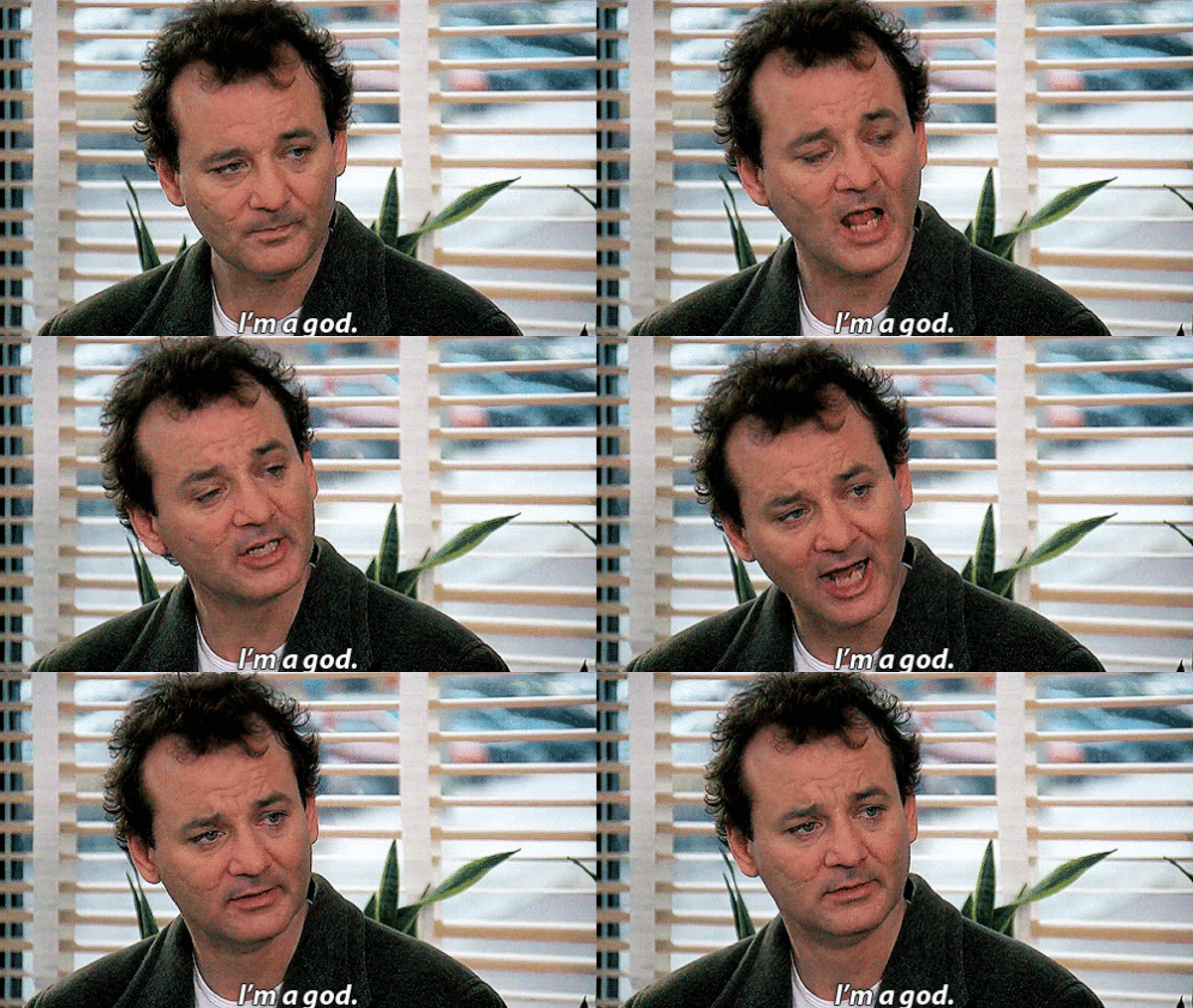
There's a massive response dedicated to reading religious subtexts into the film, with particular focus on Jewish and Buddhist readings. Ramis' own mother-in-law, a Zen Buddhist - said she had been moved by the film - and Spiritual Cinema Circle co-founder Stephen Simon called it "a wonderful human comedy about being given the rare opportunity to live several lifetimes all in the same day."
Of course, that's not how the film was marketed but, but that concept is at the heart of the story. It clearly illustrates the Buddhist idea of samsara, or continuing rebirth, and Bill Murray is the bodhisattva - a figure reincarnated to the brink of nirvana who returns to save everyone.
In Washington, a branch of the Chinese spiritual movement Falun Dafa has used the movie to instruct members in its belief that the spiritual self is not allowed to advance to higher levels until it learns from past mistakes. Dr. Niles Goldstein, a New York rabbi, sees that same ideas as indicative of the pillars of Judaism: "The movie tells us, as Judaism does, that the work doesn't end until the world has been perfected."
Groundhog Day: now showing at your local temple.
9. Why Sonny And Cher?
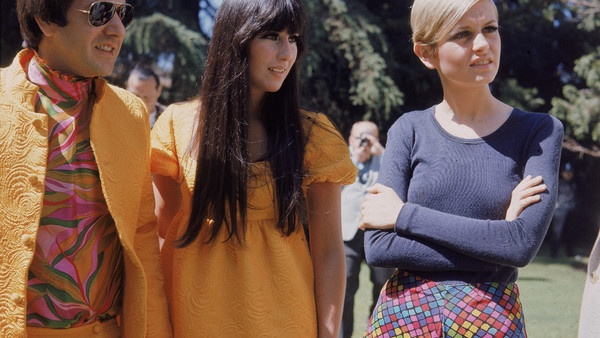
The choice to use Sonny and Cher's I Got You Babe every morning Phil awakens was an early one: apparently it was in Danny Rubin's wildly different first draft, and was one of the few specific details that actually made it through to the final version. But why was it so perfect? Rubin answered that particular question during a Reddit AMA:
"Here's why I thought of it: if you listen to the recording at the very end it sort of winds down with a big slow "I got yououououou baaaaaaaabe." You think it's over, then it creeps back in: "I got you babe! I got you babe! etc" I thought this repetition was perfect. The timing never worked out for them to use it in the movie that way, but I guess because it's a love song and because even though it's catchy it would drive you crazy after a while, it was always a good idea."
8. The Inspirations For One Key Scene
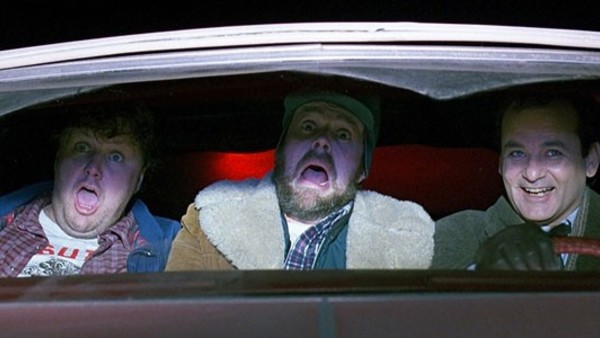
As well as Ned Ryerson being based on a real person, Phil took some of his more colourful moments from real life events. According to the film production's mythology, actor Paul Lynde was the inspiration for one of the film's more famous sequences.
After a high-speed chase through the San Fernando Valley one night when he was driving recklessly while intoxicated, the Hollywood Squares veteran crashed his car. When the police came to the wrecked vehicle, he lowered his window and said, "I'll have a cheeseburger, hold the onions, and a large Sprite."
A conflicting story suggests that the scene was in fact inspired by an incident involving comedian Shecky Greene in Las Vegas. Again, he crashed his car into the fountain outside Caesar's Palace one night while drunk. As he was pulled out, with water from the fountain raining down onto his car, he shouted, "Clean the floor mats and no hot wax!"
7. Bill Murray Bought Everyone A Danish

Another one for the long list of barely believable Bill Murray stories - especially given his cantankerous demeanour. According to Stephen Tobolowsky, during one particular shoot, Murray put a stop to things to feed the gathered masses:
"We were about to start shooting Groundhog Day and on the first day, there were 500 townsfolk gathered there to watch us. Bill looked at me and said "Do you know what these people need? DANISHES." Bill took me into the local bakery and bought every single baked good in sight."
The actor didn't fare so well himself in the cakes stakes. When filming the gorging scene, he was offered a spit bucket but he refused, and ended up making himself ill.
6. It's The Basis Of A Self-Help Book
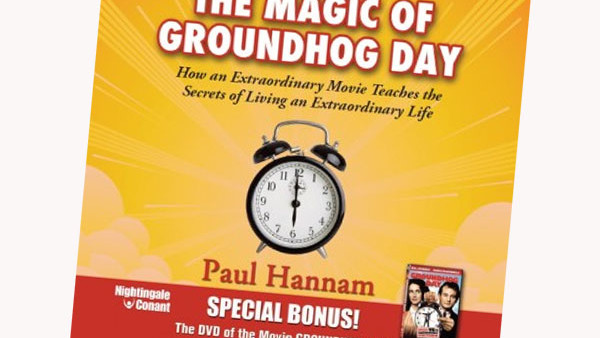
Motivational speaker Paul Hannam based his mantra for self-fulfillment on Groundhog Day, even going so far as to write a book called The Magic of Groundhog Day. He charges his readers with unlocking the magic of the movie to help transform their own lives and "break free from repetitive thoughts and behaviours that keep you stuck in a rut."
He recognised in the film the keys to transforming a "mundane day into a magical day by simply changing your attitudes." It's that simple, apparently!
The film also inspired another less philosophical trend: when it airs on TV, it's traditional to air the same six commercials on a loop during breaks.
5. Live. Die. Repeat

Rubin admits that in his first drafts - or at least in the planning stage, which ran a lot longer than the writing itself - he only had a high concept, which said that the main character was "the only variable in the universe."
A time loop was included in which the character was forced to relive the same day over and over. From there he built the script around the core idea that one lifetime just isn't enough - hence the Buddhist appeal.
"There are some people, those arrested development-type men who can't really outgrow their adolescence. And I thought, 'Well, maybe one lifetime isn't enough. Maybe you need more."
He also started his story in the middle, with Phil already in the loop and explaining in voice-over how he got there. Ramis thought it was better to show the first day.
4. It Was Never Going To Be All That Dark

There are a lot of pretty dark readings of the film: the idea that it is inevitable that given all of that time and no accountability, Phil would definitely have turned to crime out of perverse fascination.
And he probably had sex with everyone and everything, just for variation. But when asked on Reddit why he didn't simply force himself on Rita, Rubin said there was no way either he or Ramis would have been that dark:
"There is an answer to this! When I was first brainstorming the movie it occurred to me that it could go very dark. If Phil is really testing what is possible in a land without consequences, he would probably go through a phase of walking on the dark side. Rape, murder, arson, etc. But here's where the writer comes in: I had recently become a father, was starting out on a new life as a screenwriter, and feeling very upbeat (as usual, actually). I thought about it and decided against making this, as I thought of it at the time, as a David Lynch film. There may be a good, deep, reasonable human reason that Phil didn't rape anybody, but the real reason is because the writer didn't want him to."
3. Someone Thinks The Groundhog Is Christ Reborn
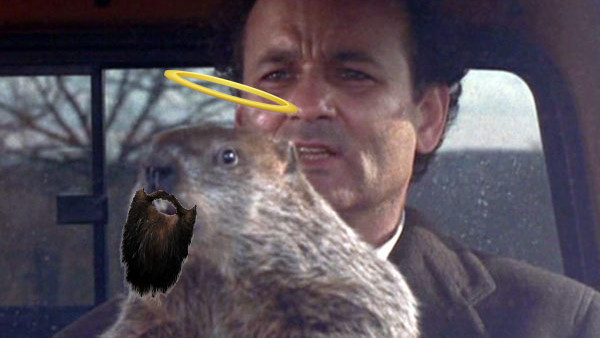
More religion, inevitably, and a bonkers theory that states that Punxsutawney Phil is pretty much Jesus. So said New York Times film critic Michael Bronski:
"The groundhog is clearly the resurrected Christ, the ever hopeful renewal of life at springtime, at a time of pagan-Christian holidays. And when I say that the groundhog is Jesus, I say that with great respect.''
Despite the supposedly Christian message, it's telling that Phil never actually remembers an after-life, or anything of death really, other than the process of dying itself. So despite the attraction of a groundhog messiah, the film is far more relevant to religions that deal in reincarnation more concretely.
2. Bill Murray Was Remarkably Difficult To Work With
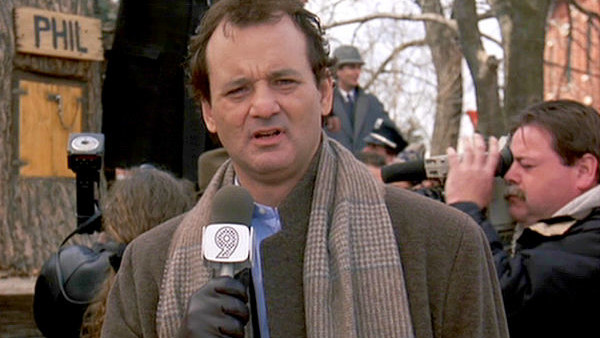
The story of Harold Ramis and Bill Murray falling out is a well-publicised one, but until relatively recently, nobody knew the extent that Murray played in the fall-out, or why it happened. It's pretty fashionable just to imagine that it was because the director and actor didn't agree on the tone of the film.
That much might be true, but it was actually Murray's personal life that was the issue: his first marriage was dissolving and he was, somewhat forgivably, cranky. It all came to a head when communication lines broke down and Ramis and the studio asked Murray to improve them.
It was agreed that things might work a lot smoother if Bill was to hire a PA to help with the day to day nonsense he couldn't deal with. So he duly hired one - who was profoundly deaf, did not have oral speech, spoke only American sign language (which neither Bill nor anyone in production could).
As Ramis remembered, Bill said, "Don't worry, I'm going to learn sign language!" "I think it was so inconvenient that in a couple weeks, he gave that up. That's anti-communication, you know?"