20 Mind-Blowing Facts You Didn't Know About Zodiac (2007)
The shockingly underrated film holds some interesting secrets.

Serial killers always attract plenty of attention, but the Zodiac Killer captured the imagination of 70s America with his unique calling cards and cryptic puzzles. It was almost inevitable that Hollywood would try and get a piece of the action. Yet out of the many Zodiac films out there, very few have actually managed to capture the sheer excitement and mystery of the case. That is, until David Fincher came along in 2007.
Fincher and producer James Vanderbilt spent months researching and interviewing, ensuring that the movie would be as factual as possible. The aim was to dispel the multitude of myths and misinformation that had surround the case over the many years and it paid off in waves.
Zodiac boasts an incredible cast and follows the story of true crime author, Robert Graysmith. Graysmith became enamoured with the story while working for a San Francisco newspaper during the attacks and dedicated over a decade of his life to trying to solve the case.
Naturally, with a case this complex, the film is full of interesting tidbits and secrets. Some of which will likely never be noticed, but we're going to try our best and bring you some mind-blowing facts about this classic film.
20. The Film Caused The Investigation To Reopen

Despite being one of the most infamous cases in history, San Fransisco Police Department actually closed the case back in 2004, due to a lack of new leads or evidence. While it remained open in Riverside, Napa Valley and Vallejo, there were no advances due to the lack of resources that the smaller departments had. However, the SFPD saw fit to reopen the investigation after the release of David Fincher's film.
An increased public interest accounted for part of that decision, with multiple reports coming in with fresh accusations and suspects. However, investigators were also interested in the amount of research and interviewing that went into the production. Fincher and his researchers had done such a thorough job, they managed to uncover evidence that the police had missed previously.
Unfortunately, the new leads failed to produce enough evidence to bring the killer to justice, and as things currently stand, the Zodiac case is still open across the four departments. Vallejo police have been looking into DNA on stamps that the killer used to send his letters, the idea being that they could collar them in a similar way they caught the Golden Gate Killer.
19. David Fincher Has A Personal Connection To The Story

Born in Denver, Colorado, director David Fincher actually grew up extremely close to the killer's stomping grounds. When he was just two years old, the family upped sticks and moved to Marin County, San Fransisco.
The director was just seven years old when the Zodiac Killer first struck. In an interview with the New York Times, he recalls noticing police cars following his school bus. At the time, the killer had just put out a letter stating his intention to target school busses, first shooting out the tires before taking out the students as they came out of the vehicle. The attack would never come to fruition, with the killer later stating; "If you cops think I am going to take on a school bus the way I stated I would, you deserve to have holes in your heads".
The harrowing childhood experience would later influence his work on Se7en, as well as serving as inspiration to take on the Zodiac film. Fincher was originally due to direct a miniseries based on the Black Dahlia murders, but dropped the project in favour of Zodiac because of this personal connection.
18. Actor John Carroll Lynch Had A Strange Connection To His Character

While John Carroll Lynch may not be a household name, he probably does have a household face due to amassing an impressive back catalogue of character roles. He was John Wayne Gacy in one of his many memorable roles in American Horror Story, he played McDonald's founder Mac McDonald in The Founder, Norm Gunderson in Fargo, among many other spotlight winning turns, as well as his unforgettable presence in Zodiac.
In the movie, Lynch plays the part of the main suspect, Arthur Leigh Allen. Throughout the film, as with the case itself, we are led to believe this is the Zodiac Killer. However, over many years of attempted convictions, the police cannot get any concrete evidence to arrest Allan and have to let him go. To this day, Allen is the prime suspect in the Zodiac killings, but numerous attempts by forensics before and since his death have failed to provide enough evidence to bring charges.
If you take a look through Robert Graysmith's second book, "Zodiac Unmasked", a spooky coincidence comes to light. During the real-life questioning of Allen in 1969, the man charged with interviewing the suspect was a detective of the Vallejo Police Department who was also named John Lynch.
17. One Of The Killer's Survivors Makes A Cameo

There
are very few chances for the mood to be lightened up in Zodiac. The
film is so focussed on accuracy on such a harrowing tale that humour and positivity are very
rare. However, if you search hard enough, it's possible to find a moment
or two that can make a viewer smile.
One such instance comes around half way through the movie, when Detective Toschi (Mark Ruffalo) storms out of the office after receiving forensic results from the search on Allen's property. During the conversation between Toschi and the police Captain, an unassuming couple pass by.
The walk-by is actually performed by one of the Zodiac Killer's surviving victims, Bryan C. Hartnell, alongside his wife. While many of the film's real-life counterparts were interviewed, Bryan is the only one to feature on screen.
It's a small moment, but far from insignificant. It's a lovely nod to a victim who has managed to shake off his terrifying ordeal and move on with his life.
16. The Film's Killer Is Terrifyingly Accurate

As mentioned earlier, both director David Fincher and producer James Vanderbilt spent months researching for the piece. Hours after hours of painstaking work went into to making sure the film correctly represented the true nature of the story, rather than exaggerating rumours as most Hollywood flicks would try to do. The result is a film that brings the murders alive in a terrifying fashion.
Two scenes that were particularly accurate were the film's opening attack on Darlene Ferrin and Mike Mageau in Blue Rock Spring, as well as the death of Cecelia Shepherd at Lake Berryessa. This was due to lengthy interviews conducted with the attacks two survivors, Mageau and Bryan Hartnell, who was picnicking with Shepherd at the time of the attack.
The filmmaker's hard work pays off throughout the film, but it's during the films attack scenes where it becomes almost too real for comfort. The attention to detail involved is so impressive that viewers could be forgiven for thinking it's a reconstruction, rather than a movie.
15. RDJ Insisted His Straw Trick Was Included

While shooting TV or film, it's not uncommon for directors or actors to have little flashes of inspiration on set. Some of the best moments on screen are due to someone just doing or saying something in the moment. It's these little moments that can define a character and often make it into the final piece.
Yet, for Robert Downey Jr, one of these moments would become a source of deep regret. The actor had perfected a little trick involving four straws and asked Fincher if he could include it during one of the bar scenes. It fit perfectly with the character and the director saw no issue with it being included.
What the actor hadn't counted on was just how many times he would need to perform the inane trick. True to his nature, Fincher called for take after take, driving the poor actor insane. In the DVD commentary, Fincher goes on to say, “Twenty-six takes later he was beside himself, he was so frustrated, so fed up.”
You have to give it up for RDJ for sticking with it for all those takes, especially as it played such a tiny part in a very quick scene.
14. The Film May Not Have Happened Without Star Wars

The Zodiac director has an impressive resume, to say the least. Iconic films such as Fight Club and Se7en brought endless praise, but take a look through that long filmography and what might take you by surprise is just where David Fincher got his start.
A far cry from his hard hitting, psychological thrillers we have grown accustomed to, Fincher's first credit dates back to 1983. Hidden away in the small print, Fincher's name pops up in Star Wars: Episode VI - Return of the Jedi.
At the time, Fincher was working for Industrial Light & Magic (a division of Lucasfilm) who had been tasked with the visual effects for the original Star Wars trilogy. Over the space of four years, Fincher gained experience on the biggest franchise film had ever seen. During his time with the company, Fincher found a love of visual effects which he would go on to utilise through his career.
However, his connection to George Lucas stretches even further back than Star Wars. After the family moved to California when Fincher was a child, they lived just two doors down from the franchise creator. Small world, huh?
13. Gyllenhaal's 'Pretty' Hands Caused An Issue
In another case of Fincher's intense attention to detail, the director required an edit that nobody could have predicted.
When cast as a cartoonist or a writer, you would imagine the actor would have some amount of talent in at least one of those fields. Apparently, this wasn't the case for Jake Gyllenhaal, despite his character being both. To film the close-up shots of Graysmith drawing, or handwriting letters, the production brought in a 'stunt' double.
It's not something out of the ordinary for Hollywood, but not many directors would spend time and money digitally retouching the double's hand for extra authenticity. But this is David Fincher we are talking about here, so of course that's something he had to do.
Addressing the decision, the director remarks in the DVD commentary, "Jake's hands are very hairless and pretty". He goes on to state that the double they used had much hairier hands than the actor and retouching was necessary " so Jake wouldn't feel like we'd done him a disservice".
12. Jennifer Aniston Had A Hand In Casting

These days, Hollywood casting agents are champing at the bit to put together a cast of this magnitude. The incredibly talented group have all gone on to have highly successful careers after Zodiac's release and all three have managed to find their way into the biggest movie franchise on the planet.
Robert Downey Jr has pulled off one of the most incredible comeback stories in Hollywood, thanks to his tenure as Tony Stark. Mark Ruffalo has made waves in hard hitting films such as Shutter Island and Foxcatcher when he's not donning the motion capture suit for Marvel. Even Jake Gyllenhaal has come into his own, currently enjoying praise for his incredible work in Spider-Man: Far From Home.
Yet, back when Zodiac was entering production, it took a nudge from Jennifer Aniston for Fincher to consider Ruffalo and Gyllenhaal. Aniston had met Fincher through her then husband, Brad Pitt and the two struck up a conversation about the upcoming film. Having worked with both actors previously, the Friends star pointed the director in their direction and her instinct paid off entirely.
11. There's A Shocking Amount Of CGI

One of the biggest issues with creating a film based in past decades is getting the setting to look believable. While that tends to be less of an issue for indoor scenes - as set designers can custom build whatever they need - heading out into the real world can cause a multitude of issues for filmmakers.
In a particularly interesting video essay, Kaptain Kristian details some incredible ways Fincher uses the tool to immerse the viewer in his film's settings. To avoid yet another film opening on the Golden Gate Bridge, the director had artists painstakingly recreate the San Fransisco skyline as it was in 1969. The resulting shot was a gorgeous sweep of the city that linked more directly to the film's setting.
The majority of outdoor scenes involved green screen or touch-ups, but that wasn't the only way the effect was used. Zodiac made use of a genius move, utilised in nearly all of Fincher's work. The scenes involving blood were filmed without any practical effects involved. The blood was added in post, as a means of streamlining the shooting process. Splatters would be inconsistent from take to take and as we're about to find out, David Fincher loves multiple takes.
10. Zodiac Was Almost A Disney Film
The business of copyright is a very tricky one to navigate, particularly when it comes to movie rights and their respective source material. At this stage, most people are aware of the difficulties that movie studios can face, thanks in part to the very public issues Marvel have had with Fox and Sony. So, it comes as no surprise that the story of the Zodiac Killer would face some form of struggle.
The 2007 film is based on the writings of Robert Graysmith, portrayed by Jake Gyllenhaal. Graysmith had dedicated his entire life to solving the mystery of the serial killer and documented his findings in great detail in his first book. The cartoonist-turned-novelist was largely involved in the on-screen adaptation and upon reading the script remarked that he understood why his wife had left him.
After the sucess of Dirty Harry, mixed with public calls for a less sensationalised feature, studios had tried for years to turn Graysmith's work into a feature. Yet for Phoenix Pictures, that was only made possible after the previous option holders let it lapse in 2002. Disney had optioned the author's book early on, but had no success when it came to putting anything together.
9. Zodiac Introduced Hollywood To Digital Filming

It's amazing to see how far technology has come in the last couple of decades. These days, anyone can film and distribute video world-wide just with their phone. The hardware and software have become so accessible in recent years, that it comes as a shock that Hollywood wouldn't start to adopt digital filming until 2007.
Though it wasn't the first feature to be all digital - certain scenes such as the taxi journey were shot on film - the majority of shooting was done with a Thomson Viper Filmstream camera. With the director's tendency for stacking up takes, the digital storage offered more efficiency on set, as well as being more cost-effective.
Fincher had previously used the cameras on various commercials he had produced. The experience and continued usage of the new technology allowed the director to experiment and get used to its way of working. It also allowed for him to use a consumer level video editing software at home, rather than be stuck at the studio.
Talking about the impact this decision had on the film industry, Fincher noted it was not meant to start a revolution. He liked the process of working digitally and hated having to wait until the next day to review footage.
8. Fincher Nearly Broke Jake Gyllenhaal

It's no secret that Fincher is a perfectionist when it comes to his work. It's understandable, given the intense stories he works on but at this stage, it's vital to keep up to the high standards he has set for himself with his earlier films.
There are countless tales of actors being pushed to their very limits with the director demanding take after take after take. Recently, it was revealed a scene in the hit Netflix show, Mindhunter, took an insane 75 takes before the director was happy. There is no settling when it comes to Fincher and his search for perfection pays off every time.
One actor who wasn't prepared for this intense work ethic was Jake Gyllenhaal. The actor spoke out against the directors intense filming habits, airing his frustration during an interview with the New York Times. Gyllenhaal was disheartened throughout filming, as Fincher would often delete multiple takes while still shooting the scene.
Overall, the actor reflected on the experience with a positive outlook, despite his complaints. He states “I wish I could’ve had the maturity to be like: ‘I know what he wants. He wants the best out of me'”.
7. The Movie Theatre Really Looked Like That
Shooting
a period piece from any era can be a nightmare for filmmakers. Trying
to find locations that accurately reflect the time can be a tricky and
often expensive job. Most of the time soundstages need to be built from
scratch, or recreated digitally, as was the case with Zodiac. However, occasionally set designers can catch a lucky break and find the perfect spot.
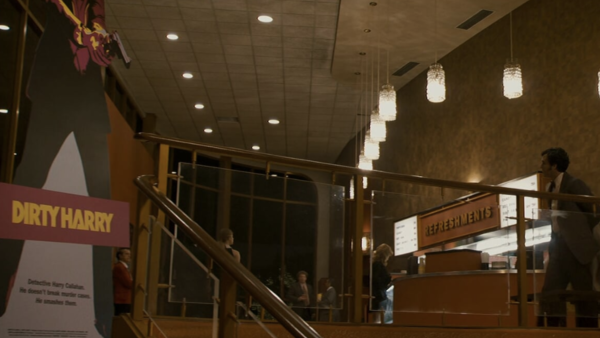
This was very much the case when it came to incorporating Dirty Harry into the film. The majority of people involved with making the 2007 flick felt that Clint Eastwood's adaptation was far too sensationalised and decided to include it, with Toschi walking out in disgust. It's a quick, unsubtle dig at one of Eastwood's most popular films, but that's not the most interesting thing about that scene.
The North Point Theatre looks absolutely perfect, accurately showing the decor style of the late Sixties. Yet the crew had very little to do with the building's design. Despite being filmed nearly fifty years after its setting, the Mann National Theatre in Westwood, California had been unchanged since it was built and kept its original aesthetic right up until its demolition in 2015.
6. Zodiac Only Managed To Win One Award

Zodiac received a huge amount of critical acclaim upon release. It boasts 89% on Rotten Tomatoes based on critical reviews alone, yet when it came to awards season, the film fell way short of expectations. Sadly, the lack of trophies wasn't based on the film's content.
The various award associations, particularly Academy of Motion Picture Arts and Sciences, have very short memories it seems. Studios will often hold a film they are interested in pushing for awards season until the last minute, meaning the majority of nominations come from films that were released late in the year.
This was the first issue that Zodiac had to face. The film released in March of 2007, so while it was eligible for nomination, it was so far back in the year that it could be easily overlooked.
The second issue was the slate of films that Zodiac went up against. The Coen Brothers released their incredible No Country For Old Men that same year, as well as heavyweights There Will Be Blood and Atonement.
Despite receiving 28 nominations, Zodiac only managed to walk away from the Dublin Film Critics' Circle Awards with a win in the Best Director category.
5. The Film's Killer Was Actually Multiple Actors
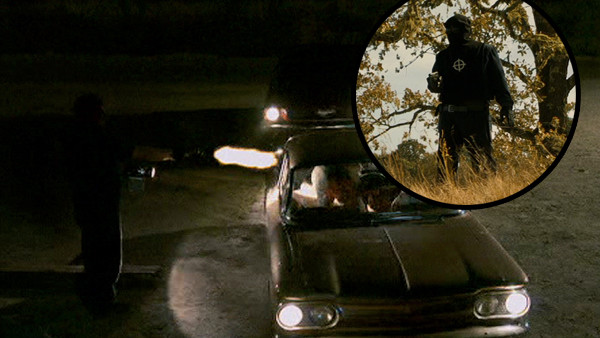
There was little chance the 2007 film would reveal the true identity of the Zodiac Killer. In fact, the film plays up to the mystery in such a way that you can't even pinpoint them to a character within the film itself.
This is of course due to the efforts of Fincher, who often likes to use shadows to hide the character's identity in all of his films. Not one of the shots in the film reveal the killer's face, but even if they did, the film has another trick up its sleeve.
Having interviewed survivors and meticulously researching the case files, the filmmakers noticed slight differences in the killer's description. In order to stay as accurate as they possibly could, they enlisted three different actors to play the killer during the three murder scenes, rather than using the same actor.
Not only does it add to the authenticity of the picture, but it adds another layer of mystery. Additionally, the lack of eyewitnesses from the first attack played a large part in why it was left out of the feature, as the filmmakers had no description to work with.
4. The Film Boasts Some Very Expensive Trees

Another example of the incredible efforts the filmmakers went to for the sake of accuracy involves a story about two trees.
When it came to film the scene at Lake Berryessa, Fincher made a slightly out-of-character choice. Most scenes were filmed on a soundstage or utilised CG effects to recreate period accurate locations, but not this one. However, after arriving at the location, a big problem arose.
Comparing the scenery to photographs from the late Seventies, the team realised the oak trees - which the actual Zodiac Killer had hidden behind - were no longer there. Due to the significance the trees had in the Lake Berryessa attack; the production crew had a choice. Move the scene to a different location, digitally add the trees, or fly in two huge oak trees via helicopter.
In a move of possible lunacy, the team chose the latter option. To recreate the setting, set designers had to dig out holes and try desperately to keep them alive for the next few days of shooting. What made things even more expensive was the fact that the trees were a protected species in California, making an already expensive job even more costly.
3. The Colour Blue Features A Lot

The eagle-eyed viewer may have noticed something about the film's colour palette. The colour blue is heavily featured in the majority of shots. This isn't unusual per say, most films of this genre make use of blue camera filters to give a cold, dark feel to the piece. Yet Fincher went one step further, as he always does.
Not only does he use the standard blue camera filter, the content in front of the camera is, more often than not, blue. The Zodiac's letters are written with blue ink, the first letter is even read by the Chronicle's editor who sports a blue shirt. The cocktail Graysmith shares with Avery is a blue drink, Arthur Leigh Allen's overalls are even blue.
The colour appears almost constantly throughout the film, but it's not just an aesthetic choice. One of the more promising leads in the case revolved around what Graysmith refers to as 'The Water Theory'. The cartoonist notices a pattern, with the attacks taking place near bodies of water, such as Lake Berryessa.
The continued usage of the colour is Fincher's way of bringing the theory to the forefront of viewers minds. Constant, but subtle references to the theory gives added weight to the theory.
2. Fincher Wanted Two Minutes Of Nothing

As we have established, David Fincher is a man who knows exactly what he wants. Woe betide anyone who disagrees with his vision, as he is a man who rarely backs down. In a way, this attitude is sensible. As someone who takes pride in perfection, you have to be willing to argue your point and stick to your guns.
An early cut of Zodiac clocked in at a staggering three hours, eight minutes. Unsurprisingly, Paramount Pictures (who were in charge of the North American distribution) rejected it and insisted on the film being cut down dramatically. Eventually, after a while butting heads, Fincher cut down the film to a more reasonable two hours, forty-five minutes. Yet his biggest sticking point was odd, to say the least.
The original cut had included a montage, showing the years passing by... Though 'showing' may be the wrong word to use here. The montage was a blank screen, with famous songs from each year portraying the passage of time. While artistically brilliant, the studio was strongly opposed to subjecting audiences with two minutes of nothingness and it was replaced with the 'Four Years Later' title card.
Fincher finally got his way when it came to the DVD Directors Cut, which features the montage in full.
1. Robert Downey Jr Left Jars Of Pee Everywhere

Zodiac was one of the first films to be shot purely on digital, which was great news for Fincher, but terrible news for his actors. The turnaround between scenes was dramatically cut due to the change in medium, something Robert Downey Jr was less than pleased with.
Given the actor is notorious for sneaking snacks on set, it's not surprising to learn that he found a way to adapt to the intense shooting schedule. What is surprising is just how he dealt with it.
Speaking on Keanu Reeves’ 2012 documentary, Side by Side, Fincher recalled how RDJ would often complain about the longer hours. The actor was quoted as saying "I can't work like this. I never get to go to my trailer. I can never get my s**t together. I'm on my feet 14 hours a day. Sure, this would take its toll on anyone, but most would shake it off.
What Downey Jr actually did was much more disgusting. The actor would often hide jars around the set, in order to urinate in them between takes. Not only that, he would often return with the full jar in hand and leave it in the shot in protest.
Watch Next
How Much Do You Know About America's Worst Serial Killers?
