20 Most Controversial Film Endings Since 2000

11. No Country For Old Men

What's it about? Adapted from Cormac McCarthy's novel of the same name by the Coen brothers, No Country For Old Men stars Josh Brolin as Llewelyn Moss, a man who stumbles across the aftermath of a drug deal gone wrong in the desert. Taking $2 million in cash, he finds himself being tracked down by a psychopathic killer Anton Chigurh (Javier Bardem) intent on recovering the money. How does it end? Moss is killed in a showdown audiences don't get to see - instead, the film cuts ahead to the aftermath, as Sheriff Bell (Tommy Lee Jones) arrives and discovers the body. The closing moments see Bell sharing strange dreams with his wife as they sit at the kitchen table. Why was it controversial? Denying audiences the climactic shoot-out between Moss and his antagonists annoyed more than a few people who perhaps focused too intently on the plot and therefore considered it a non-ending. To them, the set-up hadn't been followed by the conventional pay-off. Yet the Coen brothers are no strangers to deliberately subverting genre conventions, and for some the end revealed that the real focus is on Bell's understanding of his place in the world (clearly implied in the title) rather than the cat-and-mouse chase between Moss and Chigurh.

10. A. I. Artificial Intelligence

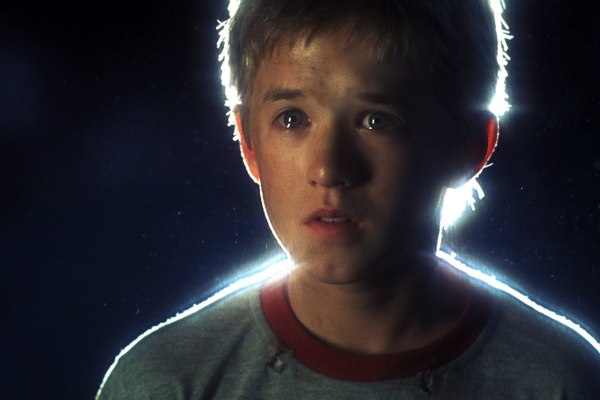
What's it about? Steven Spielberg took control of Stanley Kubrick's project A. I. Artificial Intelligence, starring Haley Joel Osment as David, a robotic boy programmed to love human parents who have lost their son. He sets out into the world to discover his true nature, aided by Gigolo Joe (Jude Law), a prostitute Mecha who can mimick love of a different kind. How does it end? After getting trapped in a car underwater for centuries, David and Teddy are retrieved by highly advanced Mecha who allow David to spend a day with the clone of his adoptive mother, finding the sense of humanity he's been looking for. Why was it controversial? A lot of viewers found the ending overly sentimental and accused Spielberg of tacking a happy ending onto Kubrick's vision (and plenty more were confused, believing the advanced Mecha to be an alien race). Spielberg responded to these crticisms, saying, "the parts of A.I. that people accuse me of sweetening and softening and sentimentalizing were all Stanley's. The teddy bear was Stanley's. The whole last 20 minutes of the movie was completely Stanley's."

9. Requiem For A Dream

What's it about? Darren Aronofsky takes audiences into the dingy world of addiction with Requiem For A Dream, adapted from Hubert Selby Jnr's novel and starring Jared Leto, Jennifer Connelly and Ellen Burstyn. Leto and Connelly play heroin addicts Harry and Marion, while Burstyn plays Harry's mother Sara, increasingly addicted to diet pills as her appearance on a TV game show draws closer. How does it end? Harry ends up in prison where he has an arm amputated after getting infect by dirty needles; Marion degrades herself at sex parties to earn money for drugs; Sara is committed to a psychiatric ward after arriving at the television station in a near-psychotic state. Why was it controversial? Without a single ray of hope shining through, this utterly depressing ending was far too much for some audiences to take. Anything this disturbing is inevitably going to court controversy, but anyone familiar with Selby's nihilistic take on the human condition can appreciate Aronofsky's adherence to the text.

8. Sunshine

What's it about? Danny Boyle directs a script from Alex "Ex Machina" Garland centering around a mission to the sun. Sunshine stars Cillian Murphy, Chris Evans and Rose Byrne as members of the doomed crew, sent to reignite the sun with a huge bomb in order to prevent a solar winter on Earth. How does it end? In a huge tonal shift, Sunshine becomes more akin to a slasher movie as it draws to a close. The insane Captain Pinbacker (Mark Strong) of a previous expedition kills off the crew as he attempts to sabotage the mission, but ultimately fails as Capa (Murphy) ignites the payload manually. Why was it controversial? The sudden switch from the more thoughtful approach to science fiction (Boyle cited inspiration from 2001: A Space Odyssey and Solaris) to psychopathic killer on the loose horror felt like a missed opportunity to stick with the broader, more interesting themes. It's been argued by some that Pinbacker is symbolic of man's lack of faith and self-destructive nature; a counter-argument is that Sunshine unfortunately turns into little more than an unofficial remake of Event Horizon.

7. High Tension

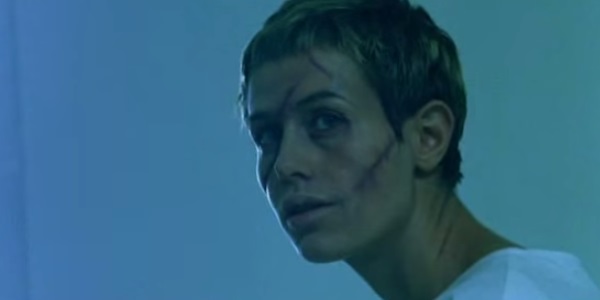
What's it about? High Tension, also known as Switchblade Romance in the UK, represents a high point for 21st century French slasher movies, at least in terms of the constant flow of graphic gore it depicts. Marie (Cécile De France) and Alex (Maïwenn Le Besco) visit Alex's parents in the countryside, only to be hunted down by a psychopathic killer How does it end? The serial killer is revealed to be Marie, creating the separate persona of the serial killer out of her desire to have her friend Alex entirely to herself. Why was it controversial? Primarily because the twist means that a great deal of what came before makes literally no sense - at least, if viewed as representing what actually happened. On the other hand, some view the film as being representative of Marie's account to the police, which certainly makes the ending more plausible, even if it still doesn't tie up all the loose ends.

6. The Dark Knight Rises

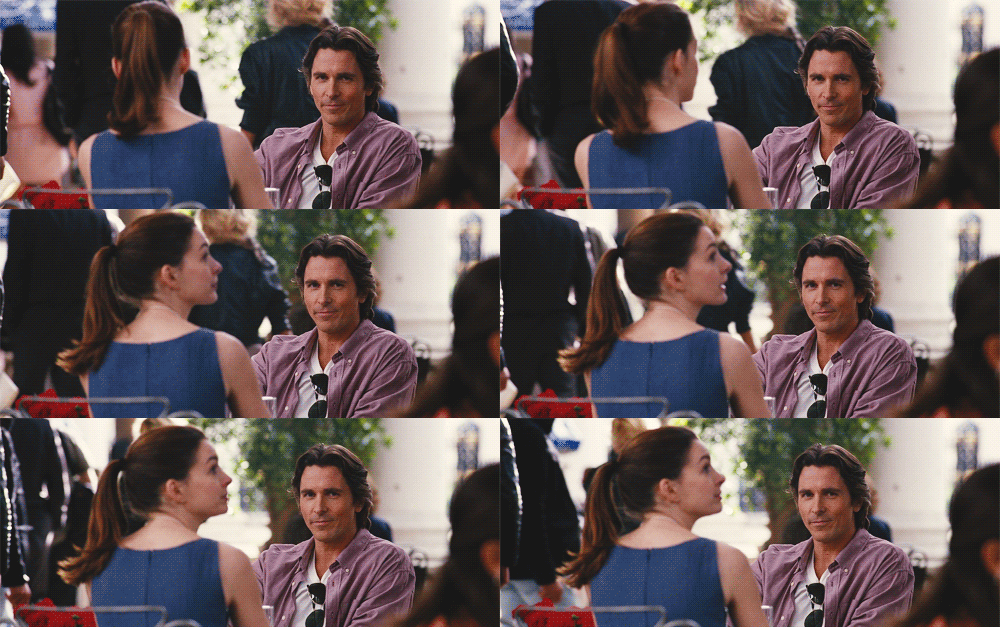
What's it about? Christopher Nolan wraps up his Dark Knight trilogy with The Dark Knight Rises, as terrorist Bane promises to bring anarchy to Gotham City and Batman comes out of exile to take him on. The plot to turn the city on its head stretches beyond Bane and his henchmen, as Bruce Wayne's past catches up with him. How does it end? After discovering his lover is actually Talia al Ghul, intent on completing her father's work and destroying Gotham, Batman manages to secure the bomb and fly it out to sea by carrying it underneath the Batwing where it detonates. Presumed dead, Alfred sees Bruce and Selina Kyle together in Florence. Why was it controversial? Did Batman die in the explosion? Is his presence with Kyle in Florence an illusion or dream? These and many more ultimately pointless questions were posed by fans and casual filmgoers alike after the release of The Dark Knight Rises. Those who asked these questions no doubt missed the line mentioning that the autopilot had been fixed, although given Nolan's deliberately ambiguous ending for Inception it's perhaps not surprising some thought he was up to the same tricks here.

5. Donnie Darko

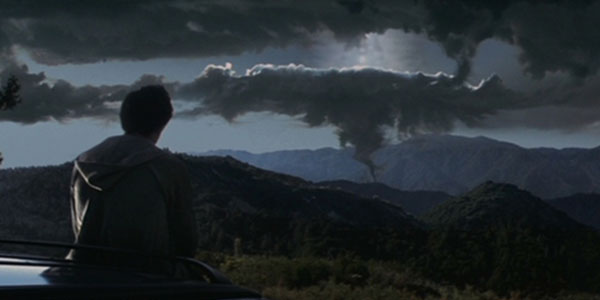
What's it about? Before tackling the reality-bending conundrum of Source Code, Jake Gyllenhaal faced a different kind of time loop puzzle in Richard Kelly's Donnie Darko. After being awakened by a man in a rabbit costume called Frank and avoiding death by the jet engine which crashes into his bedroom, troubled teen Donnie (Gyllenhaal) learns that the world will end in 28 days. How does it end? Donnie watches a vortex appearing over his house and the events from the previous 28 days unfold in reverse until Donnie is back in bed, laughing to himself just before the engine kills him. A character he will now never meet, Gretchen Moss (Jena Malone) waves at Donnie's mother, a look of confused familiarity on their faces. Why was it controversial? Audiences argued endlessly about what actually happened at the end of Donnie Darko - had he travelled back in time? Was he already dead? What was implied by the wave at the end of the film? The director's cut certainly made the ending less enigmatic, pointing to a time loop in which Donnie is caught up in a Tangent Universe and must send an Artifact (the jet engine) back to the Primary Universe in order to save it from destruction. Given that you need to wade through supplementary DVD material to get a basic grasp of the concept it's no wonder the theatrical cut proved to be controversial for many, and even now it remains open to interpretation.

4. Inception

What's it about? Christopher Nolan's "high concept" science fiction film sees Leonardo diCaprio as Dom Cobb, a specialist leading a team into the subconscious mind of the heir to an energy conglomerate in order to implant the idea of dissolving his father's company after he dies, allowing his competitor to monopolize the industry. As the team move through various layers of his subconsciousness and "dreams within a dream" reveal themselves, the dangers of being stuck in this limbo increase exponentially as the line between dream and reality begins to blur. How does it end? Having successfully planted the idea in their target's mind, Cobb and his team return to the real world where he returns to his family. As he greets his children, Cobb spins his totem - used to gauge whether or not he's in a dream state or reality - which continues to spin as the movie ends. Why was it controversial? Is Cobb back in reality or is he still dreaming? While we see the top wobble slightly it doesn't fall, suggesting that Cobb may well still be in a dream state and not, as he assumes, back in reality. There are certainly hints throughout the movie which point to this being the case; others believe that what's most significant is that Cobb doesn't care if he's back in reality or not. Nolan himself endorses this latter position, saying that the debate around the top hints towards the subjective nature of reality. It's a satisfying explanation for some, but those who like their blockbusters neatly tied up at the end were far from enamoured with this ambiguity.

3. Planet Of The Apes

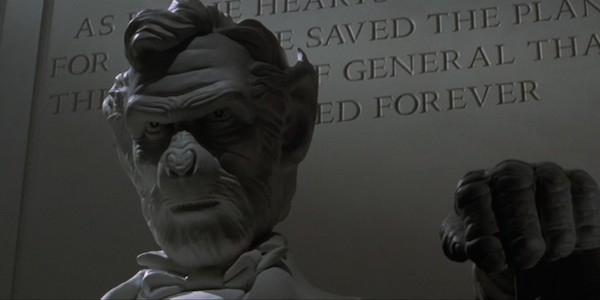
What's it about? Tim Burton's remake of the 1968 movie of the same name (itself an adaptation of Pierre Boulle's novel) stars Mark Wahlberg as Captain Leo Davidson, who crash lands on a world inhabited by talking apes after accidentally opening up a portal. He soon becomes a key player in a war for the freedom of humans who have been enslaved by their primate overlords. How does it end? After battling it out with the evil General Thade (Tim Roth), Davidson leaves the planet and crash lands back on Earth, only to discover that the Lincoln Memorial has become a monument to Thade, having taken over the planet with his primate companions. Why was it controversial? The twist ending to the original Planet Of The Apes, in which - spoiler alert! - Charlton Heston stumbles upon the Statue of Liberty and realises he's been on Earth all along, obviously wasn't going to be replicated here. But many thought this variation was absurd and more damningly inexplicable. The idea that Thade travelled back further in time than Leo is actually closer to the book than the original movie - the real problem lies in Burton's shoddy handling of the convoluted plot which he himself blamed on a rushed production.

2. I Am Legend

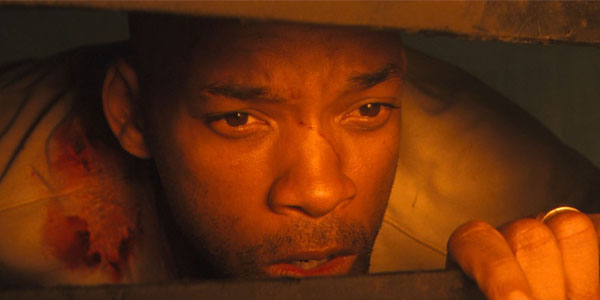
What's it about? Adapted from Richard Matheson's novelette, I Am Legend stars Will Smith as Robert Neville, the last normal man alive on Earth, as he fends off attacks from humans infected by a plague and tries to discover a cure as he scrambles for survival amidst the rubble of New York. How does it end? Having discovered other uninfected humans are still alive, they end up trapped in his underground laboratory as the vampirical infected storm their way in. Neville hides his companions in a safe place before taking them all out with a hand grenade, dying a martyr. Why was it controversial? Aside from being about as cliched as movie endings get, it is vastly inferior to the originally intended ending which reveals Neville as the "bad guy" (after all, he's spent much of the film running around killing the infected at every chance possible). Rather than complex creatures with emotions of their own who only storm his building to retrieve the one he'd captured earlier - also the entire point of the book on which the film is based - the ending opts for boring old monsters going on a killing spree. Good work, Hollywood...

In this post: 
Inception
 
First Posted On: 
Contributor
Contributor

Andrew Dilks hasn't written a bio just yet, but if they had... it would appear here.