20 Most Groundbreaking Horror Movies Of All Time

The gamechangers from the last century are all here.
The horror genre is often derided amongst critical circles as a genre not to be taken seriously - like action movies, horror rarely wins prestigious awards, frequently overlooked and rarely falling into the category of "great cinema". To call this unfair would be an understatement - over the years, many horror movies have been produced which display every bit as much skill and mastery of the form as any other type of film, with a particular emphasis on the art of creating tension through atmosphere with all the attendant factors such as production, sound design and judicious editing which goes with it. Of course, some horror movies have proven to be considerably more groundbreaking than others - some push the genre to extremes in ways previously never seen, while others forge a new path and offer up a whole new subgenre of horror which audiences have never seen before. Throughout cinematic history there have been a number of groundbreaking horror movies which fall into this category, many of which are fantastic movies in and of themselves when seen outside the horror genre tag. The following list covers, in chronological order, 20 of the most groundbreaking horror movies of all time - spanning nearly 100 years of motion picture history, these great films changed the shape of horror movies forever.

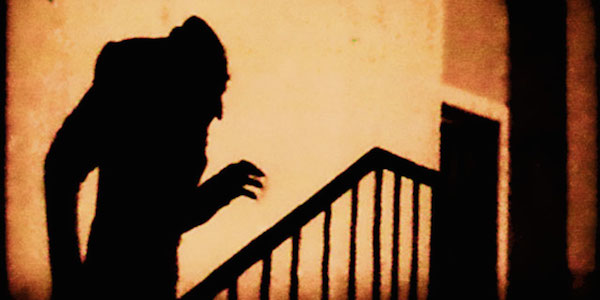
20. Nosferatu (1922)

What's it about? If you're familiar with the plot of Bram Stoker's Dracula (and let's be honest, who isn't?) then you'll find it easy to spot the correlating characters and incidents in F. W. Murnau's Nosferatu. Murnau couldn't secure the rights to Stoker's masterpiece so pretty much stole the plot wholesale, replacing the word "Vampire" with "Nosferatu" and switching Dracula's name to Count Orlok. What makes it groundbreaking? Widely recognised as the birth of horror cinema, Nosferatu's stunning use of distorted, angular sets in the style of German Expressionism established the style guide for horror aesthetic for decades to come, while Max Schreck's insanely creepy performance as Count Orlok remains to this day one of the most chilling portrayals of a vampire ever seen on screen. Robert Weine's The Cabinet of Dr. Caligari might have explored the potential for horror in a similar fashion in 1920, but Murnau truly nailed it two years later with Nosferatu.

19. Frankenstein (1931)

What's it about? If you're familiar with Bram Stoker's Dracula then chances are you're familiar with Mary Shelley's Frankenstein - the two books are perhaps the most famous horror novels ever written. Director James Whale plays a little loose with the original source material but the bare bones are there - mad scientist Dr. Frankenstein plays God and using the body parts of the dead creates a "monster" - except, of course, the real monsters are the humans who try to kill it.What makes it groundbreaking? Beyond the wonderful use of sets and lighting, which set the tone for many a Universal horror production which would follow lies a deep sense of humanity pervading throughout James Whale's Frankenstein in which fear of abandonment plays as much a role as generating scares. Only Dracula has featured in more movies than Frankenstein, but the only real competition for Whale's version came a short while later with his exceptional sequel, Bride of Frankenstein.

18. Dead Of Night (1945)

What's it about? An architect arrives at a country house party and proceeds to reveal to the assembled guests that he's seen them all in his dreams and predicts impossible to know events. The guests, amused by his claims of precognition, then entertain one another with tales of the supernatural of their own, including that of a ghostly driver and a ventriloquist driven mad when his doll appears to take on a life of its own. What makes it groundbreaking? Dead of Night is perhaps the first true horror anthology movie of all time so in this sense alone can be seen as triggering a new subgenre of horror which has persisted - for better or worse - in the many decades since its release. It's also one of the best of all time, with each segment a solid exercise in short form filmmaking of a consistently high quality. That it was produced by Ealing Studios, who would later forge a reputation as masters of comedy, makes this achievement all the more notable.

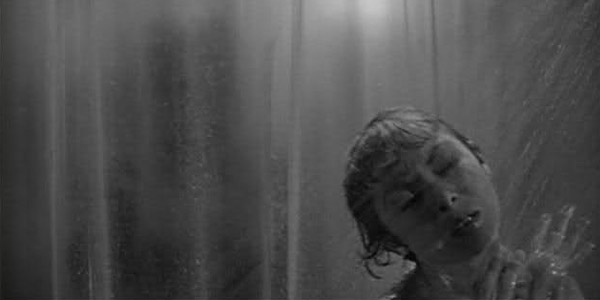
17. Psycho (1960)

What's it about? Adapted from the novel of the same name by Robert Bloch which in turn was inspired by real life serial killer Ed Gein, Psycho begins with Marion Crane (Janet Leigh) embezzling $4,000 from her office and fleeing the city, where she ends up hiding out in the secluded Bates Motel, run by Norman Bates (Anthony Perkins). Bates has a few secrets of his own, not to mention some deviant tendencies which will prove fatal to the motel's residents.What makes it groundbreaking? Many of the groundbreaking elements found in Psycho can be attributed to the erosion of the Production Code, which allowed Alfred Hitchcock to explore the twisted nature of his antagonist in a way which previously would have been impossible. The infamous shower scene is one of the most iconic in movie history, but it is Hitchcock's masterful approach to mise en scene throughout which makes this not only the best "slasher" movies but also a true masterpiece in its own right. Even the promotion of the film was groundbreaking, with Hitchcock buying up every copy of the novel and shrouding the project in near-impenetrable secrecy.

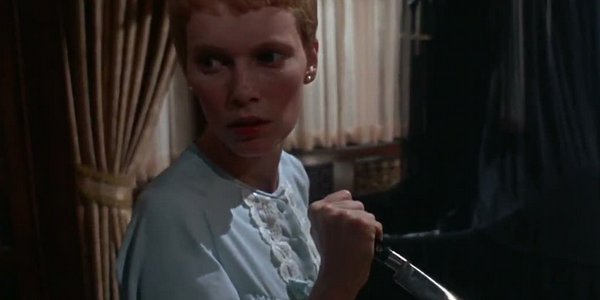
16. Rosemary's Baby (1968)

What's it about? Rosemary Woodhouse (Mia Farrow) moves herself into the old Bramford along with her husband Guy (John Cassavetes), and before long their elderly neighbours start to take a special interest in the young couple. As Rosemary begins to hear unsettling noises in the building and the neighbours' behaviour becomes increasingly strange, she begins to experience bizarre dreams including one in which she is raped by a beast, and shortly after falls pregnant with a child of occult origins. What makes it groundbreaking? Roman Polanski's adaptation of Ira Levin's disturbing novel pushed the boundaries of what was "acceptable" in horror to new levels, playing on nothing less than the sacred experience of motherhood and childbirth. Its conclusion - considered truly shocking by many at the time of its release - paved the way for a long run of Satanic Panic-inspired horror movies, although none ever quite managed to reach the same heights as Rosemary's Baby.

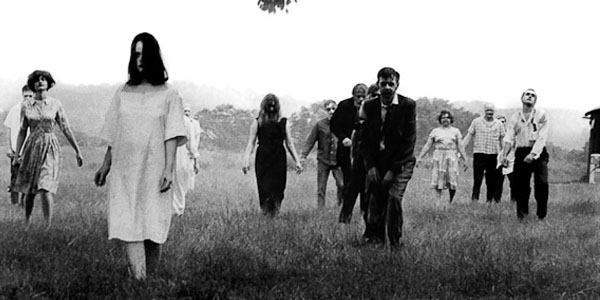
15. Night Of The Living Dead (1968)

What's it about? A group of strangers find themselves holed up in a farmhouse after the dead begin to come back to life and attack the living. We all know the drill by now - as the zombies (refered to in Night of the Living Dead as "ghouls") increase in numbers the survivors become increasingly desperate and start turning on one another in their desperation to come out on top.What makes it groundbreaking? Zombies had featured in movies before but never had they been depicted as the lumbering, rotting monsters featured in George Romero's Night of the Living Dead. Romero pushed on-screen gore in entirely new directions, shocking audiences more than any previous horror B-movie had ever hoped to, while the undercurrent of political commentary and observations about racism in America retain their potency today.

14. The Last House On The Left (1972)

What's it about? A group of young and naive teenage girls head to the big city so they can attend a concert and unwittingly find themselves trapped by a group of sadistic criminals whilst looking for someone to buy marijuana from. After they are raped and murdered, the killers head to the family home, where the tables are turned and the girls' parents exact their revenge. What makes it groundbreaking? Wes Craven's directorial debut not only epitomises the revenge thrillers of the era, it can also be said to have brought us the first home invasion horror movie of all time. Thought to be inspired by Ingmar Bergman's classic The Virgin Spring, this offers a similar exploration of the dehumanising nature of violence on both victim and aggressor. Don't let its low budget crudeness bely its intensity.

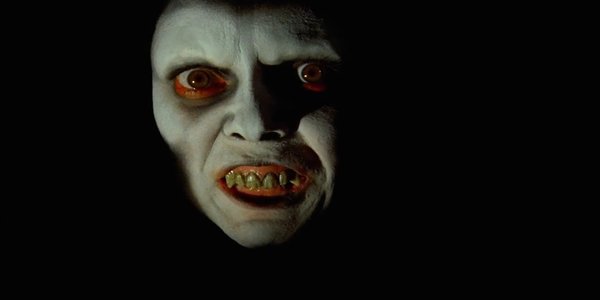
13. The Exorcist (1973)

What's it about? Adapted from the novel by William Peter Blatty, The Exorcist reworks a real life incident and tells the story of a little girl by the name of Regan who begins displaying increasingly erratic and disturbing behaviour. Her mother calls in a priest who becomes convinced she is possessed by the devil, and opts for carrying out an exorcism. What makes it groundbreaking? The Exorcist might not be the first ever "demon child" movie but it's certainly one of the most influential, and also has the honour of being the first horror movie to be nominated for Academy Awards across the board (unfortunately losing out on Best Picture to The Sting). Its influence throughout popular culture since cannot be understated - from copycat movies to countless parodies, it's embedded in the cultural landscape.

12. The Texas Chain Saw Massacre (1974)

What's it about? A brother and sister take their friends to visit the farmhouse of their deceased grandmother out in the Texan countryside and pick up a strange hitchhiker along the way. Before long they discover a dark and morbid family living next door who feed off humans, including Leatherface, a mute, lumbering giant wearing a leather mask with a penchant for dispatching his innocent victims with a chainsaw.What makes it groundbreaking? Tobe Hooper's The Texas Chainsaw Massacre can be seen as perhaps the first true slasher movie of the decade, introducing horror fans to the use of power tools as effective weapons for carnage which would persist throughout the genre in the years to come. Its semi-documentary style was also hugely influential on movies to follow, but it is perhaps Leatherface himself who influenced other films the most - a truly iconic horror movie villain if ever there was one.

Contributor
Contributor

Andrew Dilks hasn't written a bio just yet, but if they had... it would appear here.