20 Most Perfect Scenes In Cinema History
Sublime, flawless: the signature spots in your favourite movies that grabbed you and never let go.

It’s a rare thing, but sometimes you’re watching a movie and a particular scene hooks you. Maybe it’s the writing, the performances; maybe you’re smitten by the production design, the way it’s shot and edited. Maybe it’s just the context - how and where it sits within the film, informs the narrative. Whatever the case, there’s no improving on it. It’s… perfect.
Of course, perfection, like beauty, is in the eye of the beholder. It’s subjective - nothing is flawless if you’re willing to look for the smallest of holes - but that doesn’t mean that the ideal isn’t real.
Everyone reading this has such a scene in mind now: something that, at the time they watched it, elevated the film they were watching, stuck with them for hours, even days afterwards. These are twenty such movie moments, some pivotal, some transcendent, from all kind of movies over the last few decades of cinema.
Naturally, this means there will be spoilers - and an effort has been made to avoid many of the more obvious examples of ‘classic’ cinema scenes to make things more interesting.
Consider this a jumping off point, though. Why not give us your top five in the comments?
20. 28 Weeks Later (2007) - Run For Your Life

There are few opening scenes to any horror movie that set the table for the meal to come as convincingly as 28 Weeks Later, the sequel to Danny Boyle’s ‘zombie’ apocalypse slowburner of 2002.
Set at the same time as the events of 28 Days Later, at the initial outbreak of the Rage virus that has half the UK foaming at the mouth and eating people, 28 Weeks Later sees Don and Alice, hiding out in a barricaded farmhouse with four strangers. Accidentally attracting the attention of the Infected hordes roaming outside, the ragtag group are subject to the most horrific home invasion ever seen.
There’s the grating shift from still, claustrophobic compositions to juddering steadicam; the ravening butchery of the murders; Don’s desperate abandonment of his wife as she stands, framed in horror at the window before being snatched away impossibly fast.
But then he escapes the grounds of the farm, bursting out into a madcap sprint towards the river… and the camera follows him, gradually revealing dozens of roaring Infected tearing after him from every direction, as the apocalyptic swell of John Murphy’s Godspeed-influenced score reaches a crescendo. It’s brilliant, a masterclass in terror.
19. Roxanne (1987) - You Must Love The Little Birdies So

Famously adapted by Steve Martin himself (over an agonisingly twenty-five drafts) from Edmond Rostand’s coruscating 1897 play Cyrano De Bergerac, the 1987 version is a far more faithful adaptation than the trappings of the romantic comedy suggest.
As in the play, the central character is a larger-than life personality, charismatic, literate and funny, struck by a single flaw that skews his whole worldview: the possession of a bafflingly huge nose.
Rostand’s play brought the word ‘panache’ into the English language. It’s the ideal around which soldier and renaissance man de Bergerac has based his life, and to a large extent this is true of Martin’s dynamic fire chief C.D. Bales as well.
C.D. has a fearsome reputation for violence against people who sneer at his schnoz, a reputation at the forefront of everyone’s minds when, on a night out, a drunken lout calls him “big nose”...
Adapted flawlessly from the version of the same scene in the play, it’s not just the individual gags that make it work, but the relentless quickfire barrage. There are actually twenty-five in all: at nineteen, C.D. asks his captivated audience how many he’s got, but is mistakenly told fourteen.
The real reason for the ‘error’? Martin had simply written too many great jokes.
18. Ben-Hur (1959) - Chariots Of Fire

The car chase is kind of taken for granted these days as a cinematic trope. Films like Baby Driver and the Fast & Furious franchise have had to add increasingly frenetic bells and whistles to gild what should already be a pretty glorious lily.
That’s why the achievement in the 1959 version of Ben-Hur is so astonishing. Without the safety net of any of the modern visual effects we’ve come to expect in this day and age, legendary director William Wyler and his second unit director Andrew Marton put together a breathtaking, visceral chariot race, the likes of which has rarely ever been committed to celluloid, even six decades later.
The boneshaking, breakneck action is one thing, but Wyler also finds time to advance the story, principally the bitter enmity between former best friends Judah Ben-Hur and Messala, the Roman commander who had him enslaved.
As the increasingly violent race throws up trampled body after trampled body, Messala tries his damnedest to make Judah one of them… but this film ain’t called Messala, and it’s the Roman who ends up mangled, crushed by horse after horse in a surprisingly brutal climax to this thrilling scene.
17. Beauty And The Beast (1991) - Tale As Old As Time

There’s a reason that musicals, on stage and screen, still retain a huge audience worldwide after all this time. Set the perfect song to a critical moment, and you magnify the effect fivefold.
That’s why Beauty And The Beast remains one of Disney’s best-loved animated classics: it has the tunes to match the classic fairytale narrative. Gaston’s eponymous brag is full of wit, both broad and sly; ‘Be Our Guest’ ranks up there with the best Disney ‘choreography’ there is.
And then there’s the titular Oscar-winning song, the best loved signature tune in any Disney film. The first to be rearranged for the contemporary charts, both the 1991 original and the recent live action remake make the mistake of having the song sung as a duet, which robs it of much of its charm.
The pivotal scene in the film’s narrative, it defines the second act, which has focused on the deepening relationship between Belle and her erstwhile captor. The use of computers to place the 2D hand-drawn protagonists in a 3D CG environment allows for breathless ‘camerawork’ to accentuate the charm and romance of this enchanting dance.
It’s cinematic perfection… and no amount of pop divas can beat the simple, aching clarity of Angela Lansbury’s quavering vocal.
16. Primal Fear (1996) - The Sound Of Clapping Hands

In Gregory Hoblit’s superior thriller, Richard Gere is Martin Vail, a smarmy defense lawyer representing Aaron, a shy, stuttering altar boy accused of a bloody murder, only to find himself believing in Aaron’s innocence despite himself. Edward Norton plays the kid, revealed during a psychological assessment to be suffering from dissociative personality disorder: Aaron didn’t kill the man, his violent alter ego ‘Roy’ did.
Unable to change to an insanity defence this late in the trial, Vail takes a desperate gamble and places the angelic Aaron on the stand, counting on the prosecutor treating him as a hostile witness. Aaron crumbles under the pressure, the psychotic Roy emerges in open court, Vail has his mistrial and all is right with the world. Except...
Word of mouth surrounding the unknown Norton’s screen test was so extraordinary that it launched his career before filming even began; legend has it that the casting director was convinced that she had a genuine headcase on her hands.
This final scene, however, is the crown jewel. Originally, it ran to six pages, far too long, but Gere and Norton played with it, improvising to pare it down to the essence, heavy with dawning dread as Vail, smug in his rare moral victory, discovers that he’s lost after all.
15. Inglourious Basterds (2009) - The Jew Hunter

28 Weeks Later may have defined the opening gambit for horror movies for years to come, but Quentin Tarantino tends to defy conventions rather than define them. Inglourious Basterds, set deep in Nazi-occupied France circa 1944, is a lurid, often subtlety-free exploitation movie, which is why the astonishing nuance of the opening scene stands out as it does.
Transposing the classic dread of the fascistic secret police from its usual dystopic urban environment to an idyllic, isolated farmhouse is a masterstroke in and of itself. A riff on The Good, The Bad & The Ugly, it recasts the scenario as a spaghetti western home invasion, juxtaposing the jackbooted totalitarianism of the Nazis with the role of lawless wild west brigands.
The tension mounts with the revelation that the farmer is hiding a Jewish family beneath the floor. However, Tarantino is clever enough to allow that tension to ebb and flow, inserting ridiculous moments - like Colonel Landa’s implausibly huge Sherlock Holmes pipe - to level the mood for a moment before ratcheting it up again. Check out this spot-on analysis:
Christoph Waltz, in the role that made his name, is breathtaking in this practically one-handed performance. The scene is fully nineteen minutes long, yet, almost casually, he holds the audience in the palm of his hand throughout.
14. Dirty Dancing (1987) - The Time Of Your Life

Dirty Dancing is a film in which innocence and experience are constantly defining themselves against one another.
Set in the summer of 1963, the story is a fairytale romance overlaid onto period-set melodrama. Frances ‘Baby’ Houseman is a gauche, middle class teenage tomboy who embarks on a sweet affair with the working class dance instructor at her family’s vacation resort.
Come the ending, her holiday romance exposed to cold, harsh reality, Baby faces heading home in disgrace. That is, until her Disney prince returns to take her hand for one more dance, dismissing her father with that iconic “nobody puts Baby in a corner”.
The film’s dance scenes tend to switch between diegetic and extradiegetic music, depending on whether the scene is a set-piece or a montage. The music played within the story is period-appropriate to avoid jarring anachronism, while the music accompanying scenes tends to be contemporary.
The feelgood finale of Dirty Dancing is the triumph of the fairytale over reality. (I’ve Had) The Time Of My Life is an almost defiantly eighties pop tune, yet it’s used in a diegetic context. This deliberate clash heightens the impression of romantic unreality: this could easily be Frances’ daydream in the family car on the way back to dreary New York.
13. Don't Look Now (1973) - Haunted Honeymoon

The infamous sex scene at the heart of this eerie, captivating ghost story has long been touted as unsimulated - and for obvious reasons, is impossible to find in clip form online.
Legend has it that Donald Sutherland and Julie Christie were encouraged to genuinely do the deed by director Nic Roeg, to the concern of Christie’s partner Warren Beatty, who flew to London to demand that it be cut from the film. Such controversy appears to have been manufactured: Sutherland and Christie have both gone on record assuring everyone that the scenes were simulated.
Whatever the truth of the matter, it’s the brave blocking of the scene and the masterful intercutting between the lovemaking and the couple getting dressed to go out to dinner that makes it so memorable. It becomes clear that this is the first time the two have been intimate since the death of their daughter, the tragedy that overshadows the entire narrative.
For a moment that shadow is lifted, and the result - romantic yet unpretentious - is extraordinarily moving, one of the few explicit sex scenes that’s utterly essential to the finished movie.
12. American Werewolf In London (1981) - Dark Side Of The Moon

John Landis’ odd little follow-up to The Blues Brothers famously can’t seem to make up its mind whether it’s a supernatural comedy or a grisly horror. However, the most celebrated scene is the transformation scene that occurs around two thirds of the way through… and it’s all horror.
A combination of prosthetics, make-up and animatronic parts, the moment was one of several in the film originally conceived by Landis and Rick Baker to showcase a kind of state-of-the-art special effect that had never been seen in cinema before.
David Naughton endured six ten-day sessions in the make-up chair, and Landis and editor Malcolm Campbell seamlessly compiled the footage into two minutes of flawless lunacy. Baker’s elaborate practical work was a revelation, and would win him the first ever Academy Award for Best Make-Up. But it’s the effect the scene has on the viewer that’s truly remarkable.
Landis was determined to portray how agonising such a transformation would be, as the human body was stretched, twisted and snapped into a completely different shape, the face and cranium left till last. Naughton’s screaming, horrified torment stay with the audience long after the credits have rolled. It’s a scene that few filmmakers have come close to matching in the four decades since.
11. The Money Pit (1986) - Chain Reaction

It’d be Big in 1988 that would make Tom Hanks a genuine star, but there were a few critical and box office misfires along the way. Richard Benjamin’s The Money Pit, co-starring Shelley Long, was one such - but it’s dated well, retaining a special kind of charm in the intervening three decades that better, more successful films of the time failed to keep.
The story of a New York couple who find their dream house, a mansion in the nearby countryside, which turns out to be falling to pieces, The Money Pit delivers a great line in slapstick, anchored by Hanks’ bravura comic performance as a man desperately out of his depth.
This scene is the culmination of all that farcical nonsense, one of the most perfectly choreographed comic spectacles in cinema, as a single missed step - wrong place, wrong time - sets off a chain reaction of events like an absurd Rube Goldberg machine.
Practically flawless in conception and execution, it’s almost impossible to spot the seams that join this set-piece together, all mischievously soundtracked to music from Donizetti’s Lucia (back when the ironic use of opera and classical music was a fresh take). And there’s no better capstone to farce than being urinated on by a cherub.
10. Glengarry Glen Ross (1992) - Because I Don't Like You

This, along with Neil LaBute’s 1997 movie In The Company Of Men, remains the definitive study of toxic masculinity under pressure. It’s even set in a bottle; an open plan office environment filled with hard-nosed salesmen competing for commission and bonuses.
David Mamet’s adaptation of his own award-winning play is, as you’d expect, stuffed full of gruffly propulsive dialogue. Here it’s delivered by an embarrassingly strong cast, including Ed Harris, Al Pacino, Alan Arkin, Jonathan Pryce, Alec Baldwin and, in this stand-out scene, Jack Lemmon and Kevin Spacey.
In the aftermath of an office break-in, and supercharged by having made a big score, Lemmon’s Shelley Levene tears strips off Spacey’s office manager Williamson for screwing up a colleague’s sale, dripping with scorn - until he lets slip information he couldn’t possibly know unless he’d been the burglar.
Tasting blood in the water, Williamson returns the favour, savaging Levene as only Spacey can. It’s visceral, brutal stuff, so compelling that, ironically, it’s actually difficult to watch.
Some might have gone for the infamous Always-Be-Closing scene, in which uber-alpha Blake (Baldwin) unleashes a string of profane insults to supposedly motivate the men in the office. However, that’s a one-hander, one written specifically for the film - specifically for Baldwin, in fact, so that the actor would sign on and attract the financing they needed to begin shooting.
9. The Fisher King (1991) - Grand Central Waltz

Whimsical, captivating and strange - that description could apply to any one of Terry Gilliam’s movies over the last four decades, and certainly fits The Fisher King to a tee. Here he’s added ‘romantic’ and ‘luminous’ to his usual oddball stew, and the result makes you wonder why he doesn’t attempt it more often.
A perfect showcase for the late Robin Williams’ dual talents as manic comedian and fearless dramatic actor, The Fisher King is both comic fantasy and redemptive melodrama. Williams plays Parry, a delusional homeless man who believes himself to be a knight on a quest to find the Holy Grail of Arthurian legend.
There’s a lot more to the movie than this scene - a fantastic lead performance from Jeff Bridges and an Oscar-winning turn from Mercedes Ruehl, for a start - but nothing seems to capture the brimming heart of The Fisher King better than the scene where Parry, smitten, follows the woman he’s fallen in love with through a suddenly magical Grand Central Station.
Filmed over one chaotic night with a thousand extras, all of whom had to be taught the waltz before a frame could be shot, the shoot overran, and Gilliam found himself frantically directing Williams to step through genuine crowds of commuters to get the last few takes he needed. The result is simply breathtaking cinema.
8. Field Of Dreams (1988) - You Wanna Have A Catch?

Amongst male film fans of a certain age, Field Of Dreams occupies a rare place of reverence that (for a change) has nothing to do with being cool, or funny, or badass.
That’s not to suggest that women don’t love the film, of course - many do. However, this is, at its heart, a movie about a boy and his father, and by the time Phil Alden Robinson’s all-American fairytale hits the 100th minute, most of the guys you know will be muttering about “allergies”, or having “something in my eye, no seriously.”
Whimsical, intelligent, sentimental yet completely genuine, Field Of Dreams is a beautiful movie, featuring Kevin Costner in full-on Jimmy Stewart mode and a nuanced performance from Ray Liotta, seemingly cast for and against type at one and the same time.
That final scene, with the catch in the baseball field (and the catch in Costner’s voice) is as redemptive as the end of Shawshank, as cathartic as the end of Toy Story 3. Yet all it is is a crane shot circling a spotlight field at dusk, and two men trading catches as headlights queue and throng in the distance. Unforgettable.
7. Marathon Man (1976) - Is It Safe?

No, it bloody isn’t.
John Schlesinger’s harrowing thriller, filmed from William Goldman’s adaptation of his own 1974 novel, is a one of a kind movie. For decades, filmmakers have been trying, and mostly failing, to recapture its brooding menace.
Where they usually fall down is in attempting to keep their innocent protagonist both whole and heroic, sticking to the usual Hollywood received wisdom that audiences will not root for a protagonist who falls to pieces in the face of adversity. Goldman and Schlesinger, however, had no interest in sparing ‘Babe’ Levy (Dustin Hoffman) any of the anguish he suffers.
The guileless brother of a spy murdered by Szell (Laurence Olivier), a Nazi war criminal desperate to escape New York with the diamonds he stole during the war, Babe is kidnapped in the second act and tortured through dentistry in one of modern cinema’s most memorable - and memorably nasty - scenes.
What makes this truly horrible - aside from the fact that we know that Babe is completely ignorant of Szell and his diamonds, and can’t tell his captor a thing - is that Szell breaks him.
There’s no heroic standing up under pressure, no Bond-style laughing in the face of torment. Although he lives to confront his enemy and see him fall, Babe is ruined by his experience, damaged beyond repair.
6. Almost Famous (2000) - Tiny Dancer

Cameron Crowe, a former Rolling Stone journalist obsessed with the effect that a soundtrack can have on the human heart, has made his name on marrying the right song to the right moment.
From John Cusack’s boombox serenade in Say Anything…, to Tom Cruise’s fist-pumping ecstasy singing Tom Petty in Jerry Maguire: the man’s got a gift. But the ‘Tiny Dancer’ scene in Almost Famous takes that gift to a whole new level.
It’s 1973, and Stillwater are a rock n’ roll band on the verge of breaking big, but trapped together on a tumultuous tour of the midwest. After a huge bust-up, singer Russell leaves the band and crashes a local party, taking heroic quantities of acid and declaring himself ‘a golden god’.
Back onto the tour bus, a sullen silence dampens the air as the wasted frontman tries to avoid everyone’s eyes, while Elton John and Bernie Taupin’s paean to the freespirited hippychick women of the era plays in the background.
When the music moves from soundtrack to diegetic sound - when you realise that the band and the crew can hear it too - that’s where the magic begins. The atmosphere dissolves, the fight is forgotten, as gradually everyone on the bus joins in.
It’s the perfect encapsulation of Crowe’s heartfelt belief that music, maaan, is supposed to bring people together.
5. Superman III (1983) - Clark Kent Vs. Dark Superman

It’s true that the special effects in Superman III have dated worse than Taylor Swift (think about it…), but really, that doesn’t matter in the slightest: there’s more dramatic heft here than in any amount of CGI urban devastation, thanks to the still astonishing subtlety of Christopher Reeve’s dual performance as Clark Kent and Superman.
Exposing Superman to an artificial form of kryptonite, the film’s villains don’t anticipate the odd effect the radioactive rock will have on the Man Of Steel: it transforms him into a bitter, resentful hateful version of himself.
Trying to fight off the effects, Superman lands in a junkyard and with a primal scream, seems to split into two warring versions of himself: Dark Superman, angry and dishevelled, and the bespectacled, besuited Clark Kent.
It’s fairly obvious that the whole thing takes place in Superman’s head, which makes Kent’s lack of superpowers (aside from super strength) fairly psychologically intriguing. At one point, Kal El even mocks him for not being able to fly.
The climax is one of the most stirring scenes in blockbuster history, as Kent, victorious, staggers to his feet and slowly pulls open his shirt to reveal the stylised ‘S’ beneath, John Williams’ iconic score swelling all about him. Bloody brilliant, and probably the definitive superhero moment in cinema.
4. Jaws (1975) - You Fair Spanish Ladies

Jaws, the first real Hollywood blockbuster, succeeds as well it does for a variety of reasons - not least because the prop sharks didn’t actually work as intended, leading Spielberg to change tack. Instead of a monster movie, this would be a stalk-and-slash thriller.
At least, that’s become the most prevalent reading of Jaws over the ensuing years. It’s no coincidence that generations of film fans have named the shark after the movie, after all: it’s a murderer, and the film a precursor to the slasher movies of the late seventies and eighties.
In this landmark scene, hapless protagonist Brody, smart-mouthed oceanographer Hooper and grizzled shark hunter Quint have taken to the sea together to hunt the sinister beast down. Drunkenly bonding, the three clashing personalities finally begin to gel as they find common ground together.
Robert Shaw’s Indianapolis speech is rightly considered one of the best monologues in cinema, delivered by one of Hollywood’s top character actors in the scene-stealing role of a lifetime. As it stands, the moment is near perfect: but the cherry on the top is the denouement.
As the monster hunters relax, their guard down, the killer comes for them. It’s almost as if it knows...
3. Up (2009) - Carl & Ellie

When you’re compiling a list like this, you have to accept the fact that some entries are chosen for you: and you just can’t write an article on the most perfect scenes in cinema without including Pixar’s modern classic Up.
The opening minutes detail protagonist Carl’s meeting with the love of his life, Ellie, as children. From there, it’s straight into a sweeping, wordless montage, leafing through their whole life together from the moment of their wedding, culminating with Ellie’s illness, and her passing.
Often, you assume that these apparently perfect scenes came about entirely organically, springing whole from the furrowed brow of the writer/director like something out of classical myth.
Here, however, you would be mythtaken: this montage came about through the painstaking process of redrafting and revision. Building Carl’s perfect relationship with Ellie was central to establishing his motivation throughout the increasingly peculiar events of the film, but something wasn’t working.
It was story supervisor Ronnie Del Carmen who had the idea to take a planned succession of shorter snapshots and tease out the visuals and the score, cutting the dialogue entirely and blurring them into the mise en scène of a complete life.
It’s one of the most heartbreaking scenes in cinema: without a single actor, or a single line.
2. The Princess Bride (1987) - I Am Not Left Handed

There are plenty of stunning sword fights in cinema, but for utter perfection you have to go to the clifftop duel in Rob Reiner’s evergreen fairytale The Princess Bride.
Pursuing a crew of killers, The Man In Black climbs the Cliffs Of Insanity only to face swordmaster Inigo Montoya, who - in a show of sportsmanship - helps him up the last hundred feet and allows him to rest before they begin, leading the two to bond.
The stylised duel that follows is as much ones-upmanship as it is fight to the death, each man so determined to outdo the other that both initially pretend to be left-handed to allow the other more of a chance.
No stuntmen were required, as Mandy Patinkin and Cary Elwes trained to fence with either hand for the film. The scene was choreographed by the legendary Bob Anderson: the man behind the fights in Highlander and Lord Of The Rings, who trained Errol Flynn, and who played Darth Vader in every lightsaber duel in Empire Strikes Back and Return Of The Jedi.
There’s a palpable sense of relief when The Man In Black chooses not to kill Inigo at the end - because incredibly, amid the sparkling dialogue and flashing swordplay, the scene also serves to both introduce the film’s protagonist and transform a villain into a hero.
1. The Usual Suspects (1995) - The Devil Is In The Details
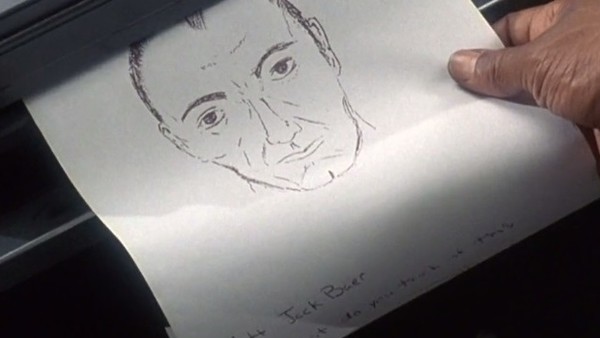
Most twist endings - even the genuinely surprising ones - are a one-shot deal. Once you know how the trick is done, there’s little desire to watch it performed again. The Usual Suspects, on the other hand, is just as thrilling a movie on the twentieth viewing, and it’s largely thanks to that final scene.
Kevin Spacey plays ‘Verbal’ Kint, a small time conman in way over his head, relaying to police the story of how he came to be the sole survivor of a massacre on a burning ship. As his tale unfolds, it becomes clear that Verbal isn’t telling the whole truth.
It’s John Ottman’s dual talents as editor and composer that make the film’s climax so compelling. Layering snatched dialogue from the preceding hundred minutes, he builds the scene as though it were a score, rising to an atonal crescendo before pulling out from the minutiae of the office to the elegiac finale of the precinct and the street beyond.
Is Verbal really the chimerical Keyser Soze? That’s the generally accepted interpretation (although some differ). But even knowing the ending, you can watch and rewatch The Usual Suspects and still get that chill down your spine every time Dave Kujan drops his coffee to the floor...