20 Post-Apocalyptic Movies You Must See Before You Die

After the end.
As modern movie-goers, we're all kind of obsessed with the apocalypse. Time and time again, filmmakers are finding new and interesting ways to depict the end of civilization as we know it... and audiences continue to lap it up in their masses. There's no limit, apparently, to the number of times one person can watch a city reduced to ashes. What is it about the apocalypse that interests us all so much, then? Does it stem from a deep-seated or innate desire to watch society crumble, thus freeing us from the confines of modern life? Does our lust for global destruction hark back to our animalistic instinct to survive at any cost? Or do we just like to watch stuff getting blown up and destroyed? Whatever the reason, there's no denying the inherent appeal of the apocalypse film. But what about those films set after the apocalypse, when humans are forced to scavenge and survive in a dangerous, ruinous landscapes? When a narrative hones in on individuals who must navigate the fallout of a worldwide catastrophe and use all the wits in order to live? Here, then, are 20 post-apocalyptic movies everybody should see before they die. To earn a place on this list, the films in question had to hit a certain criteria: said films had to be set - for the most part - in the wake of a full-on apocalyptic event that has left most of the world devastated. Films like Children of Men, more "dystopian" in nature, weren't considered.

20. The Rover (2014)

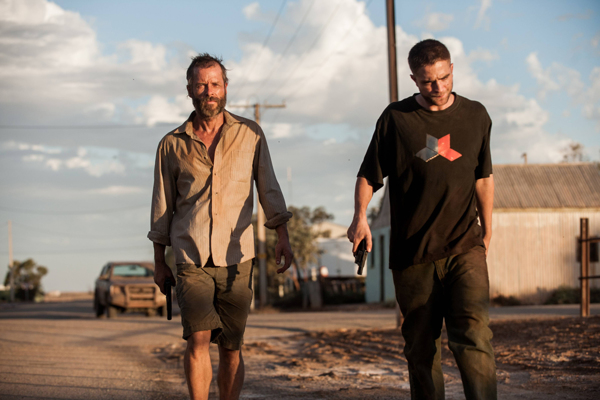
There's something about Australia that sits well with the apocalypse. A large number of post-apocalyptic films are set there, after all. Maybe it's the desert; that a large portion of the country - the middle - already subscribes to a pretty post-apocalyptic aesthetic as it is. The Rover, which stars Guy Pearce and Robert Pattinson, is Australia-set, and takes places in a future Outback - "10 years after the collapse," we're told - that has succumbed to the end of modern civilisation (and with it, the morals of most of its inhabitants). A flawed and difficult film in places that will stick with you nonetheless, David Michôd's post-apocalyptic drama is still well worth the trip, as Eric - played by Pearce - sets out on a futile mission to get back his car after it's stolen by hooligans. If that plot sounds oddly thin, it's just a means of giving Eric something to do as he embarks on a bleak and violent odyssey through an unforgiving terrain - one that brings new meaning to the word "dust bowl."

19. Stake Land (2010)

After the world is left devastated by a vampire pandemic in Jim Mickle's impressive low-budget post-apocalyptic thriller, the survivors are forced to wander a devastated US landscape dodging religious fantastics and bloodthirsty monsters who will stop at nothing to see humanity at its knees. The future world as seen in Stake Land, which stars Nick Damici (who also wrote the movie) and Connor Paolo as two ragtag survivors, is the last place you'd want to wind up. Stake Land shows the horror and post-apocalyptic genres coming together in full force, as young Martin joins forces with a vampire-killer named Mister as they attempt to find an elusive haven known as "New Eden." This is a bloody and violent post-apocalyptic tale made interesting because you can't predict the plot; nobody is safe in Stake Land. Short, creepy and packed with interesting characters, this is the independent apocalypse film at its best.

18. Waterworld (1995)

Waterworld is an exercise in Hollywood excess; a huge mess of a picture that has come to epitomise everything that is wrong with La La Land. And yet it is still a motion picture that has to be seen to be believed - and one that has been lambasted unnecessarily over the years. Despite its flaws, this Kevin Costner blockbuster - which depicts a post-apocalyptic world in which water now covers the surface of the entire planet - is a shamelessly entertaining yarn that hooks you in and doesn't let go. Waterworld is often mislabelled a flop (it wasn't), and everything from the acting to the storyline have been criticised. But given all the surplus and extravagance that clings to Kevin Reynolds' post-apocalyptic mayhem, it's hard to deny the schlocky value of a film like Waterworld. And if its vision of a pirate-like future seems somewhat ridiculous, its predicting of a world in which the polar ice caps have melted rings eerily true today.

17. The Last Battle (1983)

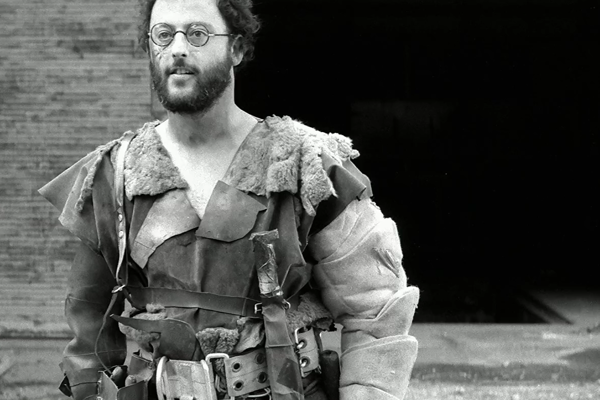
Directed by French auteur Luc Besson when he was just 24-years-old, The Last Battle - or Le Dernier Combat, if you want the original language title - stars Pierre Jolivet as the survivor of an unexplained fallout. As "The Man," he spends the sum of the film trying to locate parts for an airplane so that he might escape to a better existence. The Last Battle is made most interesting, perhaps, because it features barely any dialogue across the length of its 80-minute runtime. It's suggested that whatever event caused the end of civilisation also resulted in the population being rendered mute, and only two lines are spoken in the whole movie. The low-budget should have been a hinderance here, but instead it helps to create the film's unique - and undeniably strange - atmosphere. The film also stars Jean Reno, a frequent Luc Besson collaborator, in a prominent role as a villain. Artistic, bleak and very original, it's kind of an underrated gem.

16. The Quiet Earth (1985)

A cult film through and through, New Zealand-made post-apocalyptic yarn The Quiet Earth has to be one of the strangest entries in this particular sub-genre... and one that needs to be seen so that you can personally decide on its merits. Set in the wake of an experiment turned global disaster that leaves a scientist named Zac Hobson (played by Bruno Lawrence) as the last man on Earth, The Quiet Earth chronicles his attempt to get to grips with his new life as an isolated loner. Soon enough, the film brings in two more survivors (a man and a woman), and the group try to figure out why they survived after the rest of the world disappeared (a love triangle develops, of course). Then everything goes plainly nuts. Oddly shot and seriously weird from start to finish, The Quiet Earth deserves at least one viewing if you're a post-apocalyptic film nut. Plus, renowned scientist Neil deGrasse Tyson loves it, so there.

15. Reign Of Fire (2002)

Reign of Fire is nuts. It's a movie about a post-apocalyptic world in which dragons - yes, dragons - rule the surface, and it features Matthew McConaughey before he was considered to be any good. It's plainly crazy from start to finish, but it's also an incredibly entertaining and underrated blockbuster; totally and utterly ridiculous, yes, but what do you expect from a movie in which London Underground workers awaken a dragon and doom humanity? Set in 2020, years after dragon hordes have consumed most human beings on the planet, Reign of Fire hones in on a group of survivors - led by Christian Bale, no less - living in a Northumberland castle, because you can't make this stuff up (or clearly you can). The film is packed with inventive action scenes and moments of people being horribly burned by fire-breathing monsters. It ain't big and it definitely isn't clever, but it's one hell of a fun ride.

14. Logan's Run (1976)

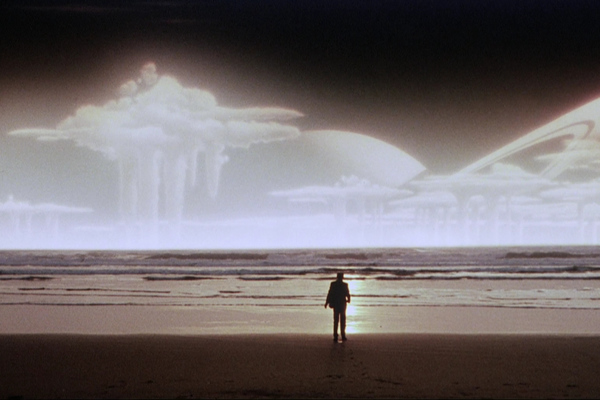
Everybody has heard of Logan's Run, a movie whose title conjures up images of cheesy '70s special effects and Michael York in a dated - but very groovy - outfit. And parts of Logan's Run are noticeably laughable, of course, but the film itself still remains an essential work of post-apocalyptic cinema. Based on the novel of the same name, the plot has the last remnants of humanity holed up in a "utopian" city where nobody is permitted to live past age 30 and are subsequently forced to commit ritual vaporisation. Such oppressive rules inspire the Logan of the film's title to do a runner, of course, and he's pursued by the sinister "Sandmen" as he flees utopia and attempts to learn the truth about the state of the world (which has since succumbed to nature). Logan's Run deals with a lot of interesting subjects, many of which are transposed directly from the novel by William F. Nolan and George Clayton Johnson, but for the most part this is simple, iconic escapism.

13. On The Beach (1959)

Based on Nevil Shute's acclaimed novel of the same name, the 1959 adaptation of On the Beach takes place after a nuclear war has devastated life in most parts of the world, and hones in on a group of survivors living in Australia, which is one of the few places in which it is still possible to breathe clean air. The plot concerns Gregory Peck's Dwight Towers, who - along with a small group of survivors - awaits death from the inevitable, airborne radiation. On the Beach isn't a masterpiece, by any means, but it's an important post-apocalyptic movie milestone as it was one of the first pictures to probe the potential aftermath of a nuclear war. It also succeeds in creating the strange and otherworldly atmosphere that would go on to define the sub-genre. Directed by the great Stanley Kramer, On the Beach is also unique - and thus terrifying - because it's essentially about people just waiting to die.

12. Dawn Of The Planet Of The Apes (2014)

Whilst the first movie in the rebooted Planet of the Apes franchise, Rise of the Planet of the Apes, was all about setting up the coming apocalypse, the sequel, Dawn of the Planet of the Apes, was very much a motion picture about human beings living in a post-apocalyptic setting. After most of humanity has been wiped out by a deadly virus, those who are immune must contend with the slow rise of sentient apes as they begin to inherit the planet. Dawn of the Planet of the Apes, aside from being a special effects masterclass and a fantastic action movie, is a post-apocalyptic movie in every sense, and yet it has a proper story and doesn't just rely on the usual tropes of the sub-genre to get by. We know, of course, that humanity is doomed and that the apes will ultimately win out - it's in the name of the movie. But Matt Reeves' picture cleverly gives us heroes to root for on both sides, and thus creates an intelligent sequel that improves on the first film in every way.

Contributor

Sam Hill is an ardent cinephile and has been writing about film professionally since 2008. He harbours a particular fondness for western and sci-fi movies.