20 Saddest Moments In Film History

If you somehow got through these without crying, you may need to return to your home planet.

There are movies that are sad, and then there are these movies. Films that can make you weep like a baby just by thinking of that one scene that reduced you to a crumbling mess the first time you saw it. Films that you can't quite shake, even after having weeks to process your emotions. These are the movies that take full advantage of the intrinsic ability of cinema to make us feel something in an incredibly intense way. All the movies on this list have one thing in common; they have at least one scene that was so heartbreakingly sad, you'll never be able to forget it. You forbid your friends from even mentioning it, because the idea of reliving the emotions you went through when you first watched are almost too much to handle. You'd think that maybe, just maybe, they could go easy on us once in a while - we're only human right? But no, they deal with loss, grief, pain, regret - emotions that we can all relate to. And while there are some movies that are just generally very sad from start to finish, there are plenty of others that just have one scene in the film that is so tragic that it stands out amongst all the others. These are the saddest individual moments in movies, and be advised: there are definitely some spoilers floating around in here.

20. Selma's Execution - Dancer In The Dark

Dancer in the Dark is emotionally exhausting from start to finish - by the time the film reaches its devastating conclusion, you basically don't have any tears left. It's the story of an Eastern European woman who is going blind because of a degenerative disorder which she has passed down to her young son. Whenever her life gets too depressing or boring, she escapes into a world of daydreams, where life is a very stark version of a Hollywood musical and she is the star. Through a series of unfortunate events she is charged with murder, but refuses to hire a lawyer to defend her, opting instead to save her money for an operation that will save her son's sight. She faces the death penalty, and as she is led into the execution chamber, she begins to sing her final song. The last few lines are abruptly and shockingly cut short as she is hanged, and despite the fact that we know she was relieved that her son's surgery worked, it packs an emotional wallop that shakes audiences to the core.

19. Jack's Suicide - Boy A

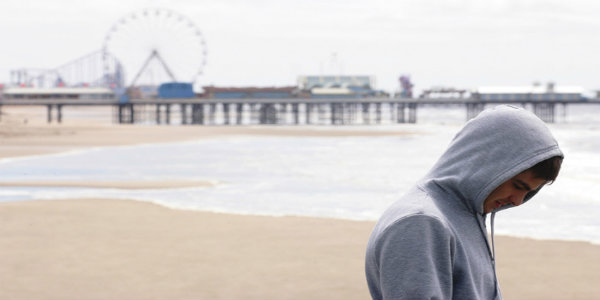
Boy A is the story of a young man who is desperate for a second chance to have a real life. He spent his teen years in confinement after his involvement in a grisly murder, but is released under an assumed identity upon reaching adulthood. When he is sent out into the world, he almost feels like it's too good to be true, and that he doesn't deserve it, as he never imagined that he would have a job, a group of friends, a girlfriend. The whole film feels like he's waiting for the other shoe to drop, which of course, it does; someone discovers his true identity, and overnight the public is clamouring for his blood. The entire sequence of him panicking and desperately trying to get a hold of his social worker is incredibly hard to watch, but the biggest blow comes when he escapes to the ocean and is on a pier preparing to commit suicide. He opens a letter from the little girl he rescued from a car accident, thanking him and calling him an angel. He begins to sob uncontrollably, realising that no matter what good he has done in his new life, he will never be able to escape his old one.

18. Jim's Encounter With His Mother - The Basketball Diaries

This is one of Leonardo DiCaprio's earlier films, coming out two years after he was nominated for an Oscar for his work in What's Eating Gilbert Grape, but two years before he became a superstar with Titanic. The Basketball Diaries is about a group of kids in Boston who are growing up on the wrong side of the tracks and starting to make some really serious mistakes in terms of heavy drug use. The most difficult scene to watch is when Leonardo DiCaprio goes home strung out on heroin only to discover that his mother has locked him out; she's had enough of his behaviour, and is attempting to show him tough love. He sits outside the door, begging to be let in, while his mother sits on the other side, crying. It showcases the darkest depths of drug addiction, and it's especially painful for everyone who has children. You don't have a heart if Leo doesn't kill you with his "I'll be a good boy" line.

17. The Story Of The Little Tsutsi Girl - Hotel Rwanda

Big surprise, a film about the 1994 Rwandan Genocide, where 800,000 people were killed over the span of three months, is incredibly sad. It's probably one of the most uncomfortable viewing experiences in recent years, and there are more chilling and tearjerking scenes than we can count. But perhaps the worst is when the American aid worker is remembering her interactions with a young Tutsi girl about to be massacred by the Hutu machete army. The girl pleaded with the woman, saying, "Please don't let them kill me, I promise I won't be Tutsi anymore!" There is no flashback to this moment, and we never actually see the girl on screen. We don't need to. Hearing this grief-stricken woman relate her experience of watching all those little children hacked to pieces was enough, more than enough. The exchange highlights the utter pointlessness of the genocide, and the conflict between the Hutus and Tutsis in general. But are you ready for the saddest part, the cherry on top of the sundae of Awful? That anecdote was a true story - an actual aid worker reported overhearing a little girl say that while she was in Rwanda during the crisis.

16. George Praying In The Bar - It's A Wonderful Life

A brief history lesson: Jimmy Stewart served as a brigadier general in the US Army, making him the second highest ranking actor in history (he was outranked only by Ronald Reagan, who as president served as Commander-in-Chief). But the war took an emotional toll on the actor, and when he returned home he was reluctant to take on the sort of light-hearted roles that had defined both his and Frank Capra's career up to that point. He chose to do It's a Wonderful Life for his first film after the war, and his clearly fragile emotional state helped create one of the most poignant scenes in the holiday classic. There's a scene when George Bailey is depressed at a bar, devastated by the loss of his bank's money and profoundly disappointed in the way his life had turned out, and begins to pray. His emotions get the better of him, and you can see the actor start to cry. Frank Capra was so affected by his performance that he reframed the shot to get a closer look at Stewart's ravaged face. His haunting portrayal of a man feeling so hopeless that he was driven to suicide is one of the reasons why this film is so beloved, and nowhere is his performance more vivid and evocative than in this scene.

15. Danny's Murder - American History X
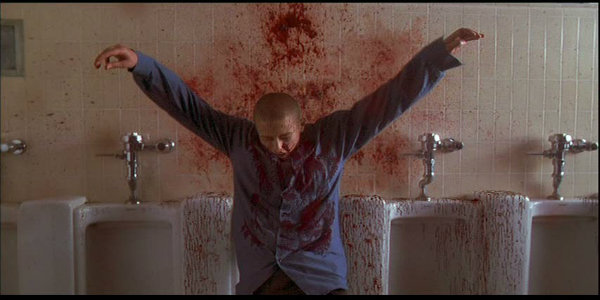
This movie isn't just sad, it's cruel. You're watching the entire film, entranced by the transformation of Derek Vinyard (played to perfection by Edward Norton, who has never been better than he is here) from intelligent teenager to violent skinhead to a reformed man haunted by the mistakes he's made. Towards the end, the audience is probably feeling a much needed sense of catharsis. And why not? We've heard all of Derek's story, how he turned his life around and unlearned all of the neo-Nazi propaganda that he had been taught, and we're feeling pretty good about his little brother Danny's chances of avoiding the same mistakes. Together, they take down all the Nazi paraphernalia in the room, and eventually they're left with an empty wall - a blank slate. But the next morning, Danny heads to school...and is gunned down in the bathroom by an African-American student he had crossed paths with the day before. While Derek is cradling his brother's lifeless body, we're struck with the realisation that he's going to have to make another difficult decision: whether or not to choose hate. It feels like a sucker punch, an unfair twist. Because that's exactly what it is. A young life cut brutally and pointlessly short.

14. John Merrick Is Shown Kindness - The Elephant Man
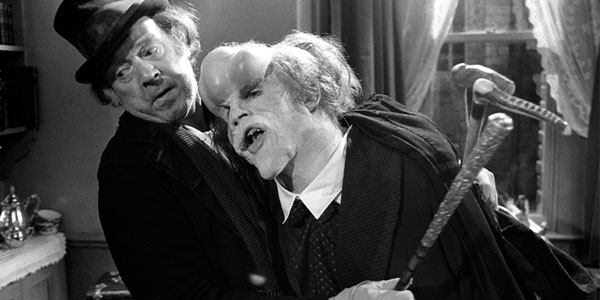
John Merrick, a man with extreme physical deformities but a fully functioning mind, has been treated cruelly his entire life. Forced into the sideshow circuit, beaten and abused until he was nearly dead, Merrick is only treated like a human when he is befriended by a curious doctor. Away from the circus and safely in a hospital, he may be seen as a novelty, but that's far better than the life he had been living before. When he's finally shown a little bit of kindness, he almost doesn't know what to do with himself. So the moment that the doctor gives him a modest gift, a mere shaving kit, he is overcome with gratitude. He begins crying and repeating, "My friends", and we are struck with the realization that this simple act is the kindest thing anyone has ever done for him. And the fact that in spite of everything he's been through, he's still such a gentle, sensitive person, makes it all the more emotional.

13. Thomas J's Funeral - My Girl

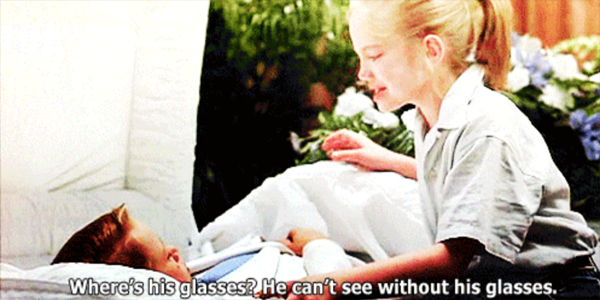
My Girl is a sweet little film about a girl named Vada who lives with her widowed father in a funeral home, and it's refreshingly frank in it's approach to the traditional coming-of-age story. For the most part, the film has a sort of melancholy, bittersweet tony, but it never feels like it's going to veer into really depressing territory. But just like in real life, death occurs unexpectedly. Vada's best friend Thomas J. goes into the woods to find her mood ring, and is fatally attacked by a swarm of bees. Despite the fact that Vada is literally surrounded by death throughout the entire film, the finality of it doesn't really register until his funeral. She comes running into the room, hysterically demanded that they put his glasses on, because he can't see without his glasses. It's a heartbreaking reminder of our first experience with the death of a loved one, and all the pain and confusion that went along with it.

12. Henry's Call Home - The Impossible
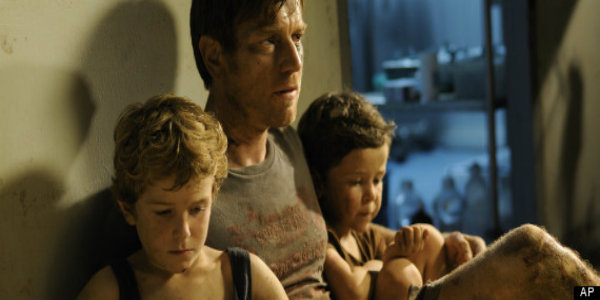
The Boxing Day Tsunami claimed hundreds of thousands of lives, so it almost feels myopic that this film focuses on the plight of just one family. Still, it's a necessary evil of filmmaking, and through this one family we experience all the pain and confusion that many of the others must have felt. There are a number of truly painful scenes in the film - any time you hear terrified children screaming for their mothers it's bound to tug on the heartstrings at least a little bit. But interestingly enough, the most emotionally effective scene comes from Ewan McGregor's character as he's in a survivor's camp, borrowing someone's mobile phone to make a phone call back to England. But how do you make that call, and tell your loved ones the enormity of what has happened to you - that your wife and children are missing? He starts to speak to his father, but quickly breaks down into heartwrenching sobs. After he hangs up, having given his family no information because of his anguish, the others insist that he call back, even though the battery is dying and other people have calls to make as well. It's a touching display of camaraderie, as well as a devastating performance by McGregor, a truly underrated dramatic actor.

11. The Opening Montage - Up

You might think that a kid's film wouldn't be able to pull off a dramatic sequence that deals realistically with complex emotional issues. But for our money, the opening montage from Up is as heavy and achingly sad as anything we've seen in films more geared towards adults, tracking the trajectory of Carl and Ellie's relationship from childhood to old age. We see them deal with issues that are all too real for most adults - dreams of a vacation paradise get shunted to the side when the car needs to be repaired, plans for having a family are cruelly destroyed by infertility, and finally, Ellie dies, leaving Carl all alone in the world. It's rare that a film attempts to tackle all of those issues, let alone in the first five minutes. It's an honest look at just how sad and beautiful life really is, and for that reason it leaves most audiences a quivering mass of emotions in right from the get-go.

10. Brooks' Final Shootout - The Shootist

To really grasp the emotional significance of The Shootist, you really need a little bit of background information. Several years earlier, John Wayne did a film called The Conquerer, which filmed about a hundred miles from a nuclear bomb testing site in Nevada. Although they claimed that the exposure would not cause any adverse health conditions, by 1981, 91 of the 220 cast and crew members had developed cancer, including John Wayne. Just as The Shootist is about a legend's last hurrah, it also happens to serve as a real life acting legend's swan song. So his final performance, in a film about a gunslinger dying of cancer, had an added poignancy with the knowledge that he would eventually die of the disease as well. Contrary to popular belief, John Wayne didn't have cancer at the time of filming, but it's still an emotionally resonant performance. It's hard not to feel a twinge of sadness for the movie giant, who goes into his last, suicidal shootout with characteristic grit and resolve.

9. The Steerage Passengers Prepare for Death - Titanic
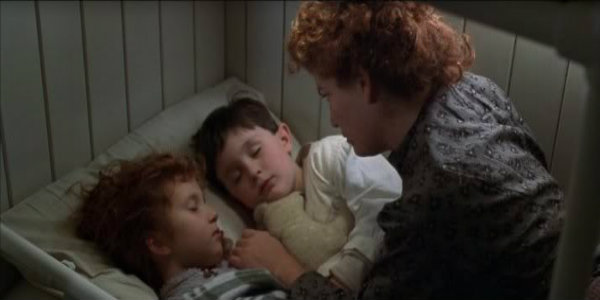
At the risk of sounding insensitive, screw Jack and Rose. Sure, it's sad that he freezes to death and she loses the man that she loves, but it's not heartbreaking. After all, what we've seen on screen amounts to little more than a vacation fling, and we all know how those usually turn out, right? But where Titanic really tugs at the heartstrings is when the film acknowledges the enormity of the tragedy. Not just one couple's experience on the Titanic, but a ship full of fathers and mothers and sons and daughters doomed to die. The montage of passengers resigned to their fate is devastating, from the pair of elderly lovers huddled together on their bed as the waters rise, to the mother in steerage soothingly telling her children traditional Irish fairy stories. These brief moments capture the real loss of the Titanic far better than any shipboard romance ever could.

8. Old Yeller's Death - Old Yeller

Old Yeller is really sort of the gold standard of destroying the innocence of children everywhere. It's funny, most of us can watch humans getting mercilessly hacked to bits without blinking an eye, but as soon as you start to bring animals into the occasion, that's crossing the line in a major way. We have far more empathy for anonymous cats and dogs than we do for anonymous humans (at least in the movies). On some level, maybe it's because we know that the humans are probably jerks anyway, whereas animals by their very nature are innocent. So when you watch a movie like Old Yeller, which features perhaps the most famous incident of a beloved dog having to be put to sleep, it's like someone rips your heart out of your chest, stops on it, and lights it on fire. Everyone who has ever had a pet can empathize with the tremendously difficult decision to euthanize them, as young Travis is forced to shoot his faithful Mastador dog who was infected with rabies while defending the family from a wolf attack.

7. Andrew Is Told He Won His Case - Philadelphia
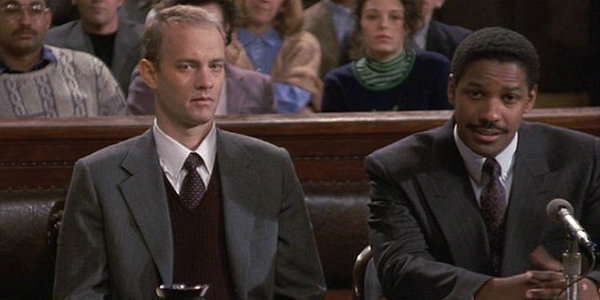
Philadelphia was a groundbreaking AIDS film of the early 90s, when the panic surrounding the outbreak of the 80s was just starting to calm down as people learned more about the disease and advocacy of patient's rights became more of an issue. Tom Hanks was awarded the first of two consecutive Oscars for his work in this film, as Andrew Beckett, a gay lawyer with AIDS who sues his firm for wrongful dismissal. It's an incredibly powerful film throughout, but one scene stands out as the most emotionally stirring. As Beckett's condition takes a turn for the worse, he is hospitalized, and becomes clear that he doesn't have a whole lot of time left. But while he's dying in the hospital, his (formerly homophobic) lawyer played by Denzel Washington arrives with a piece of good news: he has won his case. The significance of this victory cannot be overstated, and knowing that he has done something that will help all the people who come after him gives Beckett peace in his last days. It's a classic tearjerker scene that can make even the most cynical among us feel something.

6. Barkley And Lucy Are Separated - Make Way For Tomorrow
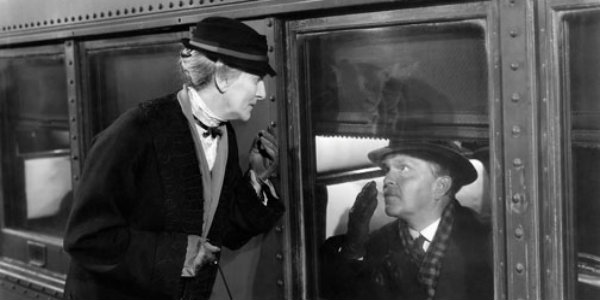
This film is depressing in an everyday sort of way (as opposed to films that address huge social tragedies, like the Titanic sinking or the Holocaust), because it addresses a topic that all of us dread and try to block out of our minds. What will happen to us when we're old, and can no longer support ourselves? Will we be taken care of by our loved ones, or will we be sent off to a nursing home? Barkley and Lucy Cooper are an elderly couple who lose their home because Barkley can't find a job due to his advanced age. None of their five children are willing or able to take them in, so with some great reluctance, they are forced to separate, with Lucy going to a nursing home and Barkley continuing on with a futile effort to find a job. In their last scene together, they're making their best efforts to pretend that it isn't their final scene. Barkley acts as though he is confident that he will soon find a job and send for her, and Lucy pretends that she believes him. But you can see the look in both of their eyes as they say goodbye, and it's clear that they know this will likely be the last time they ever see one another. It's a perfect example of the quiet tragedy of ordinary life.

5. Sophie Chooses Between Her Children - Sophie's Choice
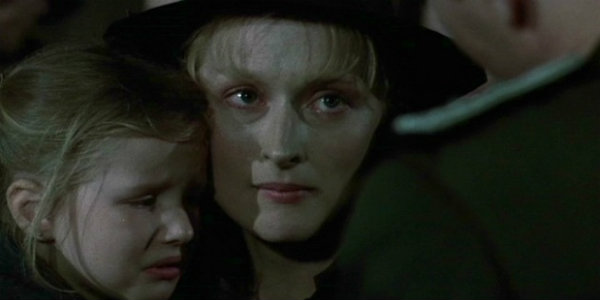
You know how when you were a kid, you would always try to get your mother to admit that she had a favorite, and she would insist that she loved all her children equally? As it turns out, that's actually true most of the time. Parents might get along with one kid better than another, but they usually love their kids equally. Sophie's Choice takes the universal theme of parental love, and follows it to its logical yet devastating conclusion. Sophie is a Polish woman with two children, and the three of them are sent to the Auschwitz death camp. But when Sophie gets there, she is faced with a harrowing decision: which child does she keep with her, and which does she essentially condemn to death? In order to save one, she has to sacrifice the other, and then live with that choice every day for the rest of her life. It's every parent's worst nightmare, played with remarkable honesty by Meryl Streep.

4. Bambi's Mother Dies - Bambi

Realistically, Bambi should probably be called The Death of Childhood Innocence. The emotional scars from watching this seemingly harmless Disney film run deep and painful. Bambi has an idyllic life as a young deer, playing with his forest friends and being doted upon by his loving mother. That is, of course, until hunters (aka the most horrible heartless people on Earth dear God how can you kill a doe and leave a young deer orphaned) ruin everything by fatally shooting his mother. The image of young Bambi curled up next to his dead mother is incredibly painful, and can make the most hardened moviegoer shed a tear. The reason Bambi hits us so hard is because the emotions evoked are something everyone can relate to. Almost everyone has a mother (or some close parental figure) and the idea of them being taken away from us, especially when we're young, is one of the most pervasive fears our society has.

3. The Kid Is Taken Away - The Kid

There are some people who subscribe to the notion that silent films are horribly outdated, and the emotions that they express ultimately end up feeling false. While that might be true for some films, The Kid is a notable exception. It's Charlie Chaplin at his most vulnerable, and his emotionally honest performance feels as relevant today as it did 90 years ago. He stars in his trademark role of the Little Tramp, who takes in a young orphaned boy played by Jackie Coogan. The pair bond, and it's heartbreaking to watch the little boy torn away from his surrogate father. Chaplin's face is remarkably expressive, and the helpless, tortured look he gives the boy while being held back by a pair of policemen sticks with you. In a way, both his performance and that of Jackie Coogan serve as a blueprint for modern screen acting, and proof that emotions don't require words to affect the audience.

2. Billy Bibbit's Suicide - One Flew Over The Cuckoo's Nest

Movies that expose the horrible practices of American psychiatric institutions are rarely what you might call cheery. But there are a lot of soul-sucking, depressing moments in One Flew Over the Cuckoo's Nest -- you might not cry, but you'll probably feel more than a little dead inside after watching the film. Billy Bibbit is the emotional heart of the film, and it's his downfall that touches us the most. MacMurphy convinces him to lose his virginity with one of his lady friends, and the next morning, he's like a different person. The tightly wound ball of anxiety inside him was, at least temporarily, loosened, and the little guy is so adorably proud of himself. But then Nurse Ratched cruelly brings up his mother, whose disapproval has always terrified Billy, and you can see his entire world come tumbling down around him. He desperately begs her not to tell his mother, but when he gets no such guarantee, he goes into the other room and slashes his wrists. The loss of such a sensitive, gentle soul who had so much potential is nothing short of tragic.

1. Brooks Hangs Himself - The Shawshank Redemption
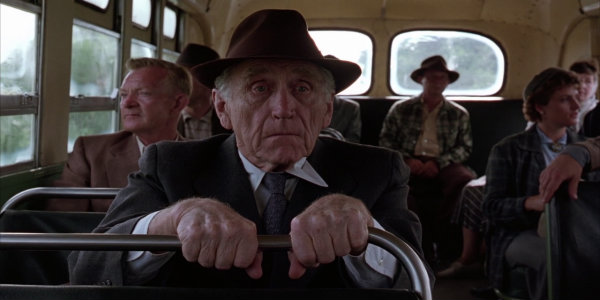
The struggle to readjust to the outside world after being incarcerated for a number of years is a common theme in films that deal with the prison system. But it's rarely shown in such a poignant and ultimately tragic light as it is in The Shawshank Redemption. Brooks was a sweet old man, long rehabilitated for whatever crime he committed as a youth, and perfectly willing to spend the rest of his days behind bars tending to his beloved pet bird. But he is granted parole, and has no clue what to do with himself. He has never lived in this world, with cars and television and so much movement, and it's been decades since he's had the freedom to do as he pleased. Brooks is overwhelmed by it, and even tries to commit another crime so that they'll send him back to jail, the only home he's known for nearly fifty years. Eventually, the aching loneliness and a sense of being out of place was too much from Brooks, and he hanged himself in his tiny apartment after carving "Brooks was here" into a beam of wood.

In this post: 
Up
 
Posted On: 
Contributor
Contributor

Audrey Fox is an ex-film student, which means that she prefers to spend her days in the dark, watching movies and pondering the director's use of diegetic sound. She currently works as an entertainment writer, joyfully rambling about all things film and television related. Add her on Twitter at @audonamission and check out her film blog at 1001moviesandbeyond.com.