20 Things You Didn't Know About The Lord Of The Rings

The most interesting tidbits on Tolkien's masterpiece, from Middle-earth to Sean Connery and beyond.

The Lord of the Rings books and films have defined and redefined fantasy over the years. They have had perhaps the greatest singular impact on the genre of any book or film series before or since, spawning a renewed interest and an unprecedented perspective on elves, dragons, magic, and all those other hallmarks of our favourite fantastical worlds. Perhaps what sets Middle-earth so above and beyond many others for Rings fans is the truly remarkable world-building done by J.R.R. Tolkien, creating and expanding upon a world so rich and immersive, with a history so detailed and elaborate that it can feel more real than fictional. What with all the volumes, languages, appendices and collections that flesh out The Lord of the Rings, it€™s not hard to imagine there being a plethora of obscure facts and trivia that is hidden to even those who can recite the history of Middle-earth from Iluvatar and the Ainur straight down to Frodo and his pals and beyond. Despite Tolkien€™s creations being the subject of both immense reverence and scrutiny over the course of decades with no sign of a shortage of steam, there are still some things that both the laymen and the Tolkien purists €“ okay, maybe not so much the latter €“ have yet to discover of the vast and wondrous land of Middle-earth.

20. It Takes Frodo 17 Years To Start His Journey

For those who are fans of the films, there appear to be only a few weeks, if that, in between the ring falling into Frodo€™s hands and the beginning of his epic journey to Mount Doom at the beginning of Fellowship of the Ring. However, in the version of the novel, things don€™t move quite so quickly, and by the time Frodo sets out with the ring, a whopping 17 years have passed in between Bilbo€™s eleventy-first party and the start of the adventure. What happens in those two decades? Not much, other than the average Hobbit-ing, by anyone€™s guess: Gandalf periodically visits Bag End until the fateful spring night when he arrives armed with information about the ring. Even so, Frodo waits until September to actually leave €“ so clearly, the whole Dark-Lord-taking-over-Middle-earth is not quite as pressing as the films might make it seem. The books, like their central hobbits, prefer to take things a little slower.

19. Nobody Knows Legolas€™ Hair Colour

One of Legolas€™ defining features, other than his filmic penchant to state the obvious, is his Elvish beauty €“ thanks, Orlando! €“ which includes those luscious white-blond locks for which he is instantly recognizable. The only thing is, that€™s not exactly specified anywhere in the novel. Yeah, Thranduil his father has beautiful golden hair as specified in the legendarium and as faithfully portrayed €“ for once €“ in the Hobbit films, but Legolas €“ among the main nine characters of the entire LOTR arsenal €“ is strangely unmentioned in this regard, which has given rise to a great debate among fans. Sindarin Elves are described in various volumes and appendices across the legendarium as having generally dark hair. This is further corroborated in relation to Legolas by this divisive description in The Fellowship of the Ring:
Frodo looked up at the Elf standing tall above him, as he gazed into the night, seeking a mark to shoot at. His head was dark, crowned with sharp white stars that glittered in the black pools of the sky behind.
In nearly 1,200 pages, however, not once is everyone€™s favourite Elf described with any certainty, which leaves us to draw this conclusion: through some recessive genetic mishap, Legolas is actually ginger.

18. The Mountains On Saturn€™s Moon Are Named After Tolkien€™s Work

Titan is Saturn€™s largest moon, and is very planet-like in its features: it has a seasonal climate that creates surface features similar to Earth€™s, including rivers, lakes, and, of course, mountains. Maybe because it€™s so Earth-like that astronomers can fulfill our fancy of a fantastical world by naming many of Titan€™s features after mythological and fantasy beings, such as craters after deities of wisdom and labyrinthi after planets from Dune. Most notably, its mountain ranges are named after mountains in Middle-earth, following a convention by the IAU Working Group for Planetary System Nomenclature. Notable ones include the Erebor Mons, the Misty Montes, the Mithrim Montes, the Mindolluin Montes and, of course, the Doom Mons €“ appropriately suspected to be the highest peak on the vast moon.

17. Sean Connery Refused The Role Of Gandalf
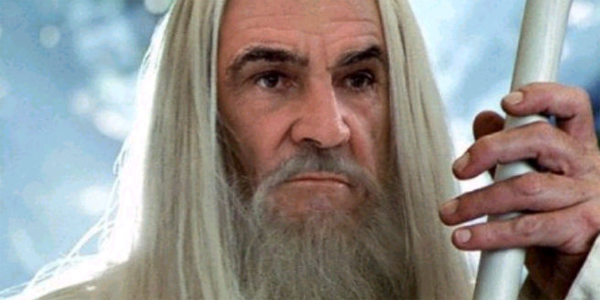
There is no doubt in anyone€™s mind that Sir Ian McKellen was born to play the genial but powerful wizard Gandalf in the Lord of the Rings and Hobbit films €“ but, bizarre as it seems now, he wasn€™t the first choice. No, the role of Gandalf was first offered to former James Bond Sean Connery, who turned it down after an initial offer of $30 million. Then, he was offered 15% of the films total profits, but he still turned it down. Even though there was no promise that these films would become as successful as they have back before 2001, this turned out to be a monumentally unfortunate choice, as that means that the trilogy would have earned Connery about 450 million dollars €“ more than any actor has ever been paid for one role. One might be wondering why on Earth Connery would refuse the brilliant role of the eccentric wizard: simply put, Connery has said that he didn€™t understand the part or the plot of the script. Even after reading the book, the script, and then watching the films. Fair enough?

16. Balrogs And Wizards Belong To The Same €œRace€

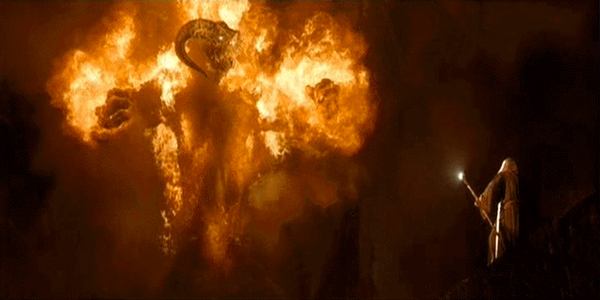
If one analogizes The Silmarillion to common mythology, the Maiar would be akin to the €œangels€ of Middle-earth, lesser in power only than the similar Valar. The Maiar are of divine origin, and so they are shape-shifters and can wander unseen at will. Back before the Lord of the Rings narrative, Melkor €“ the evil Vala €“ corrupted some of these Maiar, one of whom was Sauron, and others who became the Balrogs of Morgoth, otherwise known as €œfreaky fire demon shadow things of doom.€ Now, once the pupil became the master and Sauron€™s evil began to spread, the Valar sent several Maiar in the guise of eccentric old men to help contest Sauron: these were called the Istari, or wizards, which included Gandalf, Saruman, Radagast and two Blue Wizards. So, when Gandalf fought the Balrog in Fellowship, he was technically fighting one of his own brethren €“ sounds like a typical family reunion to us.

15. The Lord Of The Rings Is Not An Allegory
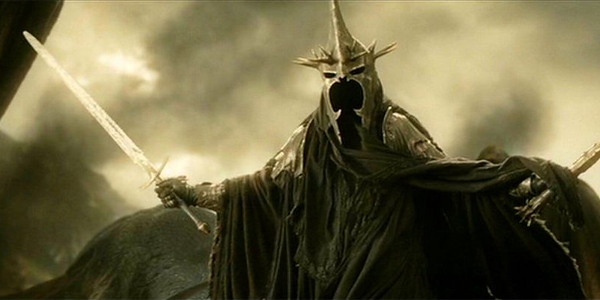
Over the years, The Lord of the Rings has been studied, analyzed and scrutinized by many, from scholars to avid fans. The concept of a power too great for humanity to possess is one that has attracted a great deal of thought, and the One Ring has been seen as a metaphor for, as one example, nuclear weapons. However, Tolkien himself has said adamantly that The Lord of the Rings is not at all allegorical, including in reference to political events such as the Cold War. The professor€™s exact quotation on allegory is the following: €œI cordially dislike allegory in all its manifestations, and always have done so since I grew old and wary enough to detect its presence. I much prefer history €“ true or feigned€“ with its varied applicability to the thought and experience of readers.€ So, Tolkien concedes that the novel can be applicable to historical events, but the decision to interpret it as such resides with the reader and not in his authorial intent.

14. Aragorn And Arwen Are Cousins (Kind Of)
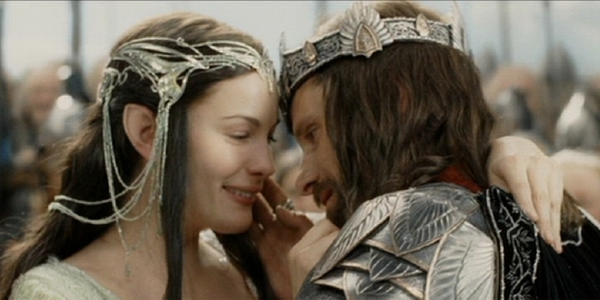
Middle-earth€™s sweetest love story takes on an unfortunately incestuous spin when one takes into consideration Aragorn and Arwen€™s genealogy €“ thankfully, due to the life expectancies of Aragorn€™s line versus Arwen€™s, they are very, very, very, very, very, very, distantly related (sixty-three times removed!), so it€™s all good. As everyone knows, Aragorn is the rightful king of Gondor, but what€™s less common knowledge is that Elros, the first High King of Numenor and Aragorn€™s sixty-first great-grandfather, was Elrond€™s twin brother. Arwen being Elrond€™s daughter, it€™s little wonder that Elrond was a bit opposed to her union with his long-lost nephew, albeit one with 6500 years of family catch-up to do. In all seriousness, this is an interesting way to gain perspective on the sheer difference between Elves and Men: whereas 65 generations separate Aragorn from Earendil (Elrond€™s father), Arwen is just two away.

13. The Lord Of The Rings Isn€™t A Trilogy

Though published as such, and adapted into a trilogy of films, the actual work was intended to be a single novel, separated into six books, and is erroneously referred to as a €œtrilogy.€ According to Tolkien, the three volumes that the work was separated into shouldn€™t be considered stand-alones, a concept that would contribute to a sense of €œshapelessness€ in the work. He singled out The Two Towers particularly, saying that Book II and III have little to do with each other, contributing to the split narrative of that volume. One might be wondering why exactly it was published in three instead of one, then. The reason seems ridiculous today now that Rings is as firmly implanted in our collective unconscious, being a centerpiece in recent popular culture, but it was because the publishers thought it would lose money by being too dark to appeal to the fans of The Hobbit. Due to that and post-WWII paper shortages, the publishers broke it up so that it would not lose too much money if sales were not as high as hoped €“ needless to say, this was hardly a necessary concern.

12. Tolkien Began The Story In A Student€™s Workbook

Back in the 20s or 30s, Tolkien had already begun working on his legendarium, but his main focus was still as a professor at Oxford, and, one day while marking School Certificate papers (college entry exams) as a sort of €œsummer job€ to earn extra money between terms, Tolkien came upon one with a blank page in it. Tolkien was finding the marking to be a work of €œeverlasting weariness,€ so coming upon a blank leaf must have delighted the professor - so much so that, on the page, he wrote a sentence that, at that point, even he barely understood, one that is now imprinted in our hearts: €œIn a hole in the ground, there lived a hobbit.€ The word €œhobbit,€ which he hadn€™t used before, intrigued the professor into exploring the story and concept in his mind. From an underachieving student, then, came forth the seed that eventually became The Lord of the Rings.

11. The Return Of The King Has The Highest Movie Body Count

The film adaptation of The Return of the King has broken a great many records: it remains to this day a movie tied for most Oscars won by a single movie (eleven) and the first and only fantasy film to ever win Best Picture and Best Director, just to name a few. What many don€™t know, however, is that The Return of the King also boasts the highest on-screen body count ever depicted in a film. With all of the epic battles we all adore, with Orcs and men being slain left and right, the death toll amounts to exactly 836 €“ depending on whether or not Legolas€™ Mumâk only counts as one. Fun fact: that€™s about 3 deaths per minute of the extended edition.

10. Lord Of The Rings By Stanley Kubrick €“ Featuring The Beatles?

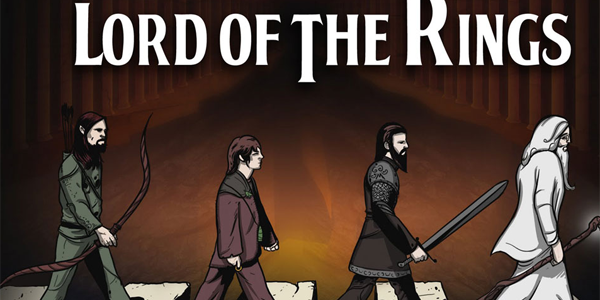
No matter how you feel about his adaptations, it speaks to Peter Jackson€™s passion and dedication to the occasionally overwhelming source material to create the trilogy of films €“ especially considering even the great Stanley Kubrick dubbed The Lord of the Rings as immense and €œunfilmable.€ The reason Kubrick made this call was because of The Beatles, who, at the time, approached Kubrick to adapt The Lord of the Rings, starring them. John Lennon, apparently, was the one who was pushing the project back in the €˜60s, and he wanted to play €“ strangely enough €“ Gollum. The rest of the cast would be rounded out by Paul as Frodo, Ringo as Sam, and George as Gandalf. While Tolkien was interested in a film adaptation, as he was concerned about royalties (which, it turns out, he needn€™t have been), he essentially killed the project because he wasn€™t keen on the Beatles to star in it. Today, picturing a Gollum played by John Lennon is utterly bizarre, but we shouldn€™t be so quick to thank the professor for his good judgment: Stanley Kubrick, the Fab Four, and Tolkien €“ it would€™ve made one hell of a movie, for better or for worse.

9. Sauron Didn€™t Forge The Three Elven Rings Of Power

Lord Of The Rings Return King Gif Technically speaking, Sauron didn€™t exactly forge any of the Rings of Power except for the One in the fires of Mount Doom. Sometime in the Second Age, Sauron approached the Elven smiths of Eregion, headed by Celebrimbor, and taught them how to forge magic rings. The Elves attempted with many lesser rings, but eventually, Celebrimbor and the smiths forged the Seven given to Dwarf-lords and the Nine for mortal men with the help of Sauron. Now, the Three of the Elves are a different story: called Narya (Ring of Fire), Nenya (Ring of Water), and Vilya (Ring of Air), the rings were hidden from Sauron and were forged in secret by Celebrimbor, untouched by the Dark Lord. This is why the Three don€™t fall under the sway of the One, nor are their bearers €“ who have included Gil-galad, Elrond, Galadriel, and Gandalf €“ corrupted by Sauron. Thus, after Sauron lost the One, the Three were used for the preservation of the realms of the Elves: Lothlorien, Rivendell and Lindon.

8. The Ents€™ Destruction of Isengard Was Based Off Of Shakespeare
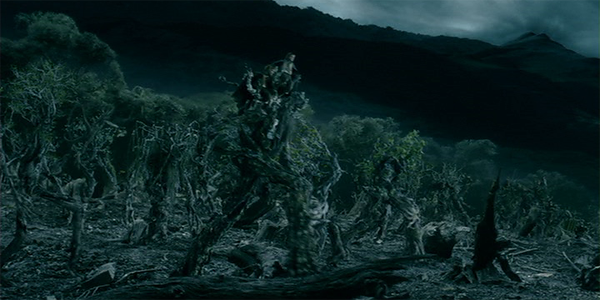
Well, more or less. Those of us familiar with Shakespeare€™s Macbeth know of the famous prophecy of Macbeth€™s death, which includes the following lines:
Macbeth shall never vanquish'd be until Great Birnam wood to high Dunsinane hill Shall come against him.
In Macbeth, what essentially happens is an army of men, not trees, disguises itself with branches to appear as though the Birnam wood is moving to Dunsinane (spoiler alert: Macbeth does indeed get vanquish€™d). Now, Tolkien, upon reading Macbeth, found himself €œbitterly disappointed€ with this development, hoping that he would get to see an actual army of trees march down to Dunsinane hill. He thought it was a waste of such a premise, and he longed to do the admittedly awesome idea of a tree army justice. It speaks to both the professor€™s temperament and dedication that he did eventually create a setting and an entire race in order to see trees actually march down to war, as we all saw €“ and cheered for €“ when the Ents and Huorns laid siege to Isengard. So Tolkien finally did the scene properly in his eyes €“ because, really, what did old Will know anyway?

7. €œGandalf€ Was Taken From Old Norse Poetry

Middle-earth is rife with beings that are rather peculiarly named by our standards here on regular Earth, so it isn€™t a huge surprise that Professor Tolkien didn€™t just pull out appropriate-sounding words from thin air to give life to the people of his world. It€™s fairly well-known that Tolkien was heavily influenced by Nordic and related mythologies, where many of the races and characters have their origins. Accordingly, in a section of the Poetic Edda, a collection of Old Norse poetry, called Dvergatal (meaning €œCatalogue of Dwarves€) is the source of most of Tolkien€™s dwarves' names, as well as the beloved wizard. In Norse mythology, Gandalf is a Dvergr, or dwarf, who is a protective, magical spirit. Tolkien has also mentioned Gandalf€™s relation to the Norse god Odin, the €œWanderer,€ an old man with a white beard and staff who spreads knowledge and truth. Other characters named from the Dvergatal include: Durin, Thorin, Thrain, Thror, as well as nine of Thorin€™s Company.

6. Sauron Started Off As A Cat

Well, in a manner of speaking. In Tolkien€™s earliest writings, Morgoth€™s chief servant €“ a position now filled by Sauron €“ was a massive, ferocious and powerful cat called Tevildo, Lord of the Cats. In an early version of the story of Beren and Luthien, Tevildo played the role that was later given to Sauron, while Tevildo was erased from Middle-earth history. A little later than that, but still quite early on in the development of the legendarium, Tevildo was transformed into Thû, the Necromancer and €œLord of Wolves.€ After a few more name changes, but while maintaining the same general role and idea, his name was eventually decided to be Sauron, and thus the Dark Lord was born.

5. The War Of The Ring Isn€™t Fantasy, It€™s History

According to Tolkien, Arda, called Middle-earth in the series, is not a fantasy land: related linguistically to Germanic words for €œearth,€ Arda is supposed to be our Earth, and the legendarium documents a period of prehistory rather than fantastical events in another world. Tolkien€™s works span three periods, and of the final one of these, The Years of the Sun, he details four €œages.€ The Lord of the Rings takes place in the 3,021-year-long Third Age, which ends just as The Return of the King does. Based on this timeline of Arda, according to Tolkien, €œmodern€ times €“the 20th century €“ correspond to about the Sixth and Seventh Ages of The Years of the Sun. The timeline grows unclear around the Fourth Age, so there is no exact certainty as far as dates, although some agree that the end of the Sixth Age corresponds with the end of World War II. All of this, really, brings us to two general consensuses: we were all frustratingly born four ages too late, and why on (Middle-)Earth don€™t they teach this kind of history in schools?

4. Aragorn Started Off As A Hobbit With Orthopedic Problems

As befitting one of the most important characters in the work, Aragorn went through a variety of changes before he became the rugged Ranger-turned-King we know and love. Starting off life as a Hobbit, then an Elf, then finally a Man, his importance to the story as Isildur€™s heir wasn€™t realized until much later on. In the beginning, his pseudonym was not Strider as we know it, but rather €œTrotter,€ which was acceptable for he was then: a peculiar hobbit with wooden shoes, which were later revealed to be concealing some kind of unnamed torture done to him by the Dark Lord while searching for Gollum €“ Tolkien also mentions in a margin note that it would be revealed that Trotter had wooden feet. This, we can be grateful, wasn€™t expanded upon further than that. Interestingly, the first possible identity for €œTrotter€ was that of Peregrin Boffin (not to be confused with the Took of the same name), Bilbo€™s long-lost nephew. But after he became Aragorn €“ named and fleshed out with many more revisions €“ his nickname was inexplicably, but fittingly, revised to be Strider.

3. The Languages Came Before The Story

It isn€™t exactly a cognitive leap to think that Tolkien, a professional philologist, used his skills after deciding to write a fantasy novel to flesh out the world by attributing unique and complex languages to some of Middle-earth€™s races. That, as it turns out, is not the order in which it happened. Rather, Tolkien, a huge lover of languages and language-making, wrote the €œhistory€ of Middle-earth as a background story for the various languages he had already created, some of which include the Elvish tongues of Sindarin and Quenya €“ influenced by Welsh and Finnish €“ the Black Speech of Sauron, and the dwarves€™ Khuzdul. Tolkien himself has said, €œThe invention of languages is the foundation. The €˜stories€™ were made rather to provide a world for the languages than the reverse. To me a name comes first and the story follows.€ Since then, the study of Tolkien€™s languages, primarily Elvish dialects, have been studied by casual fans and serious scholars alike €“ some who take the rules very seriously, and some of us who would just like to know how to say €œGo kiss an Orc€ in Sindarin (it€™s €œmibo orch€; you€™re welcome).

2. J.R.R. Tolkien Invented €œDwarves€

Obviously, the mythical dwarves have been around for centuries before Tolkien was even conceived, but the actual word €œdwarves€ was, if not invented, at least vastly popularized by the professor€™s works. Prior to The Hobbit and The Lord of the Rings, and even today, the standard plural of €œdwarf€ is €œdwarfs.€ These days, €œdwarves€ is more likely to be used in a fantasy context, whereas dwarfs is used for more technical elements, such as €œwhite dwarfs€ in astronomy. In Tolkien€™s time, the only real acceptable plural was €œdwarfs,€ which Tolkien did not want to use for his dwarves. This was because he was reluctant to have his dwarves €“ a proud and powerful people €“ be associated with €œnonsense-stories€ in which they are belittled as €œmere figures of fun.€ So to retain the dwarves€™ dignity, Tolkien used €œdwarves€ to refer to them, although he conceded later that the word €œdwarrows,€ a now-obsolete plural of dwarf, would have been better. Much to his chagrin, the original editors of the works kept €œcorrecting€ his decision back to €œdwarfs,€ as well as other words like €œelvish€ to €œelfish€ and, worst of all, €œelven€ to €œelfin.€ Seems to us that the professor had a bit of a gripe with the letter F.

1. The Hobbit Had To Be Reworked To Fit €œRings€

In The Hobbit, Bilbo Baggins unknowingly acquires the One Ring through a riddle match with Gollum, who in the version we all know, is loathe to lose it, under complete sway of the ring€™s power. This, however, was not always the case. In the first edition of The Hobbit, Gollum actually bets the ring himself on the outcome of the riddle game, which makes no sense now that we know of the corrupting influence that the One Ring has; so, in the second edition, it was reworked to match The Lord of the Rings, so that Bilbo found the ring before the game. In the first edition, Gollum€™s personality is also far less aggressive and wretched compared to the next edition, after Tolkien reworked the book to better align with Rings, adding Gollum€™s obsession and fury as a symptom of the Ring€™s power. Another seemingly minor reworking is the changing of the name of a race: the High Elves used to be Gnomes in the first edition, from the Greek word for €œknowledge,€ which was changed due to the counteractive association of the term to garden gnomes. Good thinking, John.

Contributor

Canadian student. Spends probably an unhealthy amount of time enthusing over musicals, unpopular TV shows, and Harry Potter. Main life goal: to become fluent in Elvish.