20 Things You Didn't Know About Forrest Gump
11. Tom Hanks Initially Wanted To Tone Down The Southern Accent

Tom Hanks was immediately enthusiastic about Forrest Gump after reading the script, though had some concerns about how he was actually going to play the part, namely his accent.
Both the script and the source novel called for Forrest to have a thick, distinctive Southern drawl as seen in the final movie, but Hanks initially asked Zemeckis if he could scale the accent back somewhat.
However, the director convinced Hanks to play the part as written, with the actor ultimately studying the voice of his young counterpart, Michael Conner Humphreys, who spoke with a Southern accent in real life.
Accents can be a tough nut to crack, and it's especially tricky producing a Southern one without coming across like a rootin' tootin' stereotype, so to say that Hanks did a wonderful job with it is quite the understatement.
10. Jodie Foster, Nicole Kidman & Demi Moore Turned Down The Jenny Role

Robin Wright is terrific as Forrest's traumatised love interest Jenny, though before she came aboard the studio had several other actresses in mind for the part.
Jodie Foster and Demi Moore both turned down the role, and while it's easy enough to imagine Foster bringing the necessary mannered charm to the role, not so much in Moore's case.
More surprising was that Nicole Kidman was also offered the part, though she ultimately declined the producers' request for a screen test, and so the offer ultimately went nowhere. As fantastic as Kidman is, it's just not easy to imagine her in this role either.
9. Kurt Russell Has A Voice Cameo As Elvis Presley
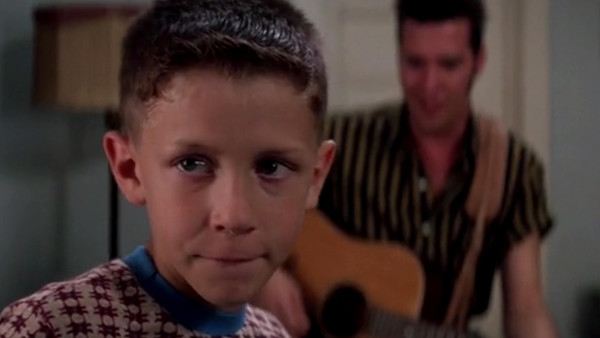
The movie is defined in many ways by the various famous faces Forrest ends up interacting with over the course of his life, and in one hilarious early moment, we learn that Elvis Presley (Peter Dobson) once stayed at young Forrest's home, and Forrest even taught Elvis his iconic jerky-knee dance move.
Though Elvis is kept out of focus for the small sequence, allowing actor Peter Dobson to more convincingly pass as the King of Rock and Roll, the voice was actually provided by none other than Kurt Russell in an uncredited cameo.
Why Kurt Russell? Well, he'd previously played Elvis in the 1979 movie Elvis, for which he received a Best Actor Emmy nomination. Though you'd probably never realise without first being told, once you're listening out for it, it's unmistakably him.
8. Tom Hanks Only Agreed To Star If The Film Was Historically Accurate

Tom Hanks loved the movie's script and was keen to sign on immediately after reading it, but had one deal-breaker condition for Robert Zemeckis, that Forrest Gump had to be historically accurate.
Accepting the obviously playful nature of the film's engagement with real-world history, Hanks wanted to ensure that the events Forrest finds himself at the center of were otherwise depicted within the realm of authenticity.
And while the film does in fact have a number of factual errors, it doesn't wilfully play fast and loose with history for the sake of our entertainment.
7. It Was The First Best Picture Oscar Winner To Also Win For Best Visual Effects
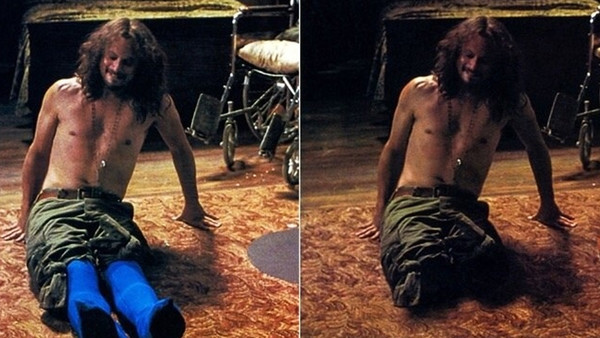
Despite Forrest Gump being the 67th Best Picture Oscar winner, it was somehow the first in the awards' history to also win the Oscar for Best Visual Effects.
This speaks to the tendency for the Academy to give the VFX award to a more commercial blockbuster film, such as Superman, The Empire Strikes Back, E.T., Aliens, or Jurassic Park, rather than more stereotypically "Oscar-worthy" dramas, which are generally less likely to incorporate extensive CGI elements.
But Forrest Gump's incredible CGI work, especially making Gary Sinise resemble an amputee and inserting Tom Hanks into archive footage, only accentuated the film's charm offensive, and so it managed to triumph over fellow nominees The Mask and True Lies.
6. Terry Gilliam & Barry Sonnenfeld Turned Down Offers To Direct It
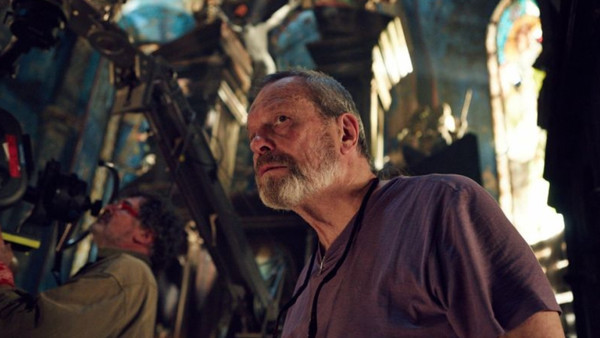
Despite being hot off a string of box office hits when he was hired to direct Forrest Gump, Robert Zemeckis wasn't in fact Paramount's first choice to helm the project.
The film was first offered to Barry Sonnenfeld, who turned it down in order to direct Addams Family Values, a choice that clearly suited Sonnenfeld's sensibilities far more comfortably.
Elsewhere, the studio wanted Terry Gilliam to direct, and he turned it down, later admitting that he didn't believe in the material, satisfied that he made the right choice and that Zemeckis was the appropriate filmmaker to do it justice.
Gilliam's uniquely eccentric voice likely wouldn't have meshed well with the whimsically earnest tone of the script, honestly, so everything clearly worked out as it was supposed to.
As for Zemeckis, he not only had a critical and commercial smash hit on his hands, but won the Best Director Oscar for his efforts.
5. "Life Is Like A Box Of Chocolates" Originated In The 1976 Film The Likely Lads

Nobody who's ever seen the movie will forget Forrest's iconic one-liner, "Life is like a box of chocolates. You never know what you're gonna get." And as fantastic a piece of dialogue as it is, it wasn't an entirely original piece of writing for the movie.
Though it was seemingly influenced by the opening one-liner from Winston Groom's novel, "Bein' an idiot is no box of chocolates," that line itself was derived from the 1976 British comedy film The Likely Lads, where a character sardonically discusses the "chocolate box of life."
4. Tom Hanks & Robin Wright Were Both Sick While Shooting Key Scenes

Though you'd never know it from watching the final movie, both Tom Hanks and Robin Wright were incredibly ill while shooting two of the film's most memorable scenes.
During the American football sequence, poor Hanks was suffering from a bout of the flu, which is the last thing anyone wants when they have to dress up in stuffy sports gear and run around a football field all day.
Wright got it worse, though: she was stricken with a deathly cold while filming the scene where Jenny sings half-naked in a nightclub.
Not only did Wright have to be scantily-clad for the shoot, but she also performed her own singing despite her illness, and the shoot reportedly ended up lasting around 24 hours. What a trooper.
3. Joe Pesci Was Considered For Lt. Dan

Gary Sinise did an incredible, Oscar-nominated job playing Lt. Dan in the movie, but he only won the part after the studio considered a far more famous face.
That's right - Joe Pesci was initially in contention to play the surly war vet, but for reasons unknown, they ultimately decided upon Sinise instead. No word on whether a formal offer was ever actually made to Pesci, though.
Pesci clearly could've knocked the role out of the park on paper, though it's also hard to argue with how perfect a fit Sinise ultimately was for the role.
2. Hollywood Accounting Ensured It Never Made A Profit...Officially
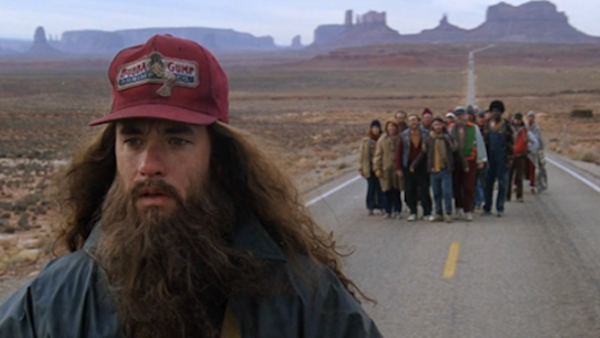
Hollywood accounting is the legally dubious means through which studios conceal their profits to avoid both paying taxes and paying out royalties payments to cast and crew members. After all, if there are no official profits, how can taxes or royalties possibly be paid?
Despite Forrest Gump making $678.2 million worldwide, Paramount used creative accounting, exaggerating the costs of production and marketing, to claim that the film never in fact made them a profit.
Though this didn't affect Tom Hanks' back-end payday, it did result in the novel's author Winston Groom being categorically ripped off.
Groom was paid a $350,000 fixed fee upfront and promised 3% of the film's net profits, yet because the film apparently didn't have any net profits (as opposed to gross profits), he didn't receive a cent.
Groom took legal action, which Paramount quickly remedied by paying out a seven-figure sum for the rights to his sequel novel Gump and Co., while promising him a percentage of the follow-up's box office.
Unfortunately for Groom, the sequel never got made, so he had to settle for the one-off rights payment instead.