20 Things You Didn't Know About High Fidelity
Happy 20th birthday to a comedy classic.
If you didn't feel old already, you're about to: the John Cusack-starring rom-com High Fidelity turns 20 years old today, an anniversary best celebrated by the recent release of the (surprisingly decent) Hulu spin-off TV series.
Directed by Stephen Frears from a script co-penned by Cusack himself, the film isn't simply a spirited adaptation of Nick Hornby's 1995 novel, but one of the most passionate and entertaining movies about music ever made.
With its droll sense of humour, delightful odd yet undeniably relatable characters, and unexpected emotional resonance, High Fidelity has enjoyed success as a cult hit even if it didn't ignite the box office upon original release.
And like any great movie, there are dozens of fascinating stories about its creation, from a certain veteran filmmaker who almost ended up making the movie, to a star-making performance that nearly didn't happen, and just how that insane Bruce Springsteen cameo came about.
As we raise a glass to 20 years of High Fidelity, here are 20 facts you probably didn't know about it...
20. Jack Black Almost Turned Down The Role Of Barry
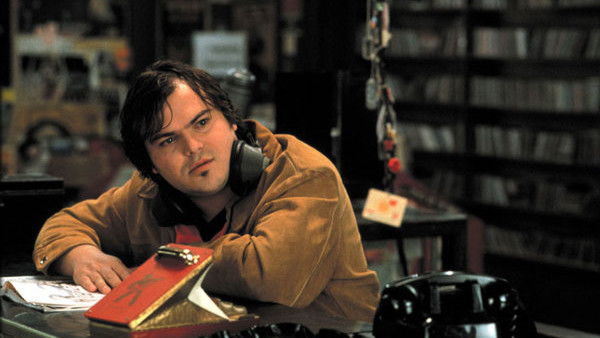
Jack Black received heaps of praise for his supporting performance in the movie as Rob's (John Cusack) lovably obnoxious employee Barry, yet as difficult as it is to imagine anyone else in the role, things almost worked out very differently.
Cusack, who co-wrote the movie's script, adapted Barry to the screen with Black in mind to play the part, but Black, who was on the verge of breaking out in Hollywood, very nearly turned it down for reasons unknown.
In the end, Black reconsidered and agreed to star, in turn delivering one of his best performances to date and one of the movie's most fondly remembered characters, damn-near stealing the spotlight away from Cusack at points.
19. The Writers Listened To 2,000 Songs While Picking The Soundtrack
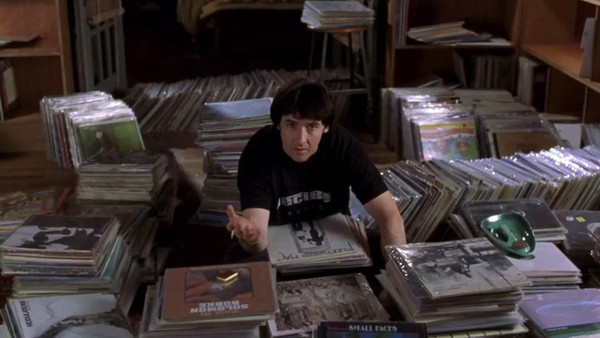
With High Fidelity's intensely musical focus, it followed that the film's soundtrack needed to help set the appropriate mood, but because Rob and his pals are "such musical snobs" - as Cusack himself suggests - Cusack and his co-writers agonised intensely over which songs to include.
Ultimately they listened to approximately 2,000 songs while seeking out the right tunes for the soundtrack, eventually settling on just shy of 70 songs to be included in the movie in one form or another.
The end result was certainly worth all that toil, given that the film's diverse soundtrack so thoroughly informs its overall identity. Still, that equates to around 100 hours spent working on the music alone.
18. Nick Hornby's Novel Was Set In London Rather Than Chicago
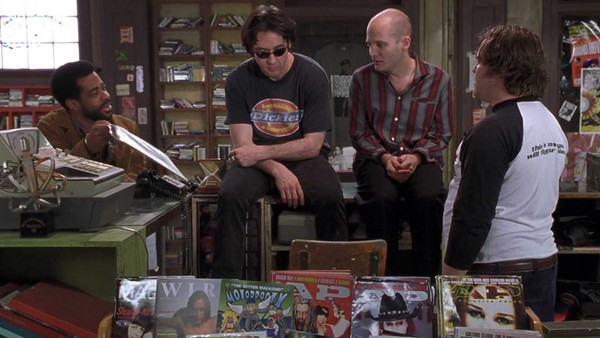
Nick Hornby's original 1995 novel of the same name was actually set in London, but the author had no qualms at all about the screenwriters ultimately deciding to shift the drama to Chicago.
The decision was largely made due to their greater familiarity with Chicago culturally-speaking. Cusack said, "When I read the book I knew where everything was in Chicago. I knew where the American Rob went to school and dropped out, where he used to spin records. I knew two or three different record shops when I was growing up that had a Rob, a Dick and a Barry in them."
The general feeling among the writers was that the change could be made without betraying the spirit of Hornby's book, and that ultimately proved to be true: High Fidelity is less about its setting but more the people and the music scene they inhabit.
17. Mike Newell Was Originally Attached To Direct

Before Stephen Frears came aboard as director, High Fidelity was originally acquired by Touchstone Pictures the very same year that Hornby's novel was released.
During its initial three years of development, Mike Newell (Four Weddings and a Funeral, Harry Potter and the Goblet of Fire) was in fact attached to direct, and it's easy to appreciate how his directorial sensibilities would've served the material well.
But for reasons unknown, Newell ultimately didn't direct the project, though it was presumably an amicable enough departure given that he still received an executive producer credit on the final film.
16. The Fourth Wall-Breaking Was Inspired By Alfie

High Fidelity's memorable narrative conceit sees protagonist Rob frequently breaking the fourth wall to talk directly to the audience, in turn detailing his feelings and basically softening the edges of an otherwise quite prickly character.
This wasn't originally part of the plan, though, with Cusack adamantly insisting that having Rob talk to the camera would result in "too much" of him, even though his co-writers were keen on the idea, citing the Michael Caine-starring 1966 classic comedy Alfie as an exceptional use of fourth wall breaks.
Ultimately Cusack was swayed when Frears came aboard as director and agreed that the meta angle would best serve the material. The rest, as they say, is history.
15. Bruce Springsteen's Cameo Was Originally Meant For Bob Dylan

Of the many fantastic moments in the movie, who could forget the legendary cameo appearance from none other than the boss himself, Bruce Springsteen?
Springsteen appears as a vision before a downtrodden Rob, jamming on his guitar while bolstering Rob's decision to call up his ex-girlfriends, but the rock icon's involvement in the film wasn't originally part of the plan.
Cusack actually wanted Bob Dylan for the part, but when he was unavailable, they decided to write it with Springsteen in mind, hoping it might raise studio interest in the script despite having no idea if The Boss would even accept the part.
But helpfully, Cusack was an acquaintance of Springsteen's, and so was able to pitch the idea directly. After reading the script, he agreed to do it, and the result was an all-timer movie cameo.
14. It Was John & Joan Cusack's 8th Movie Together

Believe it or not, but John Cusack and his sister Joan might've appeared together in more movies than any other pair of Hollywood siblings.
Joan Cusack appears in the film as Liz, the thoroughly pissed-off best friend of Rob's ex-girlfriend Laura (Iben Hjejle), and it in fact marks the eighth film they've starred in together.
The seven prior movies are Class (1983), Sixteen Candles (1984), Grandview, U.S.A. (1984), Broadcast News (1987), Say Anything... (1989), Grosse Pointe Blank (1997), and Cradle Will Rock (1999).
It doesn't stop there, though: since the release of High Fidelity, they've appeared in two more movies together - Martian Child (2007) and War, Inc. (2008).
13. Harold Ramis & Beverly D'Angelo Both Filmed Cut Cameos

The home video release of the movie includes almost 15 minutes of deleted scenes, the majority of which are well worth fans' time. The two standout scenes, however, see Hollywood legends Harold Ramis and Beverly d'Angelo making memorable cameo appearances.
Ramis shows up for a whole half-minute as Rob's father who dispenses some hilarious sex advice ("The good f**k wasn't even invented when I was your age"), while d'Angelo plays a jilted wife who wants to sell her cheating husband's record collection to him for a mere $50.
Clearly, both of these scenes should've made the cut, even if the film's 113-minute runtime was probably already making the studio a tad twitchy (for a comedy).
12. In The Hungarian Dub, Barry & Rob Discuss Reservoir Dogs Instead Of Evil Dead II

Mid-way through the movie, Rob and Barry have a memorable exchange revolving around the splatter movie classic Evil Dead II, but for the dubbed Hungarian release of the movie, this conversation was actually changed to Quentin Tarantino's heist masterpiece Reservoir Dogs, because Hungarian audiences weren't much aware of Evil Dead II.
This wasn't just a random change, though: Reservoir Dogs is actually the film name-dropped in the book version of the scene, so the dub was ultimately more faithful to Hornby's source material. We'll assume that Cusack and his co-writers are just huge Evil Dead fans, then.