20 Things You Didn't Know About Miller's Crossing
The Coen Brothers' most underrated crime drama...

Joel and Ethan Coen are some of the best and most idiosyncratic filmmakers of their generation. When discussing their films, we always remember the iconic ones, like Fargo, No Country for Old Men and The Big Lebowski, but one that remains highly underrated is their 1990 gangster drama, Miller’s Crossing.
Miller’s Crossing is the third film from the Coens, after 1984’s Blood Simple and 1987’s Raising Arizona. It includes an all-star cast, including Gabriel Byrne, Marcia Gay Harden, Albert Finney, John Turturro, Jon Polito and J.E. Freeman.
The film is an attempt to subvert and skewer a particular genre - t=his time being the gangster drama epic genre, in the style of The Godfather. And, like pretty much all of their movies, the film has gained a cult following, and a (albeit, small) legion of fans, and there will definitely be people out there who call it their favourite Coens film.
20. The Script Was Originally Conceived With The Image Of The Black Hat

One of the strangest and most arresting images from Miller's Crossing is the image that opens the film, in which a black hat in the woods drifts through the wind.
The image was in fact the first image that the Coen brothers came up with when developing the script. It was this one strange, mesmeric image that influenced them to write the whole script, and without it, Miller’s Crossing might not exist today.
19. The Coen Brothers Suffered Severe Writer’s Block While Writing It

Miller’s Crossing was, from the outset, a substantially more ambitious affair for the Coens. Due to dense, intricate plotting, and complicated tonal shifts, the script was incredibly hard for the Coens to write, and they began to suffer from severe writer’s block.
The writer’s block was so bad that they eventually decided to walk away from the script. After writing another script (in three weeks, no less), they then returned to the Miller’s Crossing screenplay and finally completed it.
18. The Writing Process Directly Inspired Their Next Film, Barton Fink

The Coens followed up Miller’s Crossing with Barton Fink, a film all about writer’s block, in which our lead character (played by John Turturro) struggles with writing a screenplay for the first time.
Sound familiar?
Well, Barton Fink was actually directly inspired by the Coens’ experience with writer’s block while writing the Miller’s Crossing screenplay.
17. The Film Was Loosely Inspired By Dashiell Hammett's The Glass Key

With the exception of a couple of titles (like No Country for Old Men, The Ladykillers and True Grit), the Coens mainly produce original content, with no adaptation in mind. However, like a lot of filmmakers, they did have a key text of inspiration, in the form of Dashiell Hammett’s classic novel, The Glass Key.
The novel centres on a bubbling potential gang war and a man that finds himself stuck in the middle of it. The latter of which then became the blueprint for Gabriel Byrne's lead character, Tom Reagan.
Another quick fact for you - Hammett's other novel, Red Harvest originated the phrase “blood simple”, which influenced the title of the Coens’ debut feature.
16. The Language Used In The Film Was Very Difficult For Them To Write

Another reason why the script was so hard to write was because of the tricky and complex language used throughout.
Miller’s Crossing incorporates a lot of phrases from the 20s period, much in a similar vein to how their future work, Fargo includes the idiosyncratic language used by the Minnesotan people.
Some classic lingo includes a “twist” (a term for a woman), a “yegg” (a criminal) and “schmatt” (yiddish word meaning poor).
15. The Coens Turned Down Batman To Work On The Film

The Coen brothers were in fact one of the filmmakers that were in consideration for helming the 1989 reboot of Batman. It was apparent that the studio was looking for a young independent filmmaker, who made quirky, original movies, of which the Coens definitely fit the bill.
However, the Coens, very passionate about Miller’s Crossing, decided to direct this instead, and the job went to another young, quirky, idiosyncratic director in Tim Burton.
14. Peter Stormare Was Originally Going To Be Cast In The Film

Peter Stormare is one of the brothers' favourite collaborators, and has appeared both in Fargo, and The Big Lebowski.
And, originally, Stormare was supposed to be featured in Miller's Crossing in a role called “The Swede”. Due to Stormare being unavailable (as he was cast in a rendition of Hamlet), the role was re-written as “The Dane”, and the role went to J.E. Freeman.
13. Trey Wilson Was Originally Wanted For The Albert Finney Role

The Coens' original choice for the role of gangster boss, Lee O'Bannon was actually Trey Wilson, who worked with the brothers in Raising Arizona.
However, just two days before principal photography began, Wilson tragically died of a brain hemorrhage. Finney was cast soon after, in a the role that would become one of his most critically acclaimed.
12. The Coens Initially Did Not Want Gabriel Bryne To Keep His Irish Accent

The Coens normally do not allow any deviations from their original vision, and in their original plan, Gabriel Byrne was not meant to use his native Irish accent throughout.
However, Byrne continued to lobby for his accent, arguing it was a good fit for the dialogue. The Coens eventually gave in, and, in the finished film, you will notice Byrne, along with Finney, use their native Irish accents.
11. The Film Includes Cinematography By Future Director, Barry Sonnenfield
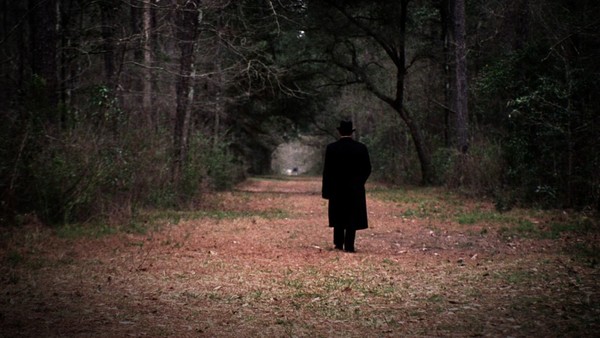
Cinematography has always been a key trademark of the Coen brothers' films, well-known for their glorious photography and the quirky, strange way the camera is used.
Before beginning to work with acclaimed cinematographers like Roger Deakins and Bruno Delbonnel, they actually worked with Barry Sonnenfield on the first 3 debut features.
Miller’s Crossing was in fact, the final film that the Coens and Sonnenfield collaborated on, as following this, Sonnenfield went on to become a very successful film director, going on to helm popular movies, like Men in Black, the Addams Family films and Get Shorty.
10. It Was The First Film That John Turturro, Steve Buscemi And Jon Polito Worked With The Coens On
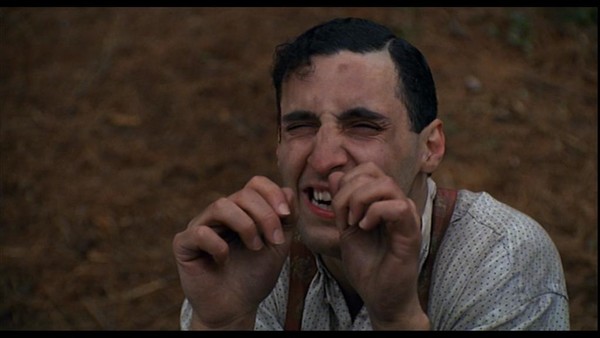
The Coens - like other famous auteurs of their generation, like Quentin Tarantino or Paul Thomas Anderson - are well-known for having a revolving door of famous faces that they always cast in their movies (including John Goodman, George Clooney and Joel’s wife, Frances McDormand).
Three of the Coens’ most prolific collaborators to star in their films include Steve Buscemi, John Turturro and Jon Polito, and Miller’s Crossing is actually the first film to star these three actors.
They went on to star in many of their films - Buscemi was featured in Fargo and The Big Lebowski; Polito in The Hudsucker Proxy and The Man Who Wasn’t There and Turturro in Barton Fink and O Brother Where Art Thou?
9. Marcia Gay Harden Had Some Stiff Competition To Get The Role
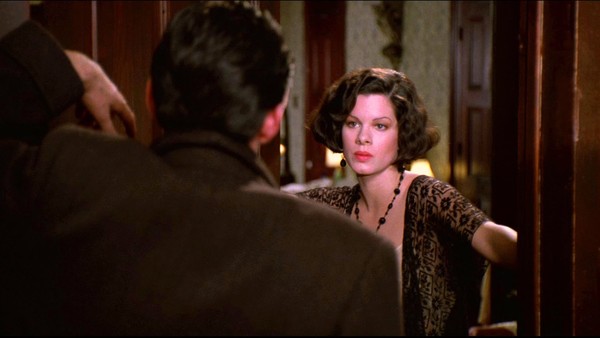
Marcia Gay Harden is a very underrated actress in the film world. She falls into the Marisa Tomei camp, in although she has actually won an Oscar (winning in 2001 for her supporting role in Pollock), she doesn’t seem to get the attention she deserves. And, in Miller’s Crossing, she delivers one of her very best performances.
However, the role was not easy to get, and in fact, she had very stiff competition. Other actresses that reportedly auditioned for the roles included Julia Roberts, Demi Moore and Jennifer Jason Leigh.
8. Jon Polito Had To Convince The Coens To Be Cast In His Role
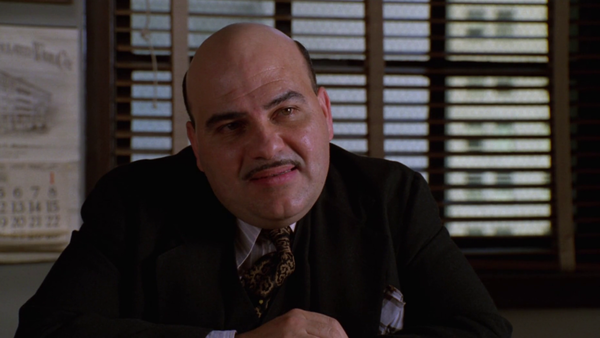
The Coens also had to be convinced about another part of the production, to cast Jon Polito (who plays Johnny Caspar) in a different role.
Polito was originally given the role of Eddie Dane, and the part of Johnny Caspar was going to be given to a much older man. However, Polito was adamant as he loved the role so much, and eventually, the Coens gave in, and he was given the role.
7. Sam Raimi Has A Cameo Role In The Film
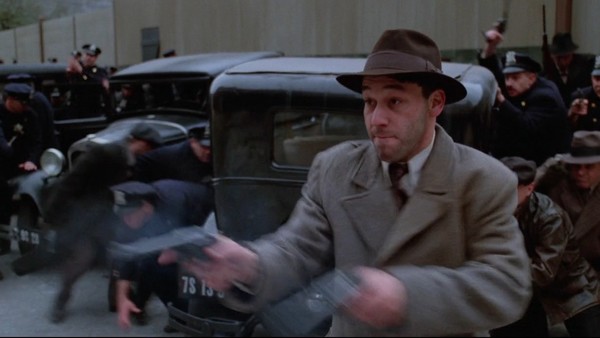
If you look really carefully, you will notice that the Evil Dead and Spider-Man director, Sam Raimi has a small cameo, playing the lead officer of a police firing squad. The Coens and Raimi were close friends - they worked together on the 1985 underrated comedy, Crimewave, in which Raimi was the director, and the Coens were co-writers.
Also, there are various other cameos that you might have missed. The secretary of the major, is played by Frances McDormand, who is Joel’s wife. Also, Finney appears again in the film, other than his actual role, in drag as an elderly female ladies’ room attendant.
6. John Turturro Based His Performance On Barry Sonnenfield
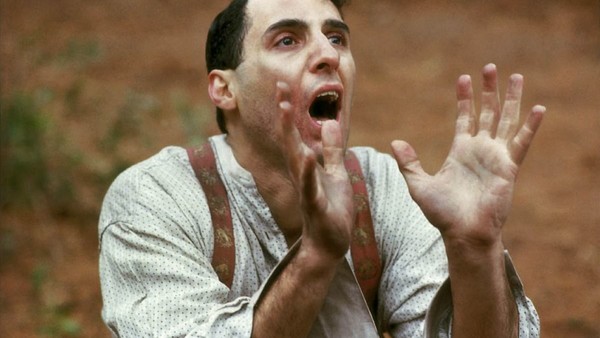
John Turturro’s performance in Miller’s Crossing is very popular and critically acclaimed, playing the nebbish and timid bookie, Bernie, who becomes embroiled in the war between the rival gangs. In fact, Turturro had actually based his performance off cinematographer, Barry Sonnenfield.
Sonnenfield details how Turturro came to him on the last day to thank him, not for his cinematography skills, but because he got inspiration for the performance watching Sonnenfield’s interactions with the Coens.
5. John Turturro Was Cast In Barton Fink Because Of His Role In This Film

Miller’s Crossing was seen as a prelude to Barton Fink in many ways, and Turturro’s performance of Bernie was so impressive that the Coens decided to cast him in their next movie.
Not only that, but if you look closely, you will see that one of the clubs is called “Barton Arms”, directly referencing their next movie.
4. It Is One Of The Few Films To Not Be Edited By Roderick Jaymes
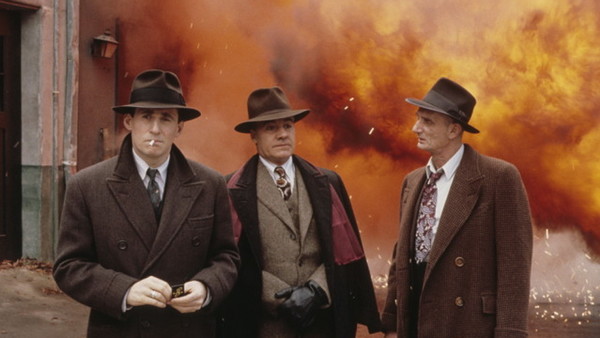
Miller’s Crossing marks the third movie not to be edited by Roderick Jaymes. Jaymes has worked with the Coens in over 14 films, which would make him the most featured Coen brothers collaborator - if he were a real person. Jaymes is in fact, the pseudonym that the Coens use when editing their movies.
The film was actually edited by Michael R. Miller, who also edited their previous movie, Raising Arizona. The only other Coens movie not to be edited by them was The Hudsucker Proxy, which was edited by Thom Noble.
3. What Does The Title Refer To?
The title of Miller's Crossing is sometimes a little confusing to fans. It most obviously refers to the place in which the mafia perform their executions. It is where the most iconic scene from the film takes place, in which our lead character, Tom, takes Turturro’s Bernie to the woods to be executed.
However, the film is also said to be a reference to editor Michael R. Miller. Being the last film that the Coens collaborated with Miller on, the title is possibly said to be a tribute they gave to Miller.
2. The Film Has Homages To Lots Of Classic Crime Films

The Coens are known as cinephiles and often, their works will include a lot of references to classic films.
An inevitable comparison for Miller’s Crossing is the 1972 classic, The Godfather. And, it feels like the opening scene is a direct reference to The Godfather, in which we see Finney’s Lee O’Bannon play the Vito Corleone-type role, where he listens to a proposition by Polito's Johnny Caspar.
Also, the ending sequence in this movie is a reference to the 1949 classic crime film, The Third Man. Both films end on a funeral, where our main character ponders what he is going to do with his life. The story was also highly influenced by The Glass Key's adaptations, Yojimbo and A Fistful of Dollars.
This just goes to show you how utterly cine-literate Miller’s Crossing is, and how much detail the Coens will put into their films.
1. It Was The Start Of Three Consecutive Commercial Failures For The Coen Brothers
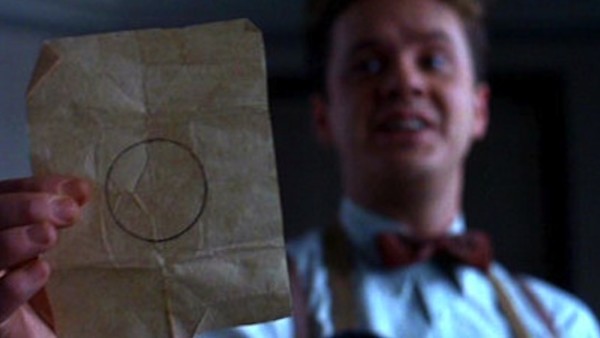
It's easy to forget that when Miller's Crossing first came out, the Coens were not the acclaimed, Oscar-winning box office draw that they are now.
Although the first two films were actually rather successful, Miller’s Crossing began a run for them where they struggled at the box office (only grossing $5 million on a budget ranging from $10-14 million). Probably down to the film’s offbeat tone and moviegoers wrongly thinking it would be an exciting and action-packed gangster movie (which the trailers sold it as), it was not something that gained good word-of-mouth, and audiences didn’t flock to see it.
The same was true of Barton Fink and their next follow-up, The Hudsucker Proxy, which were both commercial failures. It was not until their sixth movie, Fargo, where they gained both critical acclaim and box office success, as well as awards success. And, with the expectation of 2001’s The Man Who Wasn’t There, the filmmakers haven’t had a box office failure since.
It just goes to show you that even the most iconic and acclaimed filmmakers can struggle when they are first starting out.