20 Things You Didn't Know About Star Wars: Rogue One
Revisiting Gareth Edwards' sci-fi war epic.

Rogue One: A Star Wars Story was the first entry into Star Wars' still-developing anthology series - consisting of just Rogue One and Solo to date - and debuted to both critical and commercial success in December 2016.
It's somehow already been five (!) whole years since Rogue One hit screens, and while aspects of the sci-fi epic are certainly divisive with fans, it's overall an impressive achievement that actually does something different with the series' well-trod formula.
Especially mind-boggling is how well the end product turned out given the oft-noted production troubles, and also Star Wars' tendency to invoke the ire of its fans when it deviates from the norm.
Rogue One's production is extremely interesting for many reasons, full of fascinating tidbits from scrapped script ideas to near-miss casting choices, and yes, the ins and outs of those tricky reshoots.
Though it's easy to take Rogue One's existence for granted given that it's not a strictly "necessary" entry into the Star Wars canon, it's clear from these 20 mind-blowing factoids that a ton of blood, sweat, and tears went into its creation...
20. Rooney Mara, Kate Mara & Tatiana Maslany Were Considered For Jyn Erso

It's a foregone conclusion that the lead in any Star Wars movie will be massively sought out by even Hollywood A-listers, with the final casting choice made only after an extensive auditions process.
And though the part of Jyn Erso ultimately went to Felicity Jones, a number of acclaimed and beloved actresses were also under heavy consideration.
Rooney Mara ended up meeting with director Gareth Edwards for the part, though ultimately decided to withdraw herself before auditions due to her busy schedule.
Rooney's sister Kate Mara was also in the mix, reportedly being screen-tested for the part of Jyn, yet perhaps most enticingly of all, Orphan Black's Tatiana Maslany was screen-tested too.
It's especially easy to picture Maslany bringing her own uniquely fiery energy to the part, though Jones certainly did a solid job on her own merits.
19. The Story Was Pitched By VFX Legend John Knoll After Disney's Purchase Of Lucasfilm

Rogue One was greenlit under the most uncommon of circumstances, with the original pitch actually being conceptualised by none other than legendary VFX artist John Knoll.
Knoll, a 35-year industry veteran who worked extensively on the Star Wars prequels, got word that Disney were planning a series of Star Wars spin-off movies, and after hearing some less-than-inspired concepts got to work on his own.
Knoll first had the idea of a direct prequel to A New Hope a decade prior, with the story intended to become an episode of the scrapped live-action series Star Wars: Underworld.
Once Disney acquired Lucasfilm, Knoll returned to the idea, workshopping it with fellow employees of VFX house Industrial Light & Magic, before shaping it into a half-hour pitch he was encouraged to present to Lucasfilm president Kathleen Kennedy.
Kennedy loved it, greenlit the movie, and Knoll ended up with executive producer and "story by" credits while also working as the film's visual effects supervisor.
18. Numerous Titles Were Considered Before "Rogue One"

As perfect as the title Rogue One is, it was a good while before the filmmakers and producers all settled on it.
Back when it was still planned to be part of the overall Skywalker Saga rather than a delineated spin-off, Rogue One was given more traditional Star Wars-y sub-titles such as "Rise of the Empire," "Shadow of the Death Star," and "Dark Times".
They all seem to fit in with the Star Wars naming conventions yet in a totally generic and unimaginative way.
And so the crew were smart to do away with this entirely when they decided that Rogue One would be a distinct offshoot of the mainline franchise.
17. It Was The First Live-Action Star Wars Film Without An Opening Title Crawl

It's surprisingly easy to forget that Rogue One is the first live-action Star Wars film not to feature a traditional text title crawl in its opening sequence.
It is of course a hallmark of the franchise, and though 2008's animated film Star Wars: The Clone Wars also didn't feature a crawl, Rogue One was the first "major" Star Wars movie to go without.
Gareth Edwards confirmed that this decision was made before shooting started, to help differentiate the film from the seven live-action Star Wars movies that had preceded it.
Edwards also confirmed that Gary Whitta's original draft of the script did indeed have a title crawl, and though fans begged Whitta to release the title text, he was sadly unable to for legal reasons, given that Lucasfilm owns the content.
Edwards said of his decision:
"The idea is this film is supposed to be different than the saga films... There's this feeling that if we did a crawl, then it'll create another movie."
As much as the lack of a crawl left some fans disappointed, it was an elegantly simple way to distinguish Rogue One from the Saga movies.
16. Unused Footage From A New Hope Was Included In The Film

Though the film's digitally-assisted depictions of both Grand Moff Tarkin and Princess Leia proved relatively controversial with fans and commentators, few were left complaining about a sneaky feat of resurrection they probably never even noticed.
The film actually features unused footage of Red Leader Garven Dreis (Drewe Henley) and Gold Leader Jon Vander (Angus MacInnes) that was shot for A New Hope almost 40 years prior, recycled here as part of the climactic Battle of Scarif.
Edwards and his production team went on a tour of Skywalker Ranch and ended up discovering the unused material, which he was consequently able to include in the film as a neat Easter egg for fans. He said:
"We went to Skywalker Ranch, and there's the archives there. And as we're walking around, and doing all the cool things and looking at the Millennium Falcon and trying on Han Solo's jacket and things like that, in the back at the bottom was all these cans of film. And we said, 'What are they?,' and they said, 'Oh, it's Star Wars.' And you go... 'Has someone gone through all this?' And it's like, 'Not really, they're not fully like digitised at all.'"
There are happy accidents and then there's this. Wow.
15. Aaron Paul, Edgar Ramirez & Sam Claflin Were Considered For Cassian Andor
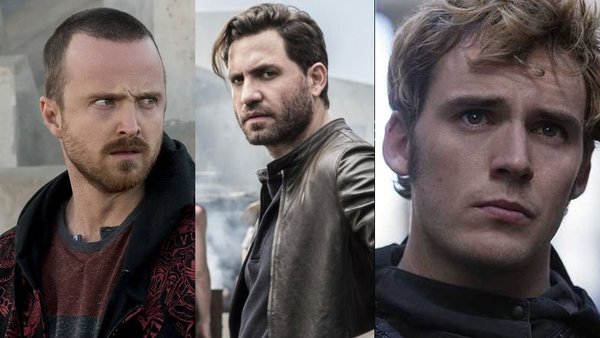
There was a major casting call to find the film's male lead, Cassian Andor, as of course eventually went to the great Diego Luna.
But prior to that, a number of high-profile and rising actors alike were in consideration, including none other than Breaking Bad star Aaron Paul.
Alongside Paul, Edgar Ramirez was also courted to possibly play Cassian, and perhaps the most left-field of the three other prospects was Brit actor Sam Claflin.
Curiously Claflin was rumoured to appear in the film around the same time that Riz Ahmed's ultimately correct casting as Bodhi Rook was first whispered about, so it's fairly likely that Claflin made it quite far in the process before it didn't work out for whatever reason.
In the end it's tough to argue with Luna's rendition of Cassian, which has turned out to be quite the lucrative role given that Luna recently wrapped shooting the Disney+ spin-off series Andor.
14. The Hilarious Origins Of The Planet Name "Scarif"

Rogue One features one of the most distinctive locales from any Star Wars movie in Scarif, the remote, tropical planet which contained an Imperial base vital for the construction of the Death Star.
While the name fits in perfectly with Star Wars' typical nomenclature, director Gareth Edwards actually came up with the planet's moniker at a Starbucks of all places. In his own words:
"I go over to get a coffee from Starbucks. I'm thinking, 'What could be the name [of the planet]? It could be this. Maybe we could use that?' Then at the very end, she gives me the drink and they must have asked my name and I must have said, 'It's Gareth,' but they heard 'Scarif.' They wrote Scarif on the cup and I was like, 'That sounds like Star Wars.' I went back in and I just give it to [writer Gary Whitta] and went, 'It's called Scarif.'"
That's quite the hilarious origin story for a planet name that's now known by tens of millions of fans and has appeared in all manner of Star Wars media.
13. Chirrut Îmwe Was Almost Played By Jet Li

Though it might be difficult to imagine anyone but the inimitable Donnie Yen playing the badass blind warrior Chirrut Îmwe, the part very nearly went to fellow martial arts legend Jet Li.
Lucasfilm only ever considered Yen and Li for the role, the two being arguably the most iconic and bankable cinematic martial artists of their time, yet Yen ultimately won out because his salary demands were considerably lower.
Though there are disputes about precisely how much Yen was paid for the part - reports suggest nobody but Felicity Jones was paid over mid-six figures - he was said to have requested considerably less than Li.
While Yen was initially hesitant to accept the part due to it taking him away from home for several months, his young son's fondness for Star Wars ultimately convinced him to play Chirrut.
And considering he was easily one of the most entertaining parts of Rogue One, it was certainly to the fans' gain.
12. The Film Underwent HEAVY Reshoots

It's not exactly a secret that Rogue One underwent considerable reshoots during post-production, though you might not be quite aware of just how pervasive the additional photography actually was.
Almost none of the footage featured in Rogue One's first teaser trailer was included in the final theatrical release, such as the memorable shot of Jyn walking onto a catwalk and being met by a TIE Fighter.
After principal photography was completed, the third act was massively reworked, with Bourne franchise writer Tony Gilroy being paid $5 million to spend 12 weeks "fixing" the finale, both with rewrites and overseeing reshoots.
Gilroy, who received a screenwriting credit, said the film was in "terrible, terrible trouble" when he came aboard.
Originally much of the finale involved the rebels running across Scarif's beach to transmit the Death Star's plans, but Gilroy was instrumental in compressing down this part of the mission, heavily re-writing it to be more efficient.
Though we'll never know for sure exactly how much of Rogue One was re-filmed, estimates run as high as 40%. Given that the reshoots ended up lasting almost two months, it's easy to believe that figure.
11. The Musical Score Was Written In Just A Month

Rogue One was only the second Star Wars film not to have its score composed by the brilliant John Williams, and the film's extensive reshoots ultimately resulted in Michael Giacchino writing the score in just a month.
Originally Alexandre Desplat was hired to score the movie, but was eventually replaced due to scheduling issues, as he was unavailable to re-work his score to accommodate the changes of the heavy reshoots.
Fresh off completing his score for Doctor Strange, Giacchino had only a month to write the music for Rogue One, likely explaining why the score borrows so liberally from Williams' own prior work.
Ultimately it's impressive that the score turned out so well considering the enormous hurry Giacchino must've been in. You'd certainly never get that impression from listening to it.
10. Galen Erso Was Inspired By J. Robert Oppenheimer, The Father Of The Atomic Bomb

One of Rogue One's most important characters is Jyn's father Galen Erso (Mads Mikkelsen), a research scientist who reluctantly aided in the creation of the Death Star, and who of course built the infamous exhaust port flaw into it as a failsafe.
Galen was in fact modeled after J. Robert Oppenheimer, the American theoretical physicist who became the father of the Atomic Bomb.
Much like Erso, Oppenheimer expressed considerable guilt over his part in helping build a weapon of mass destruction.
Given that Rogue One is heavily inspired by real-life warfare - namely the Vietnam War - it's fitting that one of its central characters would be loosely based on an instrumental historical figure.
Curiously, Christopher Nolan is imminently due to start shooting a biopic of Oppenheimer's life, set to release sometime next year.
9. The Marketing Was Delayed Because Of A Mission: Impossible Sequel

Though it's pretty much expected that any other blockbuster movie would move the hell out of Star Wars' unstoppable way, Paramount actually came to a unique pact with Disney over Rogue One's marketing.
Because both parties were concerned about audiences being confused by Rogue One and 2015's Mission: Impossible sequel Rogue Nation, the studios agreed to create a distinct distance between their marketing campaigns.
Disney agreed not to excessively promote Rogue One, beyond the release of its teaser trailer, before Rogue Nation's mid-2015 release, to ensure clean separation in the public consciousness.
With Rogue One ultimately not releasing until almost 18 months after Rogue Nation, Disney had plenty of time to get the hype machine running.
Both films were massively successful at the box office, so everybody won. All it took was a little communication and consideration.
8. The Script Was Worked On By SIX Screenwriters

Though Rogue One only has two credited screenwriters, a total of six different scribes ended up contributing to the film - and that's without even including John Knoll's initial pitch of the idea.
After Earth writer Gary Whitta took a first pass at the script and went on to receive a "story by" credit alongside Knoll, while Christopher McQuarrie, Scott Z. Burns, and Michael Arndt are all said to have provided uncredited contributions or script polishes during development.
The bulk of the final script was penned by Chris Weitz, with Tony Gilroy receiving a co-writing credit for his work on the reshoots.
That's six name screenwriters involved with the film's creative, such that it's incredibly surprising the end result turned out as cohesively as it did.
We've seen the "too many cooks" situation ruin far too many blockbuster films, but thankfully not this one.
7. It's The First Star Wars Film NOT To Include A Wilhelm Scream

The Wilhelm scream is one of the most iconic, recognisable, and infuriatingly overused sound effects in all of cinema, and prior to Rogue One had appeared in every single Star Wars movie, including The Clone Wars.
But following the release of The Force Awakens, franchise sound editor Matthew Wood decided to "move on" from the cliched, immersion-shattering scream, such that it didn't appear in Rogue One and hasn't been used in a Star Wars film since.
Wood did, however, decide to fill the void by including a new recurring sound effect called "The George," though as of yet hasn't actually confirmed what the sound effect itself is.
6. Jyn's Mother Was A Jedi In Earlier Drafts Of The Script
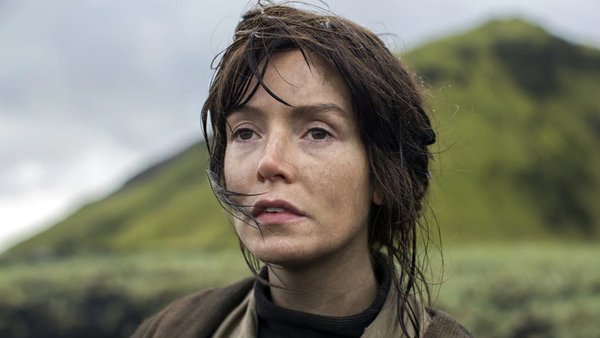
In an earlier version of the film's script, Jyn's mother Lyra (Valene Kane) was written to be a Jedi, but this was eventually changed amid the belief that it was more interesting to simply examine the lives of more "normal" citizens of the galaxy. Gareth Edwards said:
"The prologue, at one point a long time ago, was going to be the Empire coming to kill the Jedi. And Jyn's mom was going to be a Jedi... We were witnessing one of those kills and Krennic would be the person sent to do it."
This was probably a good call all things considered - Star Wars already has enough problems with characters being implausibly linked to the Force, and not every new hero needs to be a "somebody."
5. Blue Squadron Was Originally Intended To Appear In A New Hope
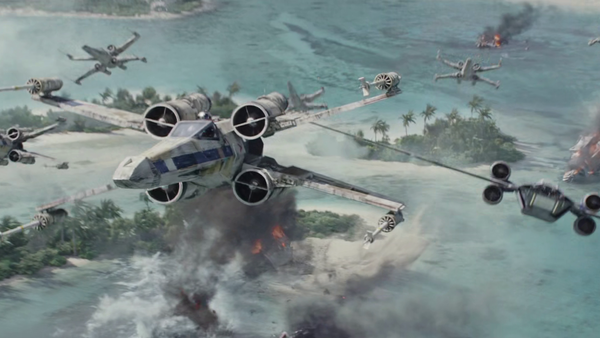
In addition to the Red and Gold Squadrons, the Battle of Scarif also featured the new Blue Squadron, which curiously enough was actually intended to show up in A New Hope's final battle.
However, the blue colouring of the spacecrafts caused technical issues with the cutting edge blue screen technology being used during A New Hope's effects-heavy sequences, and so the colour was changed to red.
But four decades on, compositing technology had evolved enough that this wasn't a problem, and so Blue Squadron could be easily reintegrated.
And by having the entire squadron go down during the Battle of Scarif, there's a plausible reason for their lack of presence in A New Hope and beyond.
4. Peter Cushing's Estate Had Major Input On Grand Moff Tarkin's Presence

Peter Cushing played Grand Moff Tarkin in A New Hope, and the actor's likeness was rather controversially reappropriated for the character's appearance in Rogue One.
Actor Guy Henry served as Cushing's stand-in on set, as well as providing the voice for the character, with a digital model of Cushing's likeness from A New Hope being layered over the top.
In terms of the ethics of digitally resurrecting an actor without their consent, Lucasfilm not only sought permission from the late actor's estate but also consulted with the family on Tarkin's appearance in the final film.
The estate was reportedly heavily involved in even minor adjustments to Tarkin's mannerisms during post-production, and while the debate continues about the character's inclusion to this day, it sounds like Lucasfilm did everything within their power to render the character respectfully.
3. Dermot Mulroney Has A Secret Role In The Film
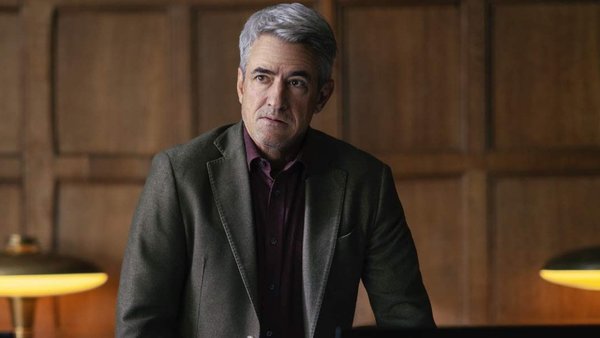
Though it's not uncommon for name actors to make secret appearances in Star Wars movies under the guise of, say, a Stormtrooper - looking at you, Daniel Craig - the great Dermot Mulroney has an untold role in Rogue One you'd never be able to guess.
As it turns out, Mulroney is an accomplished cellist and has been playing the instrument since his high school days, to the extent that he regularly performs in Michael Giacchino's orchestral sessions for movie scores.
Between 2006 and 2018, Mulroney played cello for the scores to Mission: Impossible III, Mission: Impossible - Ghost Protocol, Star Trek Into Darkness, Star Trek Beyond, The Incredibles 2, and indeed Rogue One.
It's quite the unique credit for an actor to receive in a Star Wars film, distinguishing him with a "cameo" quite unlike anybody else's in the franchise.
2. Jyn & Cassian Originally Survived The Movie

One of the Rogue One's biggest surprises is that it actually commits to killing off all of its main characters, especially Jyn and Cassian, who are obliterated when the Death Star fires at Scarif.
The temptation must've been there to keep Jyn and Cassian alive for future adventures, enough that the first draft of the screenplay indeed had them survive.
However, Gareth Edwards wanted the pair to die, and during a meeting with Kathleen Kennedy expressed this desire, to which Kennedy surprisingly agreed, giving him the nod to kill Jyn and Cassian off.
While Cassian will obviously be making a return in his Disney+ prequel series Andor, it's still ballsy to unambiguously kill two well-received characters who could've easily been spun off into their own cinematic trilogy.
1. George Lucas Reportedly Preferred It To The Force Awakens

When George Lucas sold Lucasfilm to Disney, he relinquished his rights to have any creative say over the future direction of Star Wars, though he was periodically consulted during development of the sequel trilogy.
In 2019, Disney CEO Bob Iger's memoir revealed that George Lucas wasn't exactly thrilled about the direction of Star Wars: The Force Awakens, feeling as many fans did that it lacked originality.
Yet according to Gareth Edwards, Lucas was extremely happy with how Rogue One turned out, and given Lucas' lukewarm verdict on The Force Awakens, it's clear which of the two he prefers.
Considering that Rogue One wasn't merely a retelling of what came before and actually tried to do something different with the IP, it's not terribly surprising that he favoured it over effectively a veiled remake of A New Hope.