20 Things You Didn't Know About The Dark Knight
 Batman Begins may have successfully rebooted the Batman franchise, bringing it back from the day glo excesses of the Joel Schumacher era, but it was the second film in Christopher Nolan's trilogy, The Dark Knight, that became a true sensation. The Dark Knight earned over a billion dollars worldwide; it got terrific reviews; it launched a thousand (largely stupid) discussions about its politics, whether it was pro Bush or anti War on Terror or something or other; it enshrined the brilliant (and, sadly, penultimate) performance of Heath Ledger, who breathed fiery life into the Joker in a way that audiences had never seen before. Heck, The Dark Knight, after being "snubbed" for a best picture nomination, is largely credited with inspiring the Academy of Motion Picture Arts and Sciences to change the number of nominees for best picture; yeah, I know the Oscars dont matter and nobody cares about them, but still getting that bunch of old, out of touch white guys to change rules that are some eighty years old? Thats when you know a movies gone from being just a flick to being a cultural touchstone. The Dark Knight was a massive touchstone moment for Batman, in a way not seen since the release of the 1989 Batman movie. But come on, you have access to Google, you know all this. You know that The Dark Knight brought the superhero film that much closer to legitimacy, and took it a little bit farther into despair; you know that Christopher Nolan upped the ante in a way thats enshrined The Dark Knight next to Empire Strikes Back and Toy Story 2 as sequels that got it right; you know that Batmans voice got scratchier and growlier in between films. (Seriously guys, give it a rest Batman gets a cold too, sometimes.) Heck, youre a smart, attractive, well dressed person you probably already know everything we're about to tell you about The Dark Knight. But it could just be that there are a few tasty nuggets tucked in there so, y'know, bear with us...
20. The Part of The Joker Was Written For Heath Ledger
 Much as he cast Christian Bale before the script for Batman Begins had been finalized, Christopher Nolan spoke to actor Heath Ledger about playing the Joker long before a script had been written. Ledger had actually met with Nolan about playing Bruce Wayne in Batman Begins, but it was more a formality than anything else, as Ledger flat out told Nolan that he had in interest whatsoever in appearing in a comic book movie. Apparently the actors mind was changed once he saw Begins, and he was more than on board for taking on a "comic book villain" by the time The Dark Knight rolled around...although constructing the script with an actor already signed did present its fair share of nervous moments. As Nolan remembered, Ledger was "so committed and knew what a high wire act it would be if he hadn't liked I think...it would have been extremely bad." Fortunately, Ledger "breathed a sigh of relief" when he finally read the script, feeling that "it delivered on what talked about."
19. An Epic Crime Drama
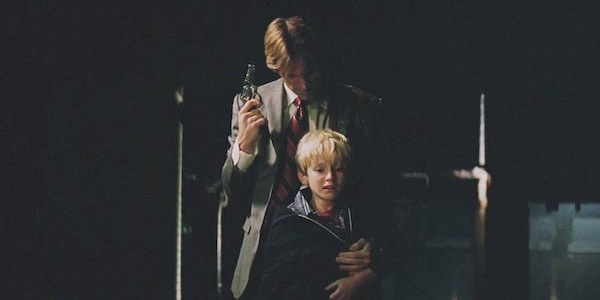 Whereas Batman Begins was designed as an epic action/adventure film in the style of, say, the James Bond franchise, The Dark Knight was conceived as an epic crime drama, in the style of The Godfather or Michael Mann's Heat. Heat appears to have been the central cinematic inspiration for the film: like Heat, The Dark Knight is ultimately as much a story about a city as about a good guy/bad guy conflict; The Dark Knights cacophonous bank robbery opening can perhaps be seen as an allusion to the famous bank heist at the center of Heat. Certainly Nolan was charmed enough by Heat to cast William Fichtner, who played Manns smug businessman Roger Van Zandt, in a small cameo as the bank manager who comes face to face with the Joker. And its possible that Joker and Batmans interrogation room interview sitting across a table from each other owes something to the central scene of Heat, when Robert De Niros thief and Al Pacinos cop sit down and chat over a cup of coffee A lot of Dark Knight's crime movie aspirations also undoubtedly stem back to Christopher Nolan and David Goyer's fondness for Jeph Loeb and Tim Sale's Batman masterwork, The Long Halloween; Nolan and Goyer stated in an introduction to the "Absolute" edition of that book that Long Halloween was their primary inspiration for both Batman Begins and The Dark Knight, and the influence is especially apparent in the latter film. Both book and movie structuring the story around the tragic fall of Harvey Dent; both show Gotham transitioning from old time mobsters to a new breed of freakish criminals; and both focus on the triumvirate of Batman, Gordon and Denthell, even a beat where Gordon disguises himself as a SWAT driver feels like a nod to a similar moment in Long Halloween involving Batman in disguise.
18. A Brilliant Performanceand a Technical Glitch
 The Jokers entrance in The Dark Knight is one of the most memorable scenes in the film, culminating with that huge IMAX close-up of him as he pulls off his mask and tells William Fichtners terrified bank manager that whatever doesnt kill you simply makes youstranger. Its a brilliant piece of performance on Ledgers partand it almost wasn't in the movie, due to a rare technical stumble on the part of The Dark Knights (brilliant) crew. Perhaps because it was their first experience working with IMAX cameras (the bank heist sequence was the first thing shot), Ledgers close-up is ever so slightly out of focus. Its something no ordinary audience member would ever notice, but was niggling enough that Nolan wanted to reshoot it much to the chagrin of Ledger, who was convinced, no matter how many times Nolan reassured him, that there was something wrong with his performance. As it turned out, Ledger never was able to recreate the magic of his performance on the day; in the final film, its the out of focus take thats used.
17. Punk Joker
 From the first released images, it was clear that Heath Ledgers Joker was going to be just a little bit different from Jack Nicholsons. Ledger and Nolan sought to bring a bit of a punk flavor to their Joker; their touchstones were singer Sid Vicious, and Alex DeLarge from A Clockwork Orange, figures who they felt embodied societal fears about teen rebellion. To get in the right anarchic, "rude" mood for the character, Ledger apparently kept a "Joker diary", in which he wrote down various things the Joker would find funny -- among them AIDs, land mines, geniuses suffering brain damage and sombreros. A similar list appeared in the April 2007 issue #663 of the Batman monthly title, by Bat-genius Grant Morrison; either Ledger read the issue in question and felt that Morrison's list would help get him in character, or that's a really weird bit of coincidence.
16. The "Imitation Batmen" Are Straight Out Of The Dark Knight Returns
 Like its predecessor, The Dark Knight nods toward Frank Miller's 1986 masterwork The Dark Knight Returns. The "imitation Batmen" who show up at the beginning of the movie, hoping to help Batman take on Scarecrow, are clearly inspired by Miller's "Sons of Batman", a reactionary group who were inspired by Batman but had no qualms about carrying firearms. In The Dark Knight Returns, Batman ultimately leads the Sons of Batman into "battle", restoring order to Gotham City; in The Dark Knight, he simply dismisses them as amateurs. ("I'm not wearing hockey pads!")
15. Bruce Waynes 70s Style Pad
 Locating Bruce Wayne in a penthouse at the center of Gotham work well with Dark Knights crime drama aspirations instead of being on the outskirts of town in a secluded manor, Bruce is smack dab in the center of the city but its also a nice nod to the 70s era of Batman comics. During that period, Bruce moved out of Wayne Manor after Dick Grayson left for college, and relocated himself to a sophisticated bachelor pad in the heart of Gotham, with a secondary Batcave hidden in a bunker under Wayne Tower. The comics Batman literally rebuilt the Batcave in exacting detail under Wayne Tower, stalactites and all; in the movie, Batmans secondary digs are a much more ultilitarian modernist garage.
14. Matt Damon Turned Down Two-Face
 Aaron Eckhart was arguably the perfect choice to play Harvey Dent, the golden boy politician (Eckhart said he had Jack and Bobby Kennedy in mind while playing the role) who ultimately slides into madness. Unsurprisingly, however, a number of actors were considered at one point or another for the part including Jason Bourne himself. Matt Damon told MTV Splashpage that he was offered the part of Harvey Dent, but had to turn it down due to a scheduling conflict. Maybe after the next reboot?
13. Aaron Eckhart ALMOST Played Commissioner Gordonwell, sort of
 Before Batman Begins, back in the dark days following Batman and Robins release, any number of Batman film ideas were pitched at Warner Brothers. One of the projects that gained the most traction was an adaptation of Frank Millers seminal work Batman: Year One, which was to have been directed by a young Darren Aronofsky, and co-written by Aronofsky and Miller himself. The film wouldve been an extremely gritty, realistic take on the Batman mythos and bizarrely, considering it was co-written by the same guy who did the comic, it wouldve taken huge license with the Batman mythos. Think fans were bothered by the tweaks Nolan made to Bane or Jokers backstories? How would they have reacted to a Batman movie where Bruce Wayne is an amnesiac vigilante who lives with an impoverished black car mechanic named "Big Al"? Year One was, by Aronofskys own admission, intended as a complete 180 from the campy excesses of Batman and Robin; the script, which would have been all kinds of R-rated, probably never really came close to being made. Aronofsky got far enough along in the process that he did start at least casually looking at actors. In particular, the director was considering Aaron Eckhardt who had made a splash in Neil LaButtes In the Company of Men to play the role of Lieutenant (not yet Commissioner) Gordon, who in many respects is the storys true central character. As to the actor Aronofsky wanted to cast as Bruce Wayne? He was a young guy, someone you may have heard of Christian Bale.
12. Returning To The Roots
 In constructing the character of the Joker in The Dark Knight Christopher Nolan, David Goyer and Jonathan Nolan ended up going straight back to the ORIGINAL source albeit unwittingly. The Dark Knights Joker bears some remarkable similarities to the Joker as he was originally introduced in Batman #1: a master planner who announces his crimes via mass media and always manages to stay one step ahead of the police, a cold blooded killer whose clown makeup masks a grim disposition, a man who seems to have no history, no backstory, no pasthell, Batman #1 even includes a sequence where Joker disguises himself as a policeman to get at one of his targets. All of this, apparently, is coincidence; according to Christopher Nolan, he had probably read the original Joker story back during the writing of Batman Begins, but hadnt looked at it since, and was a little astonished to re-read the story (at Jonathan Nolans behest) and realize just how close it was to the Joker he, his brother and David Goyer had created. Certainly the similarities made the writers feel they were on the right track with their version of the character.
11. Heath Ledger Directed The Jokers Videotaped Warnings
 In his first appearance in Batman #1, The Joker brazenly announces over the radio exactly which Gotham citizens he plans to kill. In The Dark Knight, Jokers electronic messages are modernized, in the form of grainy handheld videos broadcast on city wide television. Before his tragic death, Heath Ledger had actually been hoping to make a feature directing debut, and Nolan allowed him to basically direct the first of Jokers video statements, when he tortures an imitation Batman in a mob meat locker cinematographer Wally Pfister set the lights, microphones were set up, and then Nolan and company hid while Ledger proceeded to do the scene. Nolan was so impressed with the results that he opted not to be there when the second video, where news reporter Mike Engel is hung upside down, was shot a pretty amazing vote of confidence from a directly who famously doesnt even use a second unit.
10. Objection, Senator!
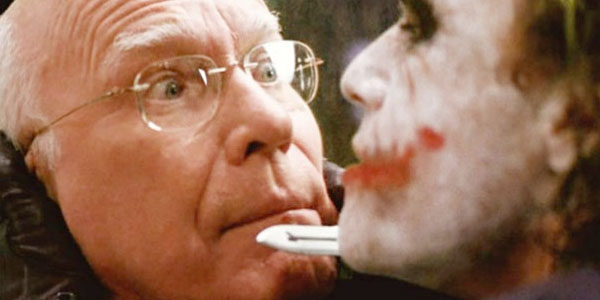 If the man who tells the Joker were not intimidated by thugs! looks familiar, you might be watching too much C-Span. The man in question is Patrick Leahy, democratic senator from Vermont, who also happens to be a massive Batman fan massive enough that he got a quote on the back cover of Frank Millers Dark Knight Strikes Again, a voice over cameo in Batman: The Animated Series and a brief appearance at Bruce Waynes white slave auction er, charity fundraiser in Batman & Robin. Fortunately, Leahy surived Schumachers fiasco to appear in two much better Batman films: he showed up in The Dark Knight, and then reprised his role as (apparently) a senior Wayne Enterprises board member in The Dark Knight Rises.
9. Rose Klebb, via Heath Ledger
 When we looked at 20 things you didnt know about Batman Begins, we talked about how much Christopher Nolan loves James Bond movies; in many ways, between The Dark Knight trilogy and Inception, hes spent the last decade making defacto Bond films, from giving Batman his own Q in the form of Lucius Fox to emphasizing the idea of Bruce Wayne as a world traveler who faces megalomaniacal villains. The Dark Knight borrows less from the Bond playbook than either the first or third films in the trilogy, but the influences are still there. Batmans skyhook stunt *might* be a little homage to the ending of Thunderball, Sean Connerys fourth Bond film (virtually the same gag closes out that picture), and theres an obvious homage to the Bond series when, at Bruce Waynes fundraiser for Harvey Dent, the Joker attacks Batman with a knife tipped shoe. In From Russia with Love, the second (and still, arguably, one of the best) Bond picture, Lotte Lenyas Russian mastermind Rosa Klebb attacks Sean Connery using a poison tipped knife concealed in the tip of her shoe.
8. Im a Man of My Word
 Unlike many directors, Christopher Nolan doesnt put deleted scenes on his DVDs, and theres a pretty simple reason for that: by and large, there aren't any deleted scenes in his movies lines get cut, moments get trimmed, yes, but a close study of any of Nolans scripts reveals that there is not, contrary to popular belief, a three hour cut of any of his Batman movies floating around out there, with tons of extra scenes and plot points and such. The Dark Knight is a typically carefully constructed Nolan screenplay, and according to the published script, at least, theres really only one deleted scene, that takes place in the Jokers getaway car after he crashes Harvey Dents fundraiser at Bruce Waynes penthouse, and sends Batman leaping out a window to save Rachel Dawes. When Joker's getaway driver asks him "What about Dent?", Joker replies, very simply, "I'm a man of my word." Why the scene was cut is open to speculation; one commonly cited plot hole in The Dark Knights script is the fact that theres no explanation as to what happens to the Joker after Batman and Rachel fall out of that window, and this scene plugs up that little hole. Perhaps Nolan felt it slowed things down? Perhaps the Joker, as he claims later in the interrogation scene, thought Batman really Dent, and figured after he leapt out the window that hed managed to kill two birds with one stone? One might be inclined to believe that this scene was never even shot, were it not for the above promotional image, which features Ledger fixing his makeup in the back of a getaway car (with a hood dressed similar to the ones that crash the penthouse)a shot which appears nowhere in the finished movie. Obviously Nolan doesnt like airing his dirty laundry in public, but any extra footage of Heath Ledger as the Joker is welcomemaybe for the upcoming box-set release?
7. Bruce Wayne, Frank Miller Style
 As with the first film in the series, The Dark Knight took inspiration from Frank Millers seminal comic Batman: Year One. Having Batman save James Gordons son from a potentially lethal fall is an obvious nod to Millers opus, but theres another, smaller one earlier in the film, when Bruce Wayne, operating during the day time, dons a motorcycle helmet and jacket to stop the Joker from assassinating Mayor Garcia. Bruces motorcycle outfit bears a suspicious resemblance to the motorcycle outfit Bruce wears during Year Ones climax
6. The Joker Hires Stunt Drivers for His Crew
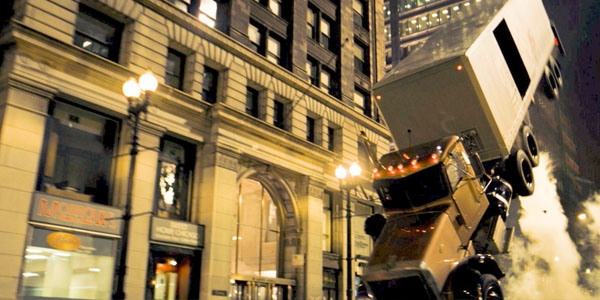 If the guy driving Jokers tricky looks familiar, you might be watching too many DVD special features. The driver of the Jokers truck, the guy with the cowboy hat, is stunt driver Jim Wilkey; Wilkeys character apparently gets knocked unconscious and dumped out of the truck about midway through the chase, but in actuality, Wilkey drove the truck for the entire sequence, including the famous moment when the truck gets flipped end over end making Wilkey arguably the coolest person in a movie that stars Batman, The Joker, Harvey Dent, Jim Gordon and Tiny Lister.
5. The Joker Applauding Commissioner Gordon was Improvised
 As spontaneous as Heath Ledgers performance looks, close study of the script makes it apparent that the Joker, along with every other element of Dark Knight, was very tightly written; Ledger brought the mannerisms and vocal quality to the role, but the words themselves are 99% on the page. One little moment of inspiration that Ledger did add came on the set of the scene when Joker is being held at MCU; when Gordon is named Commissioner, his fellow policemen applaudand Joker begins clapping too, mockingly. Jokers clap was apparently a completely spontaneous moment of inspiration; Nolan had to quickly tell the camera crew to start rolling again so that they could capture the improvisation, spur of the moment.
4. A Bit Of ForeshadowingAnd A Red Herring
 For anyone who knows who Harvey Dent really is, there are a few nice little bits of foreshadowing in The Dark Knights screenplay. Dent referring to the mob giving you second chances, and Bruce referring to Harvey as the face of Gothams bright future spring to mind, but one of the cleverer bits of foreshadowing turns out to be a red herring. For anyone paying attention, the address the Joker gives where Dent is supposedly being held is 250 52nd Streetis there any way they couldve possibly fit more number twos into that? Its a ruse, of course Dent is actually at Avenue X and Cicero (named for the Roman lawyer and philosopher), but considering 250 52nd Street is the address where Rachel meets her demise, and Rachels death is the event that sends Dent over the edge, perhaps it is indeed the (fitting) birthplace of Two-Face.
3. Rachel Dawes' Death Scares English Countryside
 Rachel Dawes death at the hands of an explosion rigged by the Joker (dude loves to blow things up) was purposefully designed, according to co-writer Jonathan Nolan, as a direct rebuke to all those scenes in superhero movies where the hero is told he must chose between saving one person or another, and just ends up saving both; Batman arguably fails to save either Rachel Dawes or Harvey Dent, plunging the third act of The Dark Knight headlong into tragedy. The explosion of the warehouse where Rachel is being held was staged at Battersea Power Station in London; apparently the film crew didn't do a good enough job warning residents, because that night emergency services were flooded with calls from people who feared a real terrorist attack was in progress.
2. Brother Eye
 When The Dark Knight was released, we were treated to an endless number of editorials, articles and think pieces by internet and cultural commentators claiming that the film had clearly rejiggered the Batman mythos to act as a direct commentary on the War on Terror. What a lot of these commentators overlooked was the fact that the story elements added by the screenwriters had been part of the comics for years. Take, for example, the much talked about plot point involving Batman using Gothams cell phones to track down the Joker. The moment was assumed by many political pundits to be a direct slam against/support for Bushs patriot act, but it was in fact directly inspired by the Brother Eye storyline in the Justice League comics, where it is revealed that Batman is so paranoid that he keeps tabs on his friends as well as his enemies.
1. Runnin From The Po-lice
 For Christopher Nolan, endings are perhaps the most important element of the entire filmmaking process. Very, very early in the process of developing The Dark Knight, before much had been figured out about the story, Nolan already had the basic elements: his final image for the film, according to the book The Art and Making of the Dark Knight Trilogy, depicted Batman "on foot", being chased by cops "from rooftop to rooftop." The image finally shifted to Batman riding away on the Batpod, but as co-writer Jonathan Nolan points out "it was the same essential image -- Batman being pursued by the people he's just helped to save. There was something very tragic about that."