20 Things You Didn't Know About The Man With The Golden Gun (1974)
The villain has a powerful weapon, but Roger Moore's second Bond film conceals so much more!

Sir Roger Moore’s second James Bond film, The Man with the Golden Gun (1974) is paradoxically a classic Double-0 Seven feature that alienated audiences upon its release and threatened to bury the franchise. It is still one of the least financially and critically successful Bond films.
Ian Fleming’s 1965 novel is also often regarded as being his weakest, but the filmmakers tried to save the movie by casting the incomparable Sir Christopher Lee as the villain, Francisco Scaramanga, who is a dark reflection of James Bond.
The films boasts plenty of exotic locations and all of the stunts, humour, and beautiful women that are synonymous with the series, but it feels strangely incomplete, having been rushed into production to capitalise on the success of Moore’s debut as Bond in Live And Let Die (1973).
That said, The Man with the Golden Gun is very much a product of its time and has become a cult classic, even though the franchise needed a soft reboot after its release.
Alike many other Bond films, there is plenty hidden beneath the surface in this one...
20. Fake Tan

When people talk about the use of make-up in films, they often think either about female performers or elaborate effects. However, in The Man with the Golden Gun, Christopher Lee’s Francisco Scaramanga required plenty of attention as well.
Fans will remember Scaramanga’s infamous third nipple (which Double-0 Seven cheekily replicates in the film), but that was not the full extent of Lee’s make-up.
In order to highlight the fact that the notorious hitman lives in the tropics, Lee received a full-body make-up treatment - particularly in the sequences in which he appears partially clothed - to simulate the killer’s tan!
19. A Rushed Score
Celebrated film composer, John Barry had a mere three weeks to score The Man with the Golden Gun and to provide a theme song.
Alice Cooper's song, “Man with the Golden Gun” - a worthy successor to Live And Let Die by Paul McCartney and Wings - was rejected (and consequently features on his 1973 album “Muscle of Love”) in favour of a collaboration between Barry and lyricist, Don Black performed by Lulu.
Critics, fans, Barry, and Lulu have questioned the incredibly suggestive (even by Bond standards) song, whilst Black wrote it as a satire.
The critics also greatly disliked Barry’s musical score (as did Barry). However, several cues from the film still rank amongst his best Bond tracks, in particular, “In Search of Scaramanga’s Island”.
18. An Ode To From Russia With Love
The filmmakers were inspired by From Russia With Love (1963) in introducing the world’s most successful and notorious hitman, Francisco Scaramanga in the film's pre-credits sequence. The contract killer lives luxuriously on his remote island in the Far East, where his valet, Nick Nack (Hervé Villechaize) hires opponents to challenge him and hone his skills.
Director, Guy Hamilton cast Marc Lawrence as gun-for-hire, Rodney, even though he was recognisable from his similar role in Diamonds Are Forever (1971), because he wanted to juxtapose the seedy underworld of Chicago with the sweeping and exotic beauty of Phang Nga Bay in Thailand.
Hamilton created a memorable pre-titles sequence by combining the island paradise with the production designer, Peter Murton’s stunning and unnerving sets at Pinewood Studios in Buckinghamshire. He also used the sequence to set up the thrilling climax to the film.
17. It Wasn’t All Britt Ekland’s Fault

Swedish actress and former Mrs Peter Sellers, Britt Ekland is actually a good actress, but her role as Mary Goodnight sadly does not do her any favours. She gets locked in wardrobes and car boots, and inadvertently puts both herself and Bond in peril on frequent occasions.
The filmmakers, unfortunately, declined to rework a weak character from Ian Fleming’s novel into a stronger supporting role. She is Bond’s former secretary and a field agent, but that is barely explored in the film. Mary also blundered her way through the novel, inadvertently convincing Scaramanga that Bond was a spy.
Britt Ekland is often named as one of the worst Bond Girls, but she simply played the role as written. No doubt as it was felt that the bumbling operative would suit the lighter tone of Roger Moore’s Bond.
16. Moore Violence
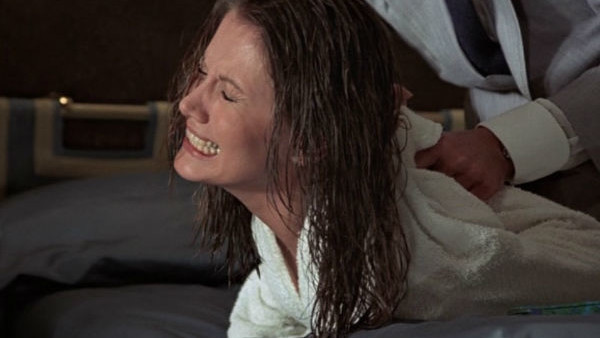
Unlike Live And Let Die, The Man with the Golden Gun frequently tries to transform Roger Moore into his predecessor, Sean Connery.
Moore expressed his concern at the scenes in which Double-0 Seven threatens to break Andrea Anders's (Maud Adams's) arm and shoves a Thai boy into a khlong. Director, Guy Hamilton wanted to convey that Moore’s James Bond could be as dangerous as Fleming's or Connery's – something that did not gel with Moore’s demeanour.
Moore’s point was proven when he was accidentally punched in the mouth during the fight in Saida's (Carmen du Sautoy's) dressing room, ending the scene with real blood on his lower lip. Fortunately, it was the last scene to be shot.
15. Re-Bonding Bond

Since Dr. No (1962), audiences have been familiar with Double-0 Seven carrying a Walther PPK 7.65 millimetre pistol.
However, when Roger Moore became Bond, both he and the filmmakers wished to distinguish him from his previous roles and from Sean Connery. That is why, in Live And Let Die, Moore does not wear a tuxedo, does not drink a Vodka Martini, and Tee Hee (Julius W. Harris) disables the PPK in an early scene, forcing Bond to rely on other guns.
With Moore established in the role, The Man with the Golden Gun started to introduce classic elements into his Bond films, including the pristine white tuxedo worn in Goldfinger (1964) and Diamonds Are Forever, and the PPK.
14. Undeniably The Man With The Golden Gun

Francisco Scaramanga cannot contain his glee (or his ego) when James Bond arrives at his island lair.
Taking Double-0 Seven on a tour of the facilities, including his solar energy plant, the notorious hitman demonstrates how he can harness the destructive power of the sun by using a solar cannon to destroy the seaplane that brought Bond to the island.
No laser beam is actually fired when Scaramanga destroys the plane. Whilst this is scientifically factual, as laser beams are invisible, films need to visually entertain their audience.
The reason why there was no laser beam in the finished film was that the special effects budget had run out!
13. “Real” Waxworks

Scaramanga’s nightmarish funhouse is designed to scare and unnerve those who enter it. It relies upon strange and often threatening exhibits designed to do this, including a gun-toting cowboy, and Al Capone and his gang lurking in a Chicago garage.
The mannequins' glazed-over expressions suggest that they are waxworks, but they are nothing of the sort. Although their acting was intended to be wooden, the gun-firing cowboy was portrayed by Roger Moore’s stunt double, Leslie Crawford, whilst Ray Marioni played Al Capone.
Moore stood in for his own mannequin before being replaced (after all, losing four fingers was not part of the deal).
12. A New Slant

MI6 increasingly followed Double-0 Seven into the field during Roger Moore's era, setting up shop in distinctive landmarks.
The British Secret Service's field office in Hong Kong is on board the wreck of the RMS Queen Elizabeth; the liner caught fire in 1972 whilst being refitted and subsequently capsized. This gave Peter Murton a fantastic opportunity to create bizarre slanted sets representing the vessel.
Sadly, whilst the first scenes for the film had been shot aboard the actual half-sunken ocean liner in November 1973, the vessel was already being scrapped by the time of the film's release as she was a hazard to shipping, meaning that the idea was already outdated.
Almost half the ship is estimated to remain on the seabed in Hong Kong Harbour and was buried during land reclamation for Container Terminal 9. This is particularly sad as the RMS Queen Elizabeth had featured in the closing chapters of Ian Fleming's 1956 Bond novel, Diamonds Are Forever.
11. The Russian Connection

Demonstrating the progress being made in achieving détente, The Man with the Golden Gun was the first Bond film to be shown in the Kremlin – a potentially awkward move as the lead villain was a former KGB agent.
After the film had been screened, a Soviet official approached series producer, Albert R. "Cubby" Broccoli to discuss the character of Scaramanga, telling him that “We didn’t train him very well”.
Whilst this speaks well for Bond’s power as a propaganda icon in building diplomatic relations, it also suggests that the Russian dignitary believed that the events depicted onscreen were real!
10. The Sound Recordist

The film initially focuses on the deadly game of wits between James Bond and Francisco Scaramanga, before turning to the Energy Crisis subplot involving the Solex Agitator.
Lieutenant Hip (Soon-Tek Oh) tries to recover the Solex in Hong Kong and convince its inventor, Gibson (Gordon Everett) to defect to Great Britain. Gibson is subsequently killed with a single bullet from Scaramanga’s Golden Gun and Nick Nack steals the Solex.
Gordon Everett (in his sole acting role) was the film’s sound recordist and worked on numerous other British films; his only other James Bond film was The Spy Who Loved Me (1977).
9. An End To Business Suits
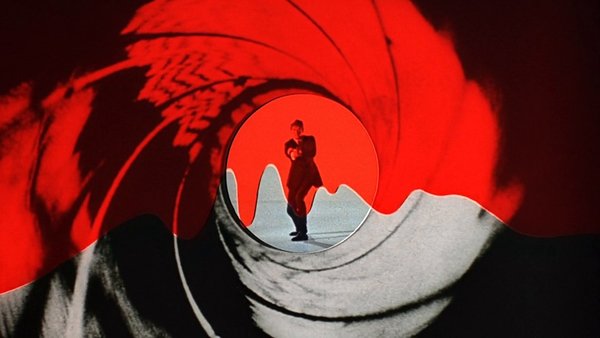
It is standard in the opening moments of the James Bond films for a gun barrel to track over the darkened screen before expanding to show Double-0 Seven walking onscreen in a tuxedo, turning, and shooting an unseen assassin in mid-stride.
However, Bond did not always wear a tuxedo in this sequence; up to and including The Man with the Golden Gun, he actually wore a business suit.
The tuxedo was likely used going forward as it was considered more of a classic, timeless look for the British spy, not least as fashions were changing so quickly at the time.
8. It Had To Be A Model

Not unlike Bernard Lee’s M, audiences may be bemused by Francisco Scaramanga's flying AMC Matador, but the concept of a flying car was not exclusive to the Bond films.
Advanced Vehicle Engineers (AVE) attracted the producers' attention with their AVE Mizar car-plane in the early 1970s, but the wing struts repeatedly failed whilst it was in flight. Tragically, this proved fatal during a test flight on 11th September 1973, killing its creator, Henry Smolinski and the Vice President of AVE, Howard Blake.
Special effects maestro, John Stears built the flying car featured in the film using miniature effects. Peter Murton revealed that the car-to-plane transformation was achieved through clever editing: wings were attached to the full-sized car, but the miniature handled the take-off at Bovington Camp in Dorset.
7. The Discreet Miniature

Scaramanga’s exploding island at film's climax was a miniature created by Derek Meddings and inspired by footage of the Battle of Monte Cassino in 1944.
However, when James Bond first sees Scaramanga's solar energy plant, he is actually looking at another of Meddings's highly-detailed miniatures, created from Peter Murton's designs for the partial set constructed at Pinewood Studios. The filmmakers had originally only intended to use the model for the destruction of the plant, but it was so convincing that it was used to compliment the soundstage set as well.
Naturally, both the miniature and the set were destroyed in true Bondian style at the climax.
6. Tapped Out On Bond

Screenwriter Tom Mankiewicz envisioned the film as a dark cat-and-mouse game between Double-0 Seven and Francisco Scaramanga.
However, when Jack Palance declined the role of Scaramanga and the focus twisted in favour of the popular kung fu films of the time, Mankiewicz began to feel increasingly “tapped out” writing the film, leading to disagreements with the director, Guy Hamilton. Mankiewicz departed the production, whilst long-time Bond screenwriter, Richard Maibaum completed the script.
Despite this, Mankiewicz would perform uncredited work on both The Spy Who Loved Me and Moonraker (1979).
Proving that there were no hard feelings, Hamilton recommended Mankiewicz to work on Superman: The Movie (1978).
5. Needless Investigation

When MI6 receives a golden bullet with “007” engraved on it, it is considered a threat from an infamous assassin, Francisco Scaramanga.
James Bond travels to Beirut to recover a golden bullet from a belly dancer, Saida, who was with Bill Fairbanks, Double-0 Two when he was shot in 1969. Separating Saida from the bullet, Bond asks Q (Desmond Llewelyn) to analyse it, assisting him in tracking Scaramanga down.
Whilst Bond’s efforts in investigating Fairbanks’s murder are amusing and lead to some genuinely good scenes in the film, they are ultimately pointless, as Q could simply have analysed the original engraved bullet...
4. The Abandoned Chase

Harry Saltzman and Cubby Broccoli produced each new Bond film in turn separately owing to their strained partnership. Harry also often had impractically outlandish ideas for the films.
He had envisioned a chase on elephant-back between James Bond and Francisco Scaramanga for this entry, but Cubby and Guy Hamilton rejected the idea for being too complex to film. Nevertheless, when an elephant wrangler advised Harry that special elephant shoes would be needed, he had 2,600 pairs shipped to the filming location, upsetting Cubby.
Shortly after the film was released, Harry’s financial woes led him to sell his 50% stake in Eon Productions to United Artists. The company was still paying for the elephant shoes in 1990!
3. A Sudden Change

Ted Moore shot seven Bond films before falling ill in Thailand and departing from The Man with the Golden Gun. Rumours circulated that the cinematographer had departed following creative differences as he never returned to the Bond series.
Ernest Day filled in for Moore for a week, but the film still needed a replacement director of photography to shoot major scenes at Pinewood Studios. The producers turned to Oswald Morris, who was initially uncertain about taking over from another cinematographer, but relented when Cubby Broccoli convinced him to join the production over dinner.
Sadly, despite his eye-catching work on the soundstage sections of the film, Morris did not count The Man with the Golden Gun as being amongst his best work.
2. Q’s Lost Scene

Whilst Q and arms expert, Colthorpe (James Cossins) analyse the golden bullet that James Bond recovered from Saida, Q's assistants test a new gadget in the background: a camera that fires a missile capable of demolishing a brick wall.
A subsequent scene was intended to show James Bond at an airport where Q would give Double-0 Seven the camera to use on his assignment.
During that sequence (which would have set the tone for the byplay between Moore’s Bond and Llewelyn’s Q, as this was their first Bond film together), Q would have been forced to admit that the camera could not actually take photographs.
1. He Has A Powerful Weapon

The golden gun is one of the most distinctive props to feature in a Bond film.
The film’s art and special effects departments collaborated with cigarette lighter company, Colibri to build a non-working prop, a pistol that fired a cap, and a version that could be assembled from its component parts. Art director, Peter Lamont showed Christopher Lee the complex process of piecing it together.
US Customs officials seized the gun whilst Lee was promoting the film and the actor had to demonstrate that it was a non-lethal prop before they would return it.
If only he had taken the disassembled gun, he would likely have got through unchallenged!
Watch Next
James Bond Quiz: How Well Do You Know 007?
