20 Things You Somehow Missed In Batman Returns
The details, Easter Eggs and questions you never spotted in Tim Burton's sequel...

Batman Returns and Batman are often in competition for the position of the best Batman film (at least out of Warner Brothers’ original quadrilogy). It’s sort of like Citizen Kane and Vertigo competing for the position of the best film ever made. Some fans prefer Batman and others (Tim Burton included) prefer the sequel.
Hugely divisive ever since its release in 1992, Batman Returns has, in later years, come to be recognised as a fantastic sequel (perhaps even more so after Joel Schumacher was entrusted with the franchise). As the film’s producer, Denise Di Novi has remarked, had Tim Burton been permitted to continue with the franchise, fans would have got a great series of Batman films, but they would have missed out on other quirky Burton offerings such as Mars Attacks!, Sleepy Hollow and Charlie and The Chocolate Factory.
But Batman Returns has often been categorised as a typical Tim Burton film. It is just that (in spades), but it is also distinctly Batman as well. Moreover, there is plenty in there that could easily be missed.
So let's look back at some of those little details...
20. Max Shreck’s Photo Wall

This is a beautiful little in-joke that is seen fleetingly throughout the movie. Surrounding a portrait of Christopher Walken’s “odious” tycoon, Max Shreck and his son, Andrew Bryniarski’s Chip Shreck hung inside the billionaire’s lavish conference room are plenty of framed photographs of Shreck alongside notable public figures and celebrities.
Early on in the film, we lean over the shoulder of Michelle Pfeiffer’s mousy “executive assistant”, Selina Kyle as she tidies up after a meeting and we catch a glimpse of Shreck having posed for photos with the likes of Sammy Davis, Jr., Elvis Presley and (future Mr. Freeze) Arnold Schwarzenegger.
It’s a fascinating insight into the real world crossing over into the high-fantasy world of Gotham City, but it also serves a background story purpose; this is a man with connections who could easily give Gotham’s own “to the manor born” philanthropist, Bruce Wayne a run for his money.
Shreck makes the point more explicitly later in the film when he brazenly asks Michael Keaton’s Bruce Wayne: “Do you think you can go 15 rounds with Mohammed Shreck?” Bruce, of course, is not even fazed by this, but just regards Shreck as being rather odd.
19. Wayne Manor Lives In A Fish Tank

Contrary to the use of use of real English manor houses like Knebworth House and Hatfield House to represent Wayne Manor in Batman, the Wayne Manor presented to audiences in Batman Returns is a combination of special effects miniatures and full-scale soundstage sets that capture its grandeur, the loneliness within and also its sinister qualities.
In Batman, however, we were never really shown how Bruce Wayne and Michael Gough’s Alfred Pennyworth access the Batcave underneath its foundations. In Batman Returns, however, Gough’s Alfred makes mention of using the stairs and, when you see how Bruce accesses the cave, you can’t really blame him.
Bruce’s preferred means of getting down into the cave where his alter-ego resides is by way of an iron maiden whose painful spikes retract and floor slides away, propelling Wayne through a chute onto the cave floor. And the method of activating this curious device? A button concealed in a scale model of Wayne Manor within a fish tank that sits in the manor’s library. Take that Christian Bale and Michael Caine with your sequence of notes played on a piano!
As an aside, it is also worth noting that Joel Schumacher used a strikingly similar way for Val Kilmer’s Bruce Wayne to get to the Batcave from Wayne Enterprises unnoticed in the following film, Batman Forever.
18. The Media Presence

Who can forget the gleefully malicious televised threats that Jack Nicholson’s The Joker espoused in Batman?
The media presence was something that the makers of the 1989 Batman film lifted directly from Frank Miller’s seminal 1986 graphic novel, The Dark Knight Returns and Burton seemed happy to bring them back for Batman Returns. Most notably, Danny DeVito’s The Penguin actively romances Gotham and challenges both Michael Murphy’s Mayor and Batman via the tube, whilst key events such as the kidnapping of Cristi Conaway’s Ice Princess are reported both in newspapers and on television.
Kim Basinger’s Vicki Vale and Robert Wuhl’s Alexander Knox represented the human side of the media in Batman. In Batman Returns, Erik Oñate portrayed “Aggressive Reporter”, who closely recalled Wuhl’s Knox, maybe even more so as he vehemently defended the freedom of the press to Shreck and, not unlike Knox’s Bat-chasing, gathered all he could on Gotham’s “penguin man”.
Whilst everyone in Gotham seems consumed
by the media circus created by the presence of Michael Keaton’s Batman and Danny
DeVito’s The Penguin (and later Michelle Pfeiffer’s Catwoman as well), it seems
that only Alfred has the rational point of view when he says to Sean Whalen’s
persistent paperboy that “it’s a diversion to read such rubbish. Most of the time, it’s a waste of time”.
17. Michael Murphy's New Mayor

In Batman, Lee Wallace’s Mayor Borg was almost as prominent as Pat Hingle’s Commissioner Gordon and Billy Dee Williams’s Harvey Dent. In Batman Returns, Michael Murphy assumed the role of Gotham City’s Mayor (whose name in Craig Shaw Gardner’s novelisation is Mayor Jenkins), whom Shreck describes as “standing-in-the-way-of-progress”.
During the film, the Mayor is therefore subjected to a power-play during the film, much of which ended up on the cutting room floor, despite his matinee idol good looks. Compared to Wallace, Murphy becomes almost invisible, his control very rapidly being wrested away from him by Shreck and The Penguin.
A sequence was meant to have featured towards the end of the film in which The Mayor asks Commissioner Gordon if Batman will ever forgive Gotham for trying to hunt him down after the murder of The Ice Princess, but either was lost during the pre-production stage or also ended up on the floor of the editing room.
Either way, by the time Batman Forever rolled into cinemas, Gotham City had yet another new mayor.
16. Alfred’s Mannerisms

Michael Gough portrayed both the valet and surrogate father figure to Bruce Wayne in Batman. However, in Batman Returns, things have changed markedly in their relationship.
Towards the beginning of the film, Alfred seems truly dismayed that Batman does not trust The Penguin, but later changes his tune when it becomes apparent that The Penguin has kidnapped The Ice Princess. He also shows genuine exasperation when Bruce reflects that he will go to Shreck’s Maxsquerade Ball purely to meet Selina Kyle – after Alfred has torn up Bruce’s invitation!
One of the other beautiful little nuggets from Gough’s nuanced performance is that, when Selina Kyle rushes out of Wayne Manor to join The Penguin’s plan in her role as Catwoman, she asks Alfred to explain to Bruce that she left because she is going through “changes”.
The surprised look on Alfred’s face is priceless! When Selina subsequently retracts this and suggests that Alfred “make up a sonnet or a dirty limerick or something”, Alfred coolly (and hilariously) replies “One has just sprung to mind, madam”.
Fittingly, in his novelisation of Batman Returns, Craig Shaw Gardner notes that this little exchange convinced Alfred that Miss Kyle was the right lady for Master Wayne.
15. Commissioner Gordon Is A Spectator (But He Is Involved)

Pat Hingle’s Commissioner Gordon is easily one of the most overlooked aspects of Batman Returns. In fact, even if you were watching film just to see him, you could very easily miss him!
His appearances are really reduced to cameos dotted throughout the film, firstly during The Red Triangle Circus Gang’s opening attack on Gotham Plaza, then in a brief newscast in which it appears that Batman has kidnapped the Ice Princess and, finally, in a brief but memorable sequence in which Gotham’s finest reactively shoot down Batman after the Ice Princess falls to her death.
The key events in these are the first in the last. We see that, in the interim period between Batman and Batman Returns, Gordon has come to trust and rely upon Batman, so much so that his first words in the film, shouted through a police radio back to headquarters are “What are you waiting for? The signal!”
Even better proof of his trust in Batman comes when he tries to hold his own officers back as they open fire on Batman following the death of the Ice Princess; he just cannot bring himself to believe that Batman would kill an innocent person (even though, as we all know, Michael Keaton’s Dark Knight and, to an extent, Val Kilmer’s Batman as well, were not too concerned about killing off bad guys).
14. Catwoman’s Mother

There is a lot of speculation on what led Selina Kyle to become Catwoman. Indeed, her origin is almost as difficult to nail down as The Joker's.
The gorgeous Ivana Milicevic, who featured in the Buffy the Vampire Slayer TV series and in Casino Royale, portrayed Selina Kyle’s untrustworthy mother, Maria Kyle in Gotham but, prior to this, Selina had a mother in Batman Returns who featured prominently in the party that never stops on Selina’s answering machine.
Selina’s mother is, however, not very complimentary of her daughter, referring to her as “a lowly secretary languishing in Gotham City” and pestering the life out of her to come home for the Christmas holidays. From the sight of Selina’s overwhelmingly pink apartment, which is filled with paraphernalia of her childhood, Selina was likely closer to her father than her mother (indeed, her one escape from her interminable lifestyle appears to be the man that she believes she is dating, who ditches her right on Christmas).
We find it amusing to imagine who Selina’s mother is. Perhaps she lives in the kind of multi-coloured suburbia that was a focus of Edward Scissorhands or the fishing town of Collinsport from Dark Shadows? Either way, she is the stereotypical nagging mother, who perhaps envies her daughter for what she imagines is the high life in glitzy, glamorous Gotham City.
If only she knew…
13. Elizabeth Sanders' Cameo

Bob Kane, who is now recognised as being a co-creator of Batman, along with Bill Finger, was meant to have a cameo as a comic artist for the Gotham Globe in Batman. He did, in fact, draw (and sign) the doodle of a man-sized bat in a business suit that appeared in the film, but was unfortunately ill when it came time to film the sequence in which “Bob Kane” hands the drawing to Alexander Knox.
When it came to the sequel, however, Kane’s actress wife, Elizabeth Sanders got her own cameo for a brief linking sequence in which a group of Gothamites debate the news of the emergence of Gotham’s “hideous penguin-man”. Indeed, she remarks that The Penguin in “like a frog that became a prince”, but she is soon corrected as “he’s more like a penguin”.
This marked the first of Mrs Kane’s appearances in the original Batman quadrilogy, as Joel Schumacher cast her as an outlandish journalist, Gossip Gerty, a more kid-friendly version of 1940s-style gossip columnists such as Hedda Hopper, in Batman Forever and Batman & Robin.
Her husband, on the other hand, served as a consultant on the first four Batman films and finally had a fleeting cameo in Batman & Robin at the charity auction in the botanical gardens where Poison Ivy, ahem, reveals herself.
12. The Outlandish Fashion

From Batsuits and Catsuits to Victorian dress, Batman Returns is filled with some outlandish outfits just for openers.
In addition to this, costume designers Bob Ringwood and Mary Vogt provided a host of outlandish 1940s-style costumes for supporting players, stand-ins, and extras. You can find plenty of authentic looking beige trenchcoats, dresses with padded shoulders and cut to accentuate their hourglass figures, slightly more masculine Victory suits, and plenty of hats.
Things then get really fascinating for Shreck’s annual Maxsquerade Ball which, as the name suggests, is an opportunity for all of Gotham’s high society to wear masks, “get juiced, and dance… badly”. Here with see an incredible number of innovative ideas for such a brief scene, including partygoers posing as the Mona Lisa, Julius Caesar complete with a dagger lodged firmly in his back (fittingly, the Mayor uses this costume), the Leaning Tower of Pisa, a polar bear, and a racetrack, amongst others.
Ironically enough, it is only Bruce Wayne and Selina Kyle who attend without wearing any masks at all, as they are both bored of wearing masks every day. Indeed, in a way, they arrive to the ball wearing their actual masks – those of normal human beings.
It was an idea so striking that Christopher Nolan recycled it in part for Christian Bale’s Bruce Wayne when he danced with Anne Hathaway’s Selina Kyle in The Dark Knight Rises exactly 20 years later.
11. The Model Of Gotham Plaza

This may seem like an unusual entry on this list. Gotham Plaza was a full-scale soundstage set, surely?
Indeed, yes; for the main part, Gotham Plaza was a fully realised set on Stage 16 at Warner Brothers’ Studios in Burbank, California, designed for Michael Keaton, Danny DeVito, Michelle Pfeiffer and countless others to perform on.
After learning of the kidnapping of the Ice Princess, Batman heads to Gotham and clambers onto its rooftops to overlook the Mayor as he gives a speech trying to reassure a large crowd of angry Gothamites that there is law and order in the city. It is at this point that Michael Keaton is looking down upon a highly detailed miniature of Gotham Plaza.
The miniature was used again in the sequence in which, due to her fear of The Penguin’s rogue bats, the Ice Princess falls to her death. Cristi Conaway was strapped into a special harness and her “fall” over the model was tracked by a special camera so that it appeared that she was falling off of a building when, in fact, she was hovering over the model below her.
10. Vincent Schiavelli

Before he sadly passed away from lung cancer in 2005, Vincent Schiavelli was one of those recognisable character actors who brought an extra special sinister edge and sometimes also an innocence to many of his roles.
Readers may remember him for his appearances as the nefarious torturer and murderer, Dr. Kaufman in the James Bond film, Tomorrow Never Dies; the sympathetic Lanny, whose underdeveloped conjoined twin is more sinister than it seems in The X-Files episode, Humbug, and Jenny Calendar’s mysterious Uncle Enyos in Buffy the Vampire Slayer. He had also co-starred with Danny DeVito in several episodes of the sitcom, Taxi, which ran from the late 1970s into the early 1980s.
Although his role in Batman Returns as The Organ Grinder, a vicious chief lieutenant to The Penguin, is brief, it is very memorable and unsettling, making his comeuppance at the hands of Batman all more rewarding.
9. The Art
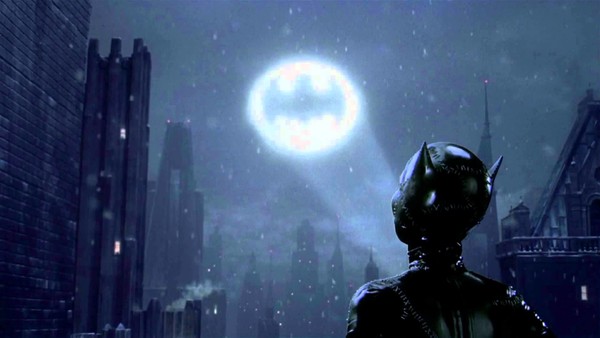
The production designer of Batman, Anton Furst and his set decorator, Peter Young won an Academy Award for Best Art Direction for Batman. The sequel had to have a rich artistic basis to be able to compete, but Anton Furst had tragically taken his own life in 1991. Apparently, at the time, he was in talks to reprise his role as production designer for Batman Returns.
Instead, Tim Burton’s frequent collaborator, Bo Welch took on that role and, as much as it is a departure from Furst’s more locomotive designs for Batman, Batman Returns is also a celebration of Furst’s work, as the seedy element of the city and the lack of planning regulations meaning that a new layer is added onto a decaying base was retained.
Welch and Burton heightened the Art Deco aspects of Gotham for the sequel, starting to give the city a hint of beauty that is otherwise choked by the crime and corruption clogging its streets.
The glorious metropolis that Gotham could be (and perhaps once was) is seen almost everywhere, from the glamorous normality of Shreck’s Department Store to a striking mural that fronts Gotham City Hall, which emphasises a golden statue of the Greek god, Atlas, which artistically indicates to Gothamites that, despite the struggle of getting there, they will be able to retake their city from the criminals and the corrupt at some point.
Gotham is also bedecked in massive statues (sorry, fans, that was not actually one of Joel Schumacher’s ideas originally) from machinist figures that hint to Gotham’s industrial nature, to older Greco-Roman figures that are woven into the city’s architecture and, even more strikingly, appear to be half buried beneath the city’s streets.
Another important thing to note is that the film’s artistic cues were mandated by Warner Brothers to appear in Batman: The Animated Series with the looks of both The Penguin and Catwoman influencing their animated counterparts. If you look closely, you can also see how the revised Gotham City created by Burton and Welch also dictated the look of Gotham in the animated series, from the establishing shots of the city to the dark and mysterious depths of the Batcave.
8. The Blueprints For The Batmobile Problem

This is a rather odd one to say the least.
Say that you have a car that is as fortified and heavily-equipped as a tank, mounted with machine guns, defensive shields and all manner of bat-themed gadgets: would you turn the blueprints to that vehicle over to anyone? Very well, then. Then answer the same question imagining that you are Batman.
Fair enough, Batman may have been asked by the authorities to turn over the blueprints to his arsenal as a condition for his continuing to operate in Gotham City, but in a conurbation of avarice and deceit, we couldn’t really see Michael Keaton’s Batman agreeing to that. George Clooney might be another matter, though…
So, it is fair to ask where The Penguin got them from. It is likely that Shreck was involved in some dirty work down at City Hall obtaining them, but the idea that the Batmobile’s blueprints would be so easily accessible just seems rather quaint and it is therefore hardly surprising that The Red Triangle Circus Gang is able to disable the vehicle’s security measures so easily.
Still, it all leads to a highly-entertaining chase sequence, some witty one-liners from The Penguin, Batman looking genuinely worried, and the emergence of the Batmissile (which possibly went on to inspire the Bat-Pod in Christopher Nolan’s The Dark Knight Trilogy), so perhaps we’re overthinking it a bit.
7. Miss Kitty

What would Catwoman be without actual cats by her side, right?
Selina Kyle’s feline companion, Miss Kitty certainly gets about during her owner’s absence and, perhaps (as was suggested in the later film, Catwoman – there, we’ve said it, it’s over!), is sounding her out for a different life.
Miss Kitty rarely accompanies Catwoman on her nocturnal adventures, instead serving as a bit of an excuse for Selina to rush off at the drop of a hat. However, when she does, it is surely memorable.
In the closing moments of the film, as a shell-shocked Bruce Wayne is being driven home in his Rolls Royce by Alfred (we always wonder what happened to the Batskiboat after the final confrontation with The Penguin), he thinks he sees Catwoman lurking in an alleyway.
When he rushes in after her, her finds a lone black cat that was presumably casting the shadow and, instinctively knowing that the freezing feline belonged to his lost love, he scoops it up and takes it back to the warmth of Wayne Manor.
It is a heart-breaking moment and easily one of the best in the film with the pay-off being that everything, Miss Kitty included, is swept to one side as the camera pans up to Gotham’s rooftops and the Bat-Signal beams up into the snow-filled sky. Standing to attention, Catwoman – alive and well – enigmatically reacts to the beacon. Then, the screen turns dark. A marvellous finish!
We just wonder whether Bruce Wayne made off with another person’s cat altogether (it would explain why it’s nowhere to be seen in Schumacher’s films…).
6. The Penguin’s Parents

Instead of it all being the child’s fault, people often assume that there must be something wrong with the parents. In The Penguin’s case, this might be true.
Both Tucker and Esther Cobblepot are part of Gotham’s elite, but they are horrified enough to rid themselves of their new-born son, Oswald when they discover his physical deformities and he subsequently kills their pet cat (this film really is not very kind to cats, is it?).
The original plan was for Burgess Meredith, the acting genius who portrayed The Penguin in the Adam West era, to portray Tucker Cobblepot, but he was sadly too ill to take the role.
This did, however, offer up an opportunity for a new chapter to be written in The Penguin’s unpleasant history, so Burton (who had greater creative control over Batman Returns) decided to cast Paul Reubens in the role. Reubens had portrayed Pee-wee Herman in Pee-wee’s Big Adventure, which was Burton’s debut as a feature length film director. His co-star from that film, Diane Salinger portrayed Esther Cobblepot.
In a roundabout way (and with some prosthetics), Reubens would reprise the role of The Penguin’s father in Gotham roughly 23 years later. Cast as Elijah Van Dahl, Reubens was far more of a father to Robin Lord Taylor’s Oswald Cobblepot than he was to Danny DeVito’s The Penguin. Also of note is the fact that Carol Kane’s Gertrude Kapelput shared more than a passing resemblance to Diane Salinger’s Esther Cobblepot in the series.
5. Max Shreck Is Really The Key Villain
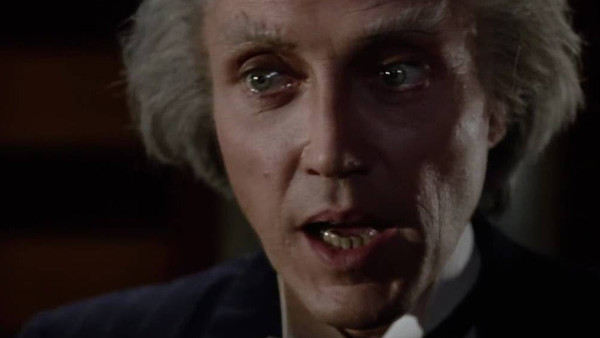
In a film where the primary characters all wear funny costumes, it is easy to forget that not all villains wear funny costumes.
Walken’s Max Shreck may look a bit “out there” with his wild wig, his zoot suit and his passion for always wearing black leather gloves but he is, at the end of day, a businessman. He is, however, not a very nice businessman. As we see during the course of the film, he is planning to build a power station to drain Gotham’s power supply purely so that his son can grow even wealthier in the future, he has murdered his partner’s body and had the body dismembered, he owns half of the firetraps in the city, and he is making a bid to supplant the Mayor. Moreover, he is responsible, in varying degrees, for creating the film’s villains.
Admittedly, The Penguin’s plan all along seemed to be to rise up from the sewers and kill the first born sons of Gotham. However, Max purely makes matters worse by seeing an opportunity in the overwhelming public sympathy surrounding Oswald’s emergence from the sewers and back into society to place The Penguin in the Mayor’s office; a plan that backfires big time when The Blackbird of Prey becomes drunk with power and unwittingly sets the people of Gotham against him. Escalating his plans, The Penguin spearheads his plan to kidnap and kill the first born sons of Gotham and things just spiral out of control from there, really.
In Selina Kyle’s case, Shreck is directly responsible for creating Catwoman when he pushes Selina out of a top storey window to her supposed death. He creates a powerhouse who is both chaotic and vulnerable in equal parts. Determined to exact her revenge against him, Catwoman can ultimately only bring down Shreck by apparently destroying herself as well.
It all contributes to the beautiful poignancy behind Catwoman’s character arc and the “will they, won’t they” romance of Batman and Catwoman. Still, when old “Max-a-millions” sees a heavily bandaged Selina walking back into the office the day after he supposedly killed her, the look on his face is priceless!
4. The Remodelling Of Shreck’s Department Store

It’s time for logic to enter into the world of Batman Returns again!
On one of her first nights on the prowl, Catwoman blows the blazes out of the entire ground floor of Shreck’s Department Store, an act that surprises and impresses both Batman and The Penguin, who are stood outside at the time.
Seemingly on the very next morning, Bruce Wayne surprises Selina Kyle as she gazes, haunted, in the shop window of that very same department store. Even more surprising, perhaps, is that fact that, only a handful of days after the explosion, Max Shreck hosts his annual Maxsquerade Ball on the department store’s ground floor (as evidenced by The Penguin’s Duckmobile literally crashing the party).
Shreck must have a great team of surveyors, builders and interior decorators to be able to achieve such grand feats in such a small space of time…
3. This Wasn’t The Penguin’s First Run At Being The Mayor

The charm, glitz and glamour (when it happens) of Shreck’s plan for The Penguin to run for the position of Gotham’s new mayor is a brilliant social satire, caused by a period of planned chaos which Shreck himself characterizes as being as being akin to real-world events such as the Reichstag Fire and the Gulf of Tonkin standoff.
However, the plot of The Penguin vying for the position of Mayor of Gotham City was not an invention of Batman Returns; it was an idea drawn by the film’s screenwriter, Daniel Waters from two episodes of the Adam West TV series entitled Hizzoner The Penguin and Dizzoner The Penguin.
Both involved The Penguin’s rise and fall as a mayoral candidate, his efforts to destroy Batman’s reputation, and his hijacking of the Batmobile (although these elements were achieved in different ways).
Even though the Adam West version retains its camp fun, we prefer the Batman Returns spin on the tale.
2. It’s Set At Christmas

We all know a Christmas movie that isn't quite a fun family film for the Yuletide Season.
There’s Gremlins; Die Hard; Lethal Weapon; Silent Night, Deadly Night; It’s a Wonderful Life, and even Tim Burton’s A Nightmare Before Christmas. Against such titles as this, Batman Returns doesn’t always automatically spring to mind as a Christmas film. After all, The Penguin bites people’s noses almost clean off and makes all kinds of filthy remarks, Catwoman is an almost pure sadomasochistic fantasy who would not be out of place in any of the films of Paul W.S. Anderson, and even Batman himself does his own fair share of killing.
But the backdrop to all of that is decidedly more pleasant. The film virtually opens with the Ice Princess lighting up the Christmas tree in the Rockefeller Center-inspired Gotham Plaza (she later has a much less pleasant experience in lighting up the tree), Alfred is seen dressing the towering Christmas tree at Wayne Manor, the city is filled with snow, and there are always the creepily romantic encounters between Bruce Wayne/Batman and Selina Kyle/Catwoman under the mistletoe.
Certainly not the most child-friendly of Christmas films but, in a market filled with Christmas-set action films, this surely must be one of the best.
1. Batman Is Pushed Out Of The Main Role

It is a common problem shared by many (if not all) of the original Warner Brothers quadrilogy of Batman films but, even though Batman features in the title and in each film of the franchise, he is often not the focal point of each film.
This started to become very apparent in Batman Returns, when so many supporting characters were introduced, including two leading villains, as opposed to the original film’s sole costumed villain.
The franchise would accentuate this problem as it continued (as, to a certain degree, Catwoman plays various different roles in Batman Returns and not always as a villain), but Batman unfortunately began to move more and more into the shadows as a character in this film. After all, his parents’ murder had been resolved as a plot point in the first film and the emotional focus of this film was in the joint relationships between Batman/Bruce Wayne and Catwoman/Selina Kyle.
Michael Keaton himself admitted that he had reservations in returning to the role of Batman/Bruce Wayne as he felt that there was little that he could offer creatively and he was concerned about merely mimicking his performance from the first film.
It is a shame in a way, because he seems much more normal (bearing in mind that we are talking about a man who dresses up as a bat) and at ease with himself as a person in this film. He just seems to get lost in the maze that is Gotham City.