20 Well-Known Movie "Facts" That Are Actually Bulls**t

It's time to stop spreading the lies.
Everybody loves a bit of movie trivia, because movie trivia can be deployed at pretty much any point in an attempt to fuel a lagging conversation - making ideal chit-chat at a party you don't really want to be at; trying to find something to talk about with those distant cousins; a fact to spice up proceedings at the pub with any awkward work associates... there's always been a need for seemingly arbitrary film trivia. But like everything else on planet Earth, movie trivia tends to get a little muddled from time to time; that's to say, "facts" sometimes burst into existence as a result of rumour, speculation or conjecture. If enough people state a piece of information as hard fact, others will accept it as such. All it takes is for one false fact to be relayed as the truth and - wham! - you've got yourself a fake fact doing the rounds. Basically, when it comes to movie trivia, be careful what you accept as the truth. There's a huge chance, after all, that that definitive and very famous piece of movie trivia you keep flashing about in order to impress the less knowledgable is actually bulls*it. Seriously: here are 20 well-known movie "facts" that, despite their fame, aren't actually true in any way, shape or form...

20. Marlon Brando Didn't Bother To Read Heart Of Darkness - Apocalypse Now
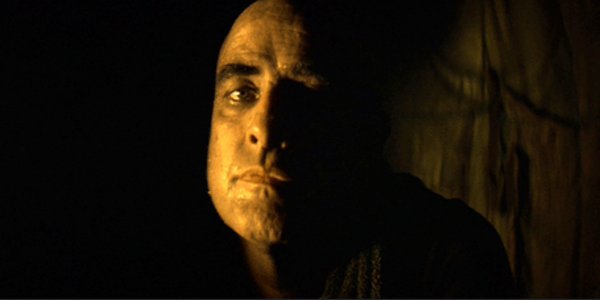
Everybody knows that Francis Ford Coppola's greatest ever flick, Apocalypse Now, was loosely based on Joseph Conrad's seminal novel Heart Of Darkness. Transposing the action from the jungles of Africa to the Vietnam War was a stroke of genius; the nightmarish, hallucinogenic journey into the depths of the wilderness makes for one of cinema's greatest - and most visually stunning - motion pictures. One of the "facts" that seems to have stuck regarding this movie concerns Marlon Brando and his unwillingness to read Heart Of Darkness before turning up on set, both fat and bald. Whilst he did turn up on set overweight, some of the information here isn't true: Brando, having read Conrad's novel, purposely shaved his head in preparation for his character, Kurtz, who is depicted as bald in the book. Even if he didn't learn his lines, Brando - contrary to popular belief - did read the novel. He also contributed a lot to the final script of based on his readings, as proven by recorded conversations between the actor and Coppola (who seems more interested in the "myth" of the film than the reality).

19. Ian McKellen Accidentally Hit His Head In Bag End; The Take Was Kept In The Movie - The Lord Of The Rings: The Fellowship Of The Ring
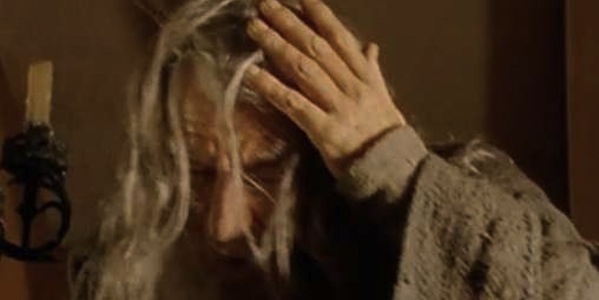
There's a hilarious moment towards the start of the first (and best) The Lord Of The Rings movie, whereupon Gandalf (played by the always amazing Ian McKellen) mistakenly misjudges the height of the ceiling in Bilbo Baggins' house and whacks his head on the rafters. The often cited "fact" regarding this scene states that the knock on the head was a total accident; Jackson loved it so much that he kept it in. To reaffirm this story and to boots its credibility, Jackson even states as such on the DVD commentary for the flick. In actuality, though, it wasn't an accident at all; Jackson must have simply misremembered the day of shooting, or was convinced by Ian McKellen's unrivalled acting ability. In the actor's own words: "Peter, for once, is wrong. The head-banging was my idea but I€™m glad if it seemed spontaneous, the aim of all actors.€

18. There's A Shoe In The Asteroid Field - Star Wars: Episode IV - The Empire Strikes Back
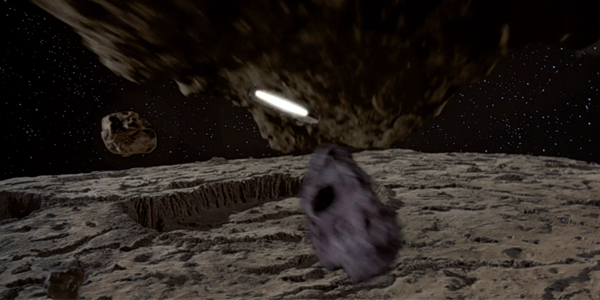
From time to time, a Star Wars nerd who thinks he knows everything about the franchise will throw out the following factoid: "During the asteroid field sequence in Empire, two of the asteroids were actually replaced with a potato and a tennis shoe in order to get back at George Lucas, who - at the time - was driving the SFX team crazy with his demands." It's a great fact, and it's deployed by fans with super confidence on a regular basis. Unfortunately, it's not entirely true: whilst there is, in fact, a potato hidden in the asteroid field, there is no tennis shoe (or any type of shoe, actually). This "fact" seems to have been mistakenly attributed to the wrong movie, given that a tennis shoe was included during a space battle sequence in Return Of The Jedi. So, c'mon, people, let's stop spreading this one around and start attributing it to the right movie.

17. The Movie Was A Huge Flop - Waterworld

If you ask anybody on the planet to name the first movie that pops into their head when you say the word "flop," chances are they'll say "Waterworld." Starring Kevin Costner as a urine-drinking renegade living on a boat in a post-apocalyptic future which is basically just Mad Max on the ocean, Waterworld is often regarded as the definitive failure; a blundering tale of excess, complete with bad writing, bad acting, bad everything. No wonder it didn't make any money at the box office, right? Wrong! Despite the fact that Waterworld continues to brandish a reputation for low income of the embarrassing kind, the truth is a lot less interesting than folk would you have believe: the movie grossed $267 million dollars on a budget of $175 million. Not an incredible box office smash, but not as bad as everyone says. Waterworld also eventually made back all its money via VHS and DVD sales. So there.

16. Lee R. Ermey "Improvised" His Lines - Full Metal Jacket

Lee. R. Ermey's batsh*t crazy drill-instructor, Hartman, is arguably the most memorable part of Stanley Kubrick's Vietnam movie, Full Metal Jacket. The story goes that Ermey, a real life former drill instructor, was brought onto the set of Full Metal Jacket as a technical advisor. After Ermey threw together an instructional tape showing him yelling at a bunch of extras, Kubrick decided to cast him the movie. The rest, as they say, is history: Ermey improvised most of his lines and insults during shooting, resulting in some really awesome scenes. In actuality, though, Ermey probably didn't "improvise" anything. In fact, the man himself has admitted in interviews that he "wrote" 50% of his lines, and did so during the script stages, with Kubrick at his side. Given Kubrick's reputation for perfectionism and creative control, it would have been entirely unlikely that Ermey would have been permitted to improvise on the spot, either. So although the actor certainly assisted in the scripting of his most famous insults, they weren't - as is often reported - "improvised" on the set. That's to say, they weren't made up on the spot and were the result of much preparation.

15. All The Clocks Are Set To 4:20, 'Cause Marijuana - Pulp Fiction

Pulp Fiction is a movie made up of endless interesting tidbits and factoids; writer/director Quentin Tarantino crafts of all of his movies in such a fashion, of course, in which every one of his motion pictures serves not only as a slice of narrative genius but as a relentless exercise in cinematic references, nods, homages and in-jokes. In short, they're super dense. One of said "facts" constantly attributed to Pulp Fiction purports that all of the clocks in the movie are set to "4:20" - a nod to a slang term for marijuana. Whilst some of the clocks visible in Pulp Fiction are set to this time (namely those in the pawn shop), the majority of them aren't. So - pretty please, with sugar on top, stop spreading this around like it happens to be true.

14. Anthony Hopkins Never Blinks - The Silence Of The Lambs
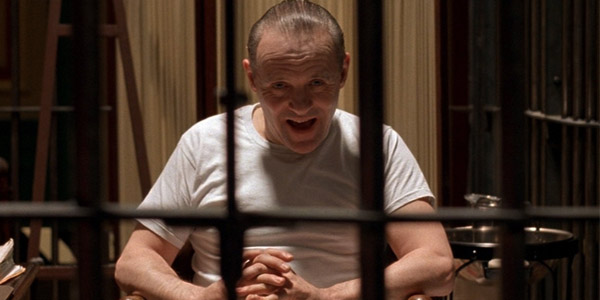
Anthony Hopkins' Oscar-winning performance as Dr. Hannibal Lecter in Jonathan Demme's unforgettable thriller The Silence Of The Lambs cements him as one of cinema's great villains; Lecter is, at once, charismatic, intelligent, monstrous and terrifying. Pretty good for just 16 minutes on-screen. One of the best-known facts about the movie, of course, relates to something Anthony Hopkins supposedly did in order to ensure that his character remained consistently uncomfortable to watch for the duration of the movie: that's to say, he didn't blink, having researched a variety of serial killers who all seemed to share this particularly unnerving trait. And yet, he does blink. Quite a lot. All throughout the movie, in fact. If you comb through all the scenes featuring Hopkins as the aforementioned cannibal, chances are that you'll see him blinking a couple of times. It's not even all that hard to spot. Something of an exaggeration is this "fact," then.

13. Hitchcock Insisted The Water Used In The Shower Scene Be Freezing Cold - Psycho
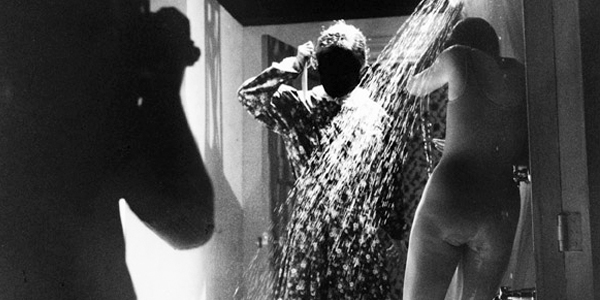
Some movie "facts" worm their way into existence for absolutely no reason. One such example can be tied to Alfred Hitchcock's seminal horror movie Psycho, which featured Janet Leigh and Anthony Perkins as a shower-inclined heroine and the man who murdered her. Hitchcock was renowned for the mistreatment he piled upon his actresses, of course, and - according to many sources - Janet Leigh was no exception to the rule. During the famous shower sequence, it was reported that Hitchcock insisted that ice cold water be used in order to really get the best performance from his actress. Good story as it is, it's also entirely untrue in every way - so much so, in fact, that Janet Leigh herself even spoke out to dispel the rumour, insisting that the Hitch and the crew made sure that the water was pumped in at a suitable temperature at all times. "Cold water wasn't even an option," she reaffirmed.

12. Harrison Ford Recorded The Infamous Voiceover Badly On Purpose - Blade Runner

The original version of Blade Runner, with its notoriously awful voiceover (courtesy of the movie's hero, Harrison Ford) and "happy ending," is often renowed as inferior to that of Ridley Scott's Director's and Final Cuts. Said voiceover was removed from all subsequent versions of the movie following the original's release, of course, given that Scott thought it to be an entirely unnecessary embellishment. Ford agreed, though he was forced by the studio as a result of negative test screenings to record one to be used in a recut version of the movie; as a result, a rumour persists to this day that he recorded it badly (read: rigidly) on purpose in hope that, when the time came, it would be scrapped. Though it was well known that Ford hated the voiceover ("I contested it mightily at the time," he said, explaining that it was "not an organic part of the film"), he also admitted in a 2002 interview that - contrary to popular belief - he did not perform it badly on purpose. "I delivered it to the best of my ability, given that I had no input," he said. "I never thought they'd use it. But I didn't try and sandbag it. It was simply bad narration."

In this post: 
The Lion King
 
First Posted On: 
Contributor

Sam Hill is an ardent cinephile and has been writing about film professionally since 2008. He harbours a particular fondness for western and sci-fi movies.