25 Movies That Would Have Been BETTER As TV Shows
15. New Mutants

To start this entry off bluntly, New Mutants never stood a chance of being successful. The film suffered through multiple delays while stuck in development hell, and when it finally did release, it was greatly affected by the pandemic. With Fox being acquired by Disney in that time, the planned trilogy was all but guaranteed to never see the light of day.
However, even taking all of that into consideration, New Mutants would have been better as a TV show. Introducing so many new characters at once was always going to result in them being underdeveloped, with a story that felt rushed.
Yes, this is how the X-Men first came together in 2000, but The Avengers changed the superhero genre forever 12 years later. The MCU set the blueprint for how a team would join forces, and though the franchise would have ultimately failed if it tried to release a Cannonball movie followed by a Magik movie etc., it may have had a chance on the small screen.
The X-Men had already seen TV success, of course with the animated series, and later with Legion and X-Men '97, and this is where New Mutants could have thrived. Not as a film that was never going to launch a franchise, but as a series that could have told the story and done the plethora of new and unfamiliar characters more justice.
14. Eternals

Much of what has already been said about Suicide Squad and New Mutants is also relevant for Eternals, in that there were too many characters and too much exposition needed to set up the dynamics of the Eternals, the Deviants, and the Celestials than could be achieved in one movie.
On top of all of that was how the wider context of the Marvel Cinematic Universe didn't work in Eternals' favour. Yes, there were some references to the wider MCU, but at no point did this feel like a puzzle piece to a bigger picture, and it still doesn't four years later.
The MCU was built on compelling individual movies that were good on their own merit, but also added to the overall narrative. Outside of the Blade reference in the post-credit scene, something that looks less and less likely to be followed up on as time goes on, it feels as though the Eternals don't have a place in the franchise.
People have been desperate for the return of Shang-Chi (Simu Liu) for example, but would anyone really miss this race of alien robots if they didn't return? With a TV series on Disney+ instead, there would be more room for character development, Captain America: Brave New World's eventual acknowledgement of the story would still have worked, and there would have been less pressure and expectation for it to connect to anything else in the same way as Moon Knight or She-Hulk.
13. Assassin's Creed
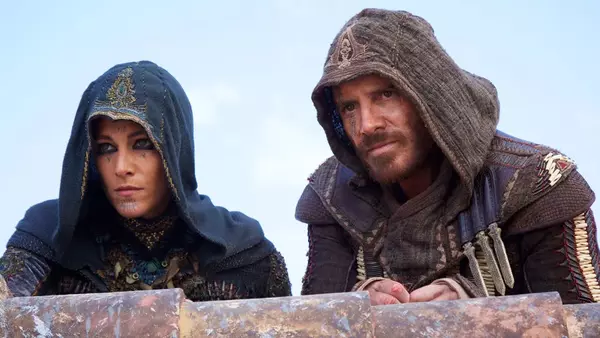
Michael Fassbender is one of those actors who can shine no matter how bad the movie around him is. Not only was he easily the best part of both Prometheus and Alien: Covenant, a low bar to be sure, he was actively outstanding as both David and Walter.
However, even he couldn't make anything out of Assassin's Creed. Whenever anyone talks about the film, they don't mention Fassbender's performance, they talk about just how underwhelming it was. Particularly when considering the popularity of the source material at the fingertips of the filmmakers.
The format was there almost begging to be utilised. You've got an assassin in the gaming franchise with however many targets, and it would have been the easiest thing in the world to put someone like Altaïr, or Aguilar in a mission-per-episode kind of situation.
Instead, Ubisoft's incredibly popular series was adapted in about the loosest way possible, almost unrecognisable from the source material. There were certain aspects that made it into the film, but nothing that was ever going to satisfy either those who had played the games or those who just wanted a good action flick to watch. This was built to be made in an episodic format.
12. Transformers One

The Transformers franchise has always brought in a huge amount of money, with two of its outings crossing the billion-dollar mark. However, though Rise of the Beasts earned $441 million in 2023, this was considered a flop, and the entire franchise was at a low point.
Enter Transformers One. The animated movie that served as an origin story for the likes of Optimus Prime (Chris Hemsworth) and Megatron (Brian Tyree Henry), showing the Autobots' home planet in all its former glory, is the best Transformers film in some time, possibly ever, and yet nobody went to see it.
Aside from the fact that the entire franchise was feeling tired after six entries and a Bumblebee spin-off, Transformers One moved away from the live-action style of the previous movies, which was a bold step because the CGI has always been one of the franchise's biggest selling points. Style over substance personified.
While Transformers One reversed such a trademark, it brought in only $129 million which is a franchise low by some margin. No one was interested in another Transformers effort just one year removed from Rise of the Beasts, particularly not an animated one, but a TV series, produced away from the expectations and reputation of the franchise Michael Bay kicked off in 2007 may have given the story a chance.
11. Ender's Game

There are so many great novel, gaming, or comic book series that have a huge, extensive material to draw from for a cinematic adaptation that ultimately barely scratch the surface. There are plenty of them included on this list, but few have as much to draw from as Ender's Game.
Imagine being able to pull from 16 novels' worth of material, spanning literally the course of 1000 years, and only having one film to show for it. Scratching the surface doesn't even come close. Surely a world of this size should have been given at least one series, probably more, to be told properly.
That's not to say that every word of the 16 novels had to be adapted, because of course that's not true. But the film missed out some of the key points of Ender's Game, including the titular character's relationship with his siblings, and the military, tactical themes that were arguably subbed out in favour of big CGI battles.
The passage of time is a crucial element in Ender's Game, and so a TV show spanning a few years would have been the ideal choice. Considering how much Ender changes throughout the story, having the children involved grow up extensively throughout the project would actually be a plus, unlike in Stranger Things or Wednesday.
10. Mufasa: The Lion King
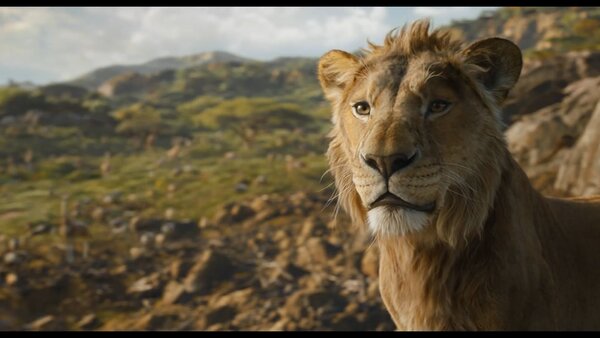
After the roaring success of Jon Favreau's "live-action" remake of The Jungle Book in 2016, the director was quickly put in charge of doing the same for The Lion King. Though the movie smashed it at the box office, fuelled largely by its name, the film itself was poorly received as a pointless remake that brought nothing new to the table and robbed the characters of any kind of emotion.
Of course a sequel was greenlit due to the $1.6 billion global intake, but Mufasa: The Lion King brought in less than half of its predecessor, confirming that not every successful project needs a sequel.
The idea of delving into Scar's backstory isn't exactly a surprising one, as Disney has often found success in exploring its villains, but the big screen wasn't the place for it, particularly when Disney+ is right there. This is exactly where a series surrounding Scar (Kelvin Harrison Jr.) and Mufasa's (Aaron Pierre) youth should have found its home.
Not only that, but this story should have headed back to animation rather than joyless "live-action". It wouldn't have made as much money for Disney as the film did, but it would have been a better final product, potentially offering more than just a shallow cash grab. But when questioning whether telling good stories or making money is at the top of Disney's list, there is only ever one answer. A lot of the time the studio checks both boxes, but not this time.
9. The Hitchhiker's Guide To The Galaxy

There are source materials that are difficult to adapt to screen, and then there is The Hitchhiker's Guide to the Galaxy in a league of its own.
It was brought to the big screen in 2005, and the film wasn't bad at all. It had a great cast, and the wackiness that came with such a project is part of its charm and appeal, but this could have been so much more.
The original material came as part of an episodic radio broadcast in the late 1970s, before being penned as a novel in 1979, and eventually making the jump to TV as a mini-series in the 80s. In short, this story was meant to be told over a longer span than just a two-hour movie.
There were plenty of aspects kept in to make a fun enough film, but it couldn't compare to the series that preceded it. It's yet another entry on this list that took a strong source material, and kept enough of it in place to make a good movie, but left too much out for it to be great.
8. Hitman
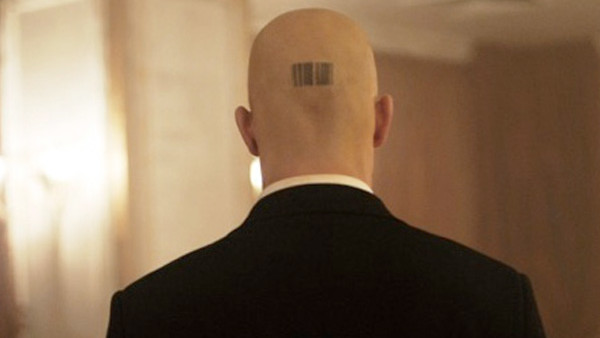
Since Hitman first made its debut on the PC back in 2000, there have been two film adaptations. Timothy Olyphant was miscast as Agent 47 in 2007, Rupert Friend was miscast in the 2015 reboot, and neither iteration came close to capturing what made the games so popular.
From the beginning, the player is set up as Agent 47, a mysterious clone trained from birth to be one of the greatest assassins alive. Though each level offered a different mission, there was always a great narrative that ran all the way through, leading to the big finish.
Exactly why this format hasn't been adapted into a TV show yet is a head-scratcher. The initial Hitman movie didn't work at all, so when discussions came up for a reboot, what compelled the filmmakers to make the same mistakes all over again?
A video game adaptation on the small screen, that actually faithfully adapts the games rather than taking one or two characters and throwing them into a situation nothing like the source material, is the simplest route to a Hitman success. A different mission each episode, much in the same vein as Assassin's Creed, would be the ideal way to bring Agent 47 to life, with more of the popular supporting characters around him, like Diana, Dr. Ort-Meyer, and more.
7. The Many Saints Of Newark
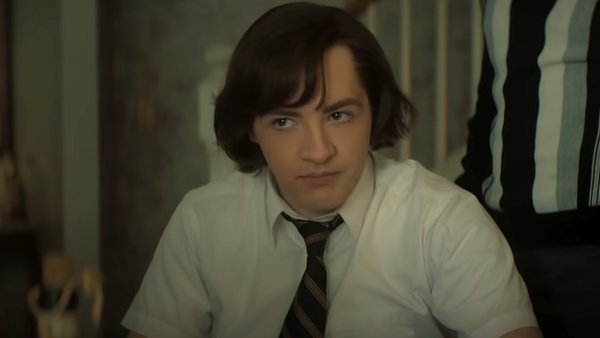
Serenity isn't the only film on this list coming off the back of a TV series, though the circumstances here couldn't have been much more different. While Firefly was a cult hit cancelled after one season, The Sopranos is widely regarded as one of the greatest shows of all time. Frankly, that it took this long to produce a spin-off is astounding.
The Many Saints of Newark offered a look at a young Tony Soprano, benefited by the most perfect casting possible. Michael Gandolfini played the character his father James portrayed for six seasons, and excelled in the role.
Much like with Serenity, it felt as though, as a concept, this had more legs than just a two-hour film. Cramming the story into a single outing only hurt the project, and though a look into the early years of Tony Soprano is something that any fan of the show would surely have wanted to see, the reception was lukewarm at best.
To put this into the context of another all-time great TV show, had The Many Saints of Newark been produced as a TV series rather than a good-not-great film, it could have been The Sopranos' Better Call Saul rather than its El Camino.
6. The League Of Extraordinary Gentlemen

The League of Extraordinary Gentlemen is often remembered as being the movie that ended the film careers of both Sean Connery and director Stephen Norrington, as the two famously clashed on the set. This was just one of the many issues that kept the project from success.
Bringing together so many characters from so many different walks of life was always going to be a challenge. It's understandable to believe it possible so soon after the success of X-Men's first foray into live action, but not every film can be X-Men.
Though none of the characters felt truly developed, it was Allan Quartermaine (Sean Connery) who may have suffered the most. He was clearly the anchor point of the story, and a living legend in the realms of the narrative, but he felt as wasted as the likes of Tom Sawyer, Captain Nemo, and Mina Harker (Shane West, Naseeruddin Shah, and Peta Wilson). There was never even any reference to the fact that the villain was Moriarty, legendary nemesis of Sherlock Holmes.
Alan Moore and Kevin O'Neill's source material isn't exactly extensive, but it is far more interesting than what the movie produced. They would have needed at least two or three seasons to get through them, but battles lasting for centuries referencing other giant fictional works, and alien invasions would have made for a far more compelling watch than a disappointingly generic war plot.