25 Things You Didn't Know About The Shawshank Redemption
Happy 25th to an all-timer.

Despite initial commercial failure, Frank Darabont's prison drama The Shawshank Redemption picked up a second life on home video and TV, where it eventually turned considerable profits for the studio, and a quarter of a century later, it reportedly remains one of the most prized assets in Warner Bros.' media library.
The film's stature as a pop-culture monolith cannot be overstated: between its iconic dialogue, wonderful performances and deeply humanistic depiction of hope prevailing over despair, it's an all-time classic for damn fine reason.
And as with any beloved movie, there are a heap of fascinating and little-known stories about how the movie was made, from its humble origins as a passion project for Darabont, to the script setting Hollywood alight and attracting a who's who of A-list talents.
Despite its relatively modest budget and production, Shawshank wasn't an easy shoot for anyone, with Darabont and his crew scarcely avoiding disaster several times, between a brutally demanding shooting schedule and a fire that damn-near destroyed one of the movie's major sets.
And yet, the end result feels so meticulously, perfectly polished that you'd never guess it was quite such a gruelling experience for all involved...
25. Morgan Freeman Recorded His Voiceover Before Shooting Began

Though the typical rules of filmmaking dictate that any voiceover required for a movie is recorded during post-production, Frank Darabont took the highly unconventional move of having Morgan Freeman record Red's memorable narration before shooting had even begun.
Darabont's reasoning was that the narration could then be played on set to establish the tone and rhythm of each scene while shooting.
Freeman recorded the original take of the narration in an Iowa recording studio in just 40 minutes, but unfortunately, there was a hiss audible on the track which couldn't be erased by the sound team.
As a result, Freeman ended up having to re-record his voiceover in a better-equipped studio, and this time it took an entire three weeks to perfect.
24. Stephen King Sold The Rights For Just $5,000

Stephen King, who wrote the novel on which The Shawshank Redemption is based, ended up selling the rights to Darabont for a mere $5,000, after becoming friends with the filmmaker when he asked permission to adapt King's short story "The Woman in the Room" into a script.
After Darabont got his first major paid writing gig, a screenwriting credit for 1987's A Nightmare on Elm Street 3: Dream Warriors, he returned to King with $5,000 to buy the rights to his novella "Rita Hayworth and the Shawshank Redemption."
Another five years passed before Darabont wrote the script - which he penned in just eight weeks - and, hilariously, King never ended up cashing the cheque Darabont sent him.
Instead, King later framed the cheque and sent it back to Darabont with a note - "In case you ever need bail money. Love, Steve."
23. It Didn't Win A Single Oscar

Even though The Shawshank Redemption is often regarded as one of the greatest films ever made - even holding the #1 spot on the IMDB Top 250 - it curiously went home totally empty-handed at the 1995 Academy Awards.
While the film was nominated for seven Oscars - including Best Picture, Best Actor (Morgan Freeman), and Best Adapted Screenplay - it was unfortunate enough to release in a heavyweight year, facing stiff competition from both Pulp Fiction and especially Forrest Gump, with the latter winning six Oscars, including Best Picture.
If you (somehow) required any more proof that gold statues - or a lack thereof - doesn't mean squat, here it is. No offense to Forrest Gump, of course.
22. Frank Darabont's Inexperience Was A Frequent Issue On Set

Incredibly, the movie was Frank Darabont's theatrical feature debut, and his lack of experience as a filmmaker caused plenty of friction on-set with the cast and crew, resulting in shooting often lasting up to 18 hours per day during six-day weeks.
Morgan Freeman took issue with the number of takes Darabont required for scenes which he felt had been completed to a high standard, to the extent that he often refused to perform additional takes that the director requested.
Though Tim Robbins was more compliant, he has since commented on the difficulty of such long shooting days.
But curiously, Darabont bristled the most with cinematographer Roger Deakins, due to their differing philosophies about the film's shooting style.
Darabont favoured epic, sweeping shots of the prison exterior, while Deakins felt that only showing the outside of the prison occasionally would emphasise the claustrophobic tension of the piece.
21. Red's Mugshots Are Of Morgan Freeman's Son
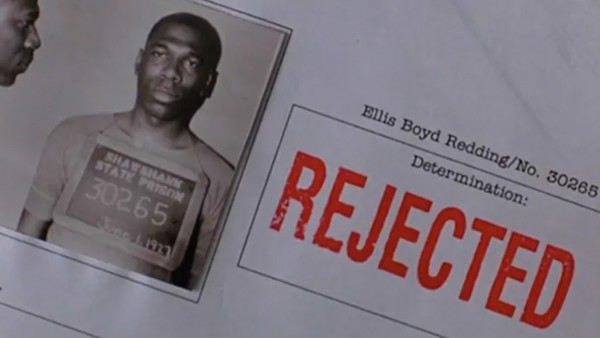
During Red's parole hearing, we memorably catch a brief glimpse of a mugshot of his younger self, and rather than simply hire an actor resembling a young Freeman for the brief cameo, Freeman's own son Alonso was drafted in to take the pictures.
Alonso also has a cameo in the film proper, shouting "Fresh fish! Fresh fish today! We're reeling 'em in!", as Andy is being brought to Shawshank in one of the opening scenes.
Freeman's son has since appeared in small roles in a few of his father's other films, including Se7en and The Bucket List.
20. Frank Darabont Used Goodfellas As Inspiration

Given Darabont's noted inexperience while making the film, he quite sensibly deferred to one of the all-time filmmaking masters for inspiration during shooting.
Every Sunday while making The Shawshank Redemption, Darabont would watch Martin Scorsese's Goodfellas, ultimately taking note of its exemplary use of voiceover narration and sharp editing to dictate the passage of time.
The irony, of course, is that Goodfellas under-performed at the Oscars just like Shawshank, and Shawshank's popularity actually allowed it to leapfrog Goodfellas - the latter being ranked #18 on the IMDB Top 250 compared to Shawshank's #1.
19. Stephen King's Name Was Intentionally Kept Out Of The Marketing
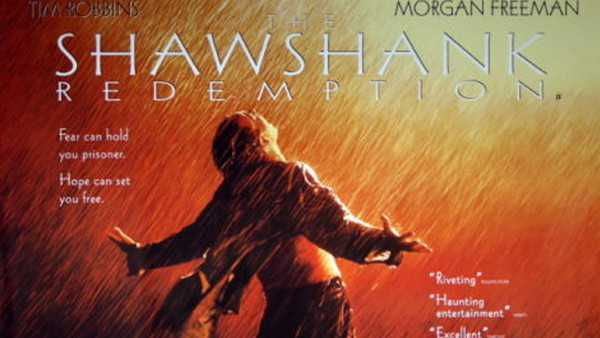
You'd be forgiven for not actually knowing that The Shawshank Redemption was based on a Stephen King-penned novella, given King's noted deference towards the horror genre and the utter lack of King's name in the film's marketing materials.
This was in fact a totally intentional move on the part of Columbia Pictures, who after seeing the film test screen extremely well, felt that an association with King might harm the film's commercial prospects with more general audiences who weren't much keen on horror.
Despite the attempt to attract mainstream crowds and drum up a steady head of awards hype, the strategy backfired, as the film ended up bombing during its initial theatrical release regardless, and only proved profitable for the studio once it hit home video.
18. Tom Hanks Almost Played Andy Dufresne

It goes without saying that the role of protagonist Andy Dufresne was majorly sought after in Hollywood, with the likes of Jeff Bridges, Kevin Costner, Tom Cruise, Matthew Broderick, Nicolas Cage and Johnny Depp all either being offered or lobbying for the part before it eventually went to Tim Robbins.
But the actor who likely would've played the part had it not been for scheduling conflicts was Tom Hanks, who ultimately had to turn it down due to being committed to Forrest Gump.
It's easy to imagine how Hanks would've knocked the role out of the park, but given that he instead went on to win his second Best Actor Oscar and score one of the biggest box office hits of his career, he surely can't be too fussed about his decision.
17. Shooting The Baseball Scene Took So Long It Injured Morgan Freeman's Arm

Who can forget the early scene where Andy is introduced to Red, who is busy playing a game of catch with another inmate in the yard?
Despite the seeming simplicity of the scene, the sequence took a whole nine hours to shoot, reportedly owing to Darabont's methodical and perfectionist style and aforementioned preference for arguably excessive coverage.
For his part, Morgan Freeman completed the nine hours of shooting without complaint, yet as you might imagine, throwing a baseball back and forth for nine hours on end would aggravate anyone's arm, and as a result, Freeman came to set the next day with his left arm in a sling.
Whether he truly was injured enough to require a sling or was simply trying to make a point to Darabont about his shooting style, only Freeman knows.