25 Wonder Woman Easter Eggs & References You Must See
"Ice cream is wonderful!"
The response to Patty Jenkins' great Wonder Woman is as delightful as it is cliche-ridden, with talk of this being the first movie in the DCEU to really get things going and a genuinely glowing critical reaction that seemingly ends the war between the reviewers and the fans.
Putting all of that needless narrative aside, Wonder Woman is excellent. It has its flaws, but they are pitiful compared to the exceptional action sequences, character work and performances, and the subsequent revelation that Patty Jenkins is set to return for a sequel should be considered truly great news.
In Wonder Woman, she has made a comic book movie that isn't beholden to any source material in a knowing way: her film is an entertaining story primarily, with great characters and real heart, and the commitment to stuffing in fan-baiting comic book references is clearly a secondary concern.
That is a genius move, as it gives the film far more mainstream appeal, and while there's no surrendering of the film's source links they don't feel claustrophobic. That comes at the cost of major Easter Eggs though, which are comparatively thin on the ground.
It might not be as packed with Eggs and references as Zack Snyder's movies on first watch, but you get the feeling there will be more revealed in subsequent viewings, and Jenkins definitely knows where her characters have come from...
25. Wonder Woman's Origin

The film chooses to focus on an origin story closer to the New 52's version of Wonder Woman, rather than older incarnations. Hippolyta tells her that she was hewn from clay and that her father - Zeus - breathed life into her having created the Amazonians to help protect mankind.
The story also references Pygmalion - who made himself a woman out of clay and begged Aphrodite to make her live, but also closely resembles an older Amazonian origin from the comics. There, a group of women among the Gods restored the souls of women unjustly killed by men by forming them bodies out of river-bed clay. The sight of them emerging from the lake clearly draws from that.
Incidentally, the whole opening of the movie feels like an homage to DC Universe; Rebirth, which begins with a monologue (from Wally West in that case) with a remarkably similar message.
24. The Justice League Plates

As hinted back in Batman v Superman, Diana's memories were inspired by Bruce Wayne unearthing the image of her alongside Steve Trevor and the others on his special mission. At one point, we actually see that photo being staged and taken, but not before we get the first part of a modern-day bookend with Bruce's presence all over it.
When the car arrives at the Louvre delivering the photo to Diana not only boasts a big Wayne Enterprises logo on the side, but also has a more gag-like nod to the Justice League. The licence plate reads JL-828-VZM, including a nice little nod to the Justice League.
23. Diana's Job
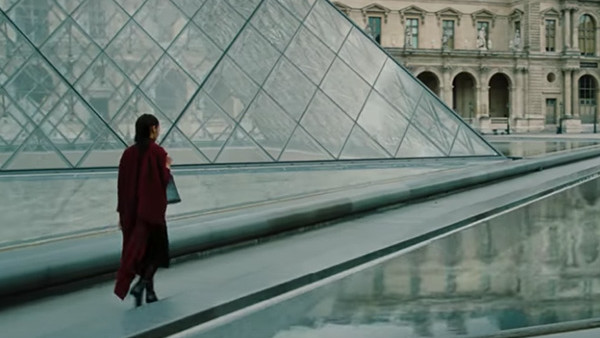
In the present day, it's revealed that Diana has replaced her superheroism with a "normal" job, working in the Louvre - having presumably been able to rise up to the prestigious job without anyone wondering why she doesn't really age...
The job is basically a call-back to Wonder Woman's day job from the comics in the 1990s, in which she worked at Gateway City Museum of Antiquities, which is a slightly less well known museum... It was also where she met Cassie Sandsmark who would later go on to become the third Wonder Girl.
22. The SMS Schwaben

A couple of the Germans who face Wonder Woman and Steve Trevor in the film are notable as real world figures. Erich Friedrich Wilhelm Ludendorff was a German general from the time, who commanded the German army towards the end of the war and went on to be a nationalist conspiracy theorists whose ideas helped underpin the Nazi party's ideology.
There's also an appearance by German leaders Paul Von Hindenberg and Kaiser Wilhelm II, while Game Of Thrones' James Cosmo turns up in a cameo as Field Marshall Haig.
More specifically, there's also a period battleship cameo: the German lifeboats we see early on are marked SMS Schwaben, which was commissioned in 1904. So why is it notable? Well, it's a bit of a gag, as the ship it replaced was named the Mars - otherwise known as the Roman name for Ares.
21. Godkiller, The Lasso Of Truth & Lightning Powers

It wouldn't be a Wonder Woman movie without the Lasso Of Truth appearing, and it works the same way as it did in the comics, though it has a new name - the Lasso Of Hestia. That refers back to the goddess Hestia, who is presented in the movie as the goddess of the hearth (she's traditionally domestic), which explains why it gets hot when the Amazons are interrogating Steve until he stops lying.
The Godkiller sword also comes from the comics, though it's a more recent addition and was wielded by Deathstroke, having been forged by Hephaestus, the ancient Greek blacksmith god.
And as another weaponry nod, Wonder Woman's lightning powers are borrowed from her father, but also from the comics, where Gail Simone introduced the power in Wonder Woman #39 (2010) as a gift from Zeus.
20. The Hercules Nod
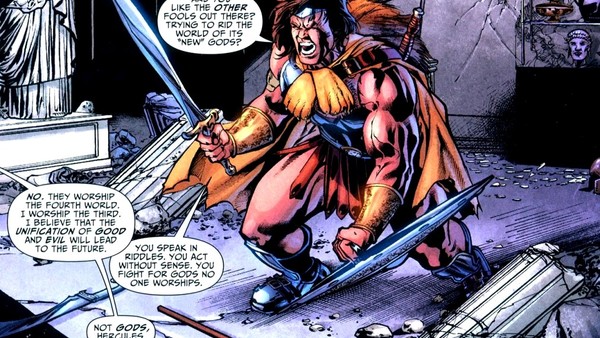
The film explains why the Amazons alienate themselves on their island as a result of mankind turning on them after Zeus made them to give them "a bridge to a greater understanding." Hippolyta was forced to lead them to freedom, alongside the Gods, turning them against Ares in the process.
This seemingly references Ares sending Hercules to challenge Hippolyta in combat, and then betraying the Amazons when invited to dine with them in defeat. He drugged them, forced himself on Hippolyta and the Amazons were enslaved. The similarities in the two stories is pretty clear.
19. Paradise Island
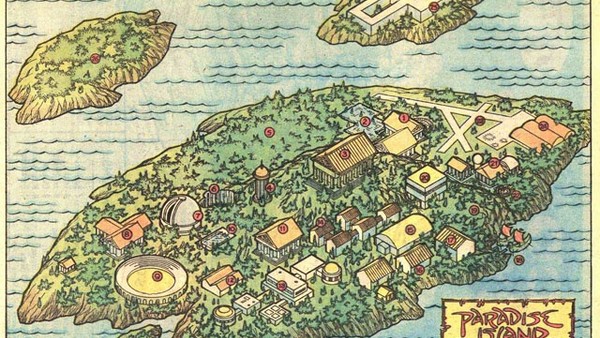
At one point in the film, Steve Trevow clearly struggles with pronouncing Themyscira and instead refers to Diana's homeland as "Paradise Island", which elicits a smirk from Diana.
That's clearly because the name is exactly what Themyscira was once known as. When William Moulton created Wonder Woman, he had his Amazons inhabit Paradise Island - a utopian ideal free of men. It wasn't until 1987 when George Perez - who is created as being one of the key drivers behind Wonder Woman's current make-up - changed the island's name.
So important was Perez that he's credited in the thanks section of the credits.
18. Ann Wolfe
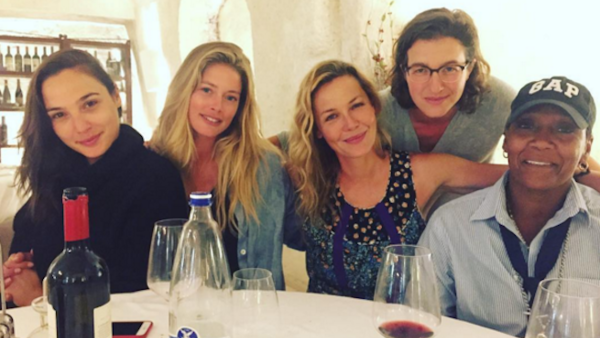
There aren't many cameos in Wonder Woman (that's more a Disney sort of thing), but one of the Amazons is played by Ann Wolfe - who is legitimately considered one of the greatest female boxers of all time. She plays Artemis, who - in the comics - Wonder Woman has to face in a tournament before she leaves for Man's World.
That story specific doesn't come into play in the film, but Wolfe's Artemis is a formidable warrior who shows her mettle fighting the Germans. It's pretty perfect casting - especially when you consider Artemis once became Wonder Woman in the comics.
17. The War Posters
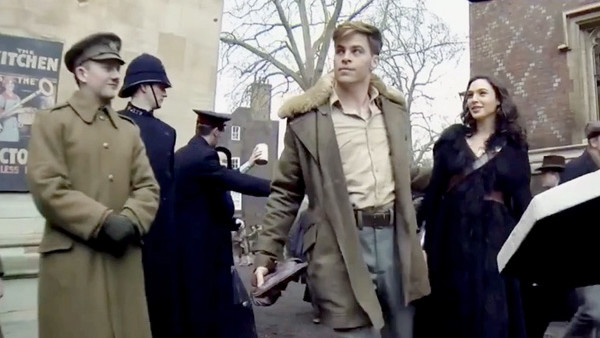
The period setting is clearly very important to Patty Jenkins, and her commitment to authenticity is obvious, and like Zack Snyder's work, it comes down to the little details.
The art department has dropped in little nods to the time period, notably with the use of propaganda posters, which were used - rather pertinently - to inspire women during the period to "do their bit". The conflict of Diana's militarism and that message is hardly accidental.
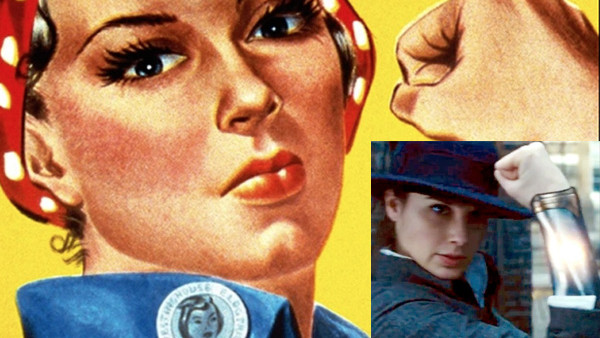
There's also a moment in the alleyway sequence that clearly references the famous "We Can Do It!" World War II poster that has come to be appreciated as one of the seminal images of motivational war images...