27 Things You Didn't Know About Reservoir Dogs
Which Batman star almost fronted Tarantino's heist classic?

We're now on the eve of the release of Quentin Tarantino's ninth film, Once Upon a Time in Hollywood, and so what better time to revisit the instant classic that kickstarted the legendary filmmaker's career?
Believe it or not, Tarantino's ground-breaking crime thriller Reservoir Dogs turns 27 this year, and given that it's not quite the pop-culture monolith that is Pulp Fiction, you'd be forgiven for not harbouring the same encyclopedic knowledge of its production and release.
And so, 27 years on, we've rustled up the 27 juiciest trivia tidbits you most certainly didn't know.
From stories of the film's hellish production to the knock-on effect it had on the rest of Tarantino's career, it's clear that Reservoir Dogs could've been a very different beast entirely with a few small changes.
Tarantino's talents aside, it's no minor miracle that the end result turned out as spectacular as it did, surely a combination of smart filmmaking instincts and a healthy dose of luck.
Armed with a tiny budget and ultra-enthusiastic cast and crew - with one major exception, that is - Tarantino delivered one of the most staggeringly confident feature-length directorial debuts of all time, and here's everything you absolutely need to know about it...
27. Tarantino Was Originally Going To Play Mr. Pink

Quentin Tarantino of course ends up playing the memorable yet relatively minor character of Mr. Brown in the movie, but originally, he lined himself up to play the far more pivotal part of Mr. Pink, the only member of the heist who actually survives the movie.
However, he nevertheless let every actor read for the part, given that the majority of the cast wasn't particularly bothered about which part they played.
Except for Steve Buscemi, that is, who was very specifically interested in Mr. Pink above all others, prompting Tarantino to tell him that he'd have to nail a killer audition in order to wrangle the part away from himself.
Clearly, Buscemi knocked it out of the park, and the rest is history.
26. The Entire Music Budget Was Spent On "Stuck In The Middle With You"

A few years ago, Tarantino revealed that the entire allocated budget for music was spent on securing the rights to Stealers Wheel's "Stuck in the Middle with You", which of course plays out when Mr. Blonde (Michael Madsen) is torturing kidnapped cop Marvin Nash (Kirk Baltz).
Tarantino was so committed to having the song in his movie that he had resigned himself to having no other music as long as he could get that song.
As for how he managed to get any other music in the film without paying for it, namely George Baker Selection's "Little Green Bag"?
The producers were able to cut a record deal for the film's soundtrack, presumably with massively favourable conditions for the artists involved.
In the event that he couldn't secure the Stealers Wheel track, however, Q.T. did have a backup: Sweet's pop hit "Ballroom Blitz."
25. The Title Came From A Customer At Tarantino's Video Store
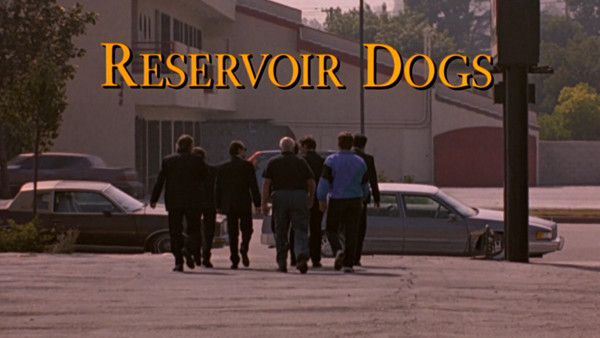
The film's title is honestly a bit of an oddity, given that it has no clear bearing on the film's characters or events - beyond the thieves being rough-around-the-edges "dogs" - and for years fans speculated on exactly how Tarantino landed on such an esoteric moniker for his film.
The truth, as it turns out, is deliciously simple. When the director was working at the video rental store Video Archives while writing the film's script, he recommended the Louis Malle movie Au Revoir les Enfants to a customer, who curtly replied, "I don't want to see no reservoir dogs!"
And thus, the film's indelible yet peculiar title was born.
24. Many Actors Wore Their Own Clothing To Keep The Budget Low

As is often the case in movies with shoestring budgets, the cast were encouraged to bring their own clothes to set in order to keep costs down.
The distinctive, garish tracksuit jacket worn by Chris Penn's Nice Guy Eddie, for instance, was Penn's own wardrobe, while Steve Buscemi wore his own black jeans, and Harvey Keitel's suit was a gift given to him by French designer Agnès B.
As for the rest of the suits? Tarantino lucked out, with the film's costume designer agreeing to donate the suits for free because she loved American crime films so much.
In fact, it wasn't only the clothes that the actors ended up providing - Michael Madsen used his own Cadillac Coupe de Ville for Mr. Blonde's ride, and even bought his own soda for the character's introductory scene.
23. Madonna Disagreed With Tarantino's Interpretation Of "Like A Virgin"

One of Reservoir Dogs' most memorable dialogues occurs in the film's opening moments, where Mr. Brown theorises that Madonna's hit "Like a Virgin" is about a promiscuous woman who, upon consorting with an especially well-endowed man, is reminded of the pain of a virgin's first time.
Later that year, Madonna saw the film herself and, while she professed to enjoy it, nevertheless disagreed with Tarantino's interpretation of her song.
As a follow-up, she sent the director a copy of hew new album Erotica and signed it, "To Quentin. It's not about d**k, it's about love. Madonna."
In a cute coincidence, you'll notice that Nice Guy Eddie doesn't chime in on the conversation about the song, given that his brother, Sean Penn, had been previously married to the singer for four years and didn't want to say anything about his former sister-in-law.
22. Michael Madsen Struggled To Film The Torture Scene

Michael Madsen may have a reputation for being one of cinema's most iconic tough guys, but despite the conviction with which he performed Mr. Blonde's brutal torture of Nash, he actually has a strong aversion to violence and struggled immensely with the scene.
Madsen was especially challenged by the requirement to hit actor Kirk Baltz, made all the worse when Baltz improvised a line about Nash having kids at home.
Madsen had recently become a father, and so the prospect of killing a man not unlike himself almost left him unable to complete the scene.
This take made it into the final film, but ever the pro, Madsen disguised his discomfort perfectly.
21. Monte Hellman Almost Directed It Instead
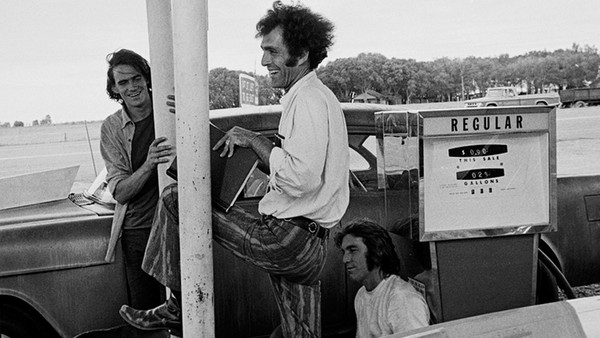
Though Reservoir Dogs is an unmistakably singular vision from a fiercely unique writer-director, the original plan was actually a little different.
After Tarantino completed the script, an established director was sought to make the movie, and Tarantino settled on cult filmmaker Monte Hellman, who enjoyed success with 1966 Jack Nicholson-starring western Ride in the Whirlwind and the 1971 indie road movie Two-Lane Blacktop, and served as a mentor to Tarantino in his earliest days as a budding filmmaker.
But Hellman's career wasn't exactly going places when Tarantino was putting together his movie, having helmed 1989's rancid horror sequel Silent Night, Deadly Night 3: Better Watch Out!, and Tarantino eventually lobbied to direct it himself.
Hellman ultimately ended up taking an executive producer credit for his involvement, and given the film's eventual success on home video, we're going to assume his investment paid off swimmingly.
20. Harvey Keitel's Involvement Raised The Budget From $30,000 To $1.5 Million

Tarantino was originally planning to make Reservoir Dogs guerrilla-style with just $30,000, a 16mm camera and a cast and crew of his friends.
However, that all changed when Tarantino received a call from Harvey Keitel, who had read the script after producer Laurence Bender gave a copy to his acting teacher's wife, who knew Keitel.
Keitel asked Tarantino if he could both star in and produce the film, and his involvement alone helped raise a total budget of $1.5 million from investors.
Unlike most of the cast, Keitel was already an established name at the time of the film's production, and so his attachment bolstered confidence that it could be a commercial success - as, obviously, it eventually was.
19. Tarantino Originally Wanted The Film To Open With Pink Floyd's "Money"

Tarantino famously writes scenes to specific pieces of music and will even include those songs in his scripts, and when it came to the film's unforgettable opening titles sequence, he insisted that the gang's slow-motion walk be set to Pink Floyd's iconic hit "Money."
And though Pink Floyd are notoriously picky about who they license music out to - and they charge a fortune for it - this wasn't actually the reason for Tarantino ultimately selecting "Little Green Bag" instead.
In fact, Tarantino heard the latter song over the radio and, upon feeling a major pang of nostalgia, decided to ditch his aspirations for Floyd.
It clearly worked out for the best - Floyd almost certainly would've never licensed the song to him anyway, and "Little Green Bag" got a nice resurgence in popularity.