30 Greatest Movies Of All Time
It is simple human nature that everybody will have their own opinion on what they define as 'the greatest'. Whether it be television shows, sports teams, musicians or even something as trivial as pizza toppings, it's a foregone conclusion that not everyone is going to have the same opinion. This rings especially true when it comes to art, which is easily the most subjective medium and definitely the most open to interpretation. As the biggest, costliest and most popular pieces of art available to the public, movies tend to divide opinion like no other medium. However, with billions of dollars at stake most releases are now treated more as entertainment, which is to be expected when you're running a business model designed to maximize income. We live in a world where the filmographies of Roland Emmerich and Shawn Levy have generated more box office business than those of Martin Scorsese and Quentin Tarantino, so it's safe to say that commercial success is no longer a barometer of quality. With that in mind, this article will cast a look back at the entire history of cinema in an attempt to pick out the 30 greatest movies ever made. It is a list that spans ten decades, covering almost every genre from silent movies to summer blockbusters, featuring directors from Kurosawa to Kubrick and Spielberg to... well, Spielberg. Taking into account both the narrative and technical qualities, as well as the influence and innovations these movies had on the medium, condensing the best of over 100 years of cinema down to just 30 was a tough task, so read on to find out what movies made the cut.

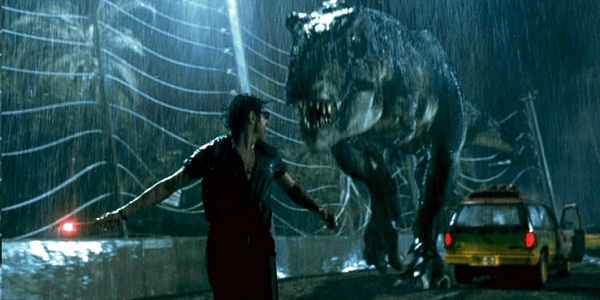
30. Jurassic Park (1993)

Big-budget blockbusters loaded with special effects are ten-a-penny these days, but over 20 years later few have come close to matching the thrills, suspense and sheer awe-inspiring spectacle of Steven Spielberg's seminal summer movie. With the director at the top of his game and pioneering visual effects that haven't seemed to have aged a day, Jurassic Park is one of the most purely entertaining movies ever made. From the first jaw-dropping shot of the brachiosaurus to the T-Rex saving the day in the final act, the seamless fusion of groundbreaking CGI and Phil 'You Had One Job' Tippett's animatronics helped usher in the age of the effects-driven blockbuster. Packed with iconic moments, memorable one-liners, one of John Williams' best scores and a string of heart-stopping set-pieces, Jurassic Park has more than stood the test of time and remains endlessly re-watchable to this day. As well as becoming the highest-grossing movie of all time with a box office gross of $983.8m (over $1.6bn when adjusted for inflation), the 20th anniversary 3D re-release added a further $116.5m, proving the movie's enduring popularity. Simply put, Jurassic Park is a timeless blockbuster that will continue to thrill every generation who have the fortune of experiencing it for the first time.

29. The General (1926)

Buster Keaton's silent masterpiece endures almost 90 years later as one of the best slapstick comedies ever made. Sight gags, physical pratfalls and stunt-work that still looks incredibly dangerous today all combine with the actor's signature deadpan expressions and visual inventiveness to create a timeless comedy that doesn't need sound to entertain. When filming the iconic locomotive chase, Keaton instructed the camera to only stop shooting when he yelled cut, or was killed. Such dedication is admirable as the sequence shows the comedian at his best, risking life and limb to deliver a standout set-piece of such vivid imagination, carried by the actor's fluid physicality. As a comedy/action/adventure hybrid from the silent era, The General was both groundbreaking and massively ambitious, with the legendary Buster Keaton at the top of his game. At the time, the movie's $750,000 budget made it an expensive project, and The General failed to recoup a significant profit. Sadly, this led to Keaton signing a studio deal with MGM that would greatly limit his creativity but The General remains his magnum opus, and a showcase for perhaps the greatest physical comedian in Hollywood history.

28. One Flew Over The Cuckoo's Nest (1975)
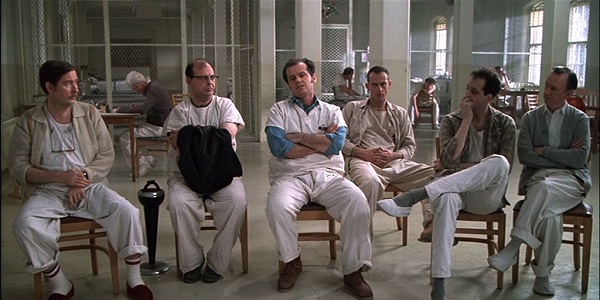
Only the second film in history to nab the 'Big Five' of Best Picture, Director, Actress, Actor and Screenplay at the Academy Awards, Milos Forman's literary adaptation deals with themes of oppression, individualism and the dichotomy between tyranny and sanity in one of cinema's great dramas. Louise Fletcher dominates the movie with an iconically villainous turn as Nurse Ratched, made all the more impressive when you consider Jack Nicholson, one of the greatest actors of all-time, is also on electrifying form as protagonist Randall McMurphy. However, it is more than just a two-hander and the rest of the ensemble deliver strong performances, enhanced by a razor-sharp script, assured direction and Jack Nitzche's memorable score. Running the full emotional spectrum from hilarious and heartwarming to outright depressing, One Flew Over the Cuckoo's Nest also packs a satirical edge that reflects the post-Vietnam time period in presenting the battle between the free-spirited and those in a position of authority, without ever getting too preachy.

27. Gravity (2013)

Gravity was a labor of love for Alfonso Cuaron, with the Mexican director spending three years bringing his insanely ambitious ideas to life. The results are nothing short of jaw-dropping, and watching the movie in the theater in 3D is easily one of the most fully immersive experiences in the history of cinema. Essentially a survival story in space, Sandra Bullock provides the emotional core of the movie in a career-best performance that proves just as important as the stunning technical achievements. From the twelve and a half minute opening shot to the final re-entry into Earth's atmosphere, Gravity is one of the most visually spectacular movies you're ever likely to see. With each shot meticulously planned in advance before a single frame was shot, Cuaron masters the logistical challenges in delivering a nail-biting thriller that could almost be described as a $100m experimental movie. Gravity became the biggest must-see 3D movie since Avatar, and captivated audiences and critics alike with a box office haul of $716.4m and seven Academy Awards. The movie's impact will no doubt be diluted by watching it home video, but when viewed as a full 3D experience on the big-screen there is nothing quite like it.

26. 8 1/2 (1963)

Federico Fellini's film about film-making is one of the most influential movies ever made, and sees the legendary Italian auteur at his avant-garde best as he delivers a semi-autobiographical tale of a director struggling with the creative process. Featuring dream sequences, flashbacks, plenty of wit and no shortage of style, 81/2 is self-reflection disguised as comedic drama. The autobiographical nature of the project is evident in the title as Fellini had previously directed six features, two shorts and co-helmed another. The story centers on Guido, a famous director on the verge of a breakdown as he struggles to balance his personal and professional lives, something Fellini himself knew about all too well. Both flamboyant and understated, stylish and grounded, 8 1/2 is a seminal examination on the symmetry between art and real life. The movie bagged an Academy Award for Best Foreign Language Film and inspired film-makers across the globe for years to come, as well as providing film theorists with decades worth of analysis on the many messages hidden within the fragmented narrative.

25. 12 Angry Men (1957)

A dialogue-driven courtroom drama that takes place almost entirely inside one room definitely has the potential to descend into tedium, but Sidney Lumet's feature debut manages to wring plenty of drama and tension out of the central conceit thanks to excellent writing, confident direction and strong performances from the ensemble cast. 12 Angry Men has more in common with a play than a movie due to the limited locations and almost real-time narrative structure, which makes the script all the more important. Thankfully, the movie boasts one of the greatest screenplays ever written that keeps audiences invested in the outcome thanks to strong characterization and constantly-shifting momentum, shot through with an underlying social commentary that never becomes too on-the-nose. Lumet's inventive camerawork stops things from becoming visually monotonous, while each of the titular 12 jurors are given ample time to offer insight into their character's personality and motivations regarding the case. Shot in just a few weeks for a paltry $340,000 (which is still under $3m when adjusted for inflation), the result is an all-time classic of American cinema and the greatest courtroom drama ever made.

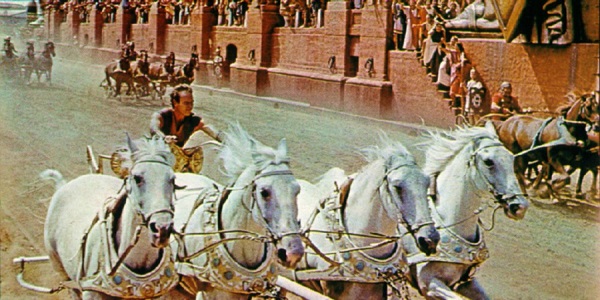
24. Ben-Hur (1959)

Even after the slew of big-budget historical epics around the turn of the 21st Century that followed in the wake of Gladiator's critical and commercial success, none of them even came remotely close to matching the sheer grandeur and visual spectacle of William Wyler's lavish production. Still one of the most impressive achievements in Hollywood history, Ben-Hur is the definitive entry in the genre. The most expensive production in history at the time, Ben-Hur's $15.175m budget equates to over $125m when adjusted for inflation, and every single penny is up there onscreen. 300 sets, over 100,000 costumes, tens of thousands of extras and over a million feet of film were used during filming, while the iconic chariot race alone took a year of planning and five weeks of shooting. Some aspects of the movie have inevitably dated, but the chariot race remains one of the all-time great set-pieces and the movie itself is the pinnacle of Hollywood grandiosity. Ben-Hur was an expensive gamble for MGM, but one that paid off handsomely as the movie scored $74m at the domestic box office (over $600m adjusted) and swept the board at the Academy Awards with eleven wins from twelve nominations, a record the movie would hold for 38 years until James Cameron's all-conquering Titanic.

23. Blade Runner (1982)

Regardless of whether you prefer the theatrical version, Director's Cut or the 25th anniversary Final Cut, there is simply no denying that Blade Runner is both Ridley Scott's finest moment behind the camera as well as one of the greatest and most influential works of sci-fi ever made. Boasting some of the most stunning production design ever seen on film, the dystopian Los Angeles of 2019 is a vivid and immersive neo-noir cityscape that is just as important to the movie as the narrative, which is incredibly complex and incorporates several recurring motifs as well as posing numerous moral and philosophical questions. Of course, the underlying messages never truly overshadow what is at its core a superbly written, brilliantly directed and strongly acted sci-fi masterpiece. As we all know, Blade Runner was a huge commercial disappointment when it was released in theaters, barely recouping the $28m production budget. Critical reaction to the movie was also polarized at the time, but in the passing years it has only grown in reputation and is now widely regarded as one of the seminal entries in the genre.

22. The Shawshank Redemption (1994)

Given its status as a universally-loved classic, it's hard to imagine that The Shawshank Redemption was a box office disappointment when it was first released. Frank Darabont makes one of the great feature debuts with one of the most uplifting and inspiring movies ever made. The narrative stretches from 1946 to 1967, tracing the trials and tribulations of Tim Robbins' Andy Dufresne as he experiences life in the titular prison. Darabont's script populates the movie with fully-rounded characters; each of the people Andy interacts with feel three-dimensional, with their own backstory and motivations. The real heart of the movie is provided by Morgan Freeman's Red, who emanates warmth and wisdom as well as getting one of the most memorable voice-overs in cinema. A movie that could easily fall into cheesy melodrama is elevated by the writing, acting and directing into a heartwarming tale of friendship and the strength of the human spirit. Of course, we can't forget that The Shawshank Redemption has one of the greatest third acts of any movie. Andy's escape is one of the great reveals, and finally seeing the Warden get his comeuppance is wonderfully satisfying. The story ends with one of the best feelgood moments in cinema as the two lifelong friends are reunited outside the confines of the prison, perfectly in tune with the movie's life-affirming nature.

Contributor

I don't do social media, so like or follow me in person but please maintain a safe distance or the authorities will be notified. Don't snap me though, I'll probably break. I was once labelled a misogynist on this very site in a twenty paragraph-long rant for daring to speak ill of the Twilight franchise. I stand by what I said, it's crap.