30 Greatest Movies Of All Time

11. Rear Window (1954)
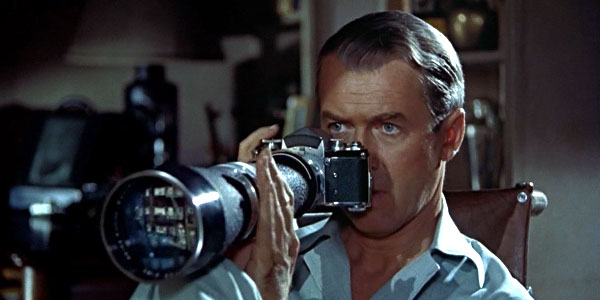
Only Alfred Hitchcock could turn such a minimalist experiment into one of the most pulsating thrillers ever made. Shot almost entirely on one massive set using mostly diegetic sound and a wheelchair-bound protagonist, the 'Master of Suspense' lives up to his name as Rear Window cranks up the tension throughout the slow-burning narrative. James Stewart stars as L.B. Jeffries, a housebound photographer who is convinced that one of his neighbors has killed their wife. With the basic premise established, Hitchcock leaves it up to the audience to decide the facts, with the director describing Rear Window as 'entirely a mental process, done by use of the visual'. The movie is full of great dialogue, character development and a twisting plot, with the recurring theme of voyeurism prevalent in both Jeffries' constant spying and the audience seeing things only from his perspective. Rear Window earned Academy Award nominations for Best Director, Screenplay and Cinematography, as well as becoming a commercial success, earning $35m at the box office (over $300m when adjusted for inflation). The movie is number one on his filmography when it comes to audience participation, and arguably his best ever.

10. Jaws (1976)

Before it was even released, many within the industry were predicting that Jaws would be an unmitigated disaster. Inexperienced director Steven Spielberg had gone $5m over-budget and 100 days over schedule, the cast were suffering from seasickness and an increasing dislike of each other, and the mechanical shark was causing no shortage of problems for the crew. Instead, this tortured production resulted in the biggest movie of all time and effectively birthed the summer blockbuster as we know it. The movie that scared an entire generation from going in the water, almost 40 years on Jaws remains one of the most expertly-crafted thrillers in history. John Williams' iconic music, the strong performances from the central trio and Spielberg's incredibly efficient direction combine to create a white-knuckle thrill ride full of increasing tension, suspense, heart, humor and one jump-scare you'll never forget. Backed by an unprecedented marketing blitz and enthusiastic word-of-mouth, Jaws went on to become a cultural phenomenon when it landed in theaters and went on to become the highest-grossing movie in history with a box office gross of $470.6m (almost $2bn when adjusted for inflation). As well as launching Spielberg's career and giving rise to the summer event movie, Jaws is simply one of the most exhilarating genre pictures ever made.

9. The Searchers (1956)

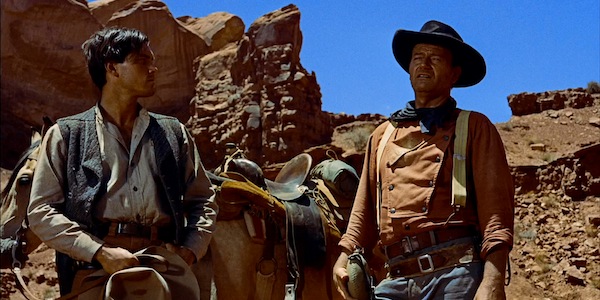
The combination of John Wayne and John Ford are almost synonymous with the Western thanks to a creative partnership that spanned five decades and over 20 collaborations. The duo's biggest triumph came with this epic Western that sees 'The Duke' deliver a career-best performance as Ethan Edwards, and the trials and tribulations he faces on a five-year search for his kidnapped niece. A revisionist Western before the sub-genre even existed, the normally stoic and heroic Wayne gives a multi-layered performance that doesn't shy away from his character's ugly side. Almost the progenitor for the antihero that would dominate 1970's cinema, Ethan is a bigoted racist driven by revenge whose single-mindedness has almost completely alienated him from society. The Searchers is a personal tale on an epic scale, featuring all of the stunning cinematography you'd expect from John Ford. A movie that has influenced everyone from Scorsese to Spielberg, the darker elements of the story and moral ambiguity of John Wayne's character were well ahead of their time, offering a fresh perspective on a genre that was becoming increasingly stale predictable. The best movie in the legendary careers of the Western's two most famous Johns.

8. Lawrence Of Arabia (1962)

David Lean's epic manages the rare feat of being both a sprawling visual spectacle and an intimate character study all at once. Shot almost entirely on location over the course of 17 months, Lawrence of Arabia features some of the best cinematography ever put to film and one of the all-time great acting performances in Peter O'Toole's career-defining turn as the title character. An epic in every sense of the word, the movie's budget swelled to $15m (well over $100m when adjusted for inflation), the running time pushes four hours and the narrative features thousands of extras and lavishly recreated sets. O'Toole features in virtually every scene, and effortlessly carries the movie with a performance both effortlessly charismatic and simultaneously enigmatic. With stunning desert vistas, sweeping camerawork and a majestic score to complement the iconic moments (Omar Sharif's entrance, the famous jump cut), the Hollywood epic doesn't get much better than this. Lawrence of Arabia would go on to win seven Academy Awards including Best Picture, Director, Original Score and Cinematography. Fittingly, the ambitiously bold and expensive production ultimately delivered one of the most grandiose, romanticized, visually spectacular epics ever committed to celluloid.

7. Raiders Of The Lost Ark (1981)

Quite simply, Raiders of the Lost Ark is the greatest adventure movie ever made. After the disappointing 1941, Steven Spielberg teamed up with best buddy George Lucas to re-imagine the old-fashioned 1940's serial for the big screen. Instantly creating a cinematic icon and launching one of the most beloved franchises of all time, Raiders of the Lost Ark is as close to perfect as the summer movie can get. The prologue remains one of the most thrilling and widely recognized action scenes in history, but from there the movie just keeps upping the stakes and getting better. Harrison Ford's effortlessly charismatic turn as Indiana Jones, stunning visual effects, plenty of quotable dialogue and more than a few killer one-liners complement the barnstorming action sequences, with the story moving along at an increasingly frenetic pace. By the time the end credits rolled, adventure really did have a new name. The highest-grossing film of 1981 by a huge margin, adjusted for inflation the movie's $389.9m gross is equivalent to well over a billion dollars today. Raiders of the Lost Ark also picked up nine Academy Award nominations, including Best Picture, and scooped four in the technical categories. The franchise could never match the incredibly high bar set by the first installment but then again, very few movies can.

6. The Godfather Part II (1974)

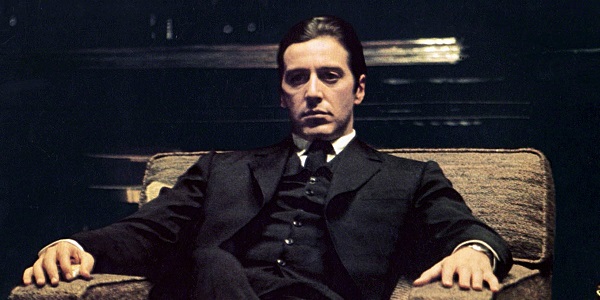
It would have been easy for Francis Ford Coppola to churn out a quick cash-in sequel to The Godfather while the movie was still relatively fresh in the public consciousness. Instead, the director broadened the scope to offer a sequel/prequel hybrid that is breathtakingly shot, wonderfully acted and unquestionably the greatest follow-up in the history of cinema. In his second outing as Michael Corleone, Al Pacino gives one of the best acting performances of all time, while in the flashback sequences, Robert De Niro makes the audience forget all about the looming shadow of Marlon Brando with his stunning turn as the young Vito Corleone. Expanding the series' mythology and recurring theme of how power corrupts, Part II parallels Vito's rise with Michael's fall and from start to finish the movie is expertly constructed, with the final shot one of the greatest endings ever; a slow zoom and Pacino's expression conveying more than any dialogue ever could. The Godfather Part II followed the success of its predecessor and won the Academy Award for Best Picture, becoming the first sequel to do so. Coppola and Mario Puzo again won for Best Adapted Screenplay, with the former also taking home the statue for Best Director. Although Pacino was shockingly overlooked for Best Actor, De Niro picked up Supporting Actor, marking the first time two different actors had won Academy Awards for playing the same character.

5. 2001: A Space Odyssey (1968)

Stanley Kubrick's influential sci-fi has been dissected and analyzed to within an inch of its life ever since it was first released 46 years ago, and one of the most impressive things about the movie is that its true meaning has never been fully explained. No feature film in history has been left open to interpretation more than 2001: A Space Odyssey, which is key to its timeless appeal. Philosophical, enigmatic, profound and visually stunning, there is no doubt that the movie is Kubrick's masterpiece. There is so much cinematic iconography packed into the four-act structure; the jump-cut from bone to satellite that condenses thousands of years into a single frame of film, the stars aligning above the monolith and the cold, calculated supercomputer HAL 9000 to name but three. Kubrick set out to make 'the proverbial good science-fiction film' and failed, instead delivering a seminal meditation on evolution and the relationship between mankind and technology. An incredible technical achievement, Kubrick spent over two years working on the special effects to provide the most realistic depiction of space ever seen on the big screen, and in true Kubrickian fashion the production went massively over-budget and behind schedule to match his grand ideas. 2001: A Space Odyssey influenced everyone from Steven Spielberg to Ridley Scott, and the singularity of vision on display has never been bettered in the sci-fi genre.

4. Apocalypse Now (1979)

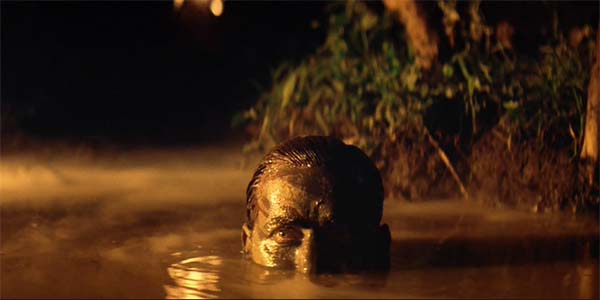
The definitive Vietnam movie, Francis Ford Coppola's war epic faced a fittingly arduous road to the big screen. The 14 month shoot was beset by problems, delays plagued the year-long post-production and the budget more than doubled from the initial estimate of $14.5m to $31.5m. When it finally hit theaters in August 1979, audiences witness the most audacious war movie ever assembled; nightmarish, mythical, harrowing and completely mesmerizing. The basic narrative boils down to Martin Sheen's Willard being sent into the jungle to terminate Marlon Brando's AWOL Kurtz 'with extreme prejudice', but is really a metaphor about a journey into the self and how the horrors of war can lead to madness. As well as being loaded with symbolism, philosophical undertones and surrealist imagery, Apocalypse Now is full of now-iconic moments; from Willard's voice-over, Kilgore's love for the smell of napalm and the unforgettable helicopter charge set to 'Ride of the Valkyries'. The movie was a resounding success, earning $150m at the box office and scoring eight Academy Award nominations, and is now regarded as a hugely influential work and one of the best war movies ever made. A visually stunning epic laced with potent social commentary, Apocalypse Now is a haunting study of war from a director of astounding vision.

3. Citizen Kane (1941)

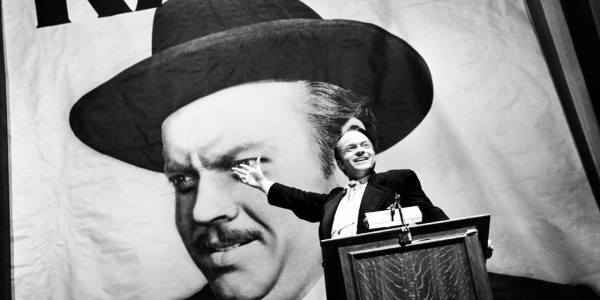
At the age of just 25, Orson Welles made what is still inarguably the greatest feature debut in history. Equal parts innovative and influential, the themes of Citizen Kane still carry many modern parallels, a remarkable achievement for a movie that is fast approaching its 65th anniversary. Partly based on the life of newspaper publisher William Randolph Hearst, Welles eschewed the normal cinematic storytelling techniques in favor of a groundbreaking non-linear narrative, using flashback and multiple narrators that serve to enhance Charles Foster Kane's ambiguity. These innovations also extend to the incorporation of multiple genres into a single narrative; elements of film noir, biopic, parody and detective story are all used to turn a potentially risky formula into a brilliantly realized piece of cinema. Welles claimed that 'sheer ignorance' led him to create a movie so different from established conventions, but he was likely selling himself short. Technically flawless, the use of deep focus, low angles and stunning camerawork gave Citizen Kane the aesthetic showmanship to match the big themes about the power of the media and the myth of the American Dream.

2. The Godfather (1972)

The Godfather is a movie so ingrained in the public consciousness that if you haven't seen it for a while you forget just how good it really is. Despite being so widely imitated, parodied and quoted over the last four decades, the movie has lost none of its power. Francis Ford Coppola's remarkable achievement overcame a lack of faith from the studio to create one of the most famous and influential movies in history. Setting a new benchmark for the quality of American cinema, everything about The Godfather is a triumph; from the stunning three-minute reverse zoom that reveals Don Corleone to Michael's anointment as the new Godfather in the final scene that completes his evolution from outsider to top dog, the movie is utterly compelling from the first minute to the last. The writing, directing, acting, deliberate pacing, music and cinematography are all note-perfect, resulting in not only the greatest gangster movie ever made but an elegiac, operatic morality tale about the American Dream. No movie before or since has managed the merger of art with entertainment as well as The Godfather. The Godfather picked up three Academy Awards from nine nominations for Best Picture, Actor and Adapted Screenplay but Coppola was bafflingly overlooked in favor of Cabaret's Bob Fosse. More than just a piece of entertainment, the movie became a cultural touchstone and a box office smash hit, grossing over $245m (almost $1.4bn adjusted for inflation).

Contributor

I don't do social media, so like or follow me in person but please maintain a safe distance or the authorities will be notified. Don't snap me though, I'll probably break. I was once labelled a misogynist on this very site in a twenty paragraph-long rant for daring to speak ill of the Twilight franchise. I stand by what I said, it's crap.