30 Greatest Movies Of All Time

21. It's A Wonderful Life (1946)
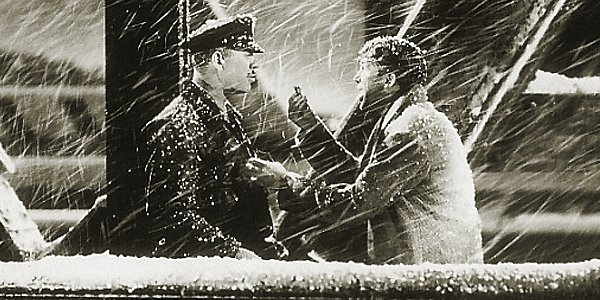
Although it has almost become required Christmastime viewing, It's a Wonderful Life is much more than an established holiday classic. One of the most uplifting and inspirational movies ever made, James Stewart delivers one of the best performances of his career as George Bailey, who is shown the true value of himself by his guardian angel Clarence. His life in ruins, drunk and ready to jump off a bridge, George tells Clarence he wishes he had never been born. Showing George how life in the town of Bedford Falls would be without him, the movie hits on its main theme; that it isn't money that makes a man rich. It sounds a little corny, but Capra shoots the movie beautifully and the script never deteriorates into the overly-saccharine, instead providing warmth and heart in spades. A parable on the well-worn notions that all people are interconnected and that life should be appreciated before it's too late, It's a Wonderful Life is one of the ultimate feel-good movies. Given the movie's status as a bona-fide American classic, it's hard to believe that the initial theatrical run ended up costing studio RKO over $500,000 due to low box office returns.

20. Goodfellas (1990)

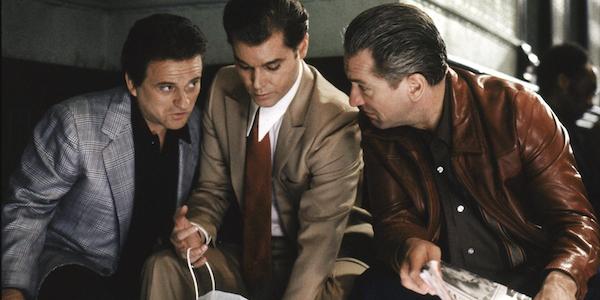
Right from the opening scene, it was clear that Goodfellas was going to be something special. What follows is a 150 minute masterclass in film-making that delivers a brutal and often hilarious look at the life and times of Henry Hill. Everything about the movie is on point; the writing, directing, editing and acting are all consistently brilliant and result in one of the undoubted high points of Martin Scorsese's distinguished career. Being a gangster movie with a narrative that spans decades from a celebrated director, Goodfellas left itself open to comparison to The Godfather. However, instead of the deliberate pace and measured direction of Francis Ford Coppola's masterpiece, Scorsese brings an abundance of style and ingenuity to the proceedings; freeze frames, voice-overs, crash zooms, montages and one of the greatest tracking shots in history are all utilized with supreme confidence, while the script features violence and black humor in almost equal measure. Although Joe Pesci deservedly won an Academy Award for Best Supporting Actor for his memorable turn as Tommy, Ray Liotta and Robert De Niro are just as good in their more grounded performances. The movie was also nominated for Best Picture, Best Director, Best Editing and Best Adapted Screenplay but inexplicably lost out on all four to Dances With Wolves. A visceral, inventive and wildly entertaining movie, Goodfellas surely made a lot of people want to be a gangster.

19. Gone With The Wind (1939)

Producer David O. Selznick's lavish adaptation of Margaret Mitchell's novel was a production beset by problems. However, despite endless rewrites of the script, a two year struggle to cast the two leads a shoot that went through three directors and several cinematographers, the end result was ultimately the greatest romantic epic in Hollywood history. From the production design and costumes to the sweeping visuals and near four-hour running time, Gone With the Wind is the embodiment of Golden Age Hollywood opulence. Although some aspects of the movie have inevitably dated, the sprawling narrative boasts strong performances from the entire cast, particularly Clark Gable and Vivien Leigh in their iconic roles, and delivers grand spectacle that mightily overshadows some weak dialogue and thin characterization. Gone With the Wind would go on to win eight Academy Awards from thirteen nominations including Best Picture, Director, Actress, Supporting Actress and Adapted Screenplay. Adjusted for inflation it remains the most commercially successful movie in history, with the $400m worldwide gross equivalent to a mind-boggling $6.5bn today.

18. Casablanca (1942)

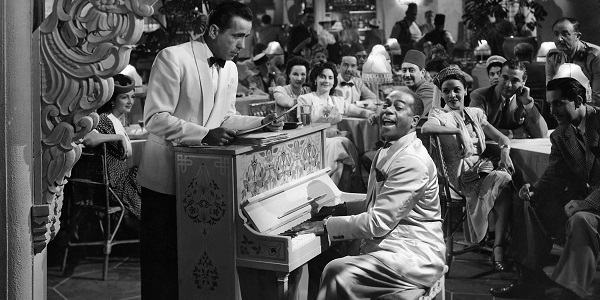
Casablanca saw Humphrey Bogart take on his very first romantic leading role, and his portrayal of Rick Blaine became one of the most iconic performances in cinema history. What could potentially descend into an endless string of cliches instead becomes a timeless love story thanks to a winning blend of comedy, drama, suspense and romance. Although essentially a romance flick, Casablanca also masquerades as anti-Axis World War II propaganda without ever distracting from the story. The movie also blends in elements of a wartime thriller, full of ambiguous characters and shifting motivations that create plenty of tension while also dealing with heavier themes of neutrality, exile and the inability to escape one's past. Aided by two legendary lead performances, Sam's unforgettable rendition of 'As Time Goes By' at the iconic piano and plenty of memorable lines (that are often misquoted), Casablanca has endured as one of the masterpieces of Golden Age Hollywood.

17. Pulp Fiction (1994)

Quentin Tarantino's post-modern, dialogue-heavy crime saga full of pitch-black humor and pop culture references became one of the most influential movies of the 90's, spawning a slew of pale imitations that attempted to copy the formula. Which is ironic as Tarantino himself is cinema's most famous magpie, constantly filling his movies with homages to his personal favorites. The fractured narrative is used to ingenious effect, weaving three interrelated stories around each other full of overlapping characters and the connective encounters between them. Tarantino has always had an ear for dialogue and the ability to bring the best out of his actors, and the sprawling ensemble are excellent across the board from Samuel L Jackson and John Travolta's instantly-iconic hitmen to brief cameo appearances from veterans Christopher Walken and Harvey Keitel. Made for just $8.5m, Pulp Fiction would earn $213.9m at the box office and win an Academy Award for Best Original Screenplay. As violent as it is hilarious, the movie boasts an awesome soundtrack and is packed from top to bottom with endlessly quotable dialogue and no shortage of iconic scenes. The defining movie of Quentin Tarantino's career, and still his best 20 years later.

16. Back To The Future (1985)

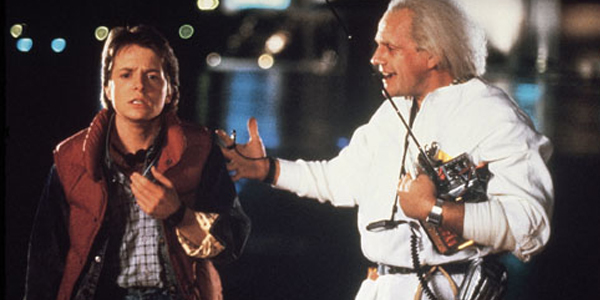
No matter how many times you've already seen it, Robert Zemeckis' timeless adventure is one of those movies that you always end up watching when you stumble upon it when channel-hopping. Almost 30 years on, Back to the Future remains one of the most purely enjoyable popcorn movies ever made, and will no doubt be viewed with the same affection in another 30 years. A unique blend of sci-fi, action, comedy and romance, the brilliantly inventive script by Zemeckis and Bob Gale juggles all of these moving parts with consummate ease and wrings plenty of laughs, tension and heart from the complex narrative. Anchored by an eminently likeable Michael J Fox in a career-defining role, the rest of the cast also deliver knockout comic performances in a movie filled with endlessly quotable dialogue, a classic soundtrack and no shortage of iconic moments. The hugely ambitious project was made for just $19m, and Back to the Future would go on to become the biggest hit of 1985, grossing over $380m at the box office. The movie also manages the rare feat of being equally appealing to both adults and children, and is regarded as essential viewing for each new generation of younger cinema fans.

15. Schindler's List (1993)

1993 was undoubtedly the greatest year of Steven Spielberg's career, and one that definitively debunked the myth that he was only a director of lightweight, populist entertainment. Only five months after the release of Jurassic Park, Spielberg showed his versatility as he delivered his most personal movie yet with a harrowing, heartbreaking and ultimately uplifting historical drama. The subject matter had to be handled delicately to avoid the movie slipping into over-sentimental melodrama, but Schindler's List avoids these pitfalls to present a powerful, often brutally realistic true-life story that runs the emotional spectrum from fear and horror to compassion and the strength of the human spirit. The writing, directing, cinematography and acting are all of the highest quality and combine to create one of the most gripping and authentic historical features ever made. Schindler's list deservedly won Academy Awards for Best Picture, Director, Adapted Screenplay and Cinematography, as well as earning $321.6m at the box office. Although sometimes a difficult watch, the movie's themes of life and death, good versus evil and the difference one man can make resonate throughout the near 200 minute running time.

14. Vertigo (1958)

Adapted from a French novel, Alfred Hitchcock's psychological thriller was generally overlooked when it was first released in theaters, but in time has come to be regarded as one of the legendary director's finest works. Operating outside of his wheelhouse as a populist entertainer, Hitchcock delivers a twisting narrative bursting with themes of love, loss and obsession. Renowned 'nice guy' actor James Stewart gives an emotionally complex performance that ranges from the terrified to outright rage, while Kim Novak is equally hypnotic in both of her roles. Similarly, Bernard Hermann's iconic score becomes increasingly integral to the plot while Hitchcock himself deploys his full arsenal of camera tricks, including the audacious reverse dolly zoom that instantly became known as the 'Vertigo shot'. From Saul Bass' dizzying opening credits to the remarkably downbeat ending, Vertigo delights in subverting expectations, especially in making the big reveal two-thirds of the way through the movie. Part love story, part murder-mystery, Vertigo is often chilling and disturbing while remaining grippingly entertaining. A surrealist experiment masquerading as a crowd-pleasing suspense movie, Hitchcock's meditation on romantic delusion and the nature of appearances is one of the greatest and most unpredictable thrillers ever made.

13. Once Upon A Time In The West (1968)

After the culmination of his Dollars trilogy, Sergio Leone initially wanted to move away from the Western genre entirely. Thankfully he didn't, as his next movie delivered a sweeping, operatic revenge tale that lived up to the mythical promise of the title. Opening with a classic scene of slow-burning suspense that introduces Charles Bronson's grizzled protagonist, Leone's revisionist Western escalates into a sprawling, three-hour epic that includes all of the director's signature visual flourishes, and another iconic score from Ennio Morricone. Featuring all of the genre archetypes from railroad tycoons to saloons and shootouts, Leone reinvigorates these familiar tropes thanks to some stunning cinematography, gripping set-pieces and several memorable characters, particularly Henry Fonda playing against type as a stone-cold killer. It is no surprise that Quentin Tarantino lists Once Upon a Time in the West as a major influence, given how Leone subverts the conventions of the Western genre throughout the movie, as well as including a number of veiled references to other works. More than just a Spaghetti Western, the movie is an elegiac, revisionist tale that is as intimate as it is epic.

12. Raging Bull (1980)

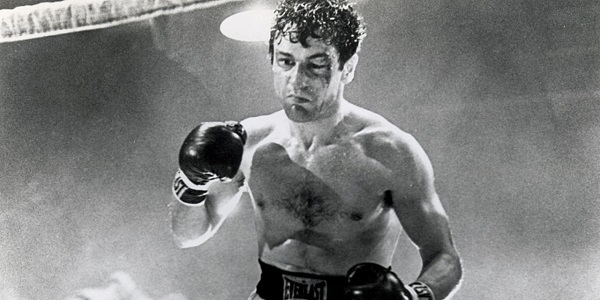
Martin Scorsese's compelling biopic of Jake LaMotta is much, much more than a sports movie; it is a searing character study of a man capable of harnessing his rage inside the boxing ring, but driven to the brink of destruction by his own demons outside of it. An unflinching, uncompromising true story is given real dramatic weight by a pitch-perfect script, great acting, flawless editing and a director who has rarely been better. A movie like Raging Bull lives and dies by the strength of its central performance, and luckily Robert De Niro delivers what could very well be the single greatest acting performance of all time in the lead role, with an insanely dedicated turn that doesn't shy away from the self-destructive, obsessive, jealous and generally unlikeable nature of the character. Production was even shut down for four months so that De Niro could gain 60 pounds to play LaMotta in the post-retirement years, after the actor had previously been in peak physical condition to play the boxer in his prime. De Niro deservedly landed the Academy Award for Best Actor for his efforts, although the movie was overlooked for Best Picture and Best Director. The stark black-and-white photography, operatic boxing scenes and intelligent writing result in an unflinching look at a deeply flawed man that elevates Raging Bull above being a mere showcase for De Niro's explosive acting.

Contributor

I don't do social media, so like or follow me in person but please maintain a safe distance or the authorities will be notified. Don't snap me though, I'll probably break. I was once labelled a misogynist on this very site in a twenty paragraph-long rant for daring to speak ill of the Twilight franchise. I stand by what I said, it's crap.