4 Problems Frequently Faced By Movie Prequels
 Making a movie prequel can be a very tricky thing to do. Occasionally, they can turn out to be pretty decent like X-Men: First Class and Monsters University, but making a prequel to a more established and popular film franchise (especially one that isn't a comedy) is a process that can be more than a little bit problematic. Issues that are endemic to prequels mainly relate to the restrictions of having to fit the film in with a franchise's established canon, and audiences' appreciation of the series that prequel built on potentially colouring their opinion of it. These are four flaws faced by movie prequels...
4. Continuity Is An Almost No-Win Situation
 Dealing with continuity in a prequel is something that's very difficult to get right. If you incorporate too little of the original film(s), it's likely that both critics and its fans will criticise you for not acknowledging it enough and not tying the original and the prequel together well enough. And if you do a lot more, it's also likely that they'll criticise you for relying too much on the original film(s) and not being creative enough. You can't do right for doing wrong. Apart from minor elements like the mission the film is based around being financed by the Weyland Corporation, the inclusion of Facehuggers, and the appearance of a proto-Xenmorph at the end, Ridley Scott's Alien prequel Prometheus largely stands on its own two feet and isn't reliant on the mythos of the Alien series to tell its story. So because of this and it leading into an upcoming second prequel with none of the big questions from Alien being answered as well as several of its own mysteries being unsolved, some Alien fans were displeased with the perceived lack of connection to the original films. For an example of the exact opposite, look no further than the Star Wars Prequels, which were filled to bursting with characters, settings, and stylistic elements lifted from the Original Trilogy as well as a plot that tied directly into it. If you watch RedLetterMedia's feature-length review of Attack Of The Clones, you'll see that one of the things that they bring up and discuss at length is how much of the film is "ripped off" from The Empire Strikes Back, including certain shots and vaguely similar concepts and plot points. Many Star Wars fans objected to the inclusion of so much material from the Original Trilogy (especially Boba Fett's extended cameo) which they saw as largely unnecessary and it became one of the reasons that the Prequels were so poorly received. It's hard to find the middle ground between linking a prequel to the original and relying too much on it, especially since what is an appropriate level of continuity to include can vary on a film by film basis and a lot of critics and fans have different views on the subject. X-Men: First Class is a film that feels like it managed to strike a good balance between the two extremes though, despite it including a large number of retcons that give it the feel of a semi-reboot at times.
3. The Story Is Restricted
 When you start a film from scratch or make a sequel or spin-off, apart from your starting point, you can go in whatever direction you feel works. You can alter and kill off major characters at your whim, vastly expand the story you're telling, and even take it in a completely new direction if you want. But if you're making a prequel, doing this is considerably harder. In a prequel (at least a direct one), the story has to tie into your source material in some way. Even if the connections are incredibly tenuous like in Prometheus, there has to be something bridging the gap between the original film(s) and its prequel. Which pushes you into a corner in terms of story because you have to make the new story fit in with the original one to some degree, taking away a lot of the freedom you would have in a sequel or spin-off. Imagine if, against all logic and reason, Warner Bros decided to make a Harry Potter prequel about Voldemort's early life and rise to power, culminating in the First Wizarding War. Before you even draw up a story outline, the whole story has been more or less completely told in the books and films from a year before Voldemort's birth right up until his first defeat, which would leave very little space for original plot developments. A hypothetical Harry Potter prequel isn't the best example here since Voldmort's story is told to us in such unusually specific detail but the point still stands. As far as story goes, a more direct prequel is severely limited in what can be achieved since it has to be kept on track with its source material in order for the larger story to be coherent. Which will only serve to harm the film because it means there is a list of required elements that have to be fulfilled in order for the full story to make sense, and the writer and director's creativity is restricted as a result.
2. The Absence Of Tension And Unpredictability
In prequels, anything you recognise from the original film will survive relatively intact in order to keep a sense of continuity. Which takes away a lot of tension and unpredictability because you know right from the start that any returning characters won't be on the list of the dead at the end of the film or experience some kind of huge change in their lives like suffering from a permanent disability. In X-Men: First Class for example, we know that, whatever happens, Professor X, Magneto, Beast, and Mystique will all survive unharmed because we've seen them in the first three films. As far as X-Men prequels go (Apart from Days Of Future Past because of time travel and alternate timelines being plot points), those four characters are effectively immortal. Whatever struggles they face, they will always make it out alive. Which robs the film of a fair bit of its tension. It's the same with The Hobbit trilogy. Because Lord Of The Rings was made before The Hobbit and we've already seen an older Bilbo Baggins, we know that he will survive his adventures with the Dwarves Of Erebor in perfect health. Which makes any scenes where Bilbo is put in mortal danger less exciting because we know that he'll either find some way of getting out of there alive, or that the other characters will back him up and manage to save his life. Or (and sorry to keep coming back to them) the Star Wars Prequels. Obi-Wan Kenobi, Anakin Skywalker, Chancellor Palpatine, Yoda, R2-D2, C-3PO, Boba Fett, Bail Organa, Chewbacca, and Mon Mothma had to survive the Prequels because they all play a part in the Original Trilogy. We also knew that Padmé Amidala was going to die because Luke and Leia's biological mother being dead was a core part of their backstories. And although it looks great, the climactic Lightsaber duel between Obi-Wan and Anakin in Revenge Of The Sith is free of all tension because we knew the end result years before the film came out. Obi-Wan was always going to win the duel and leave Anakin crippled, causing him to be put into the Darth Vader suit in order to fit in with A New Hope. By virtue of their links to their source material, prequels will usually have a considerable lack of unpredictability that makes it harder for them to genuinely surprise the audience. Which does tend to make them less enjoyable since we can work out what's going to happen.
1. They Very Rarely Live Up To Their Hype
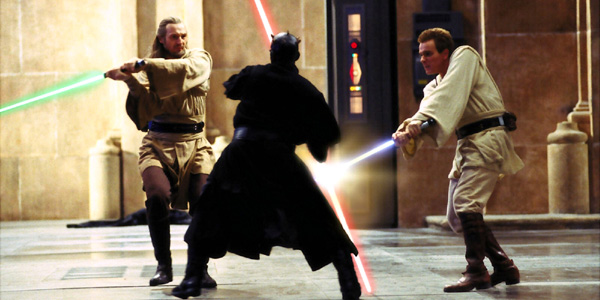 A fundamental law of cinema seems to be that a prequel's hype is almost always greater than how well it's received. The hype and anticipation around a prequel to a highly regarded film series (especially one with a devoted fanbase) tends to outstrip its critical reception because the audience's expectations are set too high by what has come before. Which takes its toll on the prequel's critical reception because some audience members are disappointed by it not living up to their expectations or its predecessors. Star Wars Episode 1 can without doubt be called one of the most highly anticipated films of all time, to the extent that a comedy film titled Fanboys was eventually made about four fans trying to steal an early copy of it from George Lucas. So whatever George Lucas delivered (and I still maintain that The Phantom Menace isn't that bad) could never live up to the hype and anticipation that grew around it before its release. If it was an original film rather than a Star Wars prequel, it would probably have been better recieved. Not a cinematic great by a long shot but still okay. But since it was a prequel to one of the best film trilogies of all time and was so widely anticipated as a result of that, it was viciously received by many and comments are still being made fourteen years later about how it supposedly ruined Star Wars forever. Although The Phantom Menace is a bit of an extreme example, it still shows a trend that frequently applies for prequels. Some fans are so fond of certain films that they don't want to see what they consider to be something so excellent dragged down by a belated prequel. And since fans of a prequel's source material are the primary demographic for that prequel, fan apathy or disdain for it can hurt its success at the box office and its critical reception. Do you think prequels are inherently flawed? Let us know in the comments section below.