5 Civil Rights Movies That Are Great (And 5 That Are Offensively Awful)
It's amazing to think these movies are all supposed to be about the same issues.

THE GREAT
5. Boycott (2001)
 Boycott is an innovative and well produced HBO film that looks at the Montgomery Bus Boycotts of 1955. This is obviously well treaded territory, but where Boycott is so much more interesting than most treatments of the subject is that it doesnt just follow the same beats and narrative arc that film makers normally use in relaying these events. Normally the Montgomery Bus Boycott is presented along these lines - a little old lady (Rosa Parks) got tired of sitting at the back of the bus one day, so she refused. This then led to Martin Luther King Jr coming into town and single-handedly organising a bus boycott which ended segregation, and then everyone lived happily ever after. To understate things considerably, this was not how it played out. Boycott focuses not just on King (who is channelled superbly in a powerhouse performance by Jeffrey Wright) but also on the grassroots organising of the Boycott itself, so it presents African American self-determination and agency from within a community. It features heroic figures that are too often forgotten such as Jo Ann Robinson, E.D Nixon, and Bayard Rustin, and when it does focus on King it presents him as a flawed and scared human being, rather than the demigod that has been crafted and exploited for capitalist gain today. https://www.youtube.com/watch?v=QWA0_s0bIMI If you are looking for a complex film that deals with this period of time with elements of meta storytelling and self-reflexivity, there is nothing else out there quite like Boycott. The ensemble cast is incredible, and the grass roots focus gives an insight into just how wide ranging and all-encompassing the Montgomery Bus Boycott was for all those involved.
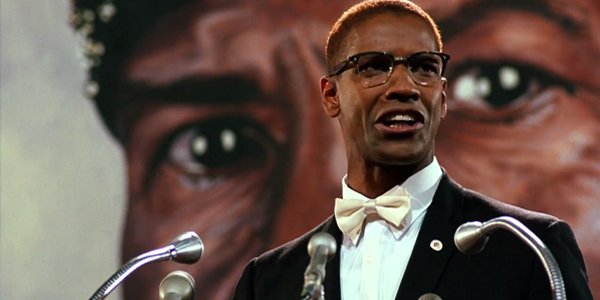
4. Malcolm X (1992)
3. 4 Little Girls (1997)
 The act of terrorism that is re-enacted in the opening sequence of the recent film Selma, is the subject of this superb documentary - again made by Spike Lee. 4 Little Girls confirmed Lees already obvious versatility as a film maker, while also confirming his status as the finest chronicler of African American stories in the film making medium. The story of four young girls being murdered when KKK bombs were detonated in a Birmingham, Alabama church in 1963 is obviously a very saddening watch, but in the skilled hands of Lee the story is also a superb chronicle of African American strength and courage in the face of inhumane violence from white Americans. One of the reasons why this documentary is so good though, isnt because it simply chronicles the events in a compelling, yet respectful fashion but rather because it goes out of its way to explicitly link the film to more contemporary times, and clearly states the message that African American freedom struggles are ongoing. One of the major elements of mainstream narratives about African American history is that since the American government introduced legislation like the Civil Rights Act of 1964, and the Voting Rights Act of 1965, African American freedom struggles have ceased, and racism has been finished with. https://www.youtube.com/watch?v=hiRB8eAhKxA Given what we have seen just recently with police in America seemingly killing young African American males at will, it is clear that the struggles and tension are far from over. Similarly in 1993 there was a spate of arsons in Birmingham churches, which Lee showcases to indicate that while things might not be as bad as they once were legislatively, on the ground levels of African American life there were still major, major issues. It was incredibly relevant upon release in a way that few films have been, and even though it was released nearly two decades ago, the film could easily be updated to show that its issues and themes are still very relevant today.
2. The Black Power Mix Tape (2011)
 There is perhaps no movement or social phenomenon less understood in American history than the Black Power movement of the late 1960s. Often times Black Power activists are presented as simply violent radicals, who carried guns everywhere and wanted to kill white people which is pretty ironic considering the same people who were criticising African Americans with guns, had no problem with white people carrying guns everywhere. The Black Power Mix Tape is a documentary that attempts to correct the record a bit. It is perhaps unsurprisingly the product of Swedish journalists who recorded the footage between 1967 and 1975 (American journalists wouldnt have been interested in a counter narrative like this), but sadly didnt get to produce anything with it. The footage was then discovered a few years ago, and crafted into a film by Goran Olsson, who presents a counter history of the movement which doesnt toe the official narrative which dictates Black Power activists had to be the bad guys. The film is wonderful as it features real interviews with movement icons such as Stokely Carmichael, Angela Davis, and Bobby Seale, and we get to see the origins and developments of the movement through their words, rather than the words used by outsiders. It is candid, revealing, and informative and considering the lies and fabrications presented about the Black Power movements origins and aims, it is a refreshing counter narrative that needs to be seen by as many people as possible, so that an understanding of how and why Black Power emerged is clear, and understood. https://www.youtube.com/watch?v=3Mzr-GxlQJs
1. Selma (2014)
Some films are just perfect for their time, and arrive with a seismic impact that taps into a cultural feeling. Selma is one of these films, and with its current 99% rating on Rotten Tomatoes and recent Oscar snubs controversy (despite this obviously enthusiastic reception), Selma is a real must see film right now. The opening scenes of the film tell more about the complex reality of the African American freedom struggles movement than a lot of other films can during their two hour plus running times. The contrast of King being deified as the saviour of African Americans by the political establishment contrasts with the ghastly act of American terrorism (which is the focus of 4 Little Girls), and the reality of how states were able to use innocent sounding laws to stop African Americans from voting. From here the film only goes from strength to strength, and while there have been criticisms of the depiction of Lyndon Johnson, these criticisms are missing the point. By and large the white political establishment didnt want African Americans fighting for freedom and social rights and didnt give up an inch. Since before slavery ended, African Americans had been organising and sacrificing themselves in the pursuit for equal standing in America and they constantly battled uphill. So Johnsons characterisation is an embodiment of the entire mainstream white political establishment in the USA rather than specifically a biography of the man itself. When understood like this, it is a powerful indictment of a system that bred and needed racism. Director Ava DuVernay also deserves the highest of praise for adding a litany of new female characters to the film, which has finally given some light to heroes often forgotten when we focus only on great men rather than communities. https://www.youtube.com/watch?v=x6t7vVTxaic Women were the Civil Rights Movement. Without the organising, fundraising, and activism of African American women, the most iconic and influential African American freedom struggles (such as the Montgomery Bus Boycott for example) would never have been possible. Throughout African American history women organised African American micro-communities largely within the church, to provide alternative support since official government support was never going to be a thing. Yet women are largely absent from the story. Selma, while obviously having a large focus on men, still attempts to remedy this injustice.THE OFFENSIVELY AWFUL
5. Ghosts Of Mississippi (1996)
 This film is a chore to watch and a wasted opportunity, which is a real shame because it tackles a very important and tragic event the assassination of heroic movement leader Medgar Evers. Unfortunately though, it does so in a way that is all too common with films depicting this era, and that is by filtering it through the eyes of a white African American protagonist played by Alec Baldwin. https://www.youtube.com/watch?v=JS5Eg55ACYM There is enough substance and drama in Evers life to fill many motion pictures and his legacy is enormous. If youve ever heard the song Mississippi Goddamn by Nina Simone, then in some way you have been touched by this assassination for example. His stature amongst African American activists was immense and his legacy deserves respect. But rather than focusing on the mans achievements, struggles, and sacrifices, what we get is the story (a heavily altered story no less) of a white American lawyer and his struggles to redeem white America by putting away the murderer of Evers thirty years later. The film barely scratches the surface of any substantial African American history, and its critique of race relations in American is about as deep as a puddle. African American agency is all but forgotten about in the film, and the film appears simply to reflect larger issues in and around the popular narratives of African American freedom struggles namely the idea that positive changes from the movement were the result of white people redeeming themselves, rather than African Americans fighting for it.
4. The Butler (2013)
 Much has been made of how the Butler is a bit loose with history and fabricates elements for dramatic purposes. This is not really a bad thing though movies have certain beats they have to hit, and certain points for them to move along, and thus things need to be chopped and changed for it to work. The oft discussed liberties that the Butler takes with specific events and characters are not actually a problem by themselves, as long as the spirit of the events remains faithful, and the fabricated events reflect real problems that real people would have faced at the time. But this idea of the spirit the film conveys is whats disappointing about the Butler. The film has an achingly conservative spirit, and despite being such a strong celebration of African American progression, it in many ways plays out like it is just the same old celebration of a simple narrative you learn in primary school, which doesnt reflect the true spirit of what happened. There are moments of sublime brilliance and originality (such as the early origins of the 1960s movement, and the depiction of violence towards African Americans), but these are counter balanced by the same old, same old depiction of the Black Panthers and Black Power groups that are demonised, despite the incredible good they did for their communities. There is also of course the problem of the ridiculous casting of various white presidents, such as Robin Williams as Dwight Eisenhower, and an inexplicable decision to cast John Cusack in the role of President Nixon. The casting is nothing but a distraction that again pulls the focus away from an African American perspective and positions the viewers interest squarely with the white characters, which we really dont need. The film is often referred to as a Black Forrest Gump, and given how ruthlessly conservative and right wing that movie is, its probably not an aspiration any film maker looking to chronicle African American Freedom Movements should look at. https://www.youtube.com/watch?v=FuojHqfe4Vk
3. Driving Miss Daisy (1989)
 This film has a legacy around it, but the legacy is probably not one that the people involved in the film anticipated it having. In 1989 this was the picture that won the Oscar for Best Picture, and this victory is interesting because it showed just how divided the perceptions of race relations in America were (are). While this film presented a hokey Oscar baiting friendship story between an old racist woman and her black car driver who become friends, Spike Lee was releasing his own examination of racial conflict in America, which was far more relevant, far more explosive, and tapped into the spirit of the times in a way that means the film is still immensely popular and influential today in fact it was the film that a certain Mr and Mrs Obama saw on their first date. The contrast between the two films, and the formers acceptance by the mainstream stands as a testament to just how divided America can be on the subject of race. Driving Miss Daisy is schmaltz, plain and simple. It is an insulting and misguided attempt to present a story of white redemption and the bridging of cultures, and there are all kinds of problems with how the characters and class issues are presented. We are supposed to appreciate and old bigoted character growing to acknowledge one of her servants, and we are also at the same time supposed to celebrate African American subservience as white Americans figure out themselves that they are wrong. It shouldnt really need to be spelled out why this is problematic. https://www.youtube.com/watch?v=TQ3wXC5jqKE The film in itself is definitely well made, and it is intriguingly patient in the way it tells its 25 year long story. But it presents itself as social commentary and a celebration of racial unity, which is not reflective of the reality of the situation, or the historical legacy of African American struggles for freedom. It probably would have slipped into relative obscurity if it hadnt been for the fact that its Oscar wins were so glaringly undeserved, and its reception was not so filtered through the white gaze. But at the end of the day, regardless of whether or not it is deserving of it that is the legacy it has now, and will have for the foreseeable future.
2. The Help (2011)
 The Help is another film that has been praised by mainstream critics, yet has been savaged by other critics for its use of stereotyping, lack of black agency, and its use of a white gaze. The Help is first and foremost about white heroism, which is a pattern that is just all too familiar with these kinds of films. This doesnt mean that the film is mean spirited, or that Emma Stones character is someone we shouldnt root for. But if you wish to showcase elements of racial history in America, and take a serious look at the past, you cant just whitewash these things and tell all the stories from a white perspective. Regardless of whether it is intentional or not, the film depicts African American domestic servants as completely inactive and passive to the inequality that they have been subjected to throughout their lives. The characters tend to be offensive mammy portrayals (an old marketing stereotype of the motherly, asexual, African American domestic servant) who draw all their views on the world from God and are the subjects of racism from bullying individuals. There is no presentation of the systemic racism of the South in the early 1960s, but even more disappointingly there is no real reference to any of the activism and organisation from African Americans in trying to overcome this. https://www.youtube.com/watch?v=WbuKgzgeUIU This last point is showcased explicitly when the film shows John F Kennedys funeral procession but only fleetingly mentions the murder of Medgar Evers. The film implicitly states through this, that for every day domestic African American workers, the assassination of the President was more influential on their lives than that of a community organiser making very real changes within their everyday community. This is not only incorrect, but it creates a racial hierarchy of which lives matter more. The Help isnt an awful film, but it is a pretty awful representation of African American freedom struggles.