5 Common Arguments Against 3D That Simply Don't Hold Up
 I have to admit, a little over 2 years ago, I was unsure about 3D. I had seen Avatar at the IMAX and that got me excited. Then all my good will towards the "format" went out the window when I saw Clash of the Titans. The opportunities that Avatar had promised had so quickly turned to mistrust, as studio execs perverted 3D to their own whims. However, after interning with a 3D consultancy and talking to some of the most exciting and talented people in the field, I am a now a passionate and loud supporter of the format. To me, 3D has so many applications that excite me both as a filmmaker and film blogger. If applied with care and craft, it is a powerful and subtle tool to help convey storytelling beats to an audience in the way cinema is visually designed for. It has the potential to rattle the cages of some of you film purists out there, but know that I am not trying to discredit your points of views or simply ignore you. Quite to opposite, in fact. I write this so you can discuss it in the comments, as I know some people care very passionately about the subject. I don't believe in a future that is entirely in 3D, but I do believe in a world where it is used expressively and artistically to better storytelling aspects. It can be done. I promise. With that in mind, let's take a look at 5 common arguments that people have against 3D and talk about why they don't really hold up...
5. "3D Adds Nothing To The Story"
 If you were paying attention, you would have seen that I put format between quotation marks in my introduction. That is because while still technically a format, 3D is gives a filmmaker a lot to consider and adjust to help convey an idea. In many ways I see it as a filmmaking tool as opposed to the idea of just a solid format. Too often I see detractors of 3D assume that 3D is a process of no choice. As if the filmmakers have an on and off button for 3D. However, having spent time on set shadowing some great stereographers (they are the ones who control the 3D), I know this is an utter fallacy. The 3D in a movie, when done well, is the culmination of hundreds of creative choices over the course of pre-production, production and post-production. Allow me to illustrate. If we have a protagonist on a long journey and he can see his destination in the distance and we want to emphasise that you can push the 3D further. This subtly bulsters the concept of the distance of that journey in a way a 2D print couldn't. Also choices such as, "will I push the 3D in more intimate scenes to enhance the shape of the characters or save my depth budget for my big set pieces?" Going one way or the other will deeply affect what the 3D says to a member of the audience. These are creative choices that directors have to make about their film and really highlights the 'format' as a tool.
4. "No Director Worth Their Salt Likes 3D"
"We looked at post-converting it, actually did some tests, and they were very good. But we didnt have time to do the conversion that we would have been satisfied with. Inception deals with subjectivity, quite intimate associations between the audience and the perceived state of reality of the characters. In the case of Batman, I view those as iconic, operatic movies, dealing with larger-than-life characters. The intimacy that the 3D parallax illusion imposes isnt really compatible with that. We are finishing our story on the next Batman, and we want to be consistent to the look of the previous films. There was more of an argument for a film like Inception. Ive seen work in 3D like Avatar thats exciting. But, for me, what was most exciting about Avatar was the creation of a world, the use of visual effects, motion capture, performance capture, these kinds of things. I dont think Avatar can be reduced to its 3D component, it had so much more innovation going on thats extremely exciting. 3D has always been an interesting technical format, a way of showing something to the audience. But you have to look at the story youre telling: is it right?"While Nolan has talked on the subject since citing it makes the screen smaller and having to shoot digitally, (both things I have issues with) it is clear that Nolan doesn't "hate" 3D. Hell, if they had had more time, than Inception could have also been in 3D.
3. "Post-Conversion 3D Is Terrible"
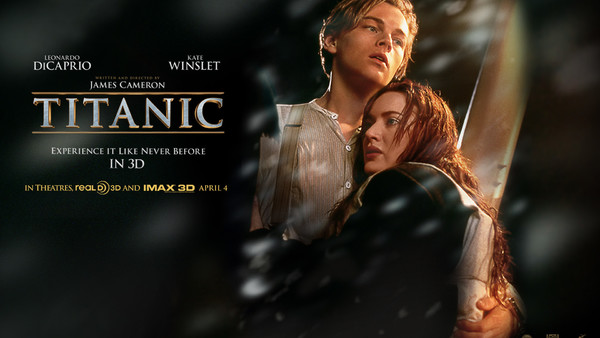 Very often I hear the opinion, "I don't mind 3D that is shot natively, but I hate post conversion." This is then followed by how they liked Avatar but hated Clash of the Titans. Though the truthabout Avatar is people never realise that a ton of that film was actually post-converted after visual effects were applied. What people are actually saying is, "I don't like post-converstions when they are rubbish. have no time put into them and look like cardboard cut-outs" Trust me, I hate those even more than you. Many times I have seen people cry afoul when a film is announced to be shot in 2D and then converted to 3D but the fact is that there are examples out there that showcase some ground breaking 3D effects. If you went out to see Titanic in 3D last year, you will know what I am talking about. The conversion of James Cameron's film was massively impressive. Having spent six months dedicated to the conversion process and under Cameron's guidance, we got the best print of the movie that had ever been released. Vice-versa, there are many natively shot films that look terrible, Cirque Du Soleil: Worlds Away and Prometheus coming to mind. The overall point is that it comes down to care. Too often have I seen 3D applied with too little care and that has hurt everything. But from the ashes, some truly wonderful 3D films have come out, some that were even post converted.
2. "I Saw A 3D Film Once And I Didn't Like It"
 People often sit back and plainly say, " I don't like 3D movies." Which is fine. I understand if people genuinely don't like the format but I also find that this can be seeded in one or two bad experiences. Many people will say they saw movies from the post-Avatar 3D cash-in era and haven't been to see another one since. The problem with this is it is like saying, "I watched The Room once and I didn't like it, so I don't watch movies anymore." It is taking the worst example of something and applying it to the whole practice. The truth is that when Clash of the Titans and The Last Airbender came out, they were rushed out with around 6 weeks of post-conversion done on them. It was a cheap, lazy and exploitative tactic from studios that should never have been allowed to happen. But I implore you to not judge the application because of that early period. Movies like Titanic 3D, Jack the Giant Killer, Life of Pi, and especially Oz: The Great and Powerful are recent examples that the application of the technology is only getting better. For films like Life of Pi and Oz, the 3D was so profound that I feel not seeing those movies in their native format is missing a huge portion of the experience. Exciting upcoming films like Baz Lurhman's The Great Gatsby and Alfonso Cauron's Gravity (of which I have heard could be the "maturing of 3D") are going to help further show case the power of 3D as storytelling tool, as opposed to a fair ground like attraction for blockbuster culture.
1. "Nobody Goes To See 3D Movies Anymore"
 For those with a rampant hate of 3D, they all get very excited when they hear that 3D screenings aren't selling that well. "It is fine that I don't like it. No one is going to them so they will die out in the next year or so." This is something I have heard for the last three years, once even directly from British critic Mark Kermode. It is true that there was a time when 3D films were not that popular amongst audiences. There was certainly a backlash against the format when a shoddy product was being put out. Sales dipped and people became annoyed at spending a premium on something that was underdeveloped and pushed out without any care. But things are looking better. Opinions are steadily rising again as better products are put out and the market is slowly clawing back a few percentages in the US, hanging in the 40%s for 3D movie attendance. However, the argument really falls apart when applied to the foreign market, which lest I remind you is around 2/3rds of box office income. As The Wrap have reported today, the 3D market in Russia and China is around 80%-90%. China's cinema market is growing at an alarming rate with a massive number of new screens being installed daily and many cross Hollywood deals being struck. With such a massive market supporting the movement so wholly, there is little chance of the format dying out any time soon. This is a great thing. Even if you staunchly hate the format and think it is an affront to the cinema that has come before, you must agree that the longer filmmakers have time to experiment, learn the language and apply the techniques, the more chance that a better product will be made. 3D is in a healthy place right now and lots of great filmmakers are using it in exciting and imaginative ways. To blindly dismiss the format seems limiting to me. Several great artists have told me that "snobbery is the enemy of progression". There are great examples of it out there but there are also not so great examples. But we are getting better at it. We 3D supporters hate bad conversions as much as you, if not even more because we see potential go to waste and more fuel for critics to throw at the format. However, if you are willing to give it a chance every once in a while, then you are in for some expressive storytelling treats. Agree? Disagree? What are your thoughts on the 3D process? Let us know in the comments section below.