5 Films To See Before Interstellar

With Nolan' space epic set to arrive later this year, here's the films you'll want to see in anticipation.

2013 was the year of science-fiction. We had movies like Alfonso Cuaron's Gravity dominating the box-office and grabbing a hatful of Oscar nominations. Spectacles like Man of Steel, Pacific Rim and Star Trek: Into Darkness providing plenty of entertainment but dividing audiences and critics. And then we had After Earth, starring a Will Smith so wooden lumberjacks were preparing to chop him down. 2014 is set to offer another meaty plate of the futuristic. Yes we have the Marvel vehicles, Captain America: Winter Soldier and Guardians of the Galaxy, but let's face it - they're throwing this stuff at us from all angles. Transcendence is due out in the coming months, with Wally Pfister transforming Johnny Depp into the world's first human USB stick. Jupiter Ascending €“ the Wachowskis' follow up to the under-appreciated Cloud Atlas €“ has been making some noise as of late, and we can't forget Dawn of the Planet of the Apes and Godzilla (versus Heisenberg). However everyone's eyes are glancing over towards November at Christopher Nolan's return to the director's chair with Interstellar. Unless you've been living in a cave or have no interest in anything vaguely to do with cinema, you'll know at least something about this film. Interstellar is based on a treatment written by theoretical physicist, Kip Thorne, way back in 2006. Paramount Pictures then sounded out Jonathan Nolan to adapt a script. From there, it languished in development for several years, before Christopher Nolan entered into negotiations in January 2013, with the intention of merging his own ideas with his brother's. Although he is usually secretive about his films in production (the script was filmed under the pseudonym Flora's Letter) some details have slipped through the cracks, luckily Nolan isn't about to pull a Tarantino. It would be simple to list his entire body of work, because it speaks for itself in terms of quality. However drawing comparisons with other filmmakers, expanding our reach to artists dissimilar to Nolan, may prove the best ingredient to prepare yourself for Interstellar. Here is some essential viewing, spanning the last twenty years, and please feel free to add more in the comments!

5. Doodlebug (1997)

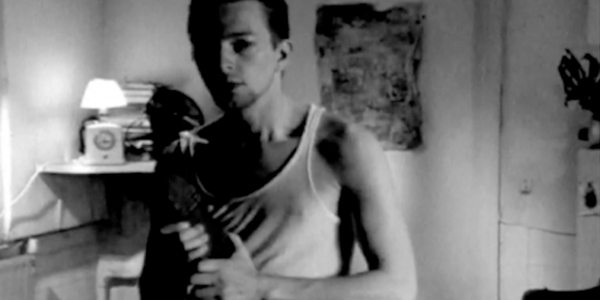
This is where it all started for Nolan. Before Memento and Inception, even before Following, there was Doodlebug. Like most short films, the premise is simple. A man is crawling on his hands and knees, trying to catch a bug of some sort ... and that's all you can say without spoiling it. Reading into it, we explore the depth of insanity, obsession and compulsion, a recurring theme in later Nolan movies like The Prestige and his Dark Knight trilogy. When comparing it to his blockbusters (or any of his work), Doodlebug is inevitably small in scale, lasting all of about three minutes. But that's not to say the thinking behind it is small, and if it does nothing else, it shows the gall of a director to even attempt such a project. Nolan filmed it while he was still at University College London studying English Literature. With no funds whatsoever, he completed Doodlebug in his spare time. Yet it was still a learning curve. Nolan has expressed his distaste with the camerawork in the bonus commentary; stating that his constant tracking shots slowed the film down. His brave (almost cocky) use of special effects may seem dated seventeen years later, but let it show the idealism of the man. Not only that, trace the path his career has travelled, and you will see him strive for bigger and bigger themes, bigger and bigger thrills, leading him into space and possibly further with Interstellar.

4. Let The Right One In (2008)

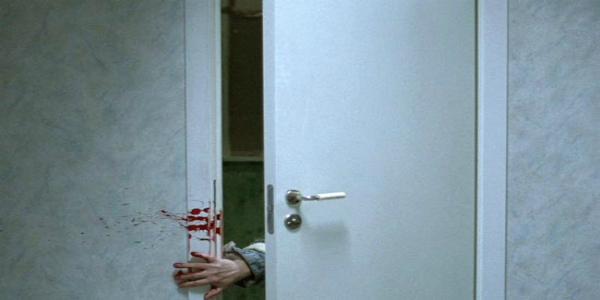
Keyboard warriors, put down your weapons and let me finish. Christopher Nolan is a creature of habit. Since Doodlebug, he has included Jonathan Nolan (as a writer and a grip) and wife, Emma Thomas (producer) on every project. He draws in names like Michael Caine and Christian Bale on numerous occasions, and Wally Pfister joined the team on Memento as cinematographer. However with Pfister leaving to direct Transcendence, he needed a new director of photography. Nolan acquired the service of the Swiss filmmaker, Hoyte Van Hoytema, whose credits include Her, The Fighter and Tinker Tailor Soldier Spy. But it is Let The Right One In that bares the nuances he brings to a movie. The Swedish horror exhibits Hoytema's tendency to grip the camera and take a wander through the scene. But unlike most, he has perfected the art of the hand-held shot. He doesn't disorientate his audience, he leads them by the hand; slow and ominous like a Reaper leading a soul into the Afterlife, building layers of subtle suspense. He accentuates the whites of snow and skin in the Swedish winter and splashes them with the vivid reds of blood, while worming his way into the nooks and crannies of a set to capture the best images, a la the pool scene finale. Hoytema will no doubt slap his stamp on Interstellar, bringing the culture and poignancy of European cinema across the Atlantic to present a different embodiment of a Nolan epic - but the use of IMAX cameras, as well as anthropomorphic 35mm photography, will still ensure the brazen and ambitious look typical of the director.

3. Killer Joe (2011)

I know, another obscure choice for the list, but what's life without a few curveballs? With Dallas Buyers Club winning all the plaudits and True Detective's ratings soaring through the roof, 2014 has proved a productive year for Matthew McConaughey €“ and he caps it off as the lead in Interstellar. He was confirmed in April 2013 alongside Anne Hathaway, with Christopher Nolan stating his performance in Jeff Nichols' Mud was influential in the decision. And while it would be easy to throw that on the list, it just seemed too easy a choice when talking about the 'McConaughaissance.' While his performance as the hobo-with-a-past was the strongest of his career so far, Killer Joe was the one that came out of left field. 2001-2009 was, quite simply, a bad time for McConaughey's career. The period saw him star in Sahara, Fool's Gold, Failure to Launch and Ghosts of Girlfriend's Past €“ in fact the only notable appearance was his extended cameo in Tropic Thunder. It was a shame because he'd proved himself a good actor in the Nineties with movies like Dazed and Confused and Amistad. But then he went off the map, spent two years away from the big-screen and came back in 2011 with some serious acting chops. He returned with a trio of great performances. The Lincoln Lawyer was a better than most legal flick with McConaughey as a sleazy lawyer proving the foundation of the film's quality. He reunited with Richard Linklater to appear in the black comedy, Bernie, and then followed up with William Friedkin's, Killer Joe. While the Exorcist director refrained from green puke this time round, he did include Kentucky fried oral sex, and if you haven't seen the film, go watch it and you'll see what I mean. McConaughey is electric as Killer Joe Cooper, a dirty cop that specialises in disposing of undesirables for cash, but when the most dysfunctional, trailer-park family can't pay him, he takes the daughter as leverage. It may not be the best film of his resurgence, but it's the boldest by far. Take one look at the never-ending list of rom-coms and compare it to Killer Joe €“ you wouldn't think this was the same actor. His performance shows him as a risk-taker, a scene-stealer, a cold-blooded psychopath and an actor entering into the strongest purple patch since Ben Affleck sat in a director's chair. Three years later, he's nailed everything he's been in (even Eastbound and Down), resulting in the reward of a coveted lead role in a Christopher Nolan space adventure.

2. Sunshine (2007)

Okay, we're edging closer now. No more obscurity or curve balls, nothing but good old-fashioned sci-fi. Readers will no doubt be questioning why this and the number one pick made it ahead 2001: A Space Odyssey, and for good reason. But everywhere you look, especially on the internet, there are people comparing Interstellar's premise with Kubrick's masterpiece €“ it just seems a predictable choice and one that has been discussed to death on forums and message boards. Danny Boyle's Sunshine seems to have passed under that radar. The film follows Cillian Murphy and a team of astronauts sent to reignite our dying Sun, but when they come across a lost ship, things take a turn for the worse. It has been compared with the sci-fi horror, Event Horizon, which is justified to a large extent. There's no other-worldly possession in this one, but the tone and atmosphere are reminiscent of the earlier work. Of course, Boyle's film has the benefit of a director at the top of his game, and while this is by no means as good as Trainspotting or 127 Hours, it still stands as a decent and entertaining two hour thrill-ride. The Fort Macleod Gazette let slip the plot of Interstellar in an article published on Nolan and McConaughey filming in the area. We now know that it will be another sci-fi movie that sees the human race faced with extinction and a voyage into the stars as the only hope for survival. This time it's crop failure that ushers in the doom and gloom. Whereas Sunshine was concerned with the Sun as the main threat to humanity, both use space travel as our last chance of salvation, and though it isn't a new or particularly original concept, the buzz around Interstellar is still deafening.

1. Contact (1997)

Contact was no Forrest Gump or Back to the Future, Robert Zemeckis' crowning achievements, but it is perhaps the one film that has the strongest resemblance to what we know about Interstellar already. Starring Jodie Foster (and Matthew McConaughey I might add), the film casts its eye on the human race as it comes into 'contact' with alien beings sending encrypted messages through space with instructions on building a giant machine capable of creating a wormhole. The first similarity is the source material both films are based on. Theoretical physicist, Kip Thorne wrote the treatment for Interstellar, and similarly, astronomer and astrophysicist Carl Sagan wrote the novel Contact and was on-hand to assure that his theorised science was adhered to on-set. Unfortunately, he died midway through filming, and was unable to see his work come to life on the big-screen. Both films have adopted wormholes as our race's catapult through the stars and if Thorne's treatment is anything like Sagan's, Interstellar's plot will observe true science and audiences will be treated to a science-fiction movie, not only with a brain, but with its origins based firmly in the painstaking calculations the discipline requires. Needless to say, November cannot come quick enough. What do you think? Are there any other films you would expect to make this list? The obscurer the better - let me know in the comments below!

Contributor
Contributor

I love all things imaginative, from the page to the screen, and nurture a soft spot for Donald Sutherland and Daniel Bryan.